Selling a business online has become the fastest way to reach qualified buyers without geographic limits. At Unbroker, we’ve helped countless business owners navigate this process and close deals faster than traditional methods.
The right strategy makes the difference between a quick sale and months of waiting. This guide walks you through every step, from preparing your financials to closing the deal.
Getting Your Business Sale-Ready
Buyers purchasing online businesses expect verified financial performance and clear operational independence. Start by organizing your financial records in a single system like QuickBooks or Xero, then link your bank accounts and payment processors directly. This step eliminates manual data entry and creates an audit trail that builds buyer confidence. Clean, verifiable financial records matter significantly for due diligence and impact final valuation. Most buyers request 2–3 years of tax returns, bank statements, and profit-and-loss statements, so you should organize these documents and keep them readily accessible to speed up the entire process. Separate personal expenses from business expenses to show true profitability. If your business currently lacks proper documentation, spend the next 60 days cleaning up your records before you list anything publicly.
Understanding Your Business Value
Valuation depends on your business size and structure. For businesses valued under $10 million, buyers typically use Seller’s Discretionary Earnings (SDE), which adds back owner compensation and one-time expenses to net profit. Larger businesses use EBITDA. Most e-commerce and digital businesses sell between 4x and 6x their annual earnings. A business that generates $4 million in annual earnings at a 5x multiple reaches approximately $20 million in value. Calculate your realistic valuation using these multiples before you list.
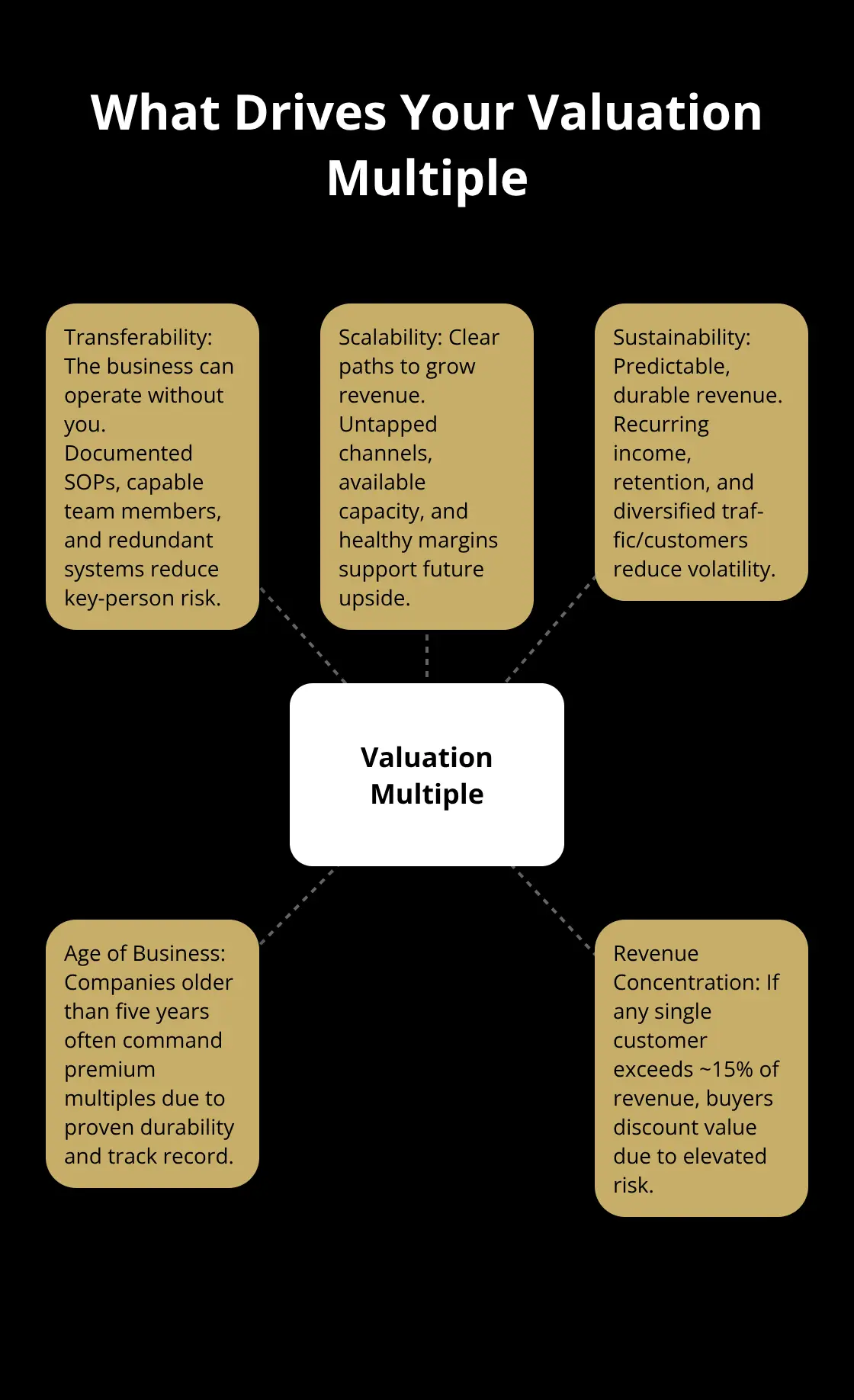
The three primary drivers that influence your multiple are transferability (how well the business runs without you), scalability (revenue growth potential), and sustainability (predictable revenue). Businesses older than five years command premium valuations, while those under three years typically sell at lower multiples. Revenue concentration also matters significantly-if a single customer represents 15 percent or more of your revenue, buyers view this as high risk and reduce their offer accordingly.
Building a Profile That Sells
Your business profile is the first impression potential buyers receive, so accuracy and detail matter enormously. List your annual revenue, profit margins, traffic sources, and customer acquisition costs explicitly. Break down revenue by product category, customer segment, and geographic region to demonstrate diversification and reduce perceived risk. Include your traffic metrics from Google Analytics-specifically pages per session, average session duration, bounce rate, and conversion rate. These metrics reveal how effectively your business converts visitors into customers. Document your operational independence by showing how many hours per week you personally work in the business. Buyers strongly prefer businesses where the owner spends under 20 hours per week, and deals command premium valuations when owner involvement drops below 10 hours weekly. List all tools and platforms you use, including hosting, email marketing software, payment processors, and fulfillment services. This transparency helps buyers understand what they acquire and what systems they inherit. Finally, mention any recent improvements, expansion plans that didn’t launch, or untapped growth opportunities-these signal potential to serious buyers and often justify higher offers.
What Buyers See First
The profile you create becomes your sales document. Potential buyers scan dozens of listings, so you must present information that stands out and answers their questions immediately. Show your traffic sources diversification: direct traffic, organic search, paid advertising, and referrals each tell a different story about business stability. Buyers want to know whether your revenue depends on a single marketing channel or whether multiple sources feed your sales. If you operate an e-commerce business, break down your product mix and show which items drive the highest margins. This detail reassures buyers that they understand what they’re purchasing and can replicate your success. Include any certifications, awards, or third-party validations your business has earned-these reduce perceived risk and strengthen your credibility with serious buyers ready to move forward with negotiations.
Marketing Your Business to Buyers
Reach Qualified Buyers Across Multiple Platforms
Passive listings attract minimal interest-the average private marketplace listing receives around 18 inquiries, while broker-led listings often generate hundreds of qualified buyer contacts. This difference shapes your timeline and final price significantly. You need active marketing across multiple channels to stand out.
Platforms like Acquire.com host over 500,000 founders and investors searching for businesses to purchase, with $2 billion in verified buyer funds available on the marketplace. When you list there, use premium marketing tools to highlight your financial metrics prominently. Serious buyers scan dozens of listings daily and skip those lacking clear revenue data or growth indicators.
Present Data That Builds Credibility
Your Google Analytics data becomes your most valuable asset. Present your conversion rate, pages per session, and average session duration alongside revenue figures. Buyers want to see traffic quality, not just traffic volume, because high-quality traffic signals sustainable customer acquisition.
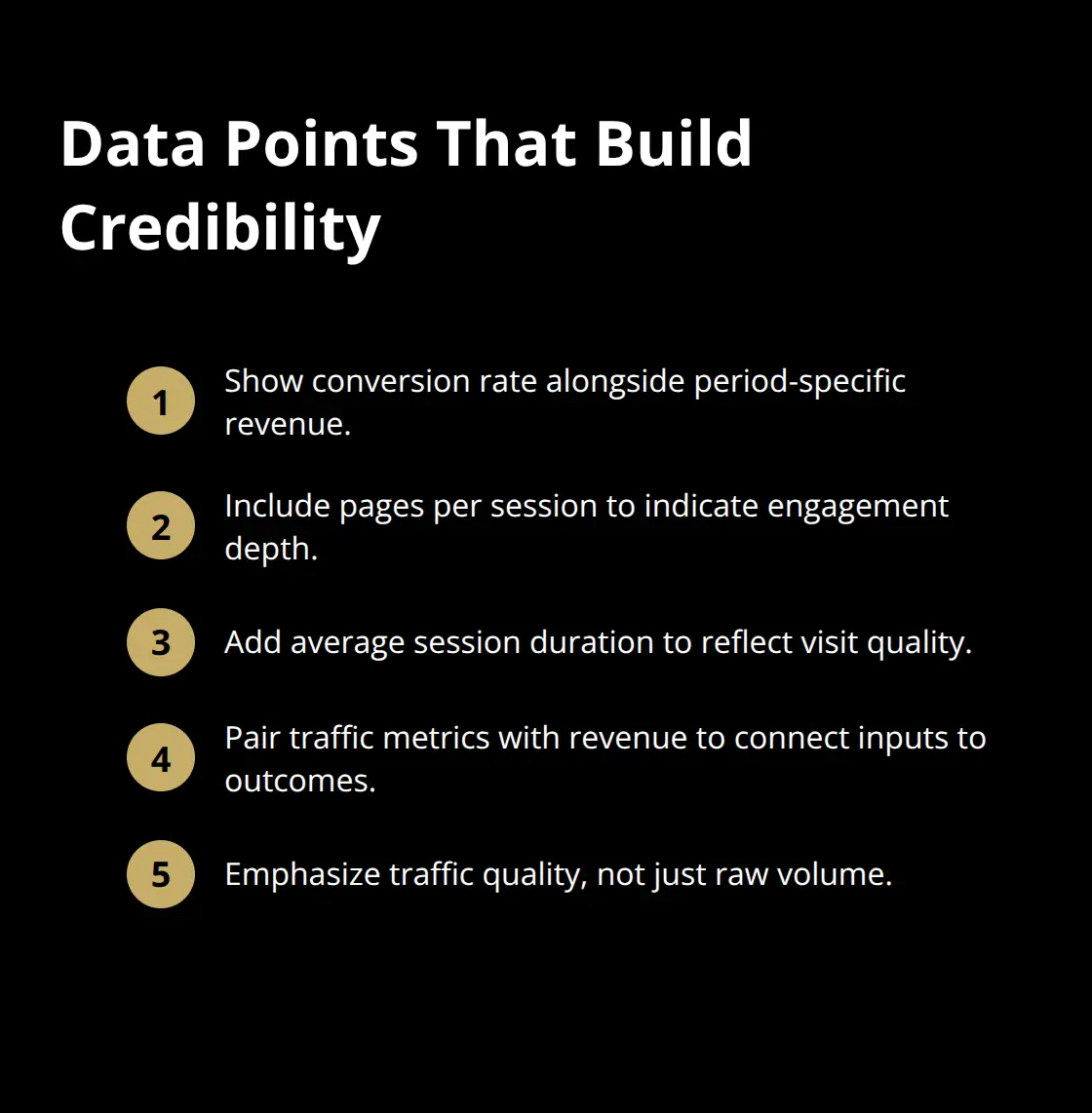
If your business generates $500,000 in annual revenue with a 3% conversion rate from 100,000 monthly visitors, show exactly that. Specific numbers build credibility and justify higher valuations far better than vague claims about growth potential. Buyers trust concrete metrics over promises.
Create Visuals That Demonstrate Operations
Professional visuals accelerate buyer decisions significantly. Screen recordings showing your dashboard, fulfillment process, or customer management system take 30 minutes to produce but communicate operational clarity that text descriptions cannot match. Stock photography fails here; buyers want to see your actual business.
For e-commerce businesses, invest in product photography that matches your store’s current quality standards. Include screenshots of your top-performing products and their profit margins. If you operate a SaaS product or digital service, record a brief demo showing core features and user experience. These visuals should live on your listing and in any pitch materials you send to serious prospects.
Highlight Competitive Advantages That Matter
Document what separates your business from competitors-whether that’s proprietary customer data, exclusive supplier relationships, a loyal email list of 50,000 subscribers, or a product with unusually low return rates. According to the National Retail Federation, online return rates average 19.3% industry-wide, so if your business maintains a 12% return rate, that’s a genuine competitive advantage worth highlighting.
Mention any patents, trademarks, or proprietary systems you’ve developed. These assets often justify premium valuations because they’re difficult for competitors to replicate and represent genuine transferable value to a new owner. Buyers pay more for defensible competitive positions than for commodity businesses.
Move Forward With Confidence
With your profile polished and your competitive advantages documented, you’re ready to attract serious buyer inquiries. The next phase involves vetting those prospects carefully to identify buyers with genuine intent and financial capacity to close the deal.
Negotiating and Closing the Deal Online
Identify Qualified Buyers With Verified funds
The moment your listing goes live, you’ll receive inquiries from curious browsers, tire-kickers, and a handful of genuinely qualified buyers with verified funds and real intent. Your job is identifying the second group quickly and dismissing the first without wasting weeks on conversations that lead nowhere. Request proof of funds before scheduling any calls-a bank statement, letter from their lender, or confirmation from an escrow service showing available capital.
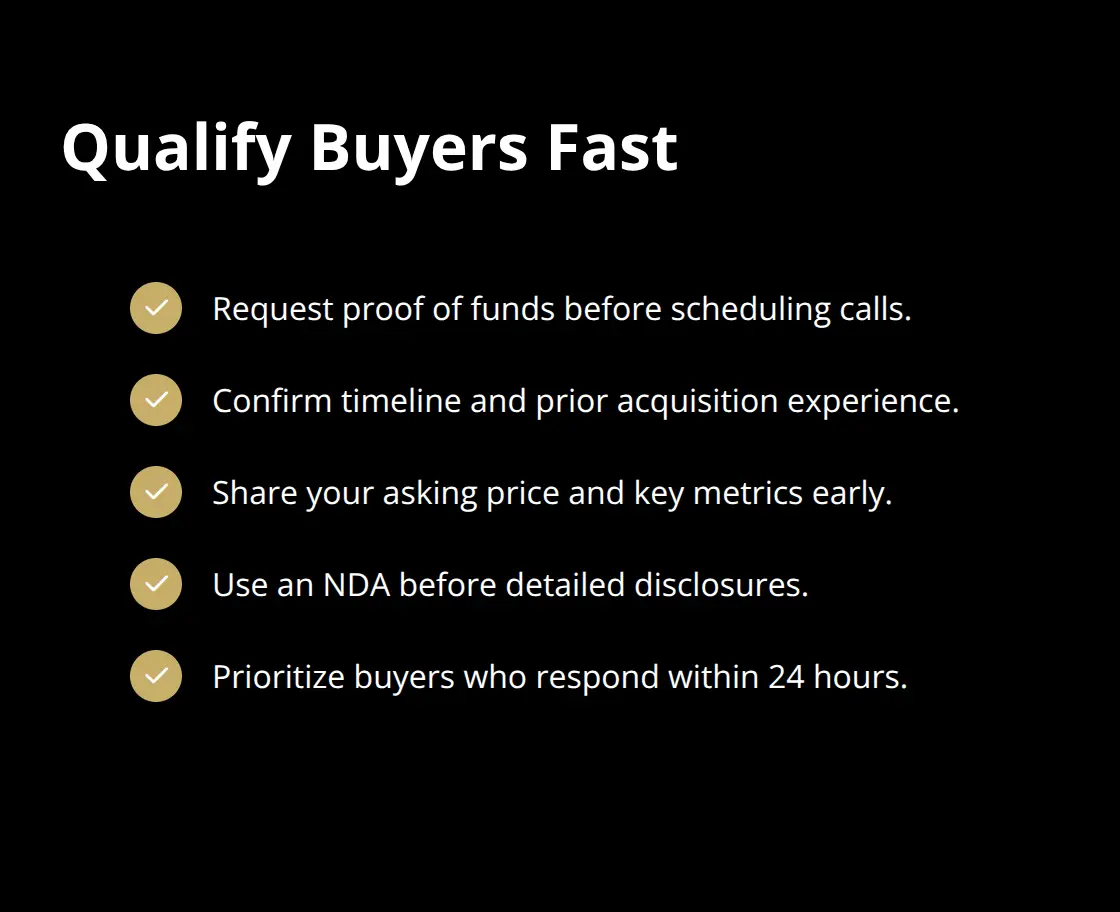
Buyers serious about closing typically provide this within 24 hours. Those who hesitate, ask vague questions, or claim they need to secure financing later aren’t worth your time.
Ask directly about their timeline and acquisition experience. A buyer who closed three previous online business purchases moves faster and understands deal structures better than a first-time founder exploring options. During initial conversations, discuss your asking price and basic business metrics before committing to deeper discussions. If a prospect seems interested, move to a non-disclosure agreement before sharing detailed financial records, customer lists, or traffic sources. This protects your competitive position if negotiations stall and the buyer decides not to proceed.
Draft and Negotiate the Purchase Agreement
Once you’ve identified a qualified buyer, the legal phase begins immediately. Work with an attorney experienced in online business sales-not a general corporate lawyer-because these deals have specific structures around intellectual property, customer data transfers, and platform dependencies that generalists miss. Your attorney should draft the purchase agreement using templates or precedents rather than starting from scratch, which accelerates timelines.
The agreement must specify exactly what assets transfer (domain names, social media accounts, email lists, inventory, software licenses), what the buyer assumes (customer contracts, vendor obligations), and what remains with you (personal tax liability, pre-sale legal disputes). Chargebacks and returns liability create ongoing issues; clarify whether the buyer inherits chargeback responsibility or you retain it for transactions completed before closing. Global chargeback volume is expected to grow 24% from 2025 to 2028, reaching 324 million transactions annually, so this detail impacts actual profitability.
Negotiate a transition period where you remain available to answer operational questions-typically 30 to 60 days post-closing-and specify your hourly rate if the buyer requests extensive handoff support. Include representations and warranties that protect both parties: you guarantee clean ownership, no undisclosed liabilities, and accurate financial reporting; the buyer guarantees they have funds and authority to complete the purchase.
Manage Escrow and Secure the Transfer
Escrow services handle the final payment and transfer mechanics, protecting both you and the buyer from last-minute changes or disputes. Funds arrive in escrow before any assets transfer, reducing your risk significantly. For deals above $1 million, attorneys typically oversee escrow directly rather than using third-party services.
Once both parties sign the purchase agreement and funds sit in escrow, the buyer gains access to systems, passwords, and operational documentation. Set a clear cutoff date for due diligence questions-typically 5 to 10 business days-after which the buyer either closes or walks. This prevents endless renegotiation and keeps momentum forward.
Common deal killers at this stage include undisclosed customer concentration issues, traffic penalties from Google, or supplier contracts that don’t transfer. Address these problems before listing rather than hoping buyers won’t notice. Closing happens when the buyer confirms receipt of all assets, funds release from escrow to your account, and you transfer domain ownership, email accounts, and platform admin access. This process typically completes within three months from initial contact when both parties move efficiently, though deals can extend longer if due diligence uncovers unexpected issues.
Final Thoughts
Selling a business online succeeds when you prepare thoroughly, disclose honestly, and seek professional guidance. The businesses that close fastest share three characteristics: clean financial records that withstand scrutiny, realistic valuations based on actual multiples rather than wishful thinking, and transparent disclosure of both strengths and weaknesses. Buyers detect exaggeration immediately and walk away, so accuracy always outperforms optimism.
Common mistakes derail otherwise solid deals. Underestimating operational independence costs you thousands in lost valuation-if you work 40 hours weekly in your business, buyers assume they’re purchasing a job, not an asset. Overpricing based on potential rather than current performance extends your timeline indefinitely and attracts only low-ball offers. Neglecting to address revenue concentration or traffic quality issues upfront guarantees these problems resurface during negotiations when you have less leverage.
When you sell business online through a structured process, you gain access to far more qualified buyers than private sales generate. We at Unbroker built our platform specifically to eliminate the friction that slows traditional sales and connect you with serious buyers ready to move forward. Start with a confidential valuation to understand your actual market value, then decide whether hands-off or hands-on selling fits your timeline and goals.