Selling a business exposes you to real risks-from buyers who misrepresent their finances to data breaches that compromise confidential information. A secure transaction process isn’t optional; it’s what separates a smooth sale from a costly nightmare.
At Unbroker, we’ve seen deals derailed by preventable security failures. This guide walks you through the specific threats you’ll face and the concrete steps to neutralize them.
What Three Threats Could Sink Your Business Sale
Fraudulent Buyers and False Credentials
Buyers who lie about their finances represent the first major threat to your sale. Fraudulent buyers present falsified bank statements, inflated revenue projections, or fabricated references to appear more creditworthy than they are. You face this risk too late, after you’ve already committed months to negotiations with someone who cannot actually close the deal. The cost of wasted time alone can push you to accept unfavorable terms from a second buyer simply to move forward.
Request verified bank statements directly from the buyer’s financial institution, not documents they provide. Ask for references from their previous business acquisitions and contact those sellers directly to confirm the buyer followed through on their commitments. Verify employment history and personal credit reports through legitimate channels. A buyer unwilling to provide these verifications should trigger immediate suspicion.
Data Breaches and Confidentiality Leaks
Data breaches during the sales process expose your confidential financial information, customer lists, employee records, and operational details to competitors or criminals. Breaches cost organizations an average of $4.45 million globally. Even if a breach doesn’t directly cause you financial loss, the reputational damage can tank your sale price or kill buyer interest entirely.
Establish strict document access controls from day one. Share information only with qualified buyers who have signed comprehensive non-disclosure agreements with real legal teeth. Use secure file-sharing platforms with encryption and access logs rather than email or cloud storage with loose permissions. Limit each buyer’s access to only the documents they genuinely need for their evaluation stage.
Unfair Pricing Through Information Asymmetry
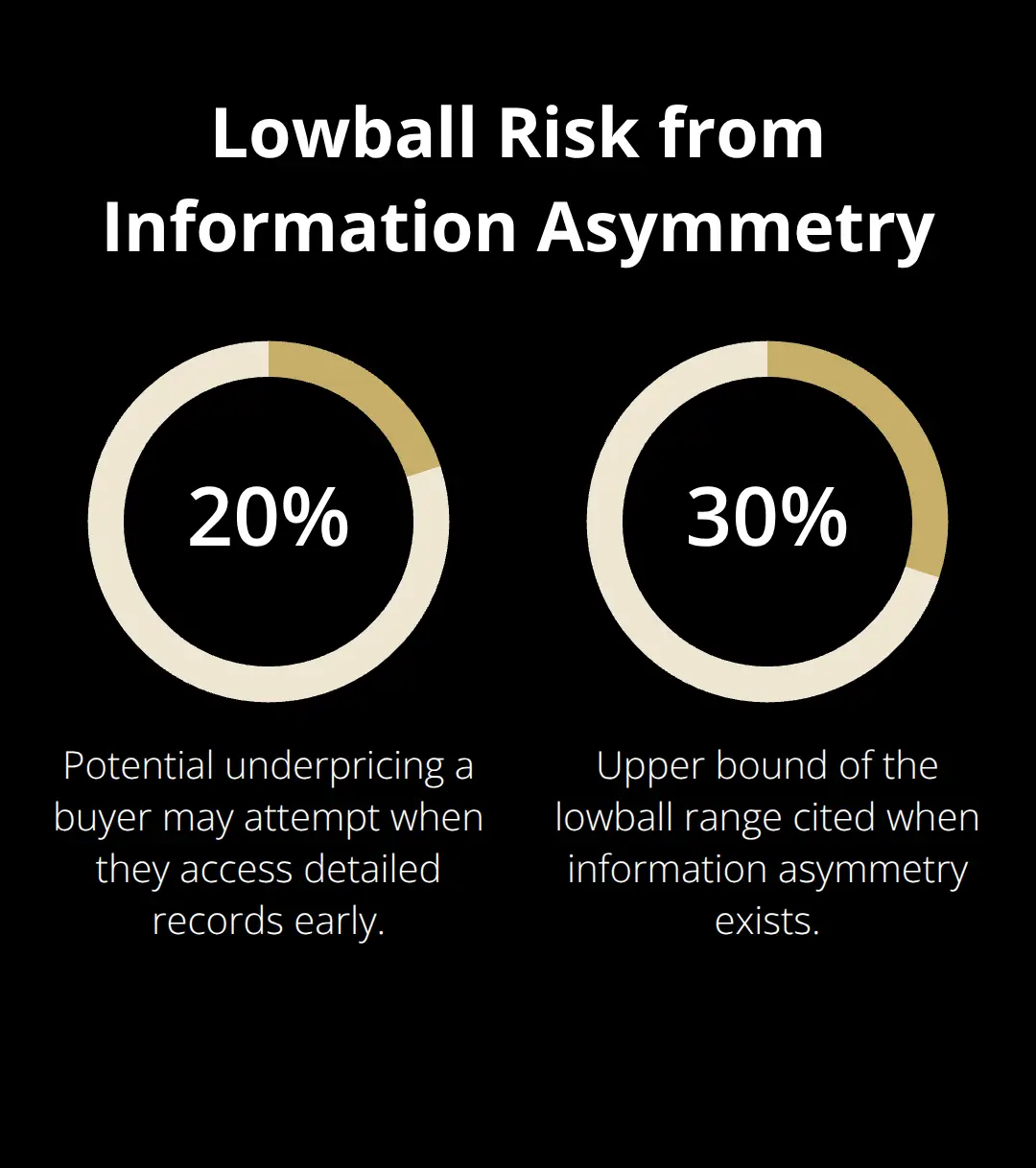
Unfair pricing happens when buyers exploit information asymmetry, knowing your business better than you do before negotiations begin. A buyer who gains access to your detailed financial records, customer contracts, and vendor agreements can lowball you by 20 to 30 percent, knowing exactly what margin you have to negotiate. They see your real numbers while you see only their claims.
Change access credentials frequently and track which documents each buyer views and when. Never share your complete financial picture with multiple buyers simultaneously; instead, stagger information release as trust and serious intent increase. This approach forces buyers to compete on equal footing rather than allowing one buyer to exploit what they know about your business that others don’t.
How to Verify and Protect Yourself Before Sharing Information
The moment you decide to sell your business, verification becomes your primary defense. Most sellers make a critical mistake: they share information before confirming the buyer’s legitimacy. This backward approach exposes you to the exact threats covered in the previous section. Start by requesting verified bank statements directly from the buyer’s financial institution, never from documents they provide. Contact three previous sellers who worked with this buyer and ask specific questions about whether the buyer closed on time, honored their commitments, and negotiated fairly. A buyer who resists these verification steps signals that something is wrong. You should also run a background check through a legitimate service and verify employment history independently. This upfront work takes days, not weeks, and eliminates time-wasters who cannot actually close.
Secure Your Documents With Real Barriers
Email and basic cloud storage create dangerous exposure for business sales. Move immediately to a virtual data room that enforces encryption and tracks access logs in real time, and allows you to revoke access instantly if negotiations fall apart. Platforms like Citrix ShareFile or Intralinks provide audit trails showing exactly which documents each buyer opened and when, giving you concrete evidence if disputes arise later. Set document permissions at the granular level: a preliminary buyer sees your executive summary and market overview only, while a serious contender gets access to three years of tax returns and customer contracts. Change your document access credentials every two weeks during active negotiations. This practice sounds excessive until you consider that a buyer who gained permanent access to your complete financial picture could shop your business structure and customer relationships to your competitors. The cost of a data room subscription remains negligible compared to the protection it provides.
Non-Disclosure Agreements With Legal Substance
A one-page NDA template downloaded from the internet offers almost no protection. Work with a business attorney to create a Non-Disclosure Agreement that specifies exactly what information is confidential, how long the confidentiality obligation lasts, what happens if the buyer breaches it, and what damages you can recover. Include a clause that prohibits the buyer from sharing your information with their advisors, lenders, or partners without your written consent. Require the buyer to return all documents or certify destruction within ten business days of withdrawing from negotiations. Many sellers skip this step because it feels confrontational, but a serious buyer expects it and respects you more for requiring it. If a buyer refuses to sign a comprehensive NDA or tries to water down its terms, that tells you everything you need to know about their intentions.
Moving Forward With Confidence
You’ve now established the verification framework and document controls that separate legitimate buyers from time-wasters. The next critical phase involves working with advisors and platforms that actively reduce your risk throughout the entire transaction. These trusted partners bring expertise, accountability, and systems that catch problems before they become expensive mistakes.
Advisors and Platforms That Actively Reduce Your Risk
Legal and Financial Expertise You Cannot Skip
A business attorney who specializes in M&A transactions catches contractual traps that general practitioners miss. They review purchase agreements for clauses that shift liability to you after closing, flag earn-out structures designed to withhold payment, and negotiate indemnification caps that protect your personal assets. Attorney fees can range from $7,500 for a mid-market business sale-pays for itself the moment they eliminate a single unfavorable clause. An accountant experienced in business sales identifies tax inefficiencies in the deal structure and verifies the buyer’s financial representations hold up under scrutiny. These advisors also serve as a buffer between you and the buyer, reducing the emotional temperature of negotiations and keeping discussions grounded in facts rather than posturing.
Why Platforms Matter More Than You Think
Technology platforms accelerate verification and reduce friction simultaneously. A platform approach forces accountability: every message stays logged, every document access gets tracked, and every deadline remains visible to all parties. This transparency alone deters bad actors. When you work through a structured platform rather than direct communication, buyers understand that their behavior is documented and that disputes have a clear audit trail. Modern platforms offer transparent alternatives that support dynamic Q&A, extensive audit trails, and dynamic indexing, ensuring every action is tracked and every document is protected. Conduct your own due diligence on any buyer-do not outsource judgment-but use a platform that gives you the infrastructure to do it thoroughly.
What to Look For in a Transaction Platform
Verify that your chosen platform uses encryption for all data, maintains access logs you can review in real time, and has a clear process for removing a buyer’s access if negotiations fail. Request references from other sellers who have used the platform and ask specifically whether they felt their information remained confidential and whether the platform’s tools actually prevented problems or simply documented them after the fact. Look for platforms that reduce deal friction through negotiation assistance and access to a broad buyer network (these features eliminate the need to juggle multiple services and reduce coordination costs). The best platforms combine transparent pricing with no hidden fees, so you know exactly what you pay upfront and after closing.
Final Thoughts
A secure transaction process protects far more than your financial interests-it protects your reputation, your customer relationships, and your peace of mind. The three core threats we covered-fraudulent buyers, data breaches, and unfair pricing-all become preventable when you implement verification upfront, control document access rigorously, and require legitimate legal protections before sharing sensitive information. This framework works because it forces accountability early and transforms your information from a liability into a controlled asset.
Modern platforms reduce risk by creating transparency and accountability throughout the entire transaction. Every message stays logged, every document access gets tracked, and every deadline remains visible to all parties. This infrastructure deters bad actors because they know their behavior is documented, and it eliminates the coordination chaos of managing multiple buyers, spreadsheets, and email chains-a single system keeps everyone aligned and provides you with a clear audit trail if disputes arise.
We at Unbroker built our platform specifically to address these security concerns. You can explore our Full Service and Assisted Business Sale options to access a vast buyer network, legal document templates, negotiation assistance, and premium marketing tools-all without the hidden fees that traditional brokers charge. Moving forward with confidence means trusting your verification process, maintaining control over your documents, and working with advisors and platforms that prioritize your security.