Selling your business is one of the biggest financial decisions you’ll make. Buyers will scrutinize everything from your finances to your operations, which is why having a solid due diligence checklist matters.
We at Unbroker have helped countless business owners prepare for this process. This guide walks you through the key areas buyers examine most closely.
Getting Your Financial Records Sale-Ready
Buyers don’t just glance at your numbers-they dissect them. Most acquisitions fail during due diligence because financial documentation is incomplete, inconsistent, or poorly organized.

Smart sellers prepare at least the last three years of audited financial statements, tax returns, and detailed profit-and-loss statements. Start by gathering your federal, state, and local tax returns alongside monthly and annual financial statements. Ensure these documents align perfectly; mismatches between tax filings and accounting records raise immediate red flags for buyers.
Validate Your True Profitability
Buyers will request a Quality of Earnings analysis from an independent accounting firm to validate that your reported profits actually reflect cash generation and true business health. This analysis typically costs between $5,000 and $15,000 but accelerates buyer confidence and can prevent deal delays. The investment pays for itself when it speeds up closing or protects your asking price. An independent firm examines whether your accounting methods match industry standards and identifies any one-time expenses or revenue that won’t continue under new ownership.
Clean Up Receivables and Payables
Audit your accounts receivable and payable meticulously. Document which customers owe you money, how long those invoices have been outstanding, and whether any payments are at risk. Simultaneously, list every liability-loans, lines of credit, vendor payments, and contingent obligations. Many sellers discover during this process that they’ve been carrying dormant accounts payable or uncollected receivables that skew their financials. Resolve these before buyers see them, as they directly impact your bottom line and buyer perception.
Create a Detailed Asset Schedule
Create a comprehensive inventory of every tangible and intangible asset. Physical assets include equipment, machinery, vehicles, real estate, and inventory; list their original cost, accumulated depreciation, and current fair market value. Intangible assets matter just as much-patents, trademarks, copyrights, proprietary software, customer lists, and brand value all influence what buyers will pay. Document the ownership status of each asset clearly. If equipment is leased rather than owned, note the lease terms and whether the lessor will allow assignment to a new owner. Buyers increasingly request a detailed asset schedule with serial numbers and condition assessments because disputes over what transfers at closing often derail deals.
Disclose All Liabilities Transparently
On the liability side, don’t hide debt or contingent obligations. Disclose every loan, line of credit, deferred tax liability, pending lawsuit, and warranty claim. Transparency here builds trust and prevents buyers from discovering problems that could kill the deal or force steep price reductions. A well-organized financial data room-whether a secure digital platform or carefully indexed folders-signals professionalism and accelerates the entire process. Buyers typically spend 30 to 90 days examining financials, and responsiveness to document requests directly impacts how quickly you close.
With your financial house in order, the next critical area buyers examine is your legal standing and operational compliance.
Legal Compliance and Deal Killers
Buyers investigate your legal standing more thoroughly than most sellers expect. A single unresolved compliance issue or hidden contract can collapse an otherwise solid deal, which is why this phase demands meticulous attention.
Verify Licenses and Permits Are Current
Start by verifying that every license and permit your business holds is current and transferable to a new owner. Contact your local business authority and industry regulators directly rather than relying on your own records. Verify Licenses and Permits Are Current to confirm which licenses are transferable and which require new applications. Document the renewal dates for your business license, professional certifications, health permits, environmental clearances, and any industry-specific authorizations. Some jurisdictions require the buyer to apply for new permits rather than transferring existing ones, which can delay closing by weeks or months. Identify these obstacles now so you can address them proactively.
Audit Contracts for Hidden Obstacles
Next, audit every contract your business has signed. Pull your customer agreements, vendor contracts, service level agreements, employment contracts, lease terms, and financing arrangements. For each contract, determine three things: whether it requires buyer consent or approval to transfer, whether it contains change-of-control clauses that trigger renegotiation, and whether the other party can terminate if ownership changes. Many sellers overlook these provisions and face surprise terminations or renegotiations that tank deals. Your landlord, for instance, may require written consent to assign your lease to the new owner, and some landlords use sales as an opportunity to demand higher rent. Contact your landlord early and confirm in writing that lease assignment is possible. Simultaneously, scan all contracts for outdated terms, missing signatures, or ambiguous language that creates risk for buyers. Clean contracts accelerate due diligence; messy ones invite scrutiny and price reductions.
Resolve Outstanding Legal Issues
Outstanding legal issues represent the third major obstacle. Review any pending or past litigation, regulatory investigations, employment disputes, product liability claims, or environmental violations. Pending lawsuits are usually detailed in a disclosure schedule, which formally qualifies the seller’s representations and helps shift or limit liability. Disclose these upfront rather than hoping buyers won’t discover them. Tax liens, judgment liens, or unsatisfied claims against your business must be resolved before closing because they transfer with the sale. If you’ve received notice of any investigation or complaint from government agencies, document the status and resolution. Many deals stall because buyers request legal opinions on disclosed issues, and vague or incomplete disclosure creates distrust that’s difficult to overcome.
Organize Your Legal Documentation
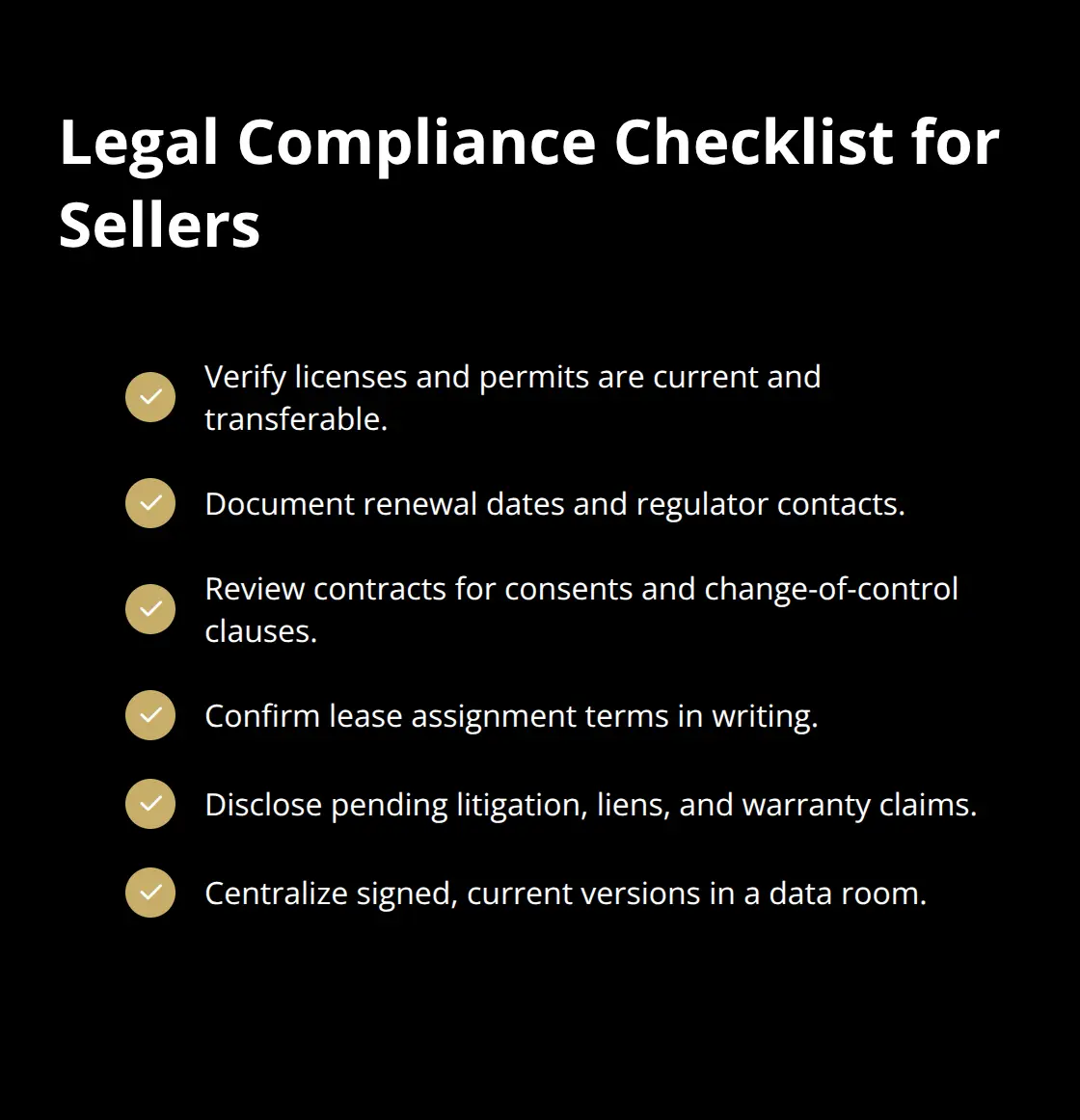
Organize all legal documents in your data room chronologically and thematically so buyers can quickly assess risk. A professional approach to legal transparency signals that you’ve run a responsible business and accelerates the buyer’s confidence in moving forward. With your legal house in order, operational readiness becomes the next critical factor that determines whether buyers move forward or walk away.
Is Your Business Operationally Ready for a Buyer?
Buyers care less about what your business looks like on paper and far more about whether it can survive and thrive without you. This phase of due diligence focuses on the operational machinery that keeps revenue flowing and costs under control.
Customer Base and Revenue Stability
Your customer base represents your most valuable asset, yet many sellers underestimate how thoroughly buyers will examine retention rates and contract terms. Pull your customer acquisition data for the past three years and calculate your churn rate-the percentage of customers you lose annually. If your churn exceeds 20 percent, buyers will immediately discount your valuation because they’ll struggle to forecast reliable revenue post-acquisition. Conversely, if you’ve locked in long-term contracts with major customers, document those agreements prominently.
Buyers specifically want to see which customers represent your revenue concentration risk. If your top five customers account for more than 40 percent of annual revenue, expect buyers to apply a significant valuation reduction because losing even one customer materially impacts profitability.

Create a customer concentration schedule showing annual spending by customer, contract end dates, and renewal terms. Contact your largest customers now to confirm they’ll work with a new owner, even if you don’t disclose the sale yet. These conversations prevent nasty surprises during due diligence and strengthen your negotiating position.
Supply Chain and Vendor Dependencies
Supply chain stability directly influences whether buyers believe they can operate the business post-closing. Map your supplier relationships and document which vendors are essential to your operations. If you rely on a single manufacturer or distributor, that dependency becomes a deal risk that reduces value. Buyers will ask whether suppliers have agreed to continue serving a new owner and whether pricing or terms might change.
Contact your key vendors now to understand their policies on ownership transfers. Some suppliers require formal approval before serving a new owner, while others may renegotiate terms when they learn about the sale. Documenting these relationships and securing informal commitments from critical vendors protects your deal value and accelerates buyer confidence.
Employee Continuity and Key Person Risk
Your organizational structure matters enormously. Identify your key employees-the people without whom operations would collapse-and document their roles, compensation, and whether they’ve agreed to stay post-sale. Employment agreements that require key staff to remain for a defined period post-closing significantly reduce buyer risk and protect deal value.
If your business depends heavily on you personally, buyers will demand a transition services agreement where you remain involved for months after closing, typically at a discounted rate. This situation weakens your negotiating position, so start training other leaders now to reduce key person risk. Document your standard operating procedures, decision-making authority, and critical workflows so buyers see a business that runs independently of any single person.
Operational Independence and Scalability
These operational factors determine whether buyers view your business as scalable or fragile, and that perception directly impacts what they’ll offer. A business that relies on your personal relationships, technical expertise, or daily involvement appears riskier and commands lower valuations. Conversely, a business with documented processes, trained staff, and established vendor relationships appears more stable and attractive to buyers.
Create an organizational chart that shows clear reporting lines and role definitions. List the systems and tools your team uses to manage operations, customer service, and financial tracking. If you’ve automated repetitive tasks or built proprietary workflows, highlight these as competitive advantages that buyers will value. The more you demonstrate that your business operates as a self-sufficient machine rather than depending on you, the stronger your negotiating position becomes.
Final Thoughts
You’ve now reviewed the complete due diligence checklist that buyers examine when evaluating your business. Financial records, legal compliance, and operational readiness form the foundation of a successful sale. Sellers who prepare thoroughly close faster, negotiate from stronger positions, and avoid the price reductions that plague unprepared businesses.
Start organizing your documents now, even if you’re months away from listing. Pull three years of tax returns and financial statements, verify that licenses and permits are current, audit your contracts for change-of-control clauses, and document your customer concentration and key employee dependencies. Conduct your own internal due diligence to identify problems on your timeline rather than during buyer scrutiny. Resolve outstanding legal issues, clean up your accounts receivable and payable, and create detailed asset and liability schedules.
A business that appears sale-ready attracts serious buyers and commands higher valuations. We at Unbroker understand that preparing for sale can feel overwhelming, which is why we’ve built a platform designed to simplify the process. Unbroker offers transparent, low-cost options that eliminate high brokerage fees while connecting you to qualified buyers, complete with legal document templates, negotiation assistance, and premium marketing resources to position your business competitively.