Selling a business online means exposing sensitive financial data, legal documents, and confidential operations to potential buyers. The risks are real: data breaches, fraudulent actors, and unauthorized access happen regularly in digital transactions.
At Unbroker, we’ve seen firsthand how a secure online sale process protects both sellers and their businesses. This guide walks you through the security measures that matter, the threats you’ll face, and the practices that keep your sale safe.
How Digital Security Protects Your Business Data During a Sale
Three Security Layers That Matter
When you put your business on the market, three security layers stand between your sensitive information and potential threats. Encryption scrambles your financial records, tax returns, and operational data so only authorized buyers can read them. Most legitimate sale platforms use AES encryption, the same standard banks use-your data becomes unreadable gibberish to anyone without the decryption key.
The second layer involves verifying who actually wants to buy your business. AI-driven buyer matching filters serious, qualified purchasers before they access any confidential details. This reduces your exposure to tire-kickers and fraudsters significantly. The third layer is legal protection through confidentiality agreements that make buyers legally liable if they misuse your information.
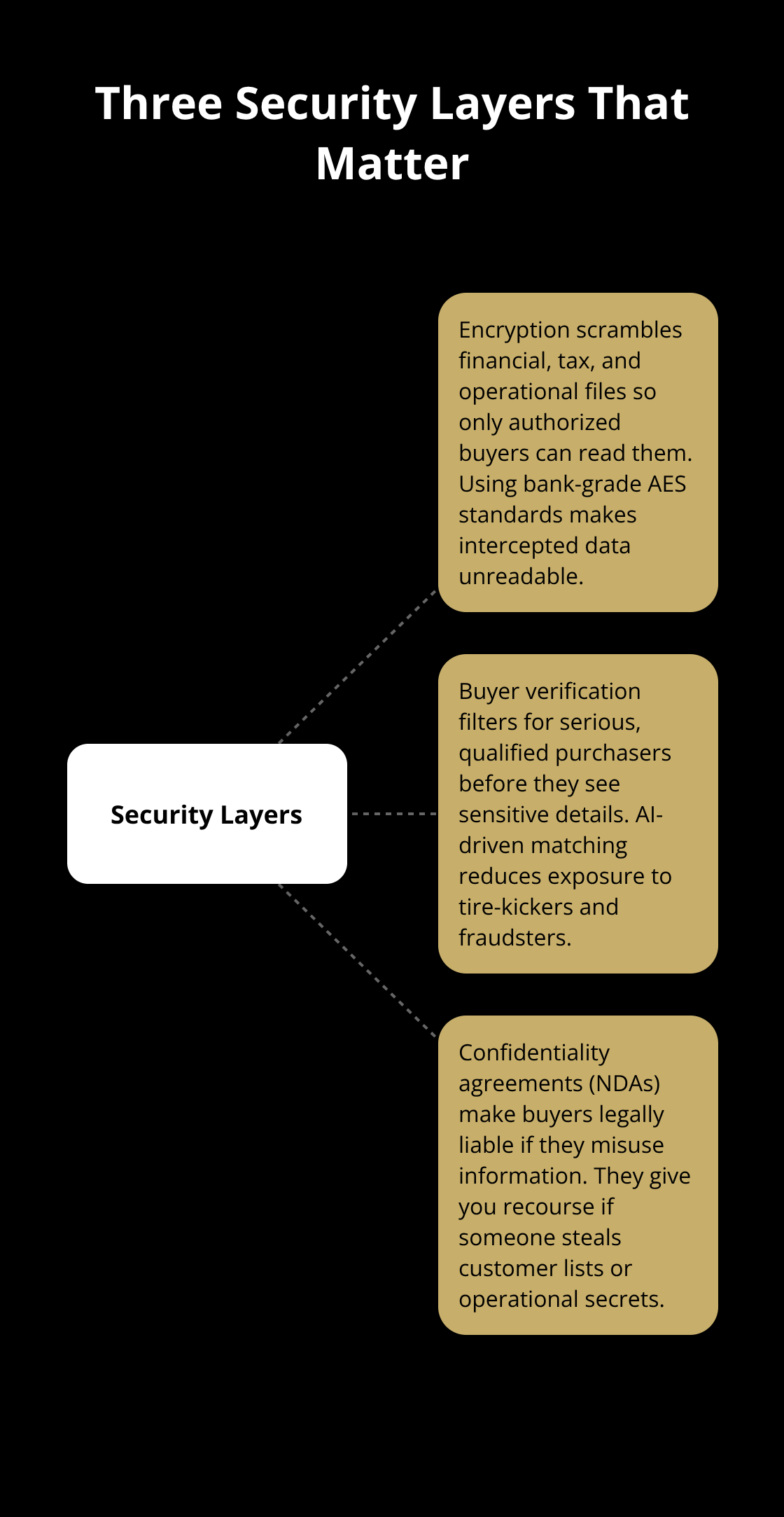
These agreements aren’t just paperwork-they give you recourse if someone steals your customer lists or operational secrets.
Why Data Breaches Cost More Than You Think
Most business sellers underestimate how much damage a single data leak causes. According to IBM’s 2023 Cost of a Data Breach Report, the average data breach costs $4.45 million, but for small business sales, the damage is often worse because sensitive operational details can be weaponized by competitors. Strict document management protocols prevent this by limiting who sees what information and when.
Instead of sending everything to every interested buyer, smart platforms use staged disclosure-buyers prove their credibility before accessing your most sensitive financial data. You should require non-disclosure agreements before sharing anything beyond basic business metrics. This approach protects your valuation and prevents competitors from accessing your operational playbook.
Working with Advisors Who Understand Confidentiality
Prioritize advisors who’ve handled confidential transactions before and carry errors and omissions insurance. These professionals understand that one careless email or unsecured file transfer can derail your entire sale and tank your business valuation. They know how to structure information access so that serious buyers get what they need while your most sensitive data stays protected.
The right advisor also manages the flow of information throughout your sale process, controlling which details reach which buyers at each stage. This staged approach builds momentum with qualified purchasers while keeping your competitive advantages hidden from those who won’t close. As you move forward, understanding these security measures sets the foundation for recognizing which platforms and advisors actually deliver the protection your business deserves.
Common Security Risks in Business Sales
Data breaches in business sales occur far more often than most sellers realize, and the consequences extend far beyond immediate financial loss. When your business financials, customer lists, and operational procedures leak during a sale process, competitors gain a roadmap to your success. Verizon’s 2024 Data Breach Investigations Report found that more than two-thirds of breaches involve a non-malicious human element-careless file sharing, weak passwords, or unsecured email remain the primary vulnerabilities in business transactions. The risk intensifies because business sale data contains everything a competitor needs: your profit margins, supplier relationships, pricing strategies, and customer acquisition costs. One leaked spreadsheet can tank your valuation before you even close a deal.
Fraudulent Buyers and Their Tactics
Fraudulent buyers pose an equally serious threat that most sellers underestimate. These actors pose as legitimate purchasers to access confidential information, then either steal intellectual property or use operational details to undercut your business. Some fraudsters request extended due diligence periods specifically to extract maximum information before disappearing.
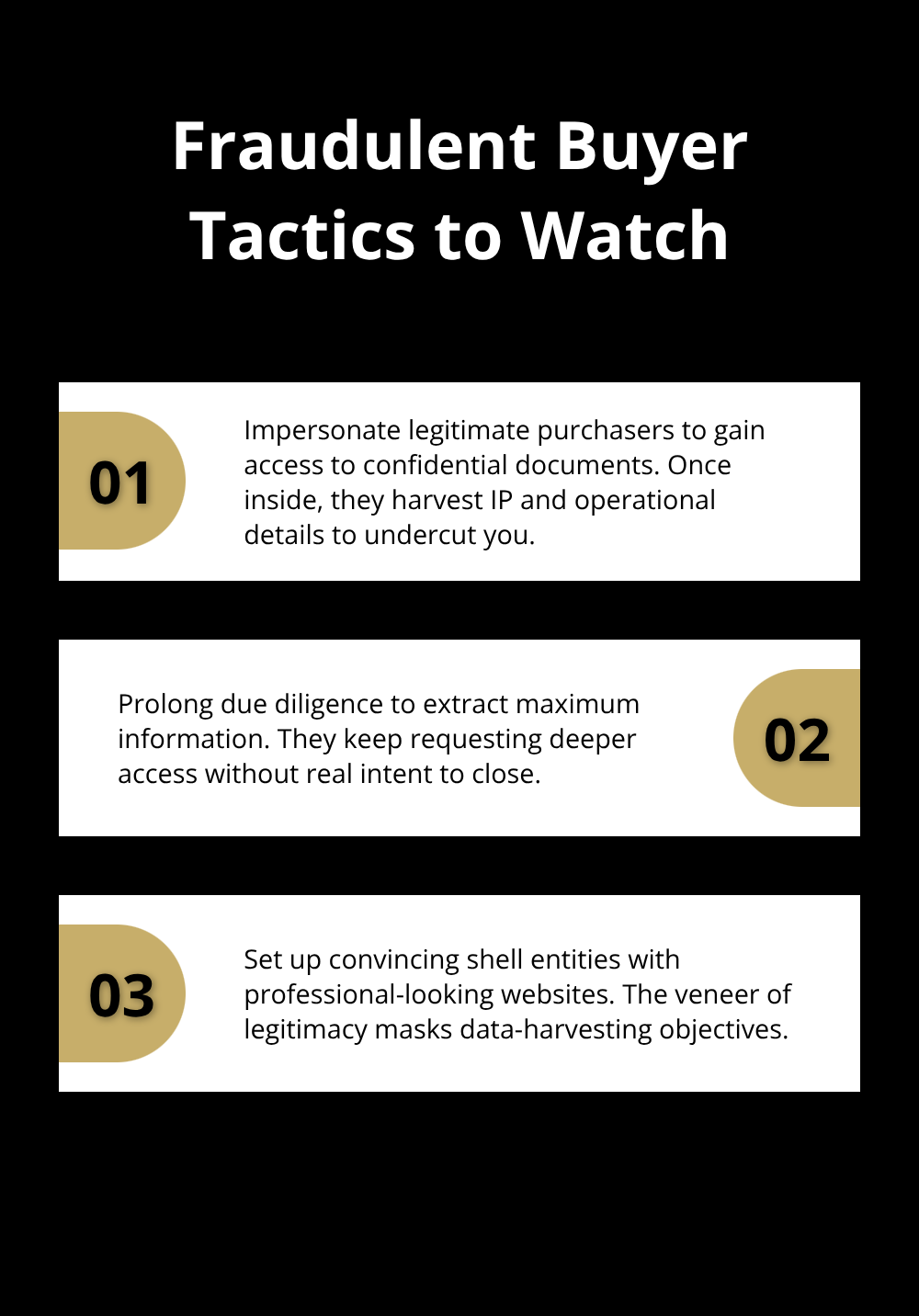
Legitimate buyers conduct thorough due diligence, but fraudsters accelerate their information gathering through manipulation. They request access to customer contracts, employee agreements, and financial records under the guise of standard due diligence, then use that access to identify which customers have the highest lifetime value or which suppliers offer the best margins. Some fraudsters create fake corporate entities with professional-looking websites to appear credible during initial conversations. Your advisor should verify buyer legitimacy through independent channels, not just accept information provided during negotiations. Platforms that use AI-driven buyer matching significantly reduce this risk by pre-screening purchasers before they access any confidential details.
Unauthorized Access to Sensitive Financial Information
Unauthorized access to your sensitive financial information happens through multiple vectors: phishing emails targeting your advisors, unencrypted file transfers, or buyers who share login credentials with unauthorized parties. The FBI’s Internet Crime Complaint Center reported cybercrime losses reached $12.5 billion in 2023. Your sale documents contain the exact information criminals need to impersonate your business, access your bank accounts, or manipulate your customer relationships.
Information Leaks Through Your Team
Your employees, accountants, and legal advisors can inadvertently expose sensitive sale information through unsecured communication channels. Email remains notoriously vulnerable, especially when advisors forward financial statements or customer lists to buyers without encryption. Document management platforms that track who accessed what information and when provide accountability and prevent casual sharing. Require that all advisors sign confidentiality agreements before accessing any sale materials, and specify that they cannot discuss your business with anyone outside their immediate team. The most dangerous leaks happen when employees find out about the sale before you’ve secured proper information controls, leading to loose conversations with competitors or customers.
These threats demand more than awareness-they require active prevention strategies that separate serious buyers from those who exploit the sale process for competitive advantage.
Best Practices for a Secure Business Sale Transaction
Select Platforms with Multi-Layer Security
The platforms you choose to sell your business on matter far more than most sellers realize. Prioritize platforms that implement multi-layer security from day one: encryption for data at rest and in transit, role-based access controls that limit which buyers see which documents, and audit trails that track every file access with timestamps and user identification. These aren’t optional features-they’re non-negotiable.
When you evaluate a platform, ask directly whether they use AES-256 encryption, whether they support staged disclosure (showing financial summaries before detailed P&Ls), and whether they provide downloadable access logs. Verify that the platform conducts buyer verification before granting access to confidential materials. AI-driven buyer matching filters out fraudsters and tire-kickers before they ever contact you, dramatically reducing your exposure to information harvesting. The platform should also require non-disclosure agreements electronically signed before any sensitive data transfer, with clear legal consequences for violations.
Implement Strict Document Management Protocols
Document management becomes your operational backbone during the sale. Implement a strict protocol where different buyer groups access different information levels based on their stage in the process. Initial-stage buyers should only see business summaries, revenue trends, and basic operational metrics. Only qualified buyers who’ve passed verification and signed NDAs should access customer lists, supplier contracts, and detailed financial statements. This tiered approach protects your valuation while maintaining buyer interest.
Within your own team, restrict document access to only those individuals who directly need it. Your accountant doesn’t need access to your customer acquisition costs, and your legal advisor doesn’t need your detailed supplier pricing. Create separate login credentials for each advisor, monitor who downloads what, and set automatic expiration dates on shared links-most platforms offer 7 to 14-day expiration windows that force buyers to request renewed access rather than storing documents indefinitely.
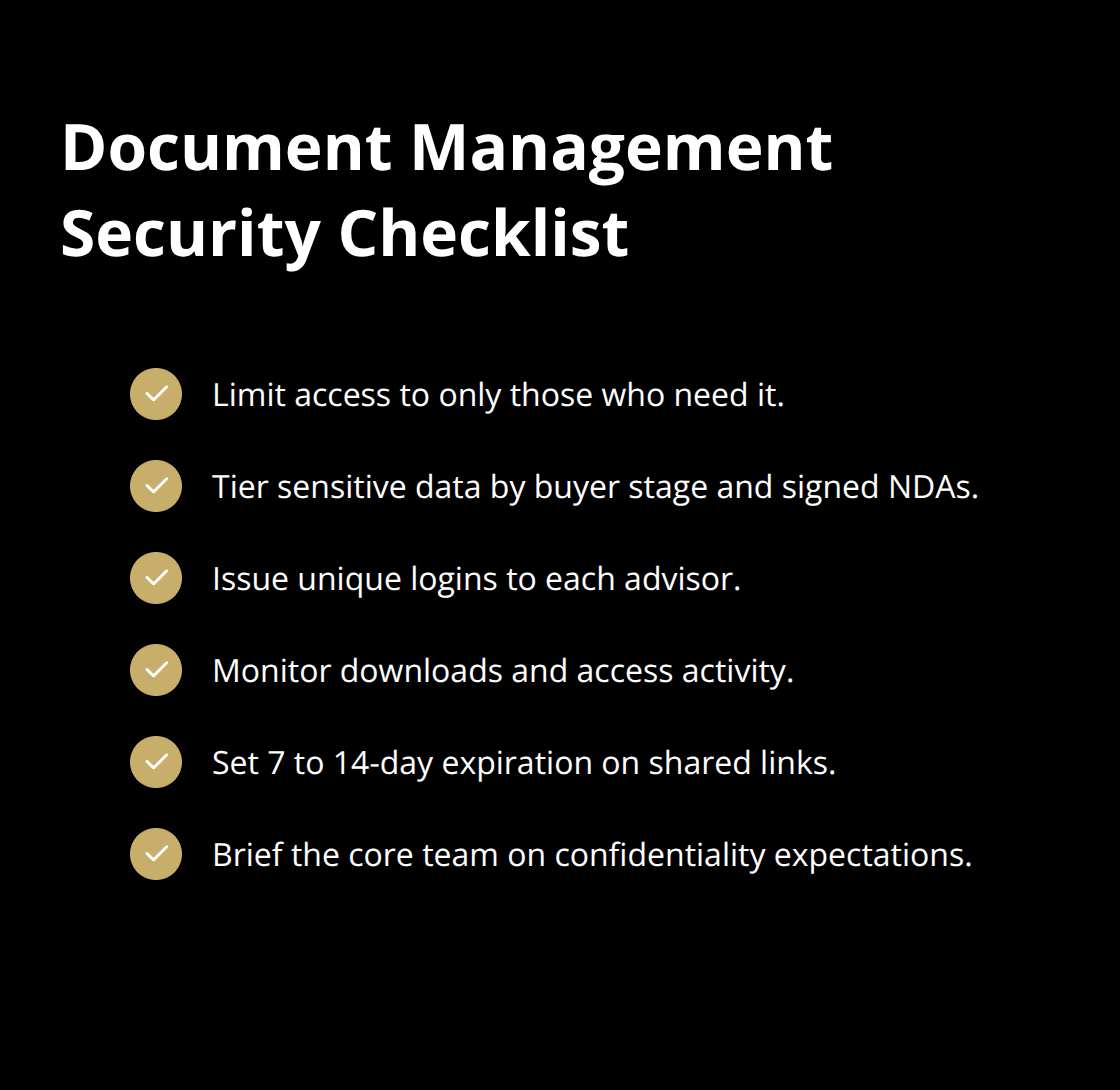
Your team members should understand that loose conversations about the sale constitute information leaks. Before your sale becomes public knowledge, brief your core team on confidentiality expectations and require written acknowledgment that they understand the consequences of unauthorized disclosure.
Work with Advisors Who Prioritize Confidentiality
Your advisors make or break your information security during the sale. Prioritize advisors with demonstrated experience handling confidential transactions and those who carry errors and omissions insurance-this coverage indicates they’ve faced consequences before and take security seriously. During your initial conversations, ask directly how they handle document sharing, whether they use encrypted email services, and what their protocols are for discussing your business with third parties. Weak advisors will give vague answers or claim email is fine; strong advisors will describe specific encryption tools, secure file transfer methods, and restrictions on team discussion.
Your advisor should also manage information flow strategically, controlling which details reach which buyers at each stage. This requires discipline-many advisors want to answer every buyer question immediately, but the best advisors push back when requests exceed what’s necessary at that stage. Your sale process should have clear gates: pre-qualification stage, initial due diligence stage, and deep due diligence stage, with progressively more sensitive information released only as buyers advance. This protects you from competitors who pose as serious buyers and accelerate their information gathering to extract maximum competitive intelligence before vanishing.
Final Thoughts
Selling your business online exposes you to real threats, but a secure online sale process eliminates most of them. Encryption, buyer verification, confidentiality agreements, staged disclosure, and strict document management work together to protect your financial data, operational secrets, and competitive advantages throughout the transaction. Trust isn’t abstract when you’re selling a business-it’s the foundation that separates a smooth sale from one derailed by data leaks, fraudulent buyers, or information harvesting.
The right platform and advisors make this tangible by implementing multi-layer encryption, verifying buyers before granting access, tracking document access with audit trails, and managing information release strategically across sale stages. They understand that one careless email or unsecured file transfer costs you far more than the effort required to prevent it. When your buyer knows your information stays protected, they move faster through due diligence and commit with confidence.
Start your secure business sale with Unbroker and experience how the right platform protects what you’ve built. We combine AI-driven buyer matching to filter serious purchasers with expert advisors who prioritize confidentiality and national marketing to reach qualified buyers. You pay only a 6% success fee when your business sells-no hidden costs, no upfront charges.