Selling a software consultancy requires more than a good pitch. You need positioning, negotiation strategy, and access to the right buyers.
At Unbroker, we’ve helped consultancy founders navigate this process. This guide covers the software consultancy sale tips that actually move deals forward.
What Makes Your Consultancy Worth Buying?
Buyers of software consultancies aren’t shopping for potential. They’re buying revenue, client relationships, and a team that stays in place. This means your positioning must focus on what’s already working, not what could work someday. The difference between a consultancy that sells and one that languishes on the market often comes down to how clearly you demonstrate three things: what sets you apart, how consistently you’ve grown, and whether clients actually stick around.
Show What You Actually Do Better
Most consultancies describe themselves in ways that apply to dozens of competitors. You need specificity about your service offerings that a buyer can immediately understand and value. Instead of saying you do software consulting, identify the exact problems you solve and for which industries. If you specialize in helping financial services companies migrate legacy systems to cloud infrastructure, state that explicitly. If you focus on implementing AI solutions for manufacturing firms with 50 to 500 employees, be direct about it. Buyers evaluate consultancies based on how defensible their market position is, and vague positioning signals weakness.
Document your expertise through concrete examples: specific technologies your team has mastered, certifications your staff holds, methodologies you’ve developed internally. A buyer wants to know that losing your team means losing competitive advantage, not just losing bodies. Your unique approach to client work, your proprietary frameworks, or your specialized team skills should be documented clearly because these become the foundation of valuation.
Prove Your Business Works Consistently
Revenue growth matters, but consistency matters more. A consultancy that grew 40% one year then flat-lined looks riskier than one that grew steadily at 15% annually. Buyers conduct detailed financial reviews, so prepare audited or reviewed financial statements for at least the past three years. Show your gross margins, utilization rates, and how revenue breaks down by service line and client.
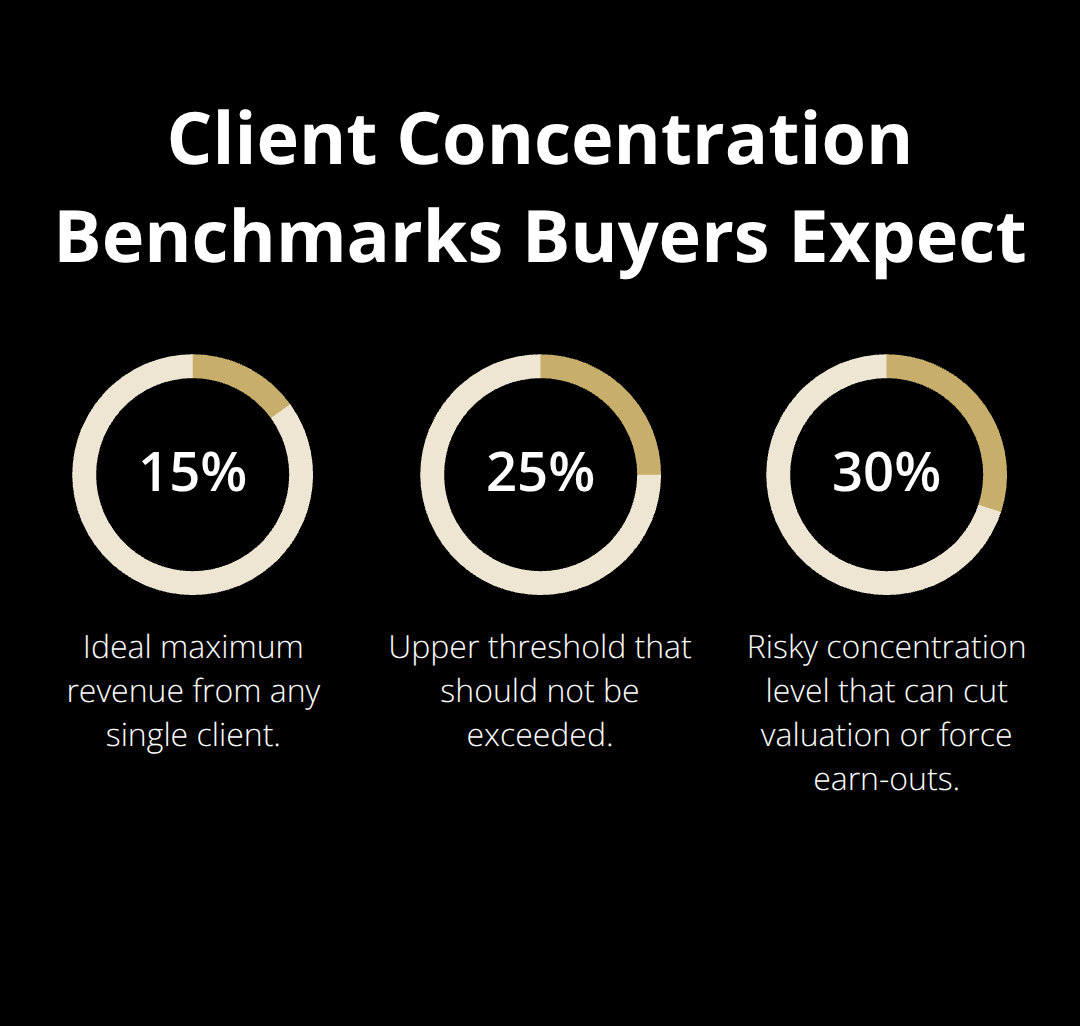
Demonstrate that your growth isn’t dependent on one or two massive clients or key individuals. If 30% of revenue comes from a single client, a buyer will discount your valuation significantly or demand earn-out provisions.
Show diversification across clients, service lines, and revenue streams. If you have recurring revenue contracts, highlight these separately because they’re worth more than project-based work. Track and present your average contract value, repeat business rates, and the average length of client relationships. These metrics tell a buyer how stable your revenue actually is.
Client Retention Is Your Strongest Asset
Long-term contracts and high retention rates separate valuable consultancies from commodity shops. If your clients stay with you for years and expand their spending over time, that’s the story buyers want to hear. Track this metric carefully and prepare a list of your largest clients, how long they’ve been with you, and whether their spending has grown or declined.
Buyers will conduct reference calls with your top clients, so make sure those relationships are solid before you start a sale process. Document the reasons clients stay: long-term contracts, strong relationships with their teams, specialized expertise they can’t find elsewhere, or consistent delivery of results. If you’ve lost significant clients, have a clear explanation ready. Sometimes it’s market-driven or the client went out of business. Other times it signals a problem.
Prepare a client concentration analysis showing that no single client represents more than 15% of revenue ideally, and certainly not more than 25%. A buyer inheriting a client base where one customer represents half your revenue is inheriting substantial risk. Finally, formalize your key client relationships in writing. If your largest contracts exist only through personal relationships without formal documentation, formalize those relationships now.
A buyer needs confidence that client relationships survive the transition of ownership.
With your consultancy positioned as a stable, defensible business with strong client relationships, you’re ready to engage with potential buyers who understand your value. The next step involves understanding what those buyers actually want and how to negotiate from a position of strength.
Strategic Negotiation Tactics for Software Consultancy Sales
Understand What Buyers Actually Prioritize
Most consultancy founders approach negotiations thinking price is the main variable. It’s not. Buyers of software consultancies care about three things: whether your team stays, whether your clients stay, and whether the deal structure protects them from risk. Understanding what a buyer actually prioritizes changes how you negotiate everything from valuation to earn-outs.
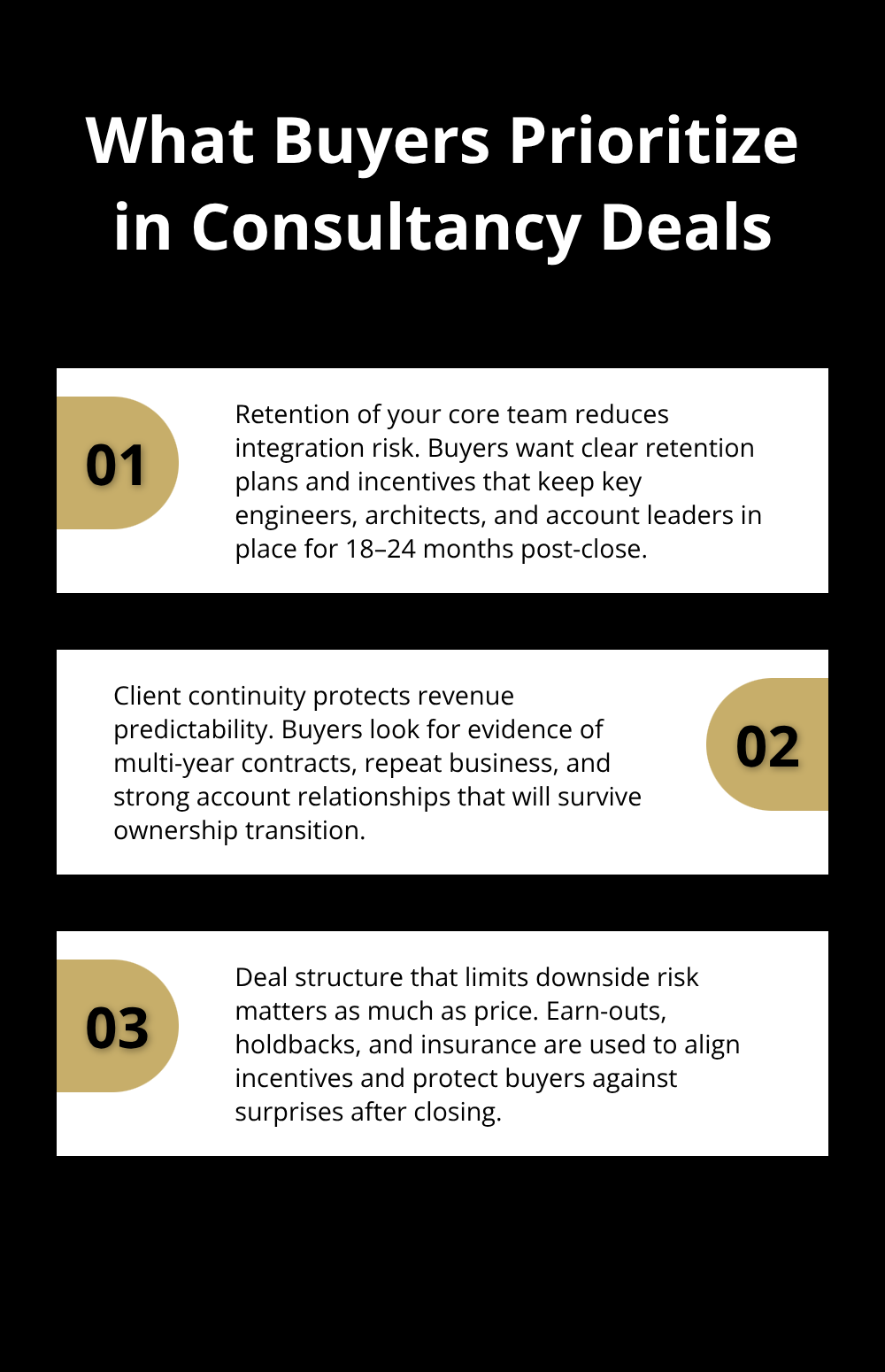
A strategic buyer acquiring your consultancy isn’t just buying revenue-they’re buying integration risk. They worry that your team will leave after the deal closes, that clients will follow key employees out the door, or that your service delivery will degrade under new ownership. The more you address these concerns proactively, the stronger your negotiating position becomes.
Identify the Specific Problem You Solve for the Buyer
Start by identifying what specific problems your consultancy solves for the buyer. If they acquire your firm, what gap do you fill in their service portfolio? Do you bring specialized expertise they lack? Do you add geographic coverage? Do you give them access to a particular industry vertical they want to expand into? Understanding this changes everything about how you present your team and negotiate terms.
A buyer acquiring you to fill a skill gap values your technical expertise and the specific people who hold that expertise. They’ll want retention agreements with your key engineers and architects. A buyer acquiring you for market access values your client relationships and your sales team. They’ll want your account managers locked in. A buyer acquiring you to expand into a new vertical wants your industry knowledge and your client base. They’ll want your consultants and your existing clients to commit to multi-year contracts with the new owner.
Once you know what problem you solve for the buyer, you can structure negotiations around protecting what they actually value. If your technical team is the asset, negotiate higher base compensation and retention bonuses that keep them in place for 18 to 24 months post-close. If your clients are the asset, structure the deal so your account managers have financial incentives tied to client retention rates.
Structure Deal Terms Beyond Purchase Price
Most consultancy sales fail because the selling founder thinks the buyer cares about valuation multiples when the buyer is actually obsessed with execution risk. A buyer will accept a lower multiple if you can reduce their risk. They’ll pay a higher multiple if you eliminate their concerns.
Terms beyond purchase price matter far more than most founders realize. A $5 million deal with $3 million paid at close and $2 million in seller financing over three years is fundamentally different from a $5 million deal where $1 million depends on client retention hitting 95% two years post-close. The second structure is riskier for you because you lose control after closing but still have compensation tied to metrics you can’t fully manage.
Negotiate for the largest cash payment at close. If a buyer demands an earn-out component, cap it at 10 to 15% of total consideration and keep the measurement period short-12 months maximum. Two-year earn-outs are common in consultancy deals but they’re dangerous because so much can change in your business after you’ve stepped back from day-to-day management.
Protect Yourself with Smart Earn-Out and Insurance Provisions
Push for earn-out metrics tied to things you can actually control: revenue retention rates, project margins, or employee retention. Avoid earn-outs tied to new revenue growth because that depends on the buyer’s sales execution, not your business fundamentals. If the buyer insists on longer earn-out periods, demand a higher base purchase price to compensate for the risk and illiquidity.
Also negotiate retention agreements separately from purchase price. Don’t let a buyer bundle team retention into the purchase price and then claim they’re paying you less because your team might leave. Retention bonuses for key employees should come from the buyer’s operating budget post-close, not from your sale proceeds. This protects you from a scenario where the buyer cuts costs by letting your team leave and then claims they don’t owe you earn-out payments because revenue declined.
Get representations and warranties insurance. This protects you from post-close disputes about what you represented about your business. Most consultancy sales include representations about client contracts, revenue accuracy, and employee agreements. If a buyer later claims your revenue was overstated or a major client wasn’t under contract, representations insurance covers your liability rather than forcing you to defend yourself in litigation.
With your negotiation strategy in place and your deal terms structured to protect your interests, you’re ready to focus on the final critical piece: getting your consultancy in front of the right buyers who will recognize and reward the value you’ve built.
Getting Your Software Consultancy in Front of the Right Buyers
Activate Your Professional Network First
Strategic buyers of software consultancies actively search for acquisition targets, but they search through specific channels. Most consultancy sales happen because someone in your network connected you with someone at a buying firm, or because you worked with an advisor who maintained direct relationships with active acquirers. Cold outreach to potential buyers rarely succeeds because consultancy acquisitions are relationship-driven deals.
Your existing professional network represents your strongest asset. Map out who you know in larger consulting firms, systems integrators, technology companies, and private equity firms that acquire businesses in your space. These aren’t abstract contacts-they’re specific people you’ve worked with, competed against, or met at industry conferences. Reach out directly to decision-makers at firms that would benefit from acquiring your service offerings. If you specialize in cloud migration for financial services, contact the heads of professional services at firms already selling cloud solutions to banks. They understand your value immediately because you fill a gap in their delivery capability.
Frame these conversations as exploratory rather than as a sale. You’re testing whether an acquisition makes sense for both parties. This approach generates inbound interest from buyers who already see the strategic fit.
Work with Advisors Who Know Your Market
The second critical mistake founders make is handling the sale process alone. You need an advisor who understands the software consultancy market specifically-not a general business broker or an M&A firm that treats all service businesses identically. Advisors who specialize in consultancy sales know which buyers are actively acquiring, what multiples they pay, and what deal structures they prefer. They maintain relationships with private equity firms focused on professional services rollups, with larger consulting firms expanding their service lines, and with technology companies building out delivery capabilities.
An advisor handles the marketing of your business to qualified buyers, manages confidentiality throughout the process, and structures conversations so you remain focused on running the business. They also bring objectivity to negotiations-founders often leave money on the table because they’re emotionally attached to the business or they underestimate their leverage. Advisors who work in this space understand the nuances of consultancy valuations and can position your firm effectively against comparable transactions.
Target Acquirers with Strategic Alignment
Targeted marketing to reach strategic acquirers means more than posting on business sale websites. It means direct outreach to firms that have acquisition strategies aligned with what you offer. Research which firms made acquisitions in your space in the past 18 months. Look at their investor presentations or earnings calls to understand their growth strategy. If a larger consulting firm stated publicly that they’re expanding into AI implementation or cloud architecture, and that’s what you do, that’s a buyer worth approaching.
Industry conferences where your potential acquirers attend give you face-to-face opportunities. Speaking at these events or sponsoring them increases your visibility with the right audience. Your goal is to be known in your market as a quality consultancy with strong client relationships and a capable team-which makes you attractive when acquisition conversations begin.
Leverage Syndication and Targeted Outreach
Advisors who specialize in consultancy sales market your business through syndication partners that reach qualified buyers actively searching for acquisitions. This targeted distribution ensures your business reaches decision-makers at firms with genuine acquisition appetites and strategic fit. The combination of your network activation, advisor relationships, and syndicated marketing creates multiple pathways for the right buyers to find you.
Final Thoughts
Selling your software consultancy comes down to three fundamentals: positioning your business as a stable, defensible asset with strong client relationships; negotiating deal terms that protect your interests while addressing buyer concerns; and getting in front of acquirers who see strategic value in what you’ve built. Most consultancy founders focus on valuation multiples when they should focus on reducing buyer risk. Buyers pay premiums for businesses where the team stays, clients remain committed, and revenue is predictable.
Preparation separates successful sales from drawn-out processes that drain your energy and distract from running the business. Document your unique service offerings, your financial performance over three years, and your client retention metrics. Formalize key client relationships in writing and identify which buyers would benefit most from acquiring your firm. Structure your deal terms to protect yourself from post-close disputes and extended earn-out periods that leave you exposed (aim for a maximum 12-month earn-out period tied to metrics you control).
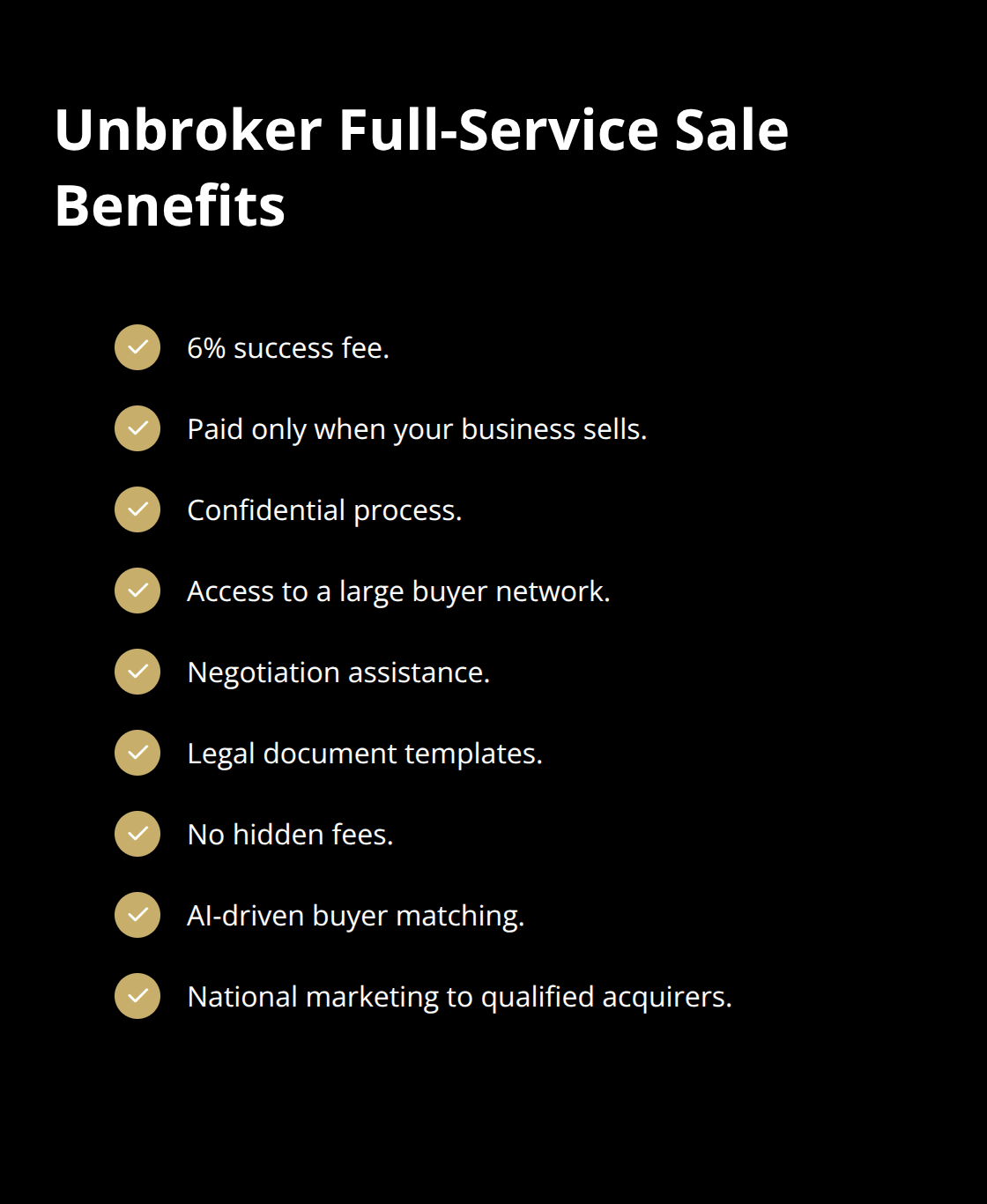
We at Unbroker help consultancy founders navigate the entire sale process with expert advisors, AI-driven buyer matching, and national marketing that reaches qualified acquirers. Our Full Service Business Sale charges a 6% success fee, paid only when your business sells, and you get a confidential process, access to a large buyer network, negotiation assistance, and legal document templates without hidden fees.
Start your consultancy sale journey with Unbroker and connect with buyers who recognize the value you’ve created.