Selling your business is one of the biggest financial decisions you’ll make. Most owners underestimate how much preparation is required to maximize value and close a deal smoothly.
We at Unbroker have helped hundreds of business owners navigate this process. This exit readiness checklist covers the financial, operational, and legal steps that separate successful sales from problematic ones.
What Financial Records Do Buyers Actually Want to See?
Buyers don’t care about perfect financial statements. They care about accurate, defensible ones. The difference matters enormously during due diligence. We see deals stall because sellers present financial data that can’t be verified or worse, data that contradicts tax filings. A buyer’s accountant will reconstruct your financials from tax returns anyway, so inconsistencies between your P&L and your 1040 or corporate return become immediate red flags.
Start by pulling three years of tax returns alongside your internal financial statements. Line them up side by side. Any material differences need explanation and documentation now, not during due diligence when a buyer interprets gaps as intentional obfuscation. If your business uses cash accounting but reported accrual numbers internally, standardize everything to accrual basis before presenting to buyers. This single step eliminates weeks of back-and-forth negotiation.
Document your revenue recognition policies in writing. If you deferred revenue, recorded customer deposits differently in different years, or adjusted for returns inconsistently, create a summary explaining your methodology. Buyers expect some variation in accounting practices across small businesses, but they need to understand it upfront rather than discover it during their audit.
Verify Your Assets with Hard Evidence
Physical assets require an actual count and valuation, not estimates. Equipment depreciation schedules must match your tax returns exactly. If you have machinery, vehicles, or inventory, obtain an independent appraisal for significant items. A buyer won’t trust your $500,000 equipment valuation if you can’t produce recent maintenance records or third-party assessment.
Inventory must be physically counted within 30 days of your sale process starting. The difference between your books and actual inventory becomes a working capital adjustment that reduces your sale price dollar-for-dollar. Intangible assets like customer lists, proprietary processes, or brand value require separate treatment. These don’t appear on your balance sheet, but they drive acquisition multiples. Create a detailed inventory of what makes your business valuable beyond the hard assets. If you have customer contracts with renewal rates above 90%, document that fact. If your operations depend on a specific software system you’ve customized, identify that as an asset.
Surface All Liabilities Before a Buyer Does
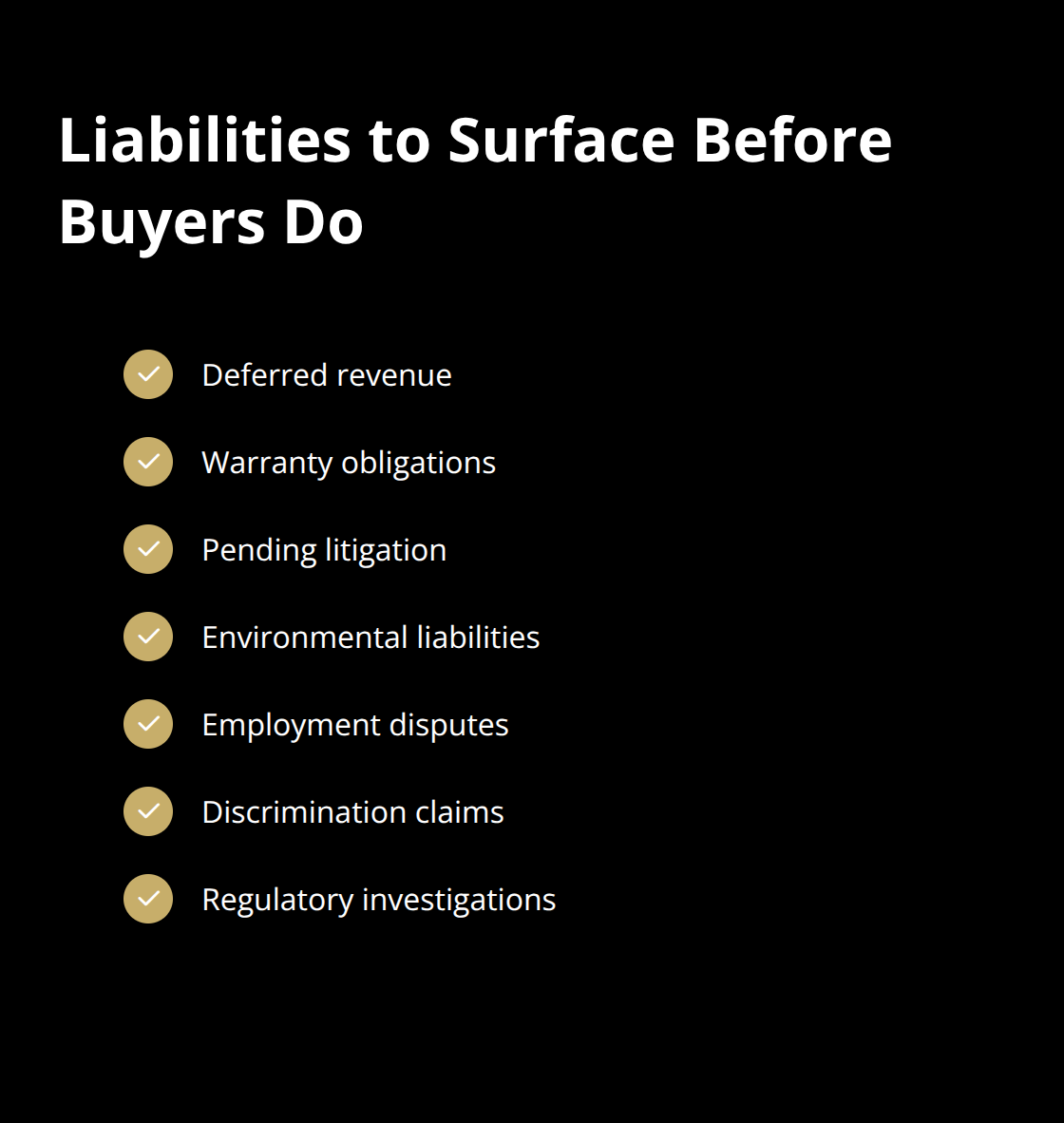
Identify liabilities you might have overlooked. Deferred revenue, warranty obligations, pending litigation, and environmental liabilities all matter. Many owners overlook contingent liabilities until a buyer’s legal team surfaces them. If you’ve had any employment disputes, discrimination claims, or regulatory investigations in the past five years, document the outcomes and any settlements.
Build a Data Room That Moves Deals Forward
Buyers move fast when they’re serious, and slow document retrieval kills momentum. Create a centralized data room with clear folder structure. Separate documents by category: tax returns and financial statements, bank statements and reconciliations, accounts receivable aging, accounts payable aging, fixed asset schedules, loan documents and debt schedules, lease agreements, customer contracts, and employee agreements.
Provide at least two years of monthly financial statements, preferably three. Include balance sheets, income statements, and cash flow statements. If your business is seasonal, explain the seasonal patterns with specific months and dollar amounts. A buyer needs to understand whether your Q4 revenue spike is normal or a one-time event.
Back up all numbers with source documentation. If your revenue comes from three major customers, show contracts proving those relationships. If you claim cost of goods sold at 35%, provide vendor invoices and production records supporting that figure. Buyers will sample your documentation, not review every transaction, but they’ll verify the largest and most unusual items.
Prepare Addback Schedules That Withstand Scrutiny
Prepare a detailed explanation of any adjustments you’ve made to reported earnings. If you added back owner compensation, vehicle expenses, or one-time costs, create a clear schedule showing what was added back and why. This addback analysis directly impacts your valuation, so accuracy matters intensely. A buyer will challenge any adjustment that looks inflated or unsupported.
Once your financial records pass this level of scrutiny, you’ve eliminated the most common friction point in due diligence. The next phase requires you to examine the operational backbone of your business-the systems, processes, and legal agreements that actually run it day-to-day.
Operational and Legal Readiness
Document Every Critical Process
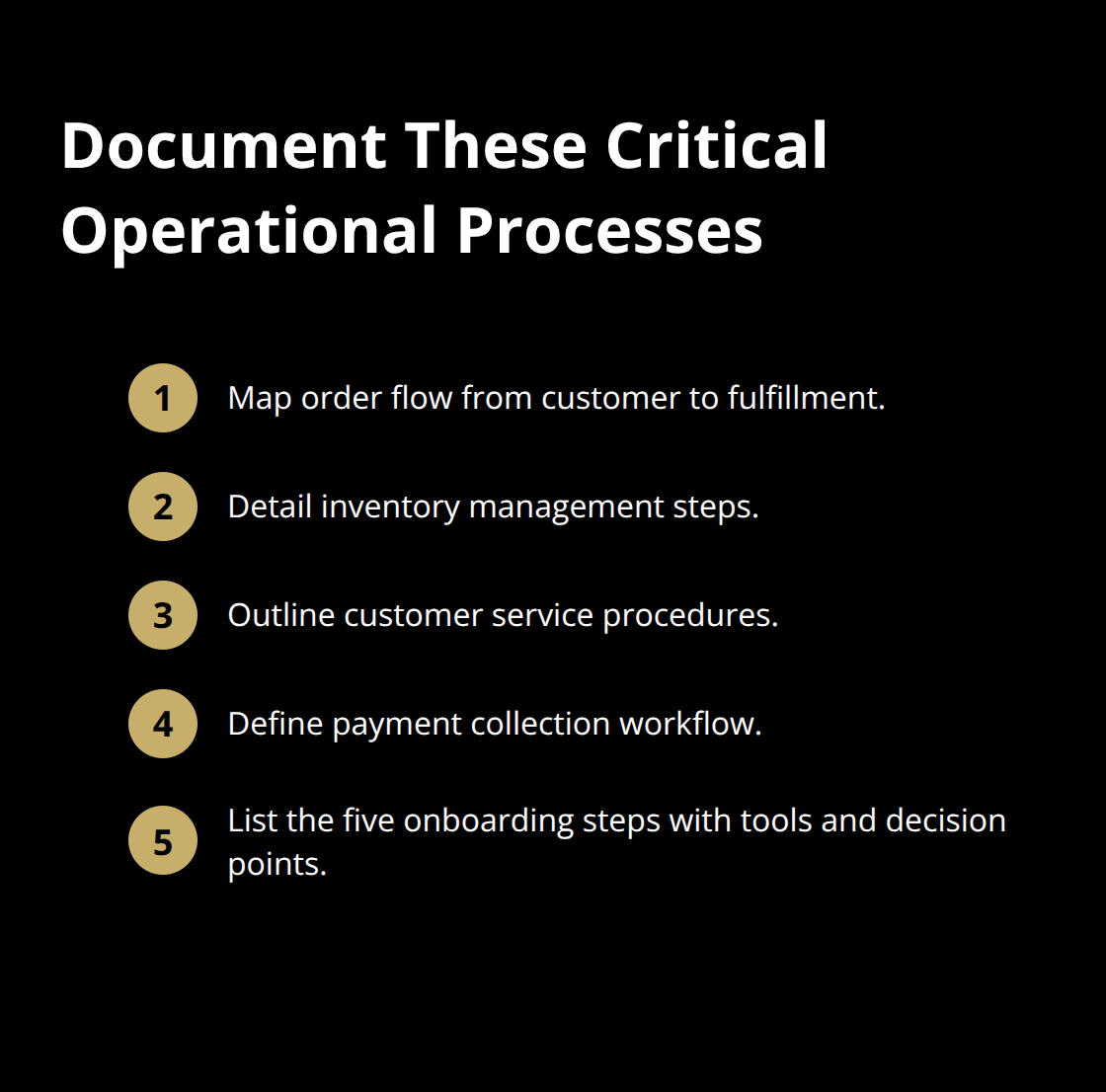
Buyers investigate operational systems obsessively because they’re purchasing a business that must function without you. A buyer needs documented proof that your business doesn’t depend on your personal relationships, your undocumented processes, or your memory. Map every critical operational process and write it down step-by-step, not as vague descriptions but as actual procedures someone could follow on day one.
Start with how orders flow from customer to fulfillment, how you manage inventory, how you handle customer service, and how you collect payments. If your customer onboarding takes five steps, list those five steps with specific tools and decision points. Buyers treat missing documentation as operational risk and discount your valuation accordingly.
Create templates for recurring tasks: how you qualify leads, how you price jobs, how you handle customer complaints, how you manage vendor relationships. These templates become the operational manual a buyer will use post-acquisition. If your business relies on a specific software system, document the access credentials, licensing terms, and any customizations you’ve made. Operational systems that exist only in your head are worthless to a buyer.
Protect Your Software and Workflows
If you’ve built custom workflows in your accounting software or CRM, create screenshots and written explanations of those workflows. Document how data flows between systems and which team members maintain each system. A buyer needs to understand whether your operations depend on a single person’s expertise or whether multiple team members can execute the same tasks.
Identify any software licenses tied to your personal name or email address. Transfer these to a business email account before the sale process begins. The buyer and seller may agree to transfer all necessary documentation, permits, and licenses for continuity in meeting regulatory requirements. If you’ve customized third-party software, obtain written confirmation from the vendor that the buyer can continue using those customizations post-acquisition. Some vendors restrict customizations to the original licensee, which creates post-closing problems.
Review Contracts for Hidden Obstacles
Pull every contract your business has signed: customer agreements, vendor contracts, lease agreements, loan documents, employment agreements, and non-compete clauses. A buyer’s legal team will examine these exhaustively because contract terms directly impact post-acquisition obligations and liabilities.
Key customer contracts deserve special attention. If your top three customers represent 40% of revenue, the buyer needs to verify those contracts explicitly allow assignment to a new owner. Many customer agreements include change-of-control clauses that let customers terminate if ownership changes. Contact these customers now and get written confirmation they’ll continue working with the new owner. Losing major customers after the sale destroys value and creates post-closing disputes about the final purchase price.
Surface Legal Issues Before Due Diligence
If you have any pending litigation, regulatory investigations, or employment disputes, disclose these immediately and provide documentation of the status and potential financial exposure. Undisclosed legal problems discovered during due diligence tank deals faster than almost anything else.
If you operate under licenses or permits, verify these are current and transferable to a new owner. Some industries require specific licensing for the buyer to operate legally, and license transfers can take months. If your business has environmental compliance obligations, document your compliance history. If you’ve ever had customer complaints about product safety, quality, or service failures resulting in refunds or chargebacks, create a summary showing the volume and resolution.
These operational and legal foundations determine whether a buyer can actually run your business after closing. The next phase focuses on strengthening the business itself-the customer relationships, management capabilities, and operational efficiency that directly drive your sale price.
Maximizing Business Value Before Sale
Customer Concentration Determines Your Valuation
Customer concentration is the silent killer of business valuations. A buyer analyzing your revenue stream will immediately identify whether your cash comes from three customers or three hundred.
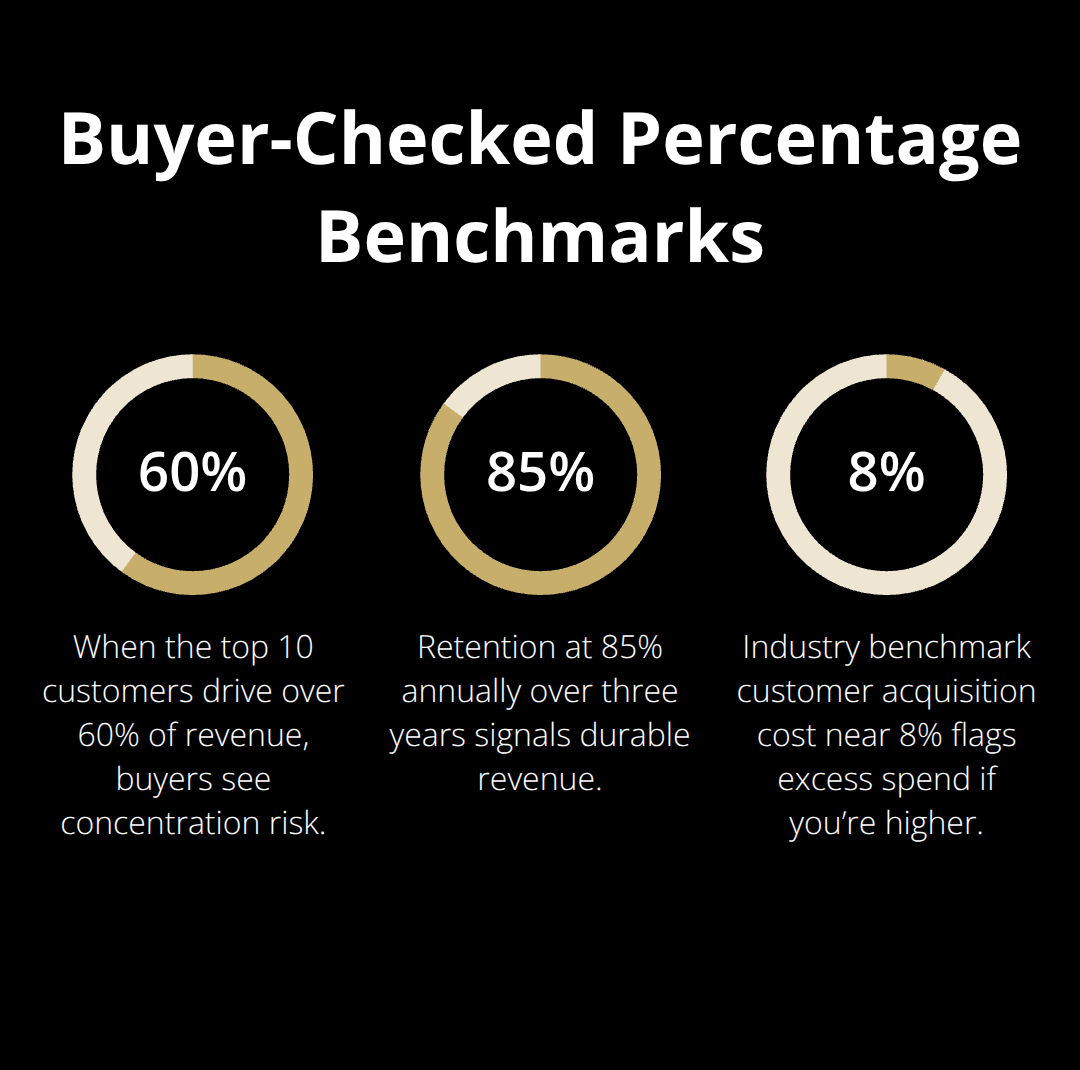
If your top ten customers represent more than 60% of revenue, buyers apply a concentration discount that can reduce your valuation by 20-30%. The math is straightforward: a buyer assumes customers can leave, and the bigger your dependence on a few relationships, the riskier the acquisition.
Map your customer revenue now and identify which relationships exist because of personal trust in you versus which ones are contractually locked in. The customers who work with you primarily because they know you personally are the highest-risk category for a buyer. Contact your top twenty customers this quarter and shift the relationship from you to your business. Introduce your operations manager or account manager as the primary contact. Have that person lead the next three customer meetings. If customers still reach out to you directly, redirect them through your team. This transition feels uncomfortable but it’s non-negotiable for maximizing your exit value.
Document your customer retention rate with specificity. If you’ve retained 85% of customers annually over the past three years, that’s a strong signal. If you can’t articulate your retention rate because you’ve never tracked it, start now. Measure which customers renewed their contracts, which ones left, and why. Buyers want defensible numbers, not vague claims about loyalty.
Build Management Strength That Survives Without You
The most valuable businesses operate through documented systems and capable teams, not through the owner’s daily involvement. Identify your three most critical operational roles and assess whether multiple people can perform those functions or whether they depend entirely on one person’s knowledge. If your lead salesperson is the only person who understands your pricing strategy or your production manager is the only person who knows how to optimize your manufacturing process, you have a critical vulnerability that crushes your valuation.
Cross-train your second-strongest person in each critical function immediately. Document the knowledge transfer and track competency through actual job performance, not just training completion. When a buyer evaluates your management team, they’re asking whether the business survives if someone leaves post-acquisition. A buyer will also examine your management bench strength by looking at your organizational chart, compensation structure, and promotion history. If everyone reports directly to you, your business looks dependent on your leadership. If you have three layers of management with clear reporting lines and decision-making authority distributed through those levels, a buyer sees institutional capability.
Weak management teams sell at different multiples depending on industry and market conditions. Strong management teams with documented processes and proven execution command higher valuations. That difference is worth hundreds of thousands of dollars.
Eliminate Operational Bottlenecks Before Due Diligence
Address operational bottlenecks that slow revenue or inflate costs. Walk through your actual operations and identify where work stalls, where manual processes exist that could be automated, or where quality issues force rework. If your order fulfillment takes eight days when competitors deliver in three, that’s a vulnerability. If you’re spending 15% of revenue on customer acquisition when industry benchmarks show 8%, that gap represents inefficiency eating your profit.
Buyers conduct operational due diligence specifically to find these problems. They’ll identify them anyway, but if you fix them first, you demonstrate management competence and you keep the value you create. A manufacturing business improved their production cycle time through process documentation and equipment reallocation in the three months before their sale process. That improvement alone added significant value to their valuation because it proved their operations could scale without proportional cost increases.
Start with your three biggest operational costs and ask whether each one delivers proportional value. If not, cut them or redirect them before a buyer does it post-acquisition.
Final Thoughts
You’ve reviewed the financial, operational, and legal foundations that separate businesses ready for sale from those that aren’t. Buyers pay for defensibility-accurate financial records that match your tax returns, documented processes that don’t depend on you personally, contracts that allow customer relationships to transfer, and a management team that can operate without your daily involvement directly impact your sale price. A business that demonstrates these strengths commands higher valuations and attracts serious buyers quickly.
Start with your financial records and data room because these create the most friction during due diligence, then identify your top ten customers and shift relationships away from you to your team. The businesses that sell fastest and at the highest multiples have documented processes and capable teams in place before the sale process starts (which is exactly what your exit readiness checklist helps you verify). Professional guidance matters because the sale process involves tax strategy, legal compliance, valuation methodology, and buyer psychology that most owners navigate alone.
We at Unbroker help business owners navigate this complexity with expert advisors, AI-driven buyer matching, and a structured process designed to maximize your outcome. Visit Unbroker to explore how we support sellers through the entire exit process with a 6% success fee paid only when your business sells.