Selling a convenience store is not like selling a shop that just rings up merchandise. If you pump fuel, buyers will look at your tanks, your supply contract, your permits and the land under the building before they get excited about your inside sales. This guide walks through each of those areas so you know what a serious buyer will ask for.
You will get a plain-language look at how fuel and in-store profit differ, which records matter most for underground tanks, what a buyer’s environmental review involves, and which agreements and licenses may not transfer on their own. It ends with a pre-listing checklist you can start assembling this week. This is general information, not legal or tax advice, so confirm the details with your attorney and tax adviser.
Why a c-store sale is different: fuel brings sales, in-store brings profit
Fuel gets customers to your lot, but it is not where most of the profit tends to sit. NACS reported that in 2025, fuel accounted for 65.0% of sales dollars but 38.8% of gross profit dollars at convenience stores. Total U.S. convenience industry sales, in-store and fuel combined, were $817.5 billion in 2025.
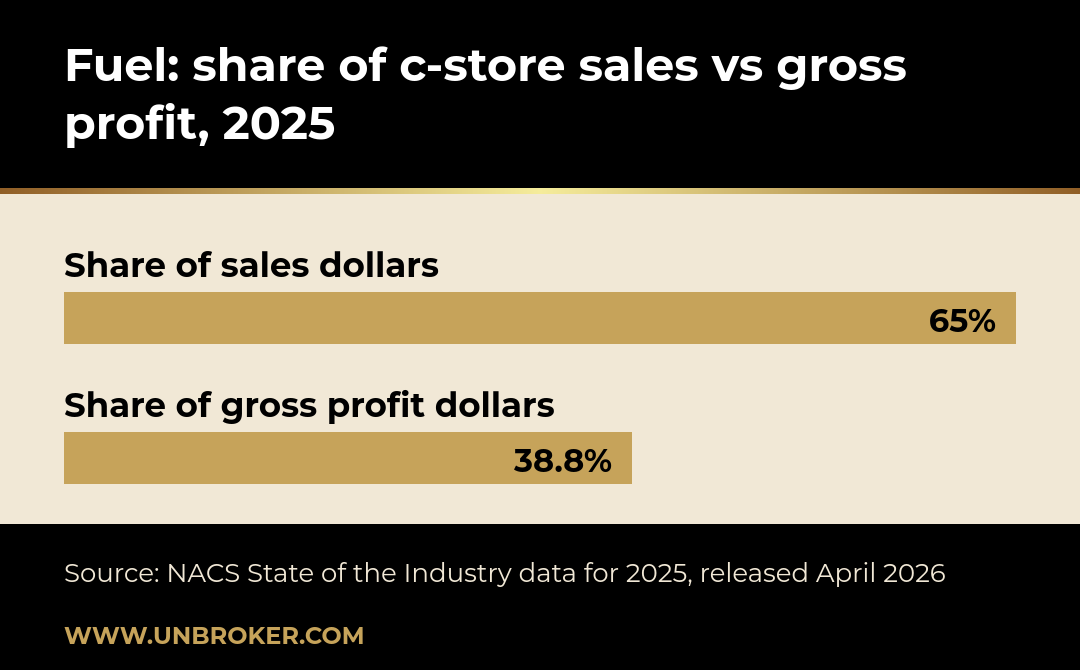
Those are industry-wide figures, not a forecast for your store. Still, they explain why a buyer will not stop at your top-line sales number. A site with huge gallons and thin in-store sales can look very different on paper from a site with modest fuel and a strong inside business, even if total revenue is the same.
The sale also carries risks a typical retail sale does not. Underground tanks come with regulatory history, and a fuel supply contract may limit what you can hand over. Environmental questions can follow the property, and some licenses are issued to you personally rather than to the business. None of this is a reason to hold back from selling. It is a reason to prepare early, because a seller who can answer these questions quickly tends to look more credible to buyers.
Know which buyers to expect and what they will want to see
The convenience industry is full of small operators. According to NACS, in its 2026 store count, 95,672 U.S. convenience stores, or 63% of the total store count, were owned by a company with 10 or fewer stores. That tells you the buyer pool for a single store often includes other small operators who already understand the business.
The same count, the 2026 NACS/NIQ TDLinx store count covering the end of 2025, put the U.S. at 151,975 convenience stores, down 280 (0.2%) from the prior count. The number of convenience stores selling fuel rose 768 (0.6%) to 122,620, the highest in eight years. In other words, the industry is roughly flat in store count, and fuel-selling sites are a large share of it.
Depending on your location and size, you may hear from several kinds of buyers:
- Owner-operators who want to run the store themselves and care most about daily cash flow, hours and staffing.
- Small multi-store operators who compare your site with their existing ones and focus on fuel supply terms and margins.
- Larger chains or regional groups that often bring their own brand and supplier relationships and run a more formal review process.
- Real estate-focused buyers who care most about the land, the lease and the environmental condition of the site.
Each group asks different questions, but all of them will want the same core package: clean financials, tank and compliance records, the supply agreement, licenses and permits, and the lease or deed. Our guide to preparing your records for due diligence covers the general habits that make this smoother.
Separate fuel profit from in-store profit in your financials
If your books lump everything together, a buyer has to guess which part of the business is doing the work. Do the splitting for them. Show fuel and in-store results side by side, month by month, so the picture is clear before anyone asks.
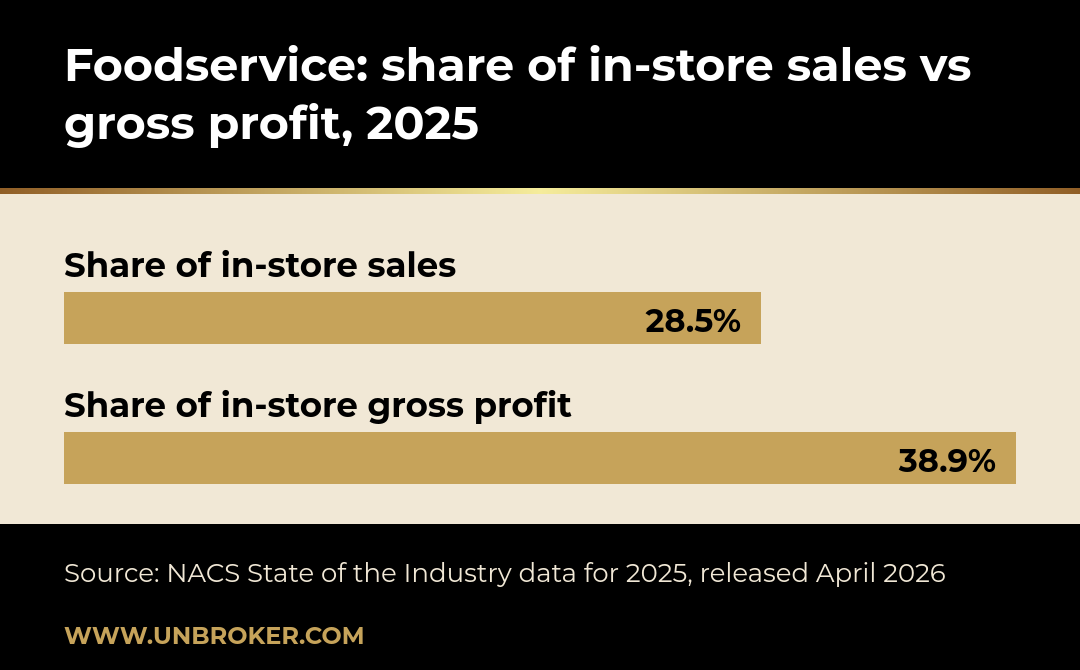
Inside the store, the mix matters too. In NACS’s 2025 data, foodservice made up 28.5% of in-store sales at U.S. convenience stores but 38.9% of in-store gross profit dollars. In 2005, foodservice was 11.9% of in-store sales. If you run a kitchen, a coffee program or prepared food, track it as its own line so a buyer can see what it contributes.
Costs deserve the same attention. NACS reported that credit and debit card fees at convenience stores hit a record $21.3 billion in 2025, and that direct store operating expenses rose 4.2% that year, the slowest increase since the COVID pandemic. Buyers know card fees are a real drag on a fuel-heavy business, so show your own processing costs clearly instead of burying them.
What to put in your financial package
- Monthly fuel gallons, fuel revenue and fuel cost of goods, shown separately from in-store results.
- In-store sales and gross profit by category, including foodservice, tobacco, beverages, packaged goods and any other major line.
- Card processing and other payment costs, listed on their own line.
- Payroll, utilities, insurance and repairs, with one-time costs and personal expenses flagged.
- Tax returns and profit and loss statements that tie to your bank deposits and point-of-sale reports.
When a buyer or valuation adviser normalizes your earnings, owner pay is treated differently depending on the earnings measure used. Ask your adviser which measure fits a store of your size and how your own pay will be handled. For a deeper look at the mechanics, see our post on business valuation add-backs.
Underground tanks: records, compliance and closure status
For a buyer, your tanks are both an asset and a potential liability, so your records carry a lot of weight. EPA has tracked the scale of tank problems nationally. As of September 2025, over 581,000 releases from federally regulated underground storage tanks had been confirmed nationwide since the program began. States and EPA in Indian country had cleaned up nearly 528,000 of them, and about 54,000 releases remained to be cleaned up. Buyers and their lenders know this history, which is why they check tank records carefully.
Ownership change notification
Under EPA’s 2015 revisions to the federal UST rules, a new owner who assumes ownership of an underground storage tank system must submit a notification of ownership change form to the implementing agency within 30 days of acquiring it. That requirement has applied since October 13, 2015, and states may add their own requirements. The obligation sits with the new owner, but a smooth handoff is easier when you hand over complete tank information and know what your state agency expects.
Designated operators and training
EPA’s 2015 UST rules set minimum training for designated Class A, Class B and Class C operators. Class C operators must be trained before assuming duties, and the operator training requirement has applied since October 13, 2018. A buyer taking over a fuel site will want to see who the designated operators are and their training records, so gather the names, roles and certificates in one place. If your designated operators are staff who may leave after closing, tell your buyer so they can plan for retraining.
Temporary closure and idle tanks
If you have a tank that is out of service, its status needs to be clear. Under the federal UST rules, an owner may temporarily close a tank for up to 12 months by following EPA’s requirements. After 12 months, the system generally must be permanently closed unless the state or other implementing agency grants an extension, and a site assessment is needed before an extension can be requested. State rules can differ, so confirm each tank’s status with your state agency before you list.
Tank records buyers commonly ask for
- A list of every tank and line: size, product stored, installation date, material and current status.
- Registration or permit paperwork with the state or other implementing agency.
- Leak detection and monitoring records, plus any alarm or failed-test history.
- Inspection reports, repair records and equipment tests.
- Financial responsibility documentation, such as proof of insurance or other coverage.
- Any release reports, cleanup records and agency closure letters.
- Records for tanks previously removed or closed in place.
- Operator designations and training certificates.
Gaps are not always deal-breakers, but surprises are. If you find a missing test record or an old repair with no paperwork, raise it with your attorney now and decide how to address it before a buyer finds it.
The buyer’s Phase I environmental review and why sellers should prepare for it
Expect a buyer of a fuel site to order a Phase I Environmental Site Assessment. The reason is legal protection. A buyer of commercial property can qualify for the CERCLA bona fide prospective purchaser, innocent landowner or contiguous property owner liability protections only if it meets conditions, including performing all appropriate inquiries before the purchase. EPA’s all appropriate inquiries rule recognizes the ASTM E1527-21 Phase I standard as one way to meet that requirement. Whether a particular buyer qualifies depends on its own facts, which is a question for the buyer’s attorney, not you.
What matters for you is that the Phase I draws on your tank and site records. The assessor typically reviews documents, looks at the property and interviews people who know its history. A complete, organized file helps the process move along. A thin one invites questions and may lead the assessor to recommend further investigation, which can add time and cost and may make buyers or their lenders nervous.
To prepare:
- Pull together the tank records listed above, along with any past environmental reports or sampling results.
- Write down what you know about the site’s history, including previous owners, past fuel operations, spills or overfills, and any neighboring properties of concern.
- Locate any correspondence with state or local environmental agencies.
- Decide who will be the single point of contact for the assessor, so answers stay consistent.
- Ask your attorney whether to share certain records now or wait until a buyer is under a confidentiality agreement.
Be accurate rather than optimistic. If something in your history is a problem, a buyer who learns about it from you and from documents is easier to work with than one who finds it in a report.
Fuel supply and brand agreements: what can transfer and what needs consent
If you buy fuel under a supply agreement or sell under a brand, that contract can shape the deal as much as the real estate. Some agreements require the supplier’s consent before an assignment. Some give the supplier a right of first refusal, and some tie your image funding, equipment or rebates to a minimum term or volume. Others require repayment if you leave early.
Federal law adds a layer, but not the one many owners assume. The federal Petroleum Marketing Practices Act (15 U.S.C. ch. 55) sets rules for termination and nonrenewal of covered motor fuel franchises between suppliers and retailers. It generally requires advance written notice, usually 90 days. It does not itself authorize or prohibit a franchise transfer or assignment that the franchise agreement or state law governs. So the contract itself, and your state’s rules, are what you need to read carefully.
Have an attorney review your supply or brand agreement and answer these questions before you list:
- Can the agreement be assigned, and does the supplier have to consent?
- Does the supplier have a right of first refusal or a right to approve the buyer?
- What are the term, minimum purchase commitments and renewal conditions?
- Do you owe repayment of incentives, equipment costs or image funding if the agreement ends early?
- Would a buyer who wants a different brand or supplier be allowed to switch, and on what terms?
Bring the supplier into the process at the right time, with your attorney’s guidance and after a buyer has signed a confidentiality agreement. Approaching them too early can undermine your privacy. Approaching them too late can stall a closing.
Licenses and permits that usually do not simply transfer
A common assumption is that the new owner just takes over your licenses. In many cases the new owner has to apply for their own, or the existing one has to be formally transferred or reissued by the agency. Rules vary by state, county and city, so treat this section as a prompt to check, not a rulebook.
Depending on what you sell and where you operate, your list may include:
- Tank registration and fuel-related permits with the state or other implementing agency.
- Retail licenses for tobacco, alcohol, lottery or similar products, where they apply.
- Food service and health department permits if you prepare or serve food.
- Weights and measures registration or inspection for your fuel dispensers and scales.
- Local business licenses, signage permits and fire or occupancy approvals.
- Sales tax and fuel tax registrations, which usually have to be set up in the buyer’s name.
Make a table of your own, in a simple document: license name, issuing agency, expiration date, license holder, and whether it can be transferred or must be reissued. Then call each agency, or ask your attorney to, and write down what they tell you. Some agencies review the buyer’s background and need lead time, which can affect your closing date. Ask early so that timing does not catch you by surprise.
Also check whether any pending violation, unpaid fee or open inspection finding could hold up a transfer. Cleaning those up before listing may save time later. For a parallel example of how permits shape a site-based sale, see our guide to selling a car wash business.
Real estate and lease: owning the land versus renting
Whether you own the land or lease it changes the whole transaction. If you own, the buyer is purchasing real estate along with the business, and the environmental review, title work, survey and zoning questions all come into play. You and your advisers will need to decide whether to sell the business and the property together, or sell the business and lease the property to the buyer. Each structure has different legal, tax and financing consequences.
If you rent, the lease is one of the most valuable documents you have. A buyer will want to know the remaining term, renewal options, rent escalations and who is responsible for environmental conditions and tank obligations. Many leases require landlord consent to an assignment, and some let the landlord change terms as a condition. A lease with only a short time left can make a fuel site much harder to sell, because a buyer is reluctant to invest in a site they may lose.
Whichever applies to you, gather the deed or lease, title and survey if you have them, zoning information, property tax bills, and any agreements with neighbors or easement holders. If you rent, read the lease for assignment, default, environmental and restoration clauses before listing, and consider asking your landlord early, under confidentiality, about a consent process.
Asset sale or entity sale: questions for your attorney and tax adviser
Most small business sales are structured either as an asset sale, where the buyer purchases selected assets and assumes agreed obligations, or as an entity sale, where the buyer purchases the company’s ownership interests. For a fuel site, this choice interacts with environmental liability, licenses, contracts and taxes.
A buyer may prefer an asset purchase because it can leave behind unknown liabilities of the old company. An entity purchase may keep contracts and permits in place but brings the company’s history with it. The tax results for you depend on your entity type, how the price is allocated among assets, how long you have held them and other facts, so do not assume one structure is better for you. Allocation reporting is part of this, and our guide to Form 8594 purchase price allocation explains the basics.
Questions to bring to your attorney and tax adviser:
- Which structure fits our entity type and the way the real estate is held?
- How would each structure affect which licenses, permits and contracts can move to the buyer?
- What environmental representations, indemnities or escrows might a buyer ask for, and how long might they last?
- How should the price be allocated among fuel equipment, inventory, goodwill, real estate and other assets?
- What are the tax consequences for us under each option, and what deadlines or conditions apply?
For more on how an asset deal works, see our overview of the asset sale approach.
Keeping the sale confidential from employees, suppliers and customers
A convenience store runs on routine. Customers stop in daily, your cashiers know the regulars, and your fuel and merchandise vendors watch your orders closely. News that the store is for sale can unsettle all three groups. Staff may start looking for other jobs, vendors may tighten terms, and competitors may use the news against you.
Practical ways to protect confidentiality:
- Market the business without naming it or the address until a buyer has signed a non-disclosure agreement.
- Limit who on your team knows, and share only what each person needs.
- Schedule buyer visits outside peak hours, and introduce visitors in a way that does not announce a sale.
- Keep tank, supply and license documents in a controlled data room rather than emailing copies around.
- Plan in advance when and how you will tell key employees, your supplier and your landlord.
Telling your team too early can cause problems, and telling them too late can feel like a betrayal. Our post on whether to tell employees you are selling, and when can help you think through the timing.
A pre-listing checklist for c-store owners
Use this list to assemble your package before buyers ask. You do not have to finish everything at once, but the more you complete, the fewer delays you may face later.
Financials
- Three or more years of tax returns and profit and loss statements, plus current year-to-date results.
- Fuel and in-store results reported separately, with foodservice broken out if you have it.
- Card processing statements and any other payment costs.
- Payroll records and an organization chart showing who does what.
- A list of one-time costs and personal expenses run through the business.
Tanks and environmental
- A complete tank and line inventory with status for each tank.
- Registration, permit, leak detection, inspection and repair records.
- Financial responsibility documentation.
- Any release, cleanup or closure documents and agency letters.
- Designated operator names and training certificates.
- Past environmental reports and a written site history.
Contracts and licenses
- Fuel supply or brand agreement, with notes on assignment, consent, term and repayment obligations.
- Other major vendor contracts, equipment leases and service agreements.
- A license and permit table showing issuer, holder, expiration and transfer rules.
- Any open violations, citations or inspection findings, and how they were resolved.
Property and legal
- Deed, title and survey if you own the land, or the full lease and amendments if you rent.
- Landlord contact and a plan for requesting consent.
- Entity documents and a list of lenders or lienholders.
- Questions listed for your attorney and tax adviser, with meetings scheduled.
Confidentiality
- A non-disclosure agreement ready for buyers.
- A plan for who is told, when and how.
- A controlled place to share documents.
If you want a wider view of what buyers expect across industries, our due diligence checklist is a useful companion to this one.
Selling a fuel site asks more of you than most small business sales, but organized records and early conversations with your advisers can make the process more predictable. If you want help with the sale itself, Unbroker pairs expert advisors with AI-driven buyer matching and national marketing, in a confidential process. Our Full Service Business Sale carries a 6% success fee, paid when the business sells.