Selling a business through traditional brokers means paying 10% commissions and waiting months for results. We at Unbroker built a digital business sale platform to change that.
Modern tools now let sellers reach qualified buyers directly, track every step in real time, and keep more money in their pockets. This shift is already happening-and it’s reshaping how businesses change hands.
Why Traditional Brokers Cost Too Much
Selling a business through a traditional broker typically means handing over 10% of your sale price as commission. On a $1 million sale, that’s $100,000 gone before you see a penny. For a $5 million exit, you’re looking at $500,000 in fees. These commissions exist because brokers control access to buyers and manage the entire process, but that gatekeeping model has become outdated.
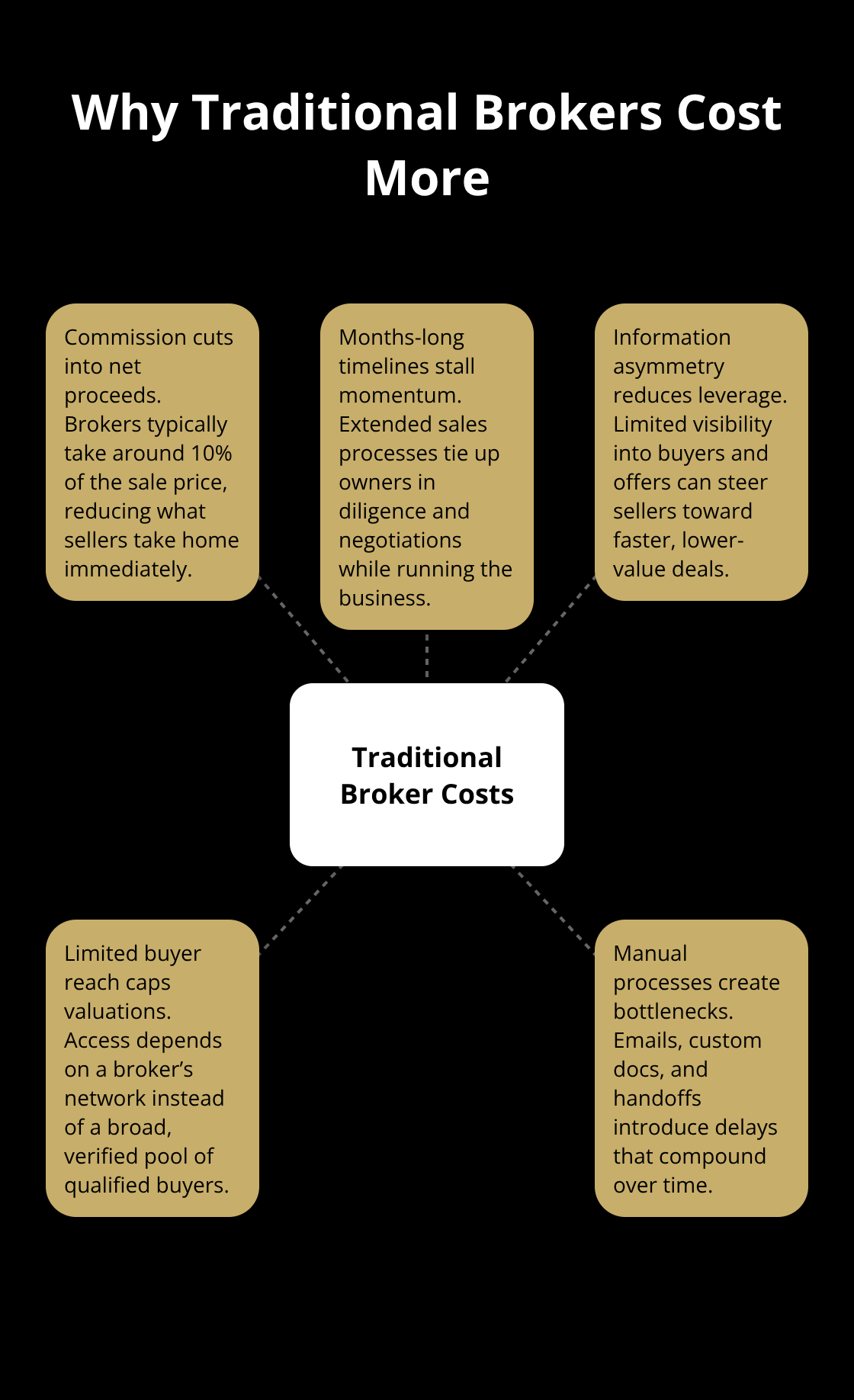
Digital platforms now connect sellers directly to qualified buyers without the middleman markup, letting you keep substantially more of what your business is worth.
The Real Cost of Waiting
Traditional brokers also charge for their time in ways that aren’t always obvious. The sales process stretches across 6 to 12 months on average for UK SMEs. During this extended period, your business sits in limbo. Operations become harder to manage when you juggle sale conversations, due diligence requests, and buyer negotiations alongside running the company. Every month of delay costs you opportunities you can’t pursue elsewhere. Digital platforms compress this timeline significantly. They automate buyer matching, standardize documentation, and remove administrative bottlenecks that traditional brokers create through manual processes.
Transparency That Protects Your Interests
Traditional brokers operate in the shadows. You don’t know who they show your business to, what they say about it, or why certain buyers drop off. You depend on their judgment about which offers merit pursuit and which don’t. Modern platforms give you real-time visibility into every interaction. You see who’s interested, track their engagement with your listing, and understand exactly where negotiations stand. This transparency prevents brokers from steering you toward lower offers that close faster (which benefits them through quicker commission collection but hurts your bottom line). When you control the information flow, you make better decisions about which buyers align with your goals and which offers actually reflect your business’s true value.
Why Buyer Access Matters More Than You Think
Traditional brokers claim their value lies in their buyer networks, yet most sellers never learn who those buyers actually are. Brokers restrict information to maintain control and justify their fees. Digital platforms invert this model entirely. They connect you with verified buyers across multiple countries and industries. You’re not limited to whoever your local broker happens to know. This expanded access directly impacts your sale price. More qualified buyers competing for your business means higher offers and better terms. The difference between a limited buyer pool and a global network can easily exceed the commission savings you’d achieve anyway.
Moving Forward With Better Economics
The financial case against traditional brokers is straightforward: you pay more, wait longer, and see less of the process. Digital platforms eliminate these friction points. What remains is understanding which platform features actually accelerate your sale and which ones simply sound impressive. The next section examines the specific tools that modern platforms use to transform how businesses change hands.
How Digital Platforms Speed Up Business Sales
Modern digital platforms compress the traditional 6-12 month sales cycle by automating the most time-consuming parts of business transactions. Rather than waiting for a broker to manually contact potential buyers, modern digital platforms use algorithms to match your business with qualified purchasers immediately after listing. This automation removes weeks of administrative delay. The H1 2026 Digital M&A Insights Report notes that AI tools correlate with transaction success, suggesting that automation directly drives outcomes. When you list on a platform with built-in AI matching, your business reaches vetted buyers within hours, not months. The platform simultaneously standardizes due diligence documentation, financial verification, and legal templates, eliminating back-and-forth email chains that traditionally stretch negotiations across quarters. Real-time dashboards let you monitor buyer interest, track which prospects engage most actively, and respond immediately to serious offers.
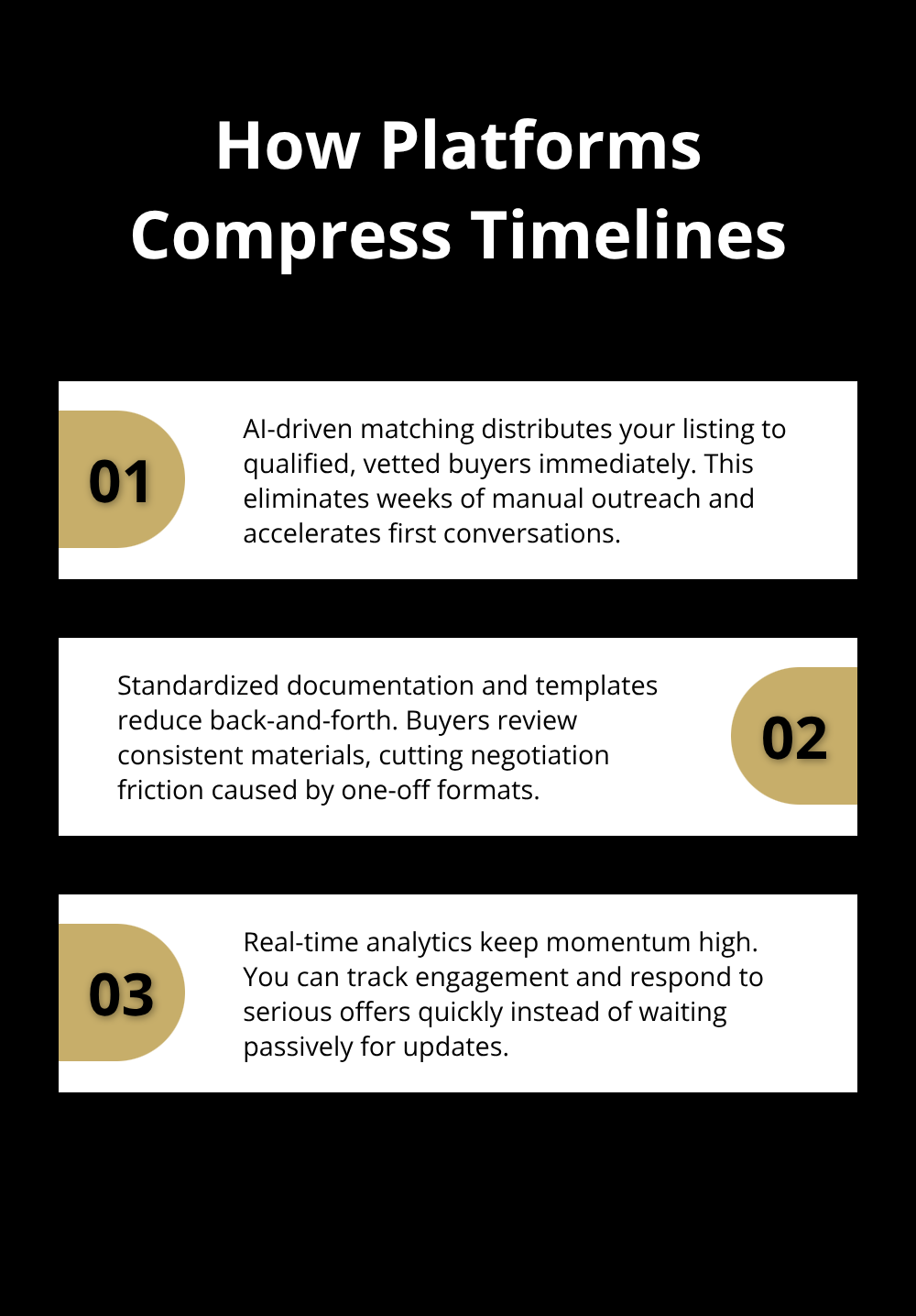
This visibility prevents the passive waiting that kills momentum in traditional sales. Platforms also integrate secure data rooms where buyers access financials, contracts, and operational metrics without requesting files repeatedly. Flippa’s approach demonstrates this efficiency: their Data Room centralizes sensitive materials with strict access controls, letting buyers conduct thorough investigation without slowing the process. Escrow and payment services built directly into platforms further compress timelines (removing the need to coordinate separate service providers for fund transfers and asset exchange).
Why Buyer Quality Trumps Buyer Volume
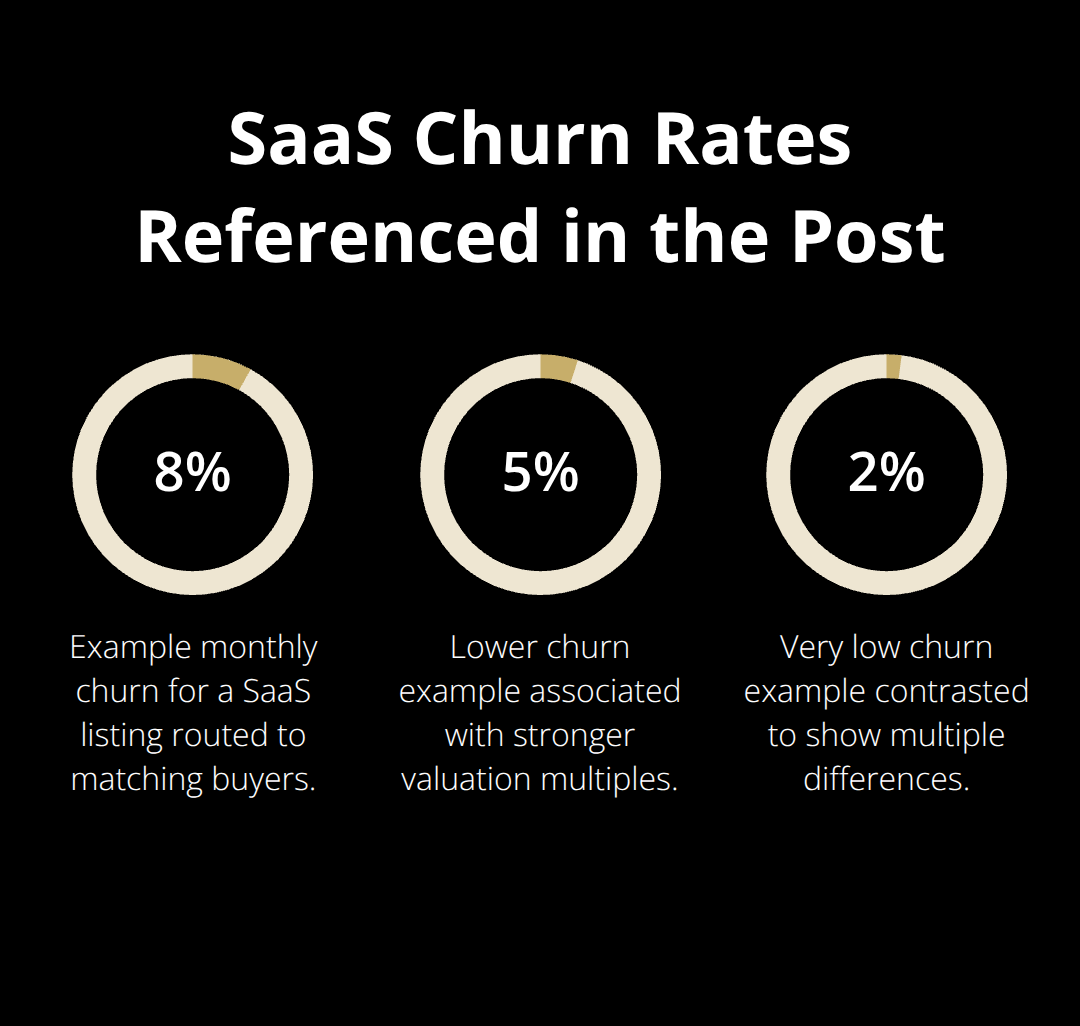
Reaching 1.9 million registered buyers across 191 countries sounds impressive, but what actually accelerates your sale is matching with the right subset of those buyers. Flippa’s verified buyer profiles ensure that your business reaches purchasers genuinely interested in your asset type and business model, not tire-kickers browsing listings. This targeted matching prevents wasted negotiation time with unqualified prospects who lack capital or strategic fit. The platform’s buyer networks include private equity firms, strategic acquirers, and digital portfolio companies actively searching for specific business types. When a platform understands that you’re selling a SaaS business with $50,000 MRR and 8% monthly churn, it routes your listing to buyers specifically seeking recurring revenue models, not to generalist investors chasing ecommerce assets. This precision reduces unsuitable inquiries and accelerates serious conversations. Real-time analytics show exactly which buyer segments engage most with your listing, allowing you to adjust your positioning or pricing before offers arrive. Platforms that track market demand signals also reveal whether your asking price aligns with what comparable businesses actually sold for (preventing the pricing missteps that kill deals during negotiation).
Converting Visibility Into Competitive Pressure
When multiple qualified buyers can see your business simultaneously, offer competition naturally drives price upward. Traditional brokers often control information asymmetrically, showing your business to buyers sequentially and sometimes steering you toward faster but lower offers that benefit their commission timeline. Digital platforms eliminate this conflict of interest by making your listing visible to all qualified buyers at once. Cross-border activity now represents a significant portion of digital business transactions, meaning your buyer pool extends far beyond your local market. A software business listed in the UK can receive offers from buyers in Singapore, Austin, or Berlin on the same day. This geographic diversity produces higher valuations because serious buyers from multiple regions compete directly. Platforms also publish real transaction data showing revenue and profit multiples for comparable exits, giving you concrete benchmarks rather than relying on a broker’s subjective valuation. Flippa’s free valuations leverage actual transaction data, helping you price confidently from day one. When buyers know dozens of other qualified purchasers are viewing the same business, they submit stronger opening offers rather than testing with lowball bids. The result is faster negotiations and higher final prices compared to sequential traditional brokerage approaches.
What Separates Platforms That Deliver From Those That Don’t
Not all digital platforms operate with the same level of sophistication or transparency. Some platforms simply list businesses without meaningful buyer verification or matching logic, leaving you exposed to tire-kickers and time-wasters. The best platforms invest in verified buyer profiles, AI-driven matching algorithms, and integrated escrow services that actually compress timelines. They provide audit-ready financial templates, legal document libraries, and real-time analytics dashboards so you understand exactly where your sale stands. They also maintain strict data security protocols (protecting your sensitive business information throughout the process). The difference between a basic listing site and a true transaction platform becomes obvious once you start receiving inquiries. Serious platforms deliver qualified buyers ready to move forward; mediocre platforms deliver volume without quality. Your next step is understanding which specific features actually matter most for your business type and sale timeline.
What You Actually Get for Less
Digital platforms strip away the broker markup, but the real advantage extends far beyond lower fees. Unbroker built its platform with concrete tools that traditional brokers charge separately for or simply don’t offer. On a traditional brokerage sale, you pay 10% commission, then separately hire accountants to prepare audit-ready financials, lawyers to draft legal templates, and marketing specialists to position your business. Digital platforms consolidate these services into one transparent cost structure. Unbroker’s Full Service Business Sale charges a 6% success fee, paid only when your business sells, compared to the $100,000 to $500,000 commission you’d pay a traditional broker on the same transaction. That difference isn’t marketing-it’s actual money staying in your pocket.
The financial advantage compounds when you factor in what platforms include. Platforms provide P&L Builder tools that connect directly to your financial accounts and output acquisition-ready statements with standardized templates for revenue, cost of goods sold, and EBITDA. This eliminates weeks spent arguing with accountants about which expenses count as operational versus one-time costs. Buyers receive clean, standardized financials immediately, which accelerates due diligence and prevents the price negotiations that arise from financial ambiguity. Legal document libraries integrated into platforms include NDA templates, IP assignment agreements, trademark documentation, and brand guidelines-materials that law firms traditionally charge $2,000 to $5,000 to prepare.
Standardized Documentation Closes Deals Faster
Traditional brokers create custom documents for every transaction, which sounds thorough but actually slows closings. Each lawyer interprets contracts differently, raising questions that extend negotiations. Digital platforms use standardized templates reviewed by legal experts and proven across hundreds of real transactions. This consistency means buyers recognize the terms immediately and don’t spend weeks negotiating minor clause variations. Platforms streamline offer management by letting you draft, share, and track letters of intent within a single workspace, eliminating email chains and version control chaos.
When both seller and buyer access the same secure system, confusion about current offer terms disappears. Escrow integration removes another traditional pain point by enabling fund transfers and asset exchange within the platform itself, reducing closing delays to days instead of weeks. A buyer sees the exact escrow terms, knows funds are protected, and feels confident moving forward. This built-in security reduces the counterparty risk that typically causes buyers to hesitate near the finish line.
Professional Support Without Information Control
Digital platforms offer negotiation assistance and expert guidance without the information asymmetry that traditional brokers exploit. When you list through a platform’s advisor network, you gain access to specialists across geographies who provide end-to-end support from vetting through negotiations to close. Unlike traditional brokers who control information to maintain leverage, platform advisors work transparently within the system where you see every interaction. You’re not dependent on a single person’s judgment about which offers to pursue.
The platform shows you buyer profiles, their engagement patterns, and their financial capacity before conversations even start. This transparency prevents advisors from steering you toward lower offers that close faster. You make informed decisions about which buyers align with your actual goals, not someone else’s commission timeline. Professional support on platforms also includes access to industry-specific expertise. If you’re selling a SaaS business, advisors familiar with SaaS valuation multiples, churn analysis, and customer acquisition cost benchmarking guide your conversations. Traditional brokers often lack this depth-they’re generalists covering all business types. Specialized platform advisors understand that a SaaS business with 5% monthly churn commands a different multiple than one with 2% churn, and they help you articulate that distinction to buyers.
Marketing Tools That Attract Serious Buyers
Marketing tools built into platforms automatically generate compelling listings with professional photography guidance, keyword optimization for search visibility, and buyer engagement tracking. These features matter because they determine whether your business attracts serious offers or gets lost among thousands of mediocre listings. Platforms that track market demand signals reveal whether your asking price aligns with what comparable businesses actually sold for (preventing the pricing missteps that kill deals during negotiation). This data-driven approach replaces the guesswork that traditional brokers rely on. Your listing reaches qualified buyers actively searching for your business type, not passive browsers. Real-time analytics show exactly which buyer segments engage most with your listing, allowing you to adjust your positioning or pricing before offers arrive. This responsiveness accelerates serious conversations and prevents the stalled negotiations that plague traditional sales.
Final Thoughts
The shift from traditional brokers to digital business sale platforms represents a fundamental change in how businesses transfer ownership. You no longer accept 10% commissions, months-long delays, or information asymmetry that favors the broker over your interests. Modern platforms deliver transparency, speed, and cost savings that traditional brokers cannot match, and the financial impact hits immediately-selling through a digital platform costs a fraction of traditional brokerage fees, leaving substantially more money in your pocket when the deal closes.
Verified buyer networks eliminate tire-kickers and connect you with qualified purchasers genuinely interested in your business type, while integrated escrow services remove closing delays by handling fund transfers within the platform itself. Cross-border transactions now dominate digital business sales, meaning your buyer pool extends far beyond your local market, and buyers from multiple countries competing for your business naturally drive valuations upward. Standardized financial templates, legal document libraries, and buyer matching algorithms compress timelines from quarters to weeks, and real-time dashboards let you track every step and respond to serious offers immediately.
We at Unbroker built our platform specifically to eliminate the friction that traditional brokers create, and you can start your business sale with transparent pricing and no hidden fees. Whether you choose full-service support or prefer to lead negotiations yourself with expert guidance, you keep control of the process and substantially more of your sale proceeds.