Selling a business requires more than just listing it online. At Unbroker, we’ve seen firsthand that sellers who follow a pre-sale marketing checklist close deals faster and at higher valuations.
The difference comes down to preparation. Clean financials, polished marketing materials, and strategic visibility separate successful sales from stalled ones.
Get Your Financial Records Sale-Ready
Buyers scrutinize financials before making an offer, and incomplete or disorganized records kill deals. We’ve seen transactions stall for weeks because sellers couldn’t quickly produce tax returns or profit-and-loss statements. Your goal is to compile a complete financial package that takes no more than 48 hours to assemble when a serious buyer appears.
Organize Your Core Financial Documents
Start by gathering the last three years of federal tax returns, business tax returns, and personal tax returns if you’re a sole proprietor. Many buyers request these documents within days of expressing interest, so having them digitally organized and ready matters enormously. Create a master folder with consistent naming conventions: 2024 Tax Return, 2023 Tax Return, and 2022 Tax Return work better than vague file names.
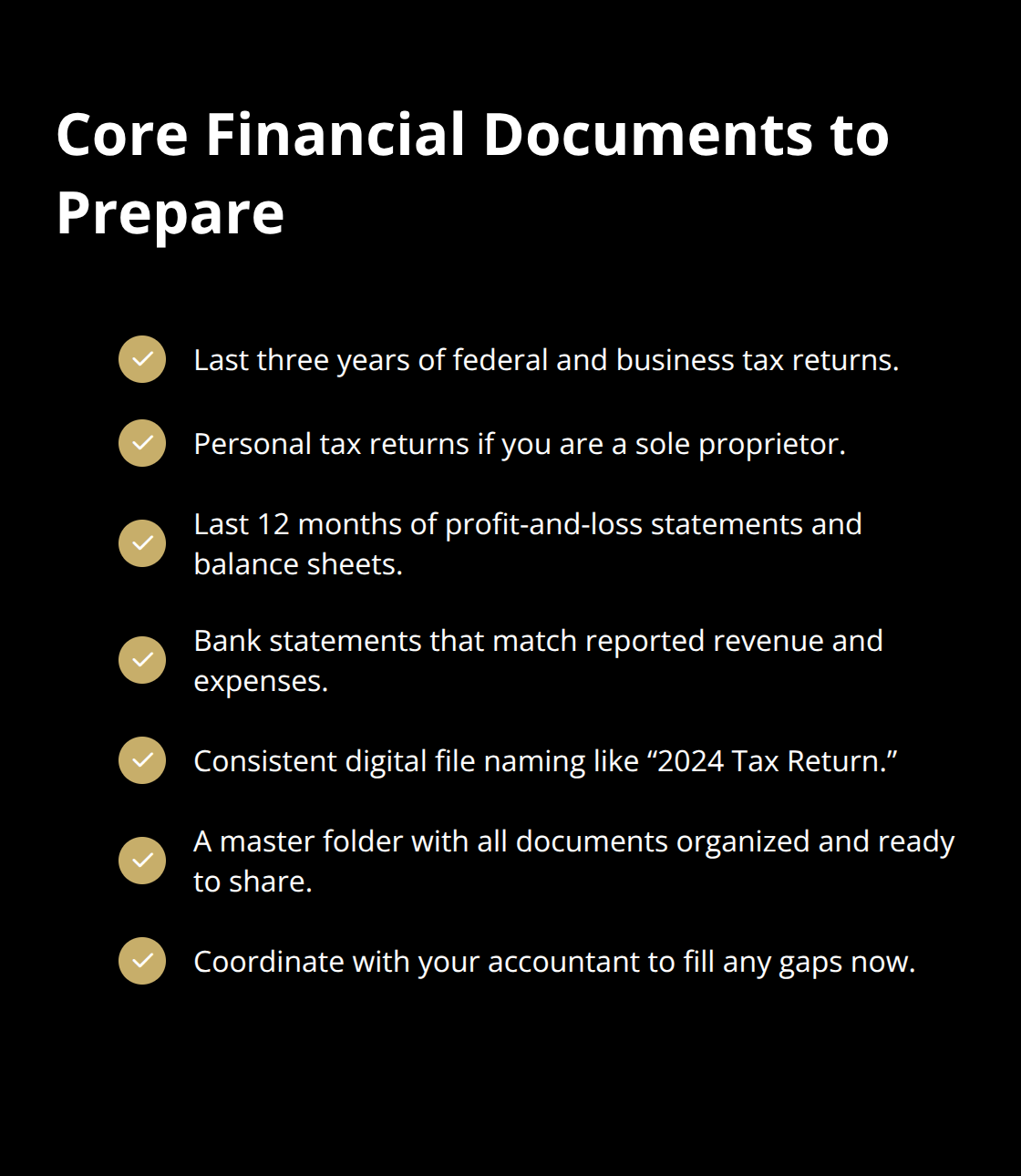
Next, pull together your last 12 months of monthly profit-and-loss statements and balance sheets. If your accounting software doesn’t generate these automatically, work with your accountant to create them now rather than scrambling later. Include bank statements that correspond to your reported revenue and expenses. Buyers compare these statements to your tax filings to verify accuracy, and discrepancies tank credibility fast.
Highlight Revenue Trends and Growth Patterns
Buyers want to see whether your business is growing, stable, or declining. Calculate your year-over-year revenue growth for the past three years and compile this into a simple one-page summary. If you grew 15% annually, that number belongs front and center in your marketing materials.
Document your recurring revenue separately from one-time sales. Subscription customers, long-term contracts, and service agreements with auto-renewal clauses are worth significantly more to buyers than sporadic transactions. If 60% of your revenue comes from recurring sources, state that explicitly. Recurring revenue creates predictable cash flow and lowers risk for buyers, which directly impacts valuation.
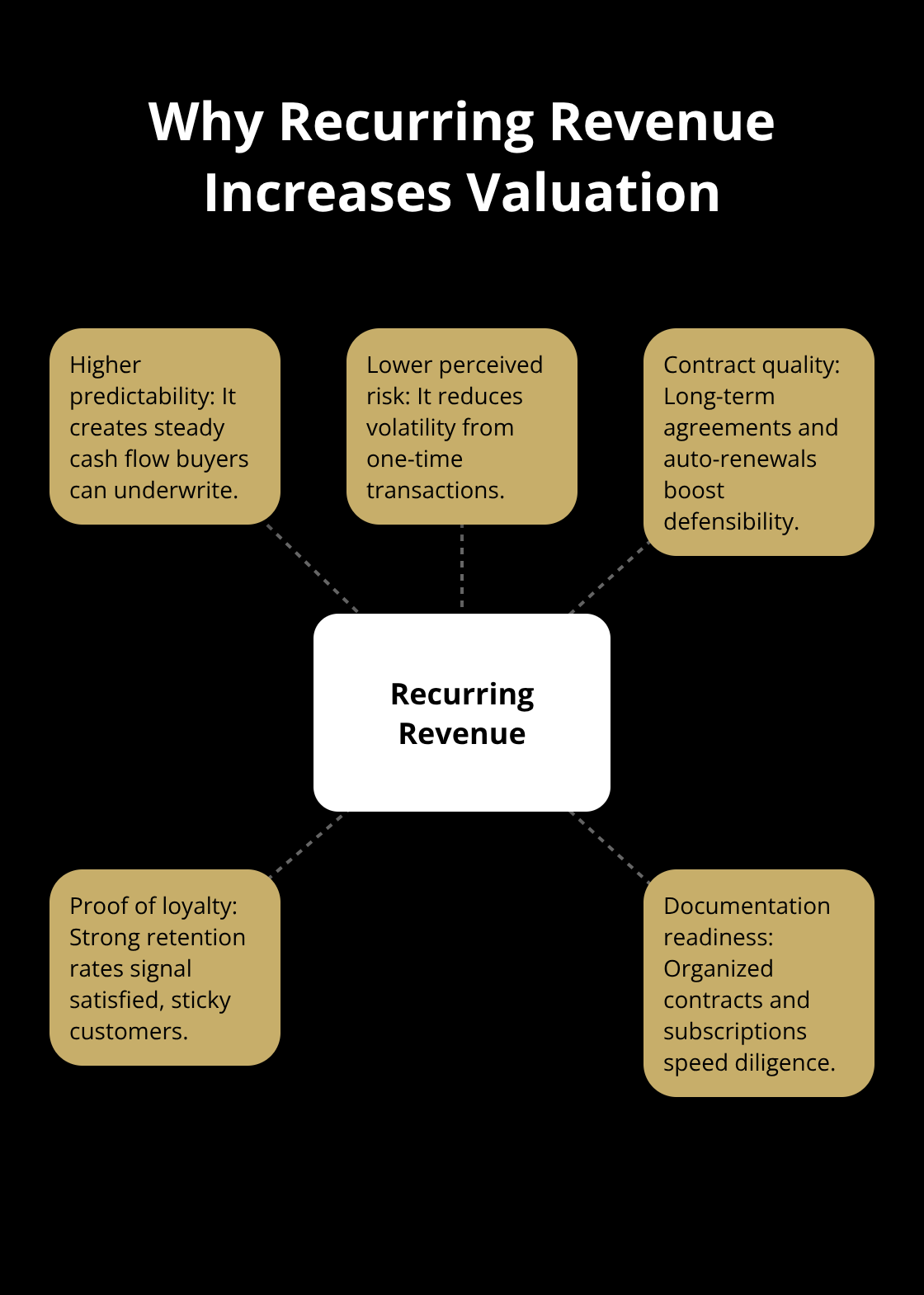
Organize customer contracts, service agreements, and subscription documentation in a separate folder. Include customer retention rates if you track them (a 90% annual retention rate for subscription customers is a powerful selling point that justifies a higher asking price).
Highlight any revenue concentration risks too. If one customer represents more than 20% of revenue, disclose this upfront rather than letting a buyer discover it during due diligence and lower their offer in response.
Prepare Financial Summaries and Asset Documentation
Create a financial summary document that a buyer can understand in five minutes. This document should show total revenue, gross profit, operating expenses, EBITDA, and net profit for the past three years in a simple table format. Add a brief explanation of any unusual expenses or one-time costs that won’t repeat after the sale.
Buyers often ask about owner compensation, so document how much you personally drew from the business and whether that will change under new ownership. Prepare a list of all business assets, including equipment, inventory, intellectual property, and software licenses. Include purchase dates, replacement values, and current condition. If you’ve made significant capital investments in the past two years, document these with receipts and explain how they benefit the business.
Organize all vendor contracts, supplier agreements, and lease terms in one location. Buyers want to know your cost structure and whether contracts transfer or require renegotiation. If you have a favorable lease rate or a long-term supply contract at locked-in prices, these are assets that increase business value. The faster you can provide clean, organized financial documentation, the faster qualified buyers move from interest to offer. Once your financials are polished and ready, the next step is crafting marketing materials that showcase what makes your business stand out to potential buyers.
Marketing Materials That Buyers Actually Read
Most business sellers write vague descriptions that could apply to any company. A buyer scanning ten listings sees nothing that distinguishes yours from the rest. Deals stall because sellers bury their strongest selling points in generic language. Your business description needs to lead with concrete facts that make a buyer stop scrolling and request more information.
Write a Description That Stops Scrollers
Start with a single sentence that states what your business does and its core strength. If you run a digital marketing agency, write: Digital marketing agency generating $1.2M annual revenue with 85% client retention and three enterprise contracts worth $400K combined. This tells a buyer immediately that your business has scale, stability, and valuable long-term relationships. Avoid phrases like leading provider or trusted partner; instead, quantify what makes you different. If your business has operated for 12 years, mention it. If you’ve grown 22% year-over-year, lead with that number. Buyers respond to specificity because it signals confidence and transparency.
Lead With Numbers That Justify Your Price
Include the metrics that justify your asking price: monthly recurring revenue, customer acquisition cost, average customer lifetime value, and gross margin percentage. A SaaS company with $50K MRR and 92% gross margins tells a buyer far more than one claiming strong profitability. If you don’t currently track these metrics, calculate them now-they take an hour and dramatically increase perceived value.
Structure your description to answer the three questions every buyer asks: How much revenue does this generate? How stable is that revenue? How much work will I have to do?
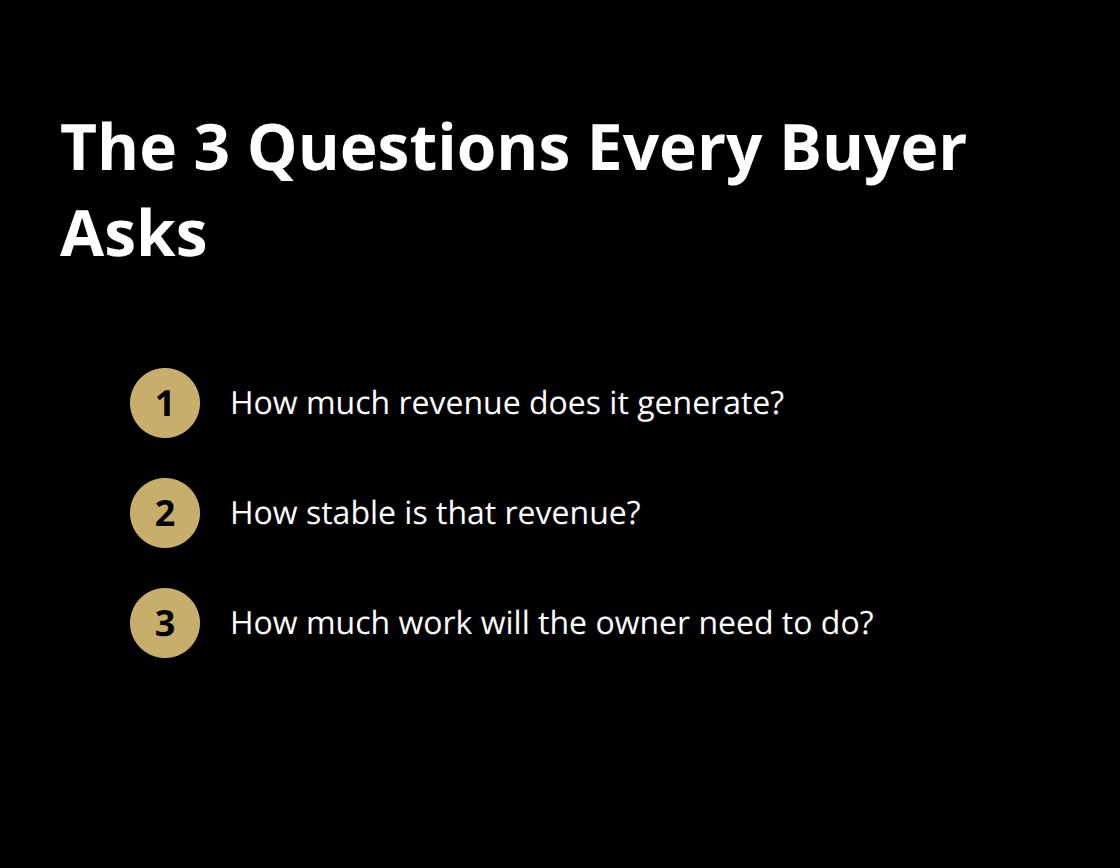
If recurring revenue accounts for 70% of your total, state this prominently. If you personally work 20 hours weekly and could transition to five hours under new ownership, say so. Buyers fear overpaying for a business that collapses when the current owner leaves, so reducing uncertainty around sustainability and workload directly impacts your sale speed and final price.
Position Your Competitive Advantages
Create a one-page visual summary of your competitive position that shows where you rank in your market. Include market share if you know it, your customer count relative to competitors, and any proprietary advantages like patents, exclusive contracts, or unique technology. If you hold a contract with a Fortune 500 customer or serve a niche market with limited competitors, highlight this. Buyers perceive lower risk in businesses with defensible market positions, and this perception translates to higher valuations.
Use language that shows momentum rather than stagnation: expanding into three new verticals, launched two new service lines in 2025, or secured three enterprise partnerships in the past year. Finally, ensure all marketing materials use the same financial figures and claims as your documented financial statements. A buyer who finds conflicting numbers between your marketing description and your tax returns will assume you’re hiding something and will either walk away or demand a significant price reduction.
With your marketing materials polished and aligned to your financials, the next step is making sure qualified buyers actually find your listing.
Optimize Your Listing for Maximum Visibility
Buyers searching for businesses use specific keywords and browse multiple platforms. If your listing doesn’t appear in those searches or relies on outdated photography and vague descriptions, qualified buyers never find you. The visibility gap between a well-optimized listing and a poorly optimized one can mean the difference between closing in 45 days versus 6 months.
Target the Keywords Buyers Actually Search
Start by identifying the exact terms buyers search for in your industry. If you sell a digital marketing agency, buyers likely search phrases like digital marketing agency for sale, marketing services business, or agency with recurring revenue. Embed these terms naturally throughout your listing title, business description, and key sections. Avoid keyword stuffing, which signals desperation and tanks credibility, but do optimize listing title with business type and location. A title reading Digital Marketing Agency, Denver with $1.2M Revenue attracts far more qualified inquiries than Marketing Business for Sale.
Invest in Professional Photography and Financial Visuals
Professional photography shows your business operations, team, and workspace. Buyers form opinions within seconds of viewing images, and poor-quality photos signal that you don’t take the sale seriously. Include images of your office, key team members at work, client testimonials displayed on your wall, or products in action. Add at least one financial summary image showing revenue trends and profitability over three years. Professional photography improves inquiry rates significantly, with listings featuring videos receiving 403% more inquiries than those without them.
Publish Across Multiple Platforms Simultaneously
Post your listing on industry-specific marketplaces where serious buyers congregate, general business sale platforms like BizBuySell, and your own website if you have one. Each platform has different buyer audiences and search algorithms, so relying on a single channel limits your exposure dramatically. Attract serious buyers with proven tactics to boost visibility across channels. Platforms like BizBuySell see over 50,000 monthly visitors actively searching for businesses, making comprehensive platform coverage non-negotiable for visibility.
Make Financial Data Immediately Accessible
Include your complete financial summary document as a downloadable file within your listing. Buyers who see numbers immediately request additional information far more often than those who must email you for basic financial data. The easier you make it for serious buyers to evaluate your business, the faster qualified offers arrive.
Final Thoughts
Selling a business moves faster and commands higher prices when you execute a pre-sale marketing checklist systematically. The sellers who close deals in 45 days instead of six months share one thing in common: they prepared their financials, polished their marketing materials, and optimized their listings before going live. Clean financial records eliminate buyer skepticism, compelling marketing materials that lead with concrete metrics stop qualified buyers from scrolling past your listing, and strategic keyword optimization with professional photography ensures those buyers actually find you.
Businesses that invest time in pre-sale preparation typically sell for 10 to 15 percent higher valuations than those that don’t. A 45-day close versus a 180-day close means you regain control of your time and capital months earlier, and you avoid the mental fatigue of managing a business while simultaneously trying to sell it. Each step compounds the others-a buyer who discovers organized financials, sees professional photos, and reads a description backed by real numbers moves from interest to offer significantly faster than one encountering vague claims and disorganized documents.
Start with your financial records this week, polish your marketing materials next week, and optimize your listing the week after. This timeline keeps momentum high and prevents the common trap of endless preparation without action. If you want expert guidance through the selling process without traditional brokerage fees, Unbroker offers transparent, low-cost options including hands-off full-service selling or DIY support with expert assistance.