Selling your business doesn’t mean broadcasting it to the world. A confidential sale platform lets you control who knows about your deal while still reaching serious buyers.
At Unbroker, we’ve seen firsthand how privacy during a sale protects your competitive edge, keeps your team focused, and maintains customer trust. The trick is balancing that confidentiality with the transparency buyers expect about pricing and terms.
Why Confidentiality Protects Your Bottom Line
Selling a business is complicated enough without competitors knowing your plans. When word spreads that you’re selling, rivals poach your customers, employees update their LinkedIn profiles, and your suppliers renegotiate terms. A confidential sale process prevents this damage from happening in the first place. Businesses sold through confidential channels retain significantly more customer relationships and staff during the transition than those subjected to public auctions. The reason is straightforward: secrecy eliminates the uncertainty that triggers departure. When employees don’t know if they’ll have jobs after the sale closes, they explore options. When customers sense instability, they test alternative vendors. When suppliers perceive weakness, they demand prepayment or higher prices. A confidential process keeps your operation running normally until the deal is final.
Keeping Your Team Intact
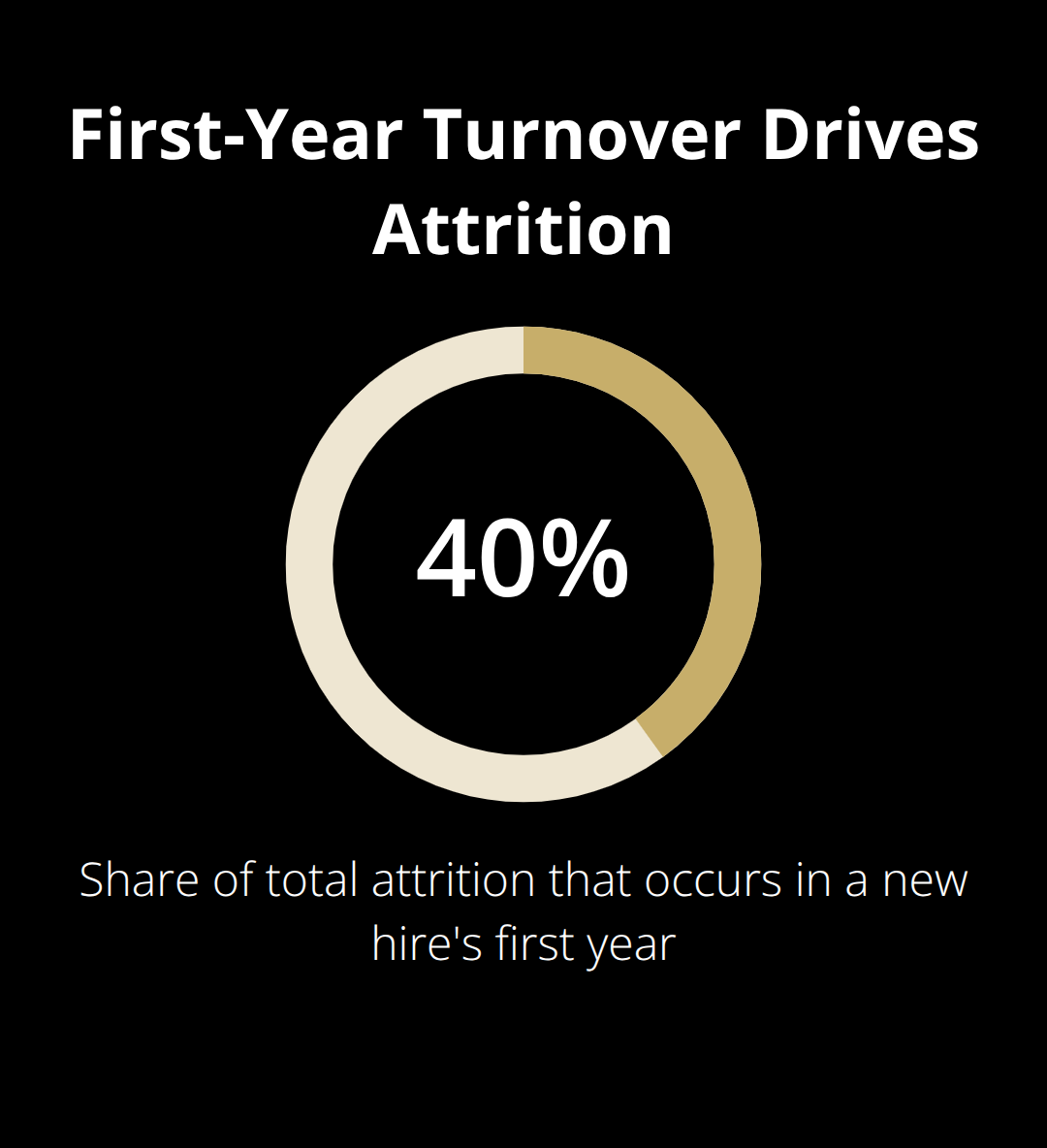
Employee retention during a business sale directly affects the purchase price. Buyers factor in staff continuity and institutional knowledge when valuing a company. If your top performers leave before closing, the deal value drops. During a new hire’s first year, turnover accounts for roughly 40% of all attrition, underscoring how critical retention is during transitions.
In a confidential sale, only essential staff need to know, and you can bring them in gradually with NDAs in place. This approach prevents the mass exodus that derails deals. You control the narrative instead of watching rumors spread through Slack channels. Timing matters here: inform your team only after a buyer is serious and terms are near final (typically two to four weeks before closing). This window minimizes the period of uncertainty.
Protecting Revenue and Relationships
Customer retention during a sale is measurable and critical. Breaching confidentiality during a sale can trigger a cascade of negative consequences, from employee departures to customer defection. Confidential sales avoid the public perception of distress that triggers customer defection. Suppliers also behave differently when they don’t know a transition is happening. They continue normal service, honor existing terms, and don’t demand deposits or accelerate payments. In public auctions, suppliers often contact your customers directly to secure their own positions, which damages both relationships and your negotiating leverage. Confidentiality protections are legally binding contracts that protect proprietary information when it is shared with third parties, keeping these relationships stable until new ownership is established and ready to communicate directly with all stakeholders. This stability directly impacts what a buyer will pay for your business and how smoothly the transition proceeds after closing.
Private Listings Move Faster Than Public Auctions
Speed Wins in Confidential Sales
Private listings close in weeks, not months. When you sell through a confidential process, you eliminate the extended marketing phase that public auctions demand. A typical public auction requires 60 to 90 days of exposure, open houses, and broad marketing to generate competitive bidding.
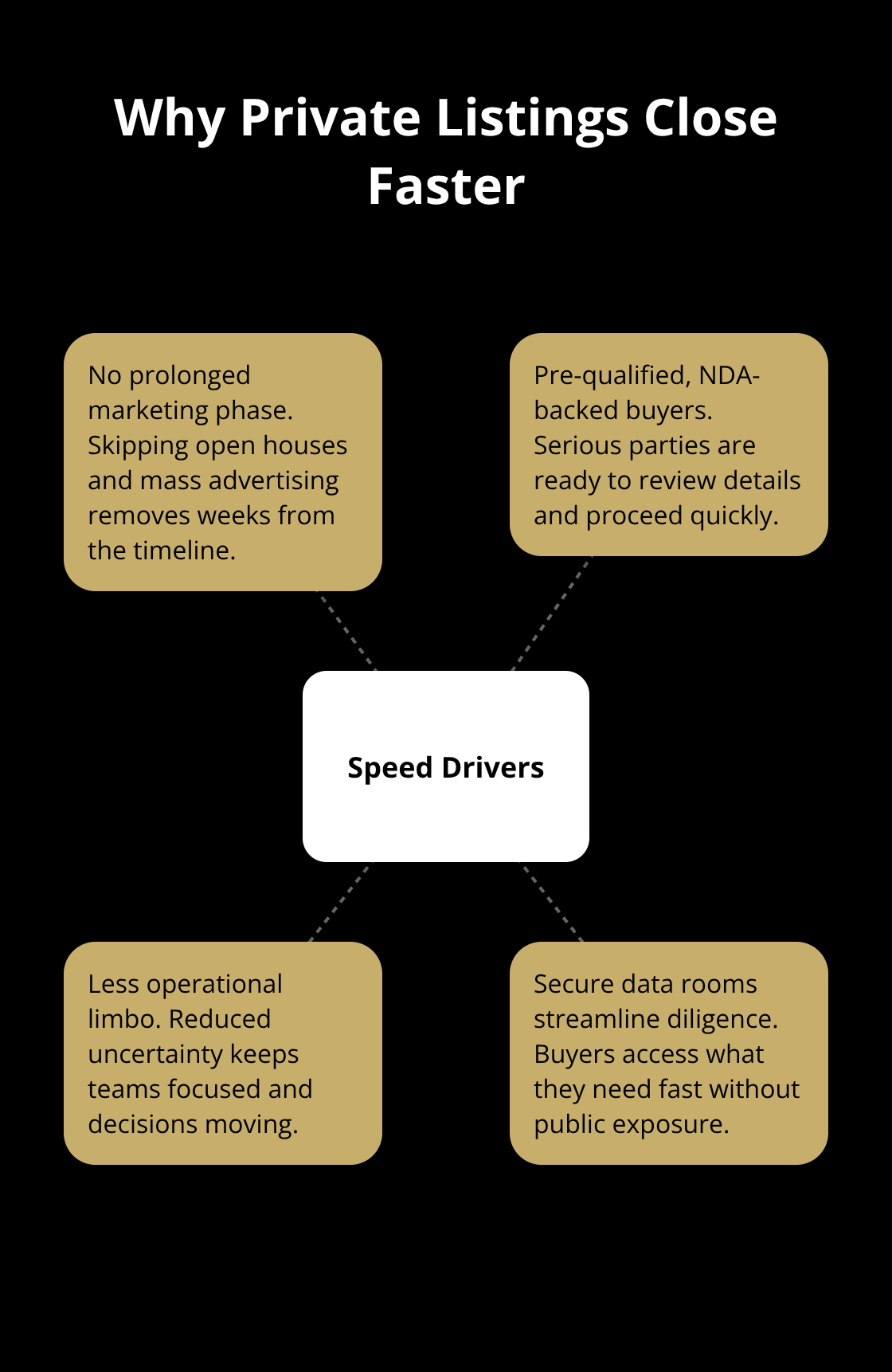
Private sales compress that timeline dramatically because you work directly with pre-qualified buyers who have already committed to confidentiality through an NDA. The difference matters financially: every week your business remains in limbo costs money. Employees grow uncertain, customers sense instability, and operations suffer. In private deals, serious buyers move fast because they have already cleared the confidentiality hurdle and have access to detailed financial data through secure data rooms.
Control Over Information and Strategy
This acceleration also gives you control over the process itself. You decide when to share information, which buyers receive what data, and how quickly negotiations progress. Public auctions strip away that control entirely. Once your business hits the market, every competitor, employee, and vendor can see the listing. Your pricing strategy becomes public knowledge. Your financial metrics are visible. Your weaknesses are exposed. In a private listing, you release information gradually to vetted buyers only, protecting competitive secrets and allowing you to adjust your pitch based on buyer feedback.
Flexibility in private deals means you can negotiate terms that matter to you beyond price. Want a seller note to defer taxes? Private buyers often accept this. Need a transition period where you stay involved? That becomes negotiable in private sales. Prefer a stock deal instead of an asset sale? Private negotiations allow creative structures that public auctions rarely accommodate because auction winners expect standardized terms and exit immediately after closing.
Quality Buyers Replace Quantity
The quality of buyers in private sales far exceeds quantity in public auctions. A public auction attracts tire-kickers, competitors gathering intelligence, and buyers with weak financial positions who cannot actually close. Private sales filter out these time-wasters before they ever see your business. Buyers who sign NDAs and proceed through secure data rooms have genuine intent and financial backing. They are serious enough to jump through hoops, which means they are serious enough to close. These buyers negotiate harder on price, yes, but they also close faster and honor their commitments.
In public auctions, you might receive twenty offers, but half fall apart during due diligence when buyers realize they cannot actually fund the purchase. In private sales, you receive fewer offers but the ones you do receive are bankable. This efficiency matters because every failed deal costs you time and extends the uncertainty your team faces. A private buyer who closes beats ten public auction bidders who do not.
Negotiation Flexibility Protects Your Business
Negotiation flexibility also protects your operational continuity in ways public auctions cannot. When you sell to a strategic buyer through private channels, you can structure earn-outs tied to customer retention or revenue performance. You can negotiate employment agreements for key staff. You can establish transition periods where you remain available to advise the new owner. Public auctions force a clean break on closing day, which is why confidential sales work better for owner-operated businesses where your departure could destabilize customer relationships or team morale. The buyer knows this too, which is why they are willing to negotiate terms that protect both parties.
These structural advantages in private sales-speed, control, buyer quality, and flexibility-create a foundation for the next critical question: how do you actually price your business fairly when negotiations happen behind closed doors?
Pricing Without the Guesswork
Confidential sales create a paradox: you want privacy, but buyers demand transparency about what they are actually paying for. This tension determines whether your deal closes or collapses. The answer is not to hide your numbers in darkness but to control how and when you reveal them. Pricing transparency in a private sale works differently than in public auctions. In public markets, dozens of comparable sales establish a baseline price that all bidders see. Everyone negotiates from the same reference point. In confidential sales, you set the pricing framework before sharing financials, which means your valuation strategy shapes the entire negotiation.
Ground Your Price in Real Numbers
Most sellers fail because they either underprice to close quickly or overprice and watch buyers walk away. The solution is anchoring your asking price in actual financial performance, not hope. Pull your last three years of tax returns, bank statements, and customer acquisition costs. Calculate your EBITDA (earnings before interest, taxes, depreciation, and amortization) accurately because that is what serious buyers use to value your business.
Typical business valuations range from 2 to 10 times EBITDA depending on industry, growth rate, and customer concentration. A SaaS company with predictable recurring revenue trades at 8 to 10 times EBITDA. An e-commerce store with customer acquisition costs eating into margins sits closer to 3 to 5 times EBITDA. Know your actual multiple before you talk to a single buyer. This prevents the emotional pricing that destroys deals.
Present Honest Financials
Transparent pricing also means being honest about what revenue is actually recurring versus one-time windfalls. Buyers will find inconsistencies during due diligence, and if they discover you inflated numbers, the deal dies and your reputation within the tight business sale community suffers permanently. Sellers who hide declining customer retention rates or revenue concentration with one major client think they can negotiate around it later. They cannot.
Buyers hire accountants to verify everything, and hidden problems kill trust faster than low numbers ever could. Instead, present your financials cleanly with notes explaining seasonal fluctuations, customer churn, and growth trends. If you lost a major customer last year, say so upfront and show how you replaced that revenue. If your margins are thin, explain why and what you are doing to improve them. This honesty attracts buyers who understand your business and are willing to pay fairly for it, not buyers hunting for a bargain through information asymmetry.
Maintain Consistency Across All Negotiations
Avoid the trap of quoting different prices to different buyers or changing your story based on who is asking. Confidential sales move through secure data rooms where every buyer sees the same financial documentation. Inconsistencies become obvious within days. One price, one story, consistently told across all negotiations. This consistency builds credibility and accelerates the process because buyers trust what they are seeing.
Specify What’s Included and What Costs Extra
Hidden fees and surprise costs kill private deals faster than almost anything else. Specify upfront whether the purchase price includes inventory, customer lists, intellectual property, or just the core business assets. Clarify which liabilities the buyer assumes and which you are paying off at closing. State whether there are transition costs, training periods you will provide, or earn-out structures tied to future performance (such as customer retention or revenue milestones).
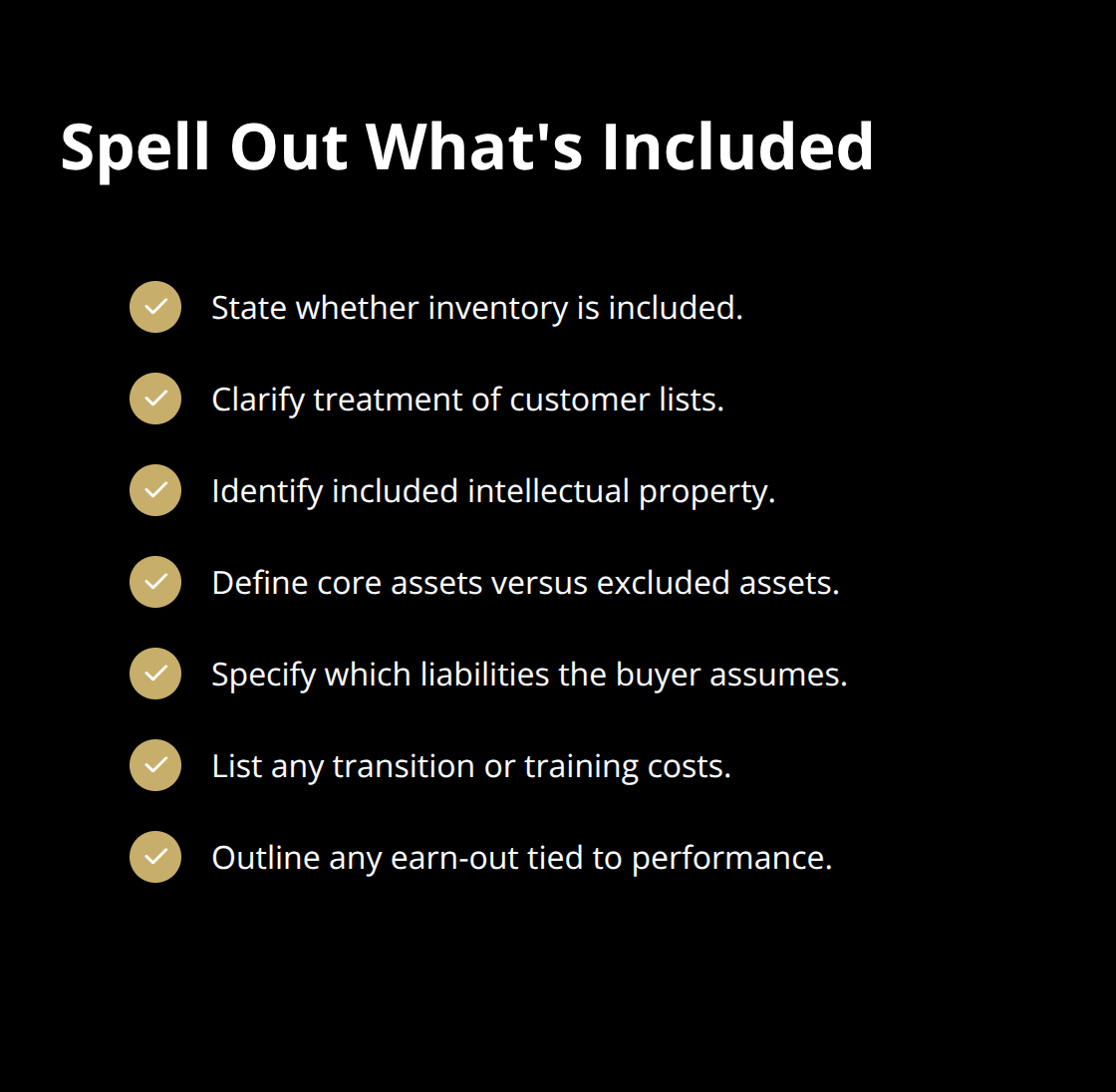
Write these terms into your information memorandum before sending it to any buyer.
When buyers encounter surprises during due diligence, they either demand price reductions or walk away entirely. Neither outcome serves you. Transparent terms from the beginning narrow negotiations to price and structure, not constant disputes over what was actually included in the sale.
Final Thoughts
Selling your business requires balancing two competing demands: keeping your sale confidential to protect operations and being transparent about pricing so buyers trust what they are paying for. A confidential sale platform lets you control information flow without hiding the numbers that matter. You reveal financial data only to serious, pre-qualified buyers who have signed NDAs, set your price based on actual EBITDA multiples and industry benchmarks, and present honest numbers upfront so due diligence moves fast instead of derailing over hidden problems.
The platform you choose determines how smoothly this balance works. Some platforms charge high fees that eat into your proceeds, while others lack the security infrastructure to protect sensitive data or fail to vet buyers properly. If competitive disruption, employee retention, or customer relationships matter more than maximum bidder count, confidential selling is your answer.
Unbroker offers the tools and support to structure that sale fairly and securely without the traditional broker markup. Start by gathering your financial documentation and deciding which service model fits your timeline and involvement level.