Becoming a broker requires more than ambition-it demands strategy, credentials, and genuine client focus. At Unbroker, we’ve seen countless professionals transform into trusted advisors by following a clear path.
This guide walks you through every stage, from understanding what brokers actually do to building a reputation that attracts clients. You’ll learn the licenses you need, the skills that matter, and how to avoid the mistakes that derail new brokers.
What Brokers Actually Do in Today’s Market
Brokers connect buyers and sellers, but the real work extends far beyond matchmaking. A broker’s job is to guide clients through complex transactions, manage risk, navigate regulations, and build relationships that last years. Financial brokers execute trades, manage portfolios, and advise on investment strategy. Real estate brokers handle property transactions and market analysis. Business brokers facilitate company sales and help owners exit their businesses. What separates successful brokers from those who fail is simple: they solve problems their clients actually have.
A financial advisor who only talks about market performance without addressing a client’s cash-flow concerns loses credibility fast. A real estate broker who shows properties without understanding a buyer’s lifestyle needs wastes everyone’s time. A business broker who pushes a sale timeline that doesn’t match the owner’s goals creates conflict. The market demands brokers who listen first, recommend second, and follow through relentlessly.
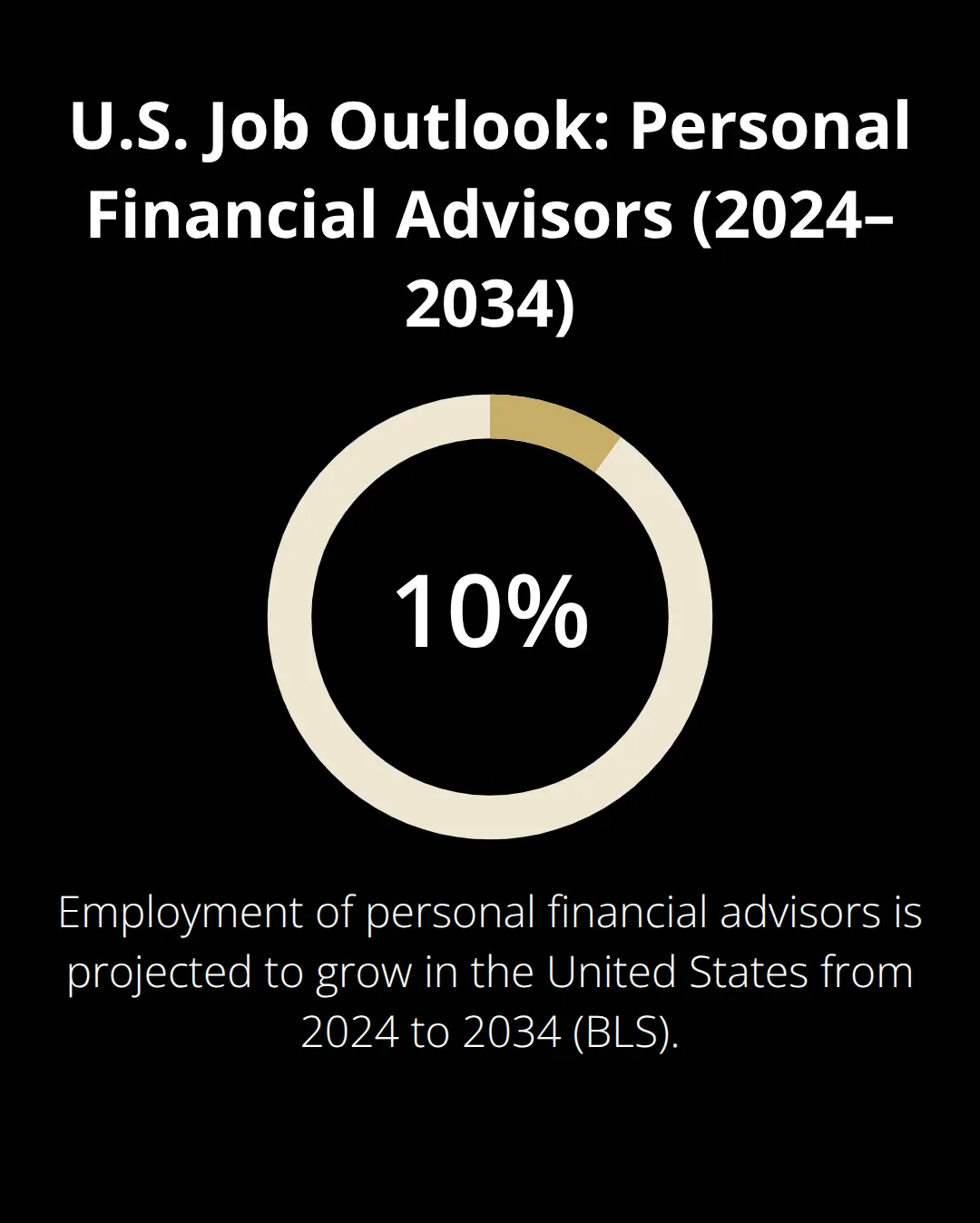
According to the U.S. Bureau of Labor Statistics, employment of personal financial advisors is projected to grow 10 percent from 2024 to 2034, much faster than the average for all occupations. This growth stems from increasing wealth, more complex financial products, and clients seeking specialized guidance. Real estate brokerage remains competitive but essential, with the National Association of Realtors tracking active agents and market data across the United States. Business brokerage is less saturated but rapidly expanding as more owners recognize the value of professional exit planning.
Why Specialization Matters More Than Ever
Generalist brokers struggle because clients want experts. A financial advisor who claims to handle crypto, real estate, and tax planning equally well serves no one well. The market rewards brokers who define a niche and own it completely.
Some brokers focus on specific industries, like tech founders or healthcare practices. Others target client types, such as high-net-worth individuals or small business owners preparing to sell. Real estate brokers increasingly specialize by geography or property type-luxury homes, commercial spaces, or distressed properties. A broker who understands the nuances of selling a SaaS company differs fundamentally from one who handles all business sales generically.
That specialization creates competitive advantage because you build deeper knowledge, stronger networks, and faster deal velocity. Clients trust specialists because specialists reduce uncertainty. When you’ve sold fifteen tech startups, you know the buyer landscape, valuation benchmarks, and common negotiation patterns. A generalist with two hundred transactions across unrelated sectors cannot match that depth.
How to Choose Your Specialization
Try choosing your specialization based on three factors: where your existing knowledge sits, which client problems excite you, and where you see market demand growing. Financial advisors with backgrounds in technology investing naturally attract tech founders. Real estate brokers with experience in commercial development understand investor needs. Business brokers with operational experience can advise sellers on pre-sale improvements that increase value.
Your specialization is your competitive edge, and it determines which clients you attract and how quickly you build authority in your market. The brokers who thrive earliest in their careers are those who commit to a specific niche rather than trying to serve everyone. This focus allows you to develop systems, refine your pitch, and build referral networks within your chosen segment. As you establish yourself in one area, you’ll find that clients within that niche refer others like themselves, creating a self-reinforcing cycle of growth.
Building Your Foundation and Getting Licensed
Understanding License Requirements Across Broker Types
Becoming a broker legally requires credentials, and the path differs sharply depending on your specialization. Financial advisors need Series 7 and Series 65 licenses from FINRA, which demand passing exams after completing required coursework. Real estate brokers in Texas must complete 270 classroom hours of mandatory courses including Principles, Agency Law, Contract Law, and Real Estate Finance, then log at least four years of active experience totaling 720 transaction points before applying. Business brokers face fewer federal mandates but often pursue credentials like Certified Business Intermediary to signal expertise. The licensing timeline matters: Texas brokers have one year from application filing to complete all requirements, so plan realistically rather than rushing through credentials that carry real consequences if you fail exams or miss compliance deadlines. Education alone doesn’t make you credible; the actual practice of connecting clients to solutions does. That said, skipping certifications costs you clients who won’t trust an unlicensed advisor with their money or property transactions.
Selecting the Right Firm Model for Your Career Stage
The firm you choose shapes everything that follows, and most brokers pick wrong because they chase commission splits instead of infrastructure. Four distinct firm models exist: proprietary product sales shops that push their own investments, independent broker-dealers offering more autonomy, wirehouses like major banks providing brand recognition and support, and registered investment advisories focused on fee-based planning. A rookie financial advisor at a wirehouse gets training, compliance support, and client leads but surrenders significant commission percentages.
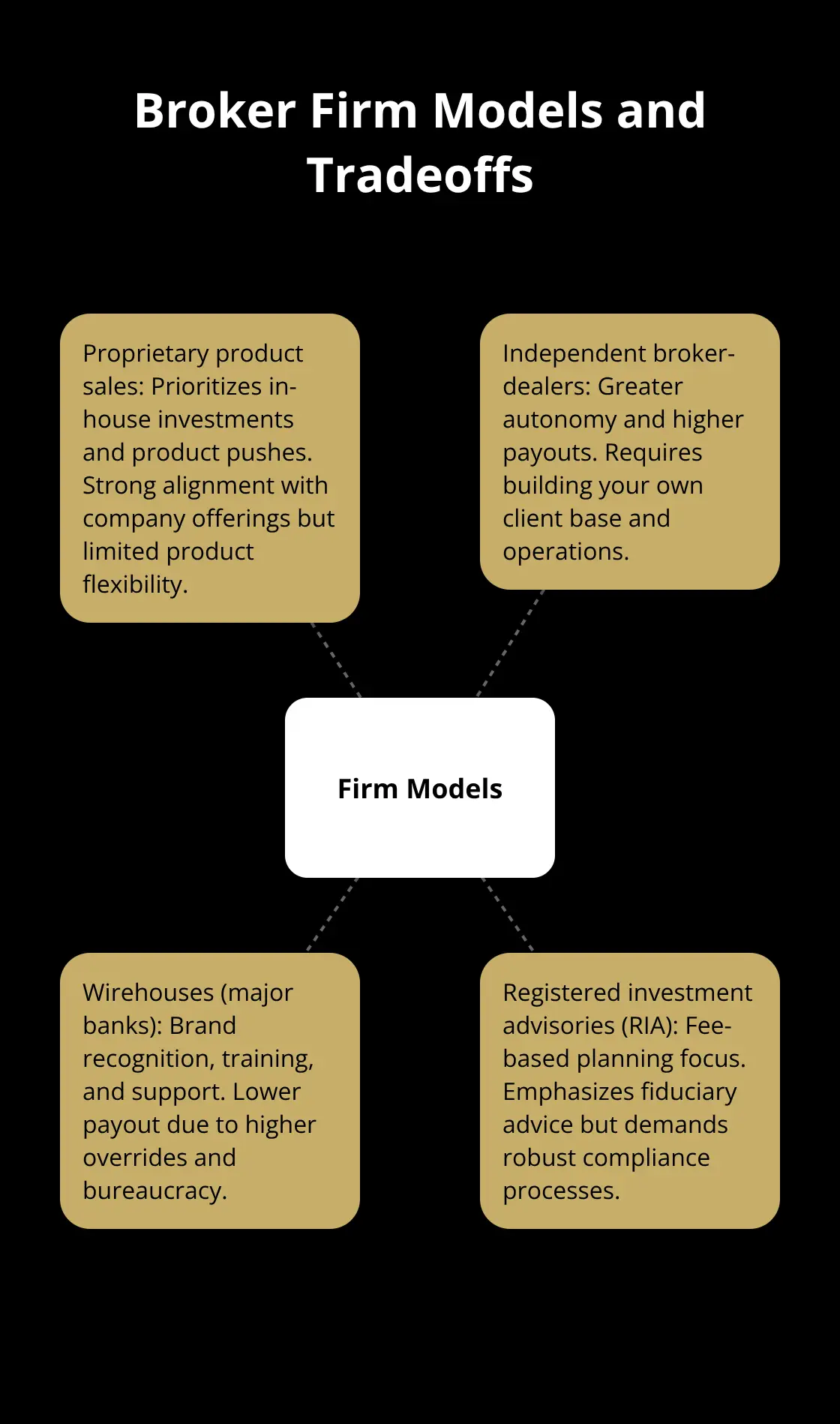
An independent broker-dealer offers higher splits but requires you to build your client base from zero with minimal institutional support. Real estate brokers face similar tradeoffs when choosing between large franchises with national marketing versus small independent brokerages with lower overhead.
Prioritizing Support Over Commission Splits
Your first firm should prioritize mentorship and operational infrastructure over maximum commission payout. The best firms assign experienced brokers as mentors, provide technology platforms that handle compliance and reporting, and maintain clear referral processes that feed new clients to productive advisors. Real estate brokers specifically need firms that handle IABS disclosures, intermediary rules, and advertising compliance automatically rather than forcing you to manage legal requirements solo. Choose a sponsoring broker who invests in your growth because the wrong choice costs months of wasted effort learning systems that don’t scale. After you’ve built your first fifty clients and proven your ability to close deals, then optimize for commission structure; early in your career, access to support networks and proven processes matters infinitely more than keeping an extra two percent of commissions.
The infrastructure you build now-your systems, your mentor relationships, your compliance habits-determines how fast you scale once you’ve mastered the fundamentals. With your license secured and your firm selected, you’re ready to focus on what actually attracts clients: the skills and knowledge that separate advisors clients trust from those they ignore.
Skills That Attract Clients and Keep Them
The gap between licensed and trusted separates rookies from advisors clients actually call back. Licenses prove you passed an exam; skills prove you solve problems. Financial advisors need to understand cash flow analysis, tax implications of investment decisions, and how market volatility affects specific client goals. Real estate brokers must know neighborhood appreciation rates, comparable sales data within the past ninety days, and how interest rate changes impact buyer purchasing power. Business brokers require operational literacy about EBITDA multiples, industry-specific valuation benchmarks, and what acquirers actually care about beyond revenue numbers.
Building Market Expertise That Clients Recognize
None of this knowledge comes from coursework. It comes from obsessive attention to your market segment. Read quarterly earnings reports for companies in your niche. Track comparable transactions in your specialization.
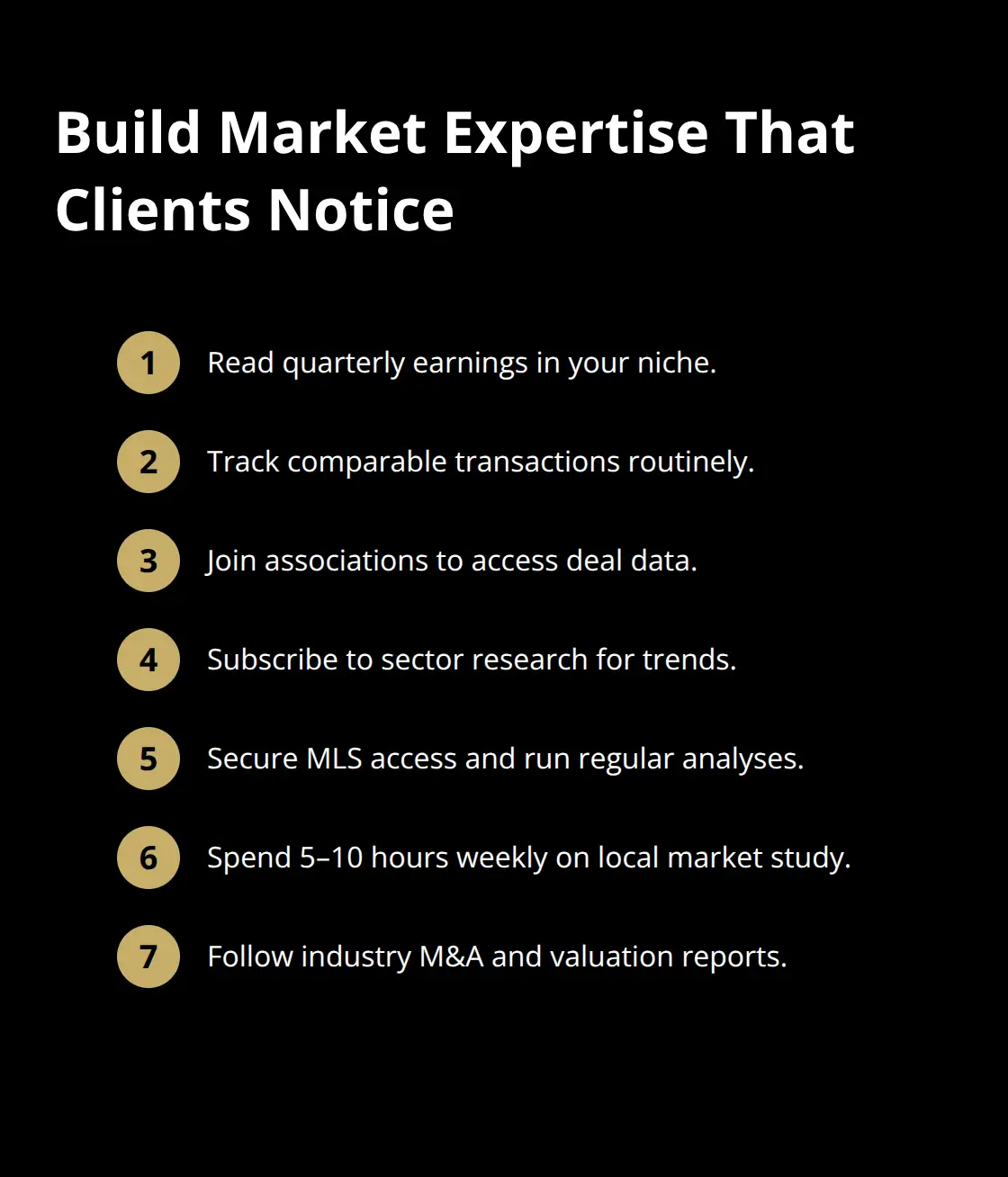
Join industry associations where peers share deal data. Financial advisors should subscribe to industry research from sources covering your target sector, whether that means tech funding trends or healthcare consolidation patterns. Real estate brokers need MLS data access and regular market analysis; most successful agents spend five to ten hours weekly analyzing their local market rather than prospecting. Business brokers benefit from industry publications that track M&A activity, valuation trends, and buyer appetite in their chosen sectors.
This knowledge becomes your competitive advantage because clients sense immediately whether you understand their world or merely speak the language. A tech founder knows within minutes whether their financial advisor actually understands SaaS unit economics or just uses the terminology. A commercial property buyer recognizes whether their broker knows current cap rates and financing trends or simply pulls comps from a database. Your market expertise either builds trust or reveals you as a generalist pretending to specialize.
Building Referral Partnerships That Generate Consistent Business
Client acquisition fails when brokers chase activity instead of strategy. Most rookies spend their first year networking widely, hoping someone becomes a client. Successful brokers instead identify their ideal client profile with specificity and build referral partnerships with professionals who already serve those clients. A financial advisor targeting tech founders should build relationships with startup accountants and employment lawyers who encounter founders regularly. A real estate broker specializing in luxury homes should connect with high-end interior designers, estate planners, and divorce attorneys who refer clients needing premium properties. A business broker focusing on healthcare practices should know the accountants and consultants already advising practice owners.
These referral partnerships work because they’re reciprocal; you refer clients to them, they refer clients to you. Schedule monthly check-ins with your referral partners, bring specific opportunities or insights relevant to their practice, and track referral sources religiously so you know which relationships actually generate business. Early-career brokers often believe they need a massive network; the reality is that five strong referral partnerships generating consistent leads beat fifty weak LinkedIn connections. Your niche determines who those partners are, so choose them deliberately rather than collecting contacts randomly.
Delivering Results That Create Lasting Reputation
Long-term reputation builds through consistent delivery and transparent communication. Clients who feel manipulated or over-promised never return and tell others about their experience. Deliver what you promised on timeline, communicate proactively when obstacles arise, and focus your recommendations on client outcomes rather than your commission upside. A financial advisor who recommends a lower-fee investment because it actually suits the client’s situation better builds trust that compounds over years. A real estate broker who advises a seller to wait six months for better market conditions rather than pushing an immediate sale creates loyalty that generates referrals for decades. A business broker who honestly assesses that a business isn’t ready to sell and recommends operational improvements first establishes credibility that attracts serious sellers.
These choices cost short-term revenue but create the reputation that actually scales your practice. Clients talk about advisors who put their interests first, and that word-of-mouth becomes your most powerful marketing tool.
Final Thoughts
Becoming a broker follows a predictable path, but execution separates those who build thriving practices from those who quit within two years. You need the license, yes, but licensing is just permission to work. The real milestones happen after: landing your first three clients, hitting your first referral partnership that generates consistent business, closing your first deal that clients actively praise, and reaching the point where new clients come to you rather than you chasing them.
Most rookies fail because they rush specialization, chase commission splits over mentorship, or treat client relationships as transactions rather than partnerships. They pick firms based on commission percentages instead of infrastructure. They network broadly instead of building deep referral partnerships. They recommend products that benefit themselves rather than solutions that benefit clients. These mistakes cost months of wasted effort and damage reputations that take years to rebuild.
How to become a broker successfully means committing to a specific niche, choosing a firm that invests in your growth, building genuine referral partnerships, and delivering results that create lasting reputation. You read your market obsessively, communicate transparently with clients, and prioritize their outcomes over your commission. If you’re selling a business, Unbroker offers transparent, low-cost options that eliminate high brokerage fees, with full-service or assisted support depending on your needs.