The brokerage industry looks nothing like it did ten years ago. Technology has flattened barriers to entry, regulatory frameworks have tightened, and client expectations have shifted dramatically.
If you want to become a broker today, you need a clear roadmap. We at Unbroker have created this guide to walk you through licensing, building your business, and staying competitive in a market that rewards speed and specialization.
What’s Really Changed in Real Estate Brokerage
The shift from traditional brokerage to modern platforms has fundamentally altered how deals get done. Ten years ago, brokers relied on local networks, phone calls, and face-to-face meetings.

Today, data drives decisions. According to the National Association of REALTORS, 88% of home buyers search online before contacting an agent, meaning brokers who don’t maintain strong digital visibility lose deals before conversations even start. Modern platforms have compressed timelines dramatically-what took weeks now happens in days. Properties that would sit for months on traditional MLS listings now move faster through AI-powered matching systems that connect buyers and sellers with precision.
How Regulation Shapes Competitive Advantage
The regulatory environment has tightened significantly. State licensing boards now require ongoing compliance checks, detailed trust account management, and documented fair housing practices. This isn’t bureaucratic overhead-it’s a competitive advantage if you execute it well. Brokers who maintain transparent, compliant operations build client trust faster than those cutting corners.
Why Your Agent Years Matter
Most states require approximately two years of active real estate experience before you qualify for a broker license, but here’s what matters: those years need to be strategic. Working as an agent under a mentor who runs a successful brokerage teaches you operational realities that coursework never covers. You’ll learn how agents actually get paid, which pricing models work, what compliance failures cost, and how to manage difficult personalities. This foundation directly impacts your success rate when you open your own operation.
Startup costs remain the leading reason brokers fail, according to industry data. Many brokers underestimate overhead and lack financial cushions for the first six months to a year when income is minimal or nonexistent. The broker licensing exam itself is comprehensive-longer and more demanding than agent exams-and covers contracts, ethics, insurance, taxes, and the legal complexities of running a brokerage. Passing requires serious preparation, but the real test comes after licensure when you actually manage agents, handle escrow accounts, and navigate regulatory audits.
Credibility in a Transparent Market
Clients today verify credentials instantly. The National Association of REALTORS membership carries weight because it signals adherence to a published ethics code. If you become a REALTOR broker, clients see that commitment publicly. This matters more in modern markets because transparency is now table stakes, not a differentiator.
Your brokerage model-how you’ll monetize operations-must be crystal clear from day one. Will you take a percentage of agent commissions, charge monthly fees, offer additional services, or continue actively selling yourself? Each model has trade-offs. A commission-split model incentivizes agent recruitment but creates income volatility tied directly to agent performance. Monthly agent fees provide predictable revenue but require constant recruiting to replace underperformers. Successful modern brokers clearly define their value proposition before licensing. They know exactly what problems they solve for agents and clients, not after the fact.
Your state’s licensing board can point you toward approved broker training programs and courses. Try seeking peer recommendations specifically-not generic reviews, but conversations with brokers in your target market about which programs actually prepared them for real challenges. This intelligence shapes your preparation strategy and helps you avoid programs that teach theory instead of operational reality.
The Licensing Path That Actually Works
Educational Requirements That Test Real Competency
The educational requirements for broker licensing aren’t optional hurdles-they test whether you understand the legal and financial mechanics of running a brokerage. In California, you must complete eight statutorily required college-level courses before sitting for the broker exam. These aren’t continuing education credits; they constitute substantive coursework covering Real Estate Practice, Legal Aspects of Real Estate, Real Estate Finance, Real Estate Appraisal, and Real Estate Economics or Accounting. You then select three additional courses from a list that includes Property Management, Escrow, Real Estate Office Administration, Mortgage Lending, and Advanced Real Estate topics. Each course requires at least 45 hours and three semester-units, completed at a WASC-accredited institution or an approved private real estate school.
This requirement exists because brokers handle escrow accounts, manage trust funds, and face direct liability for agent violations. The coursework covers the exact problems you’ll encounter operationally, not theoretical abstractions. Starting in 2024, California’s Real Estate Practice course includes implicit bias and fair housing content with interactive components, reflecting how regulatory bodies now prioritize fair lending practices as non-negotiable.
Strategic Timing of Your Agent Years
Most states require approximately two years of active real estate experience as an agent before you qualify for broker licensing. This timing matters strategically-don’t rush through agent years just to reach broker status. Top producers use these years to build relationships, market knowledge, and operational insights that make brokerages profitable. An agent who spent two years cold calling, negotiating deals, and understanding client pain points enters broker licensing with real advantages over someone who coasted through the minimum requirement.
The Exam and What Comes After
The broker licensing exam itself is substantially longer and more demanding than agent exams-often a full day of testing that covers contracts, ethics, insurance, taxes, legal complexities of running a brokerage, and property management fundamentals. Your state’s licensing board provides exam content outlines and approved study resources; use them instead of generic test prep materials. Ask brokers in your target market which prep programs actually covered what appeared on their exam, not which had the best marketing.
After licensing, continuing education requirements vary by state but typically mandate annual hours to maintain your license. Continuing education credits don’t satisfy the initial college-level course requirements; you must complete the core courses beforehand.
Compliance Infrastructure Protects Your License
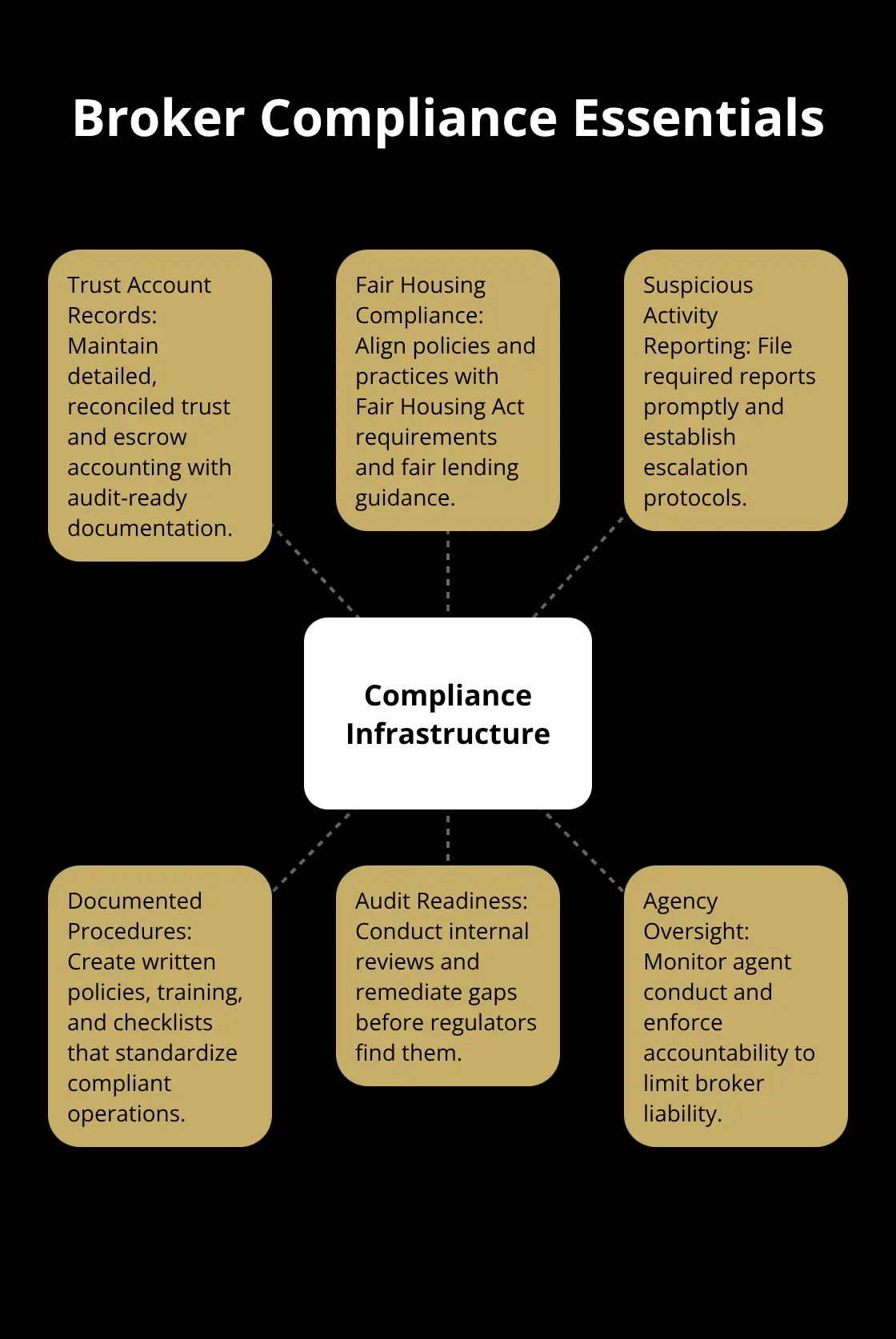
The federal compliance landscape adds another layer to broker operations. You must maintain detailed trust account records, file suspicious activity reports if required, and comply with fair lending regulations under the Fair Housing Act. Being a broker entails substantial responsibility and liability for your agents’ actions, requiring thorough compliance checks and documented procedures.
This isn’t bureaucratic theater-regulatory audits happen, and violations cost money and reputation. Build your compliance infrastructure before you need it, not after an audit identifies gaps. Your state licensing board can point you toward approved broker training programs, but seek peer recommendations specifically about which programs prepared brokers for real operational challenges rather than just exam passage. The brokers who thrive after licensing are those who treated compliance as a competitive advantage, not a burden.
Building a Brokerage That Agents Actually Want to Join
Your brokerage model determines everything that comes next-revenue stability, agent recruitment, operational complexity, and ultimately whether you survive the first year. Most brokers fail within eighteen months because they never clearly defined what problem they solve or why agents should leave their current firm to join them.
Choosing Your Revenue Model
The commission-split model dominates traditional brokerages, where you take a percentage of agent commissions in exchange for office space, compliance infrastructure, and training. This creates immediate income pressure; you need agents producing from day one, and top producers rarely join brand-new brokerages. The monthly agent fee model flips this dynamic-agents pay a fixed monthly amount regardless of sales volume, giving you predictable revenue but requiring constant recruitment to replace underperformers.
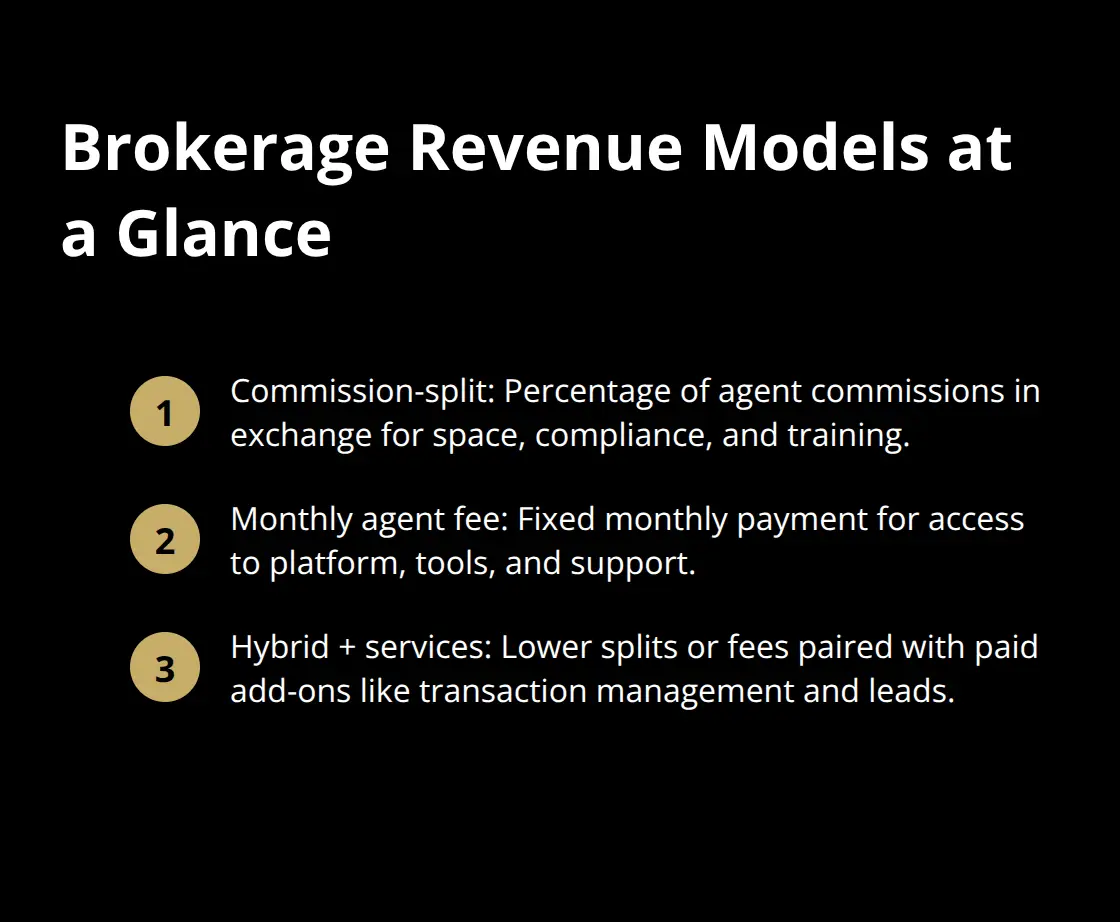
Some modern brokers combine these approaches, charging lower commissions while adding ancillary services like transaction management, lead generation, or technology tools that generate additional revenue streams.
Your choice depends on your competitive positioning and target agent profile. If you’re targeting experienced producers, commission-splits work because they keep more of their earnings. If you’re targeting agents building their practice, monthly fees with included tools and training become attractive. Document this decision in your business plan before licensing; it shapes everything from your marketing message to your operational budget to your hiring strategy.
Finding Your Competitive Edge Through Specialization
Specialization wins in modern markets because it reduces competition and builds defensible positioning. Rather than positioning as a general residential brokerage competing with established firms in your area, identify a specific niche where you have expertise or can build it quickly. Military relocation specialists, investment property brokers, luxury market experts, or commercial real estate firms all command premium positioning because they solve specific problems better than generalists. According to the National Association of REALTORS, specialized agents generate higher transaction volume in their niche than generalists attempting to serve everyone.
Your technology stack amplifies this positioning-AI-powered CRM systems, transaction management platforms, and digital marketing tools level the playing field against larger brokerages. Audit every software subscription, every office expense, and every administrative process for necessity. Negotiate hard with vendors; many will discount rates for brokerages committing to multi-year contracts.
Recruiting Agents Who Fit Your Model
Your first hire matters disproportionately-avoid chasing top producers who will never leave established firms. Instead, recruit agents with transferable skills from adjacent industries. A hire with cold-calling experience from financial services or telecom can generate significant production quickly. This person brought discipline and process to prospecting that many real estate agents lack.
Building Relationships That Sustain Growth
Build your agent relationships through regular touchpoints, understanding their individual goals, and aligning your leadership style to their needs. Top performers need autonomy and higher commission splits. Agents building their practice need training, leads, and mentorship. Different motivations require different compensation and support structures.
Final Thoughts
Becoming a broker requires more than passing an exam and securing a license. You need a clear business model, realistic financial expectations, and genuine understanding of what agents need to succeed. The brokers who thrive in modern markets treated their agent years strategically, built compliance infrastructure before licensing, and defined their competitive positioning before opening doors.
Your first year will test your resolve, so expect minimal income for six months and slower growth for about a year. Financial cushions matter more than optimistic projections, which is why you should build them before you launch. Your state licensing board provides free resources and guidance that minimize startup costs, and the National Association of REALTORS offers tools and frameworks specifically designed for new brokers navigating these exact challenges.
The agents you recruit will determine your success more than any other factor. Your first hires should bring transferable skills and hunger rather than existing production, and you should build relationships through regular touchpoints that align your leadership style to individual motivations. When you’re ready to transition out, Unbroker offers transparent, low-cost options for selling your business without high brokerage fees, giving you clarity on what your operation is actually worth.