Selling a business is one of the biggest financial decisions you’ll make. Most sellers focus on finding the right buyer and negotiating price, but they overlook the risks and due diligence that protect their interests.
At Unbroker, we’ve seen deals fall apart because sellers didn’t understand their legal exposure, hidden liabilities, or how to vet buyers properly. This guide walks you through the critical steps to safeguard yourself before, during, and after the sale.
What Risks Hide in Your Business Before You Sell
Tax and Regulatory Compliance Gaps
Most sellers discover problems during buyer due diligence that should have been caught months earlier. Tax compliance gaps, undisclosed customer contracts with termination clauses, and unresolved employee disputes surface when it’s too late to fix them cheaply. These aren’t theoretical concerns-they directly reduce your sale price or kill deals entirely. The IRS reports that roughly 70% of business audits flag issues in the three years before a sale, and many of those problems create liability that buyers demand you cover.

Regulatory violations in areas like data privacy, employment law, or industry-specific licensing expose you to fines ranging from thousands to millions depending on severity. If your business operates across multiple states or countries, you face exponentially more compliance risk. A single missed tax filing in one jurisdiction or an expired license can trigger buyer renegotiations.
Audit your tax returns, regulatory filings, and compliance records with a CPA and attorney at least six months before you approach buyers. Ask specifically about any outstanding audits, pending investigations, or unresolved notices from regulatory bodies. If you find issues, address them immediately rather than hoping buyers won’t notice.
Hidden Financial Liabilities
Hidden financial liabilities damage deals equally. Deferred revenue, accrued bonuses, lease obligations, and vendor liabilities often surprise buyers during financial statement review. You may have promised employees bonuses that technically vest after the sale, or you’ve deferred revenue from customer contracts that require delivery post-close. These items adjust the purchase price downward and create escrow disputes.
Document every financial obligation clearly and normalize your profit figures by removing one-time items. Explain what’s sustainable versus temporary. This transparency prevents late-stage shocks and strengthens buyer confidence in your numbers.
Customer and Employee Retention Risks
Customer and employee departures after closing destroy value faster than anything else. If your top three customers account for 40% of revenue and they have change-of-control clauses in their contracts, they can walk the day the sale closes. Similarly, key employees who built relationships with major clients often leave within six months post-sale, taking that institutional knowledge with them.
Review every material customer contract for termination rights, renegotiation triggers, and consent requirements now. Identify your most critical employees and understand what incentives or retention packages will keep them through transition. If customer concentration is high, start diversifying your revenue base immediately-buyers heavily discount businesses where a handful of clients drive most income. These steps position you to address buyer concerns before they become deal obstacles.
How to Build an Audit-Ready Business Before Buyers Arrive
Selling a business without conducting your own due diligence first puts you at a severe disadvantage. You won’t know what problems exist, what buyers will demand you fix, or what price adjustments they’ll claim. The sellers who emerge from diligence with the strongest positions are those who audit themselves first.
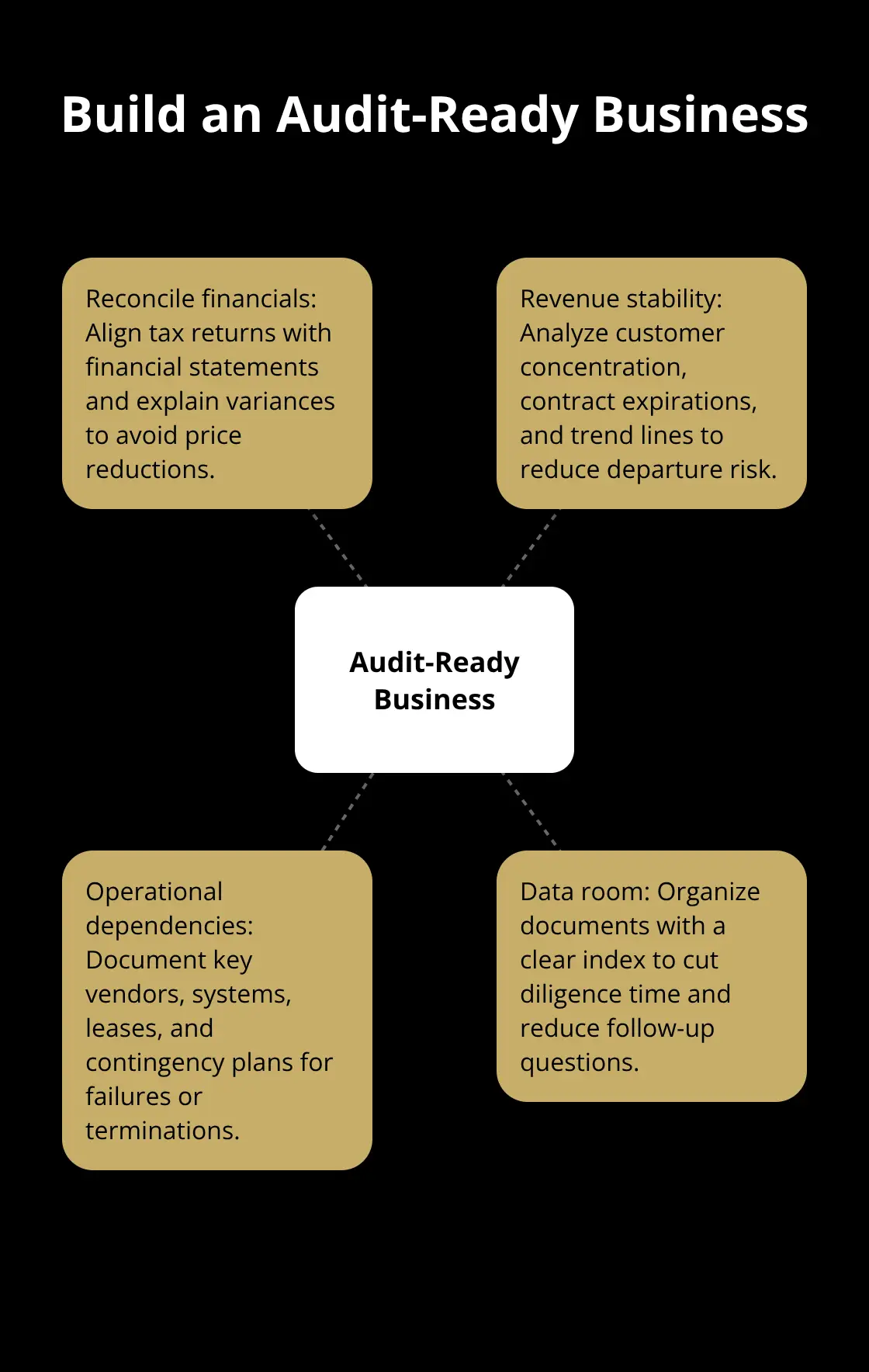
Reconcile Your Financial Records
Start by organizing three years of financial records, tax returns, and general ledger entries with a CPA who specializes in M&A. Don’t just pull documents together-reconcile your tax returns against your financial statements and identify every variance. Buyers will do this anyway, and discovering inconsistencies yourself gives you time to explain or correct them. Financial statement mismatches rank among the top reasons buyers demand price reductions or walk away entirely.
Next, create a normalized earnings schedule that removes one-time expenses, unusual revenue spikes, and non-recurring items. If you had a one-time severance cost or a project that won’t repeat, separate that from your sustainable profit. Include plain-language explanations next to any anomalies so buyers understand your core business economics without guessing.
Assess Your Revenue Stability and Customer Risk
Your revenue stability matters as much as profit. Pull a detailed customer list showing annual revenue from each account, contract expiration dates, and growth or decline trends over the past three years. Calculate your customer concentration ratio-buyers will heavily discount your valuation because they see departure risk as extremely high when concentration is significant.
Identify which customers have change-of-control clauses and note which ones require explicit consent to transfer contracts. This step prevents the scenario where your largest customer walks away the moment the sale closes. Start diversifying your revenue base immediately if concentration is high-buyers heavily discount businesses where a handful of clients drive most income.
Map Your Operational Dependencies
Map your operational dependencies by listing your key vendors, critical software systems, lease obligations, and employees whose departure would disrupt operations. For each critical vendor or system, document what happens if they terminate or fail. Do you have backup suppliers? Can you migrate to different software without losing data? How long would it take?
Buyers conduct this analysis themselves during diligence, so doing it now prevents last-minute surprises and demonstrates you understand your business deeply. This visibility into your own vulnerabilities gives you control over how you present them to potential buyers.
Organize Your Data Room for Buyer Access
Organize all this information into a clean data room with clear folder structure and a master index so buyers can find what they need without sending you dozens of follow-up questions. This single step cuts weeks off diligence timelines and signals to buyers that you’re serious and prepared. A well-structured data room also reduces the friction that typically emerges when buyers struggle to locate documents or piece together your financial story.
With your own audit complete and your data room ready, you’ve eliminated the information asymmetry that typically favors buyers. You now control the narrative around your business’s strengths and weaknesses, which positions you to address buyer concerns before they become deal obstacles or price concessions.
Protecting Yourself from the Wrong Buyer
Most sellers focus on finding any buyer willing to pay their asking price, but the wrong buyer creates far more damage than no buyer at all. A buyer without capital reserves may struggle to close, leaving you in limbo for months. A buyer planning to strip assets or eliminate your team can trigger employee departures before closing, destroying operational value. A buyer with hidden litigation or financial distress may default on earnouts or seller financing, leaving you chasing unpaid obligations for years. Vetting buyers thoroughly upfront prevents these scenarios from derailing your exit.
Verify Financial Capacity and Track Record
Start by requesting recent financial statements, bank statements covering at least three months, and proof of funds from any buyer’s lender or investor. Verify their track record by speaking directly with sellers from their previous acquisitions-not references they provide, but sellers you find independently through industry networks or your attorney’s contacts. Ask those sellers specific questions: Did the buyer close on time? Did they honor earnout calculations? Did they maintain the business or strip it? Did key employees stay?
These conversations reveal whether a buyer has a history of integrity or a pattern of disputes. Run a basic background check on the buyer’s ownership team and verify their business reputation through the Better Business Bureau, state corporate filings, and any available litigation records. If the buyer is a private equity firm, research their fund performance, investment thesis, and whether they faced regulatory actions or LP complaints. This diligence takes two to three weeks but eliminates deal risk that could cost you far more later.
Control Information Flow with Legal Protections
Equally critical is protecting your deal and controlling information flow during negotiations. Share financial statements and sensitive operational details only after a potential buyer signs a comprehensive nondisclosure agreement with protection covering your employees for 12 to 24 months post-deal. Many sellers rush this step and leak confidential information to unvetted buyers, creating competitive exposure or employee panic that spreads through your organization.
Engage an M&A attorney experienced in your industry before your first buyer conversation-not after-to draft your NDA and review all incoming letters of intent. An attorney costs $2,000 to $5,000 upfront for this work but prevents costly mistakes in deal structure, liability language, and escrow terms that could otherwise cost you hundreds of thousands.
Negotiate LOI Terms and Exclusivity Windows
When a letter of intent arrives, understand which provisions are binding and which are not. Most LOIs include non-binding price and terms but include binding provisions around broker indemnification, expense allocation, and exclusivity periods lasting 30 to 60 days. That exclusivity window restricts your ability to negotiate with other buyers, so negotiate it down to 30 days or make it contingent on the buyer demonstrating proof of funds.
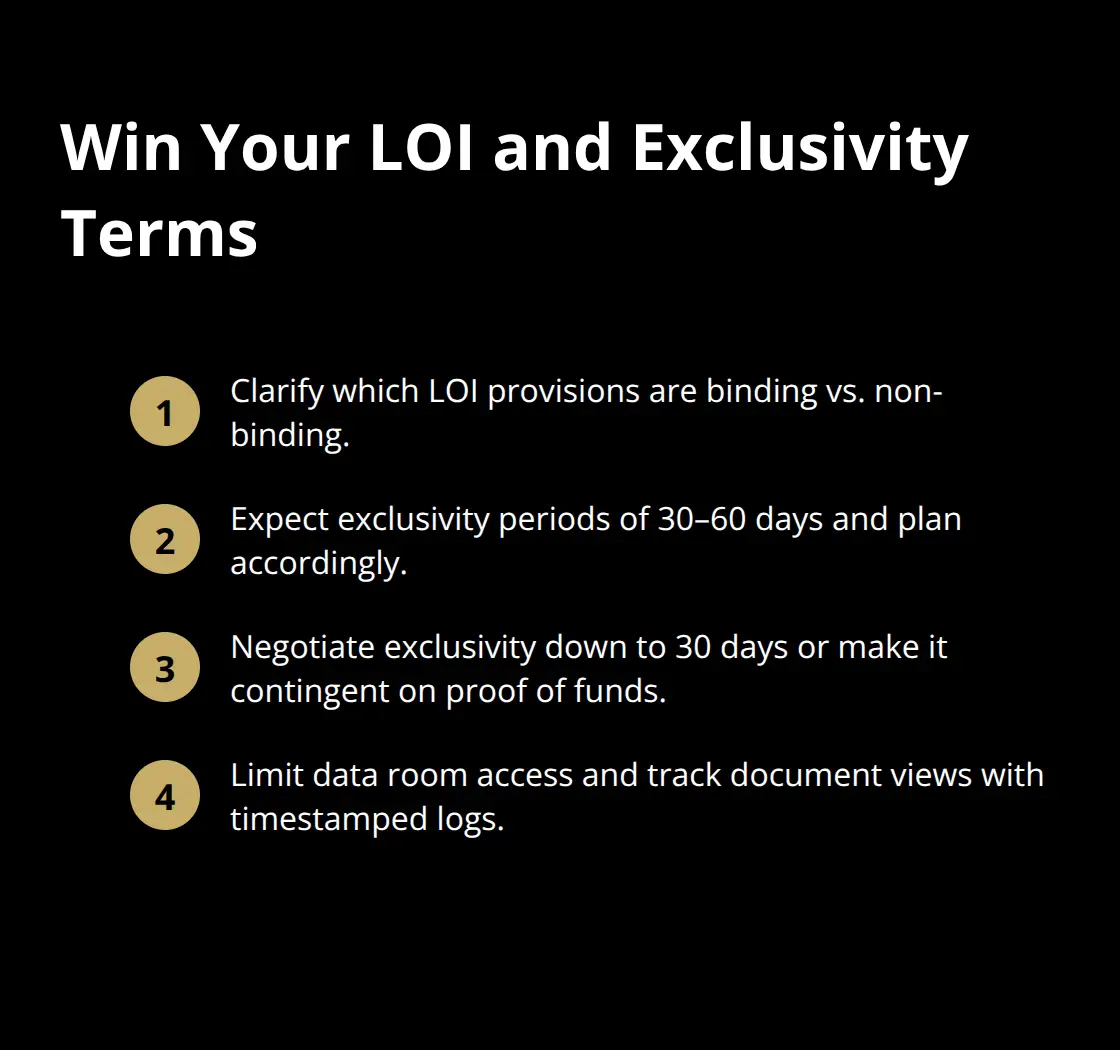
Finally, limit access to your data room and track who views what documents using timestamped access logs. This prevents competitors from disguising themselves as buyers to steal customer lists or pricing information.
Final Thoughts
Selling a business without understanding risks and due diligence leaves you vulnerable to price reductions, deal collapse, and post-sale disputes. The sellers who achieve their best outcomes audit themselves first, organize their information transparently, and vet buyers with the same rigor buyers apply to them. These steps cost time and money upfront, but they cost far less than discovering problems during buyer diligence or closing a deal with the wrong buyer.
You control the narrative when you’ve already identified and addressed your vulnerabilities. Identify tax compliance gaps, hidden liabilities, and customer concentration risks before approaching the market. Reconcile your financial records, normalize your earnings, map your operational dependencies, and build a clean data room that signals professionalism and reduces buyer friction.
Verify buyer financial capacity and track record through independent conversations with their previous acquisition targets, protect your confidential information with a solid nondisclosure agreement, and engage an M&A attorney before your first buyer conversation. We at Unbroker help sellers navigate this process with transparent pricing, legal templates, and expert guidance-visit Unbroker to explore options that fit your timeline and budget.