Selling a business is one of the biggest financial decisions you’ll make. Most business owners underestimate how much planning it takes to maximize value and avoid costly mistakes.
We at Unbroker have helped hundreds of sellers navigate the exit phases successfully. This guide breaks down exactly what happens at each stage, from initial assessment through closing the deal.
Phase 1: Assess Your Business Readiness
Pull together three years of tax returns and financial statements to show buyers a clear profit trend. Hard numbers matter far more than guesses when you’re determining what your business is actually worth.

According to SC&H Wealth, 80-90% of owners tie their personal wealth directly to their business, which means an accurate valuation impacts your retirement security. Buyers focus on EBITDA (earnings before interest, taxes, depreciation, and amortization) or SDE valuation metrics, not gross revenue-a critical distinction most owners miss. An independent written valuation costs money upfront but reveals exactly where gaps exist between your perceived value and what a buyer will actually pay.
Identify what makes your business defensible to a buyer next. Document your intellectual property, customer contracts, and recurring revenue streams, as these assets drive higher valuations and attract serious buyers. Reduce your personal involvement in daily operations now rather than after you list, since buyers heavily discount valuations when the owner is irreplaceable. Companies that invest in succession planning see higher employee retention rates and lower recruitment costs. Check your market timing too, as growth momentum, industry trends, and buyer appetite all shift the value equation. Start these conversations with advisors at least five years before you want to exit, giving yourself time to strengthen weak areas and capitalize on your business’s true potential.
With a clear picture of your business’s current state and value, you can now move into the next critical phase: preparing your business to attract serious buyers and command the highest possible price.
Phase 2: Getting Your Business Sale-Ready
Buyers conduct thorough due diligence on every business they seriously consider purchasing, and they will scrutinize your operational documentation from day one. Create a comprehensive operations manual that details your key processes, systems, and workflows-this proves your business can run without you and justifies a higher valuation. Document all customer contracts, vendor agreements, and service level commitments in one organized location, since buyers need clarity on revenue stability and contract terms before they commit. According to SC&H Wealth research, organizations with documented succession planning and clear processes report higher employee retention, which directly impacts buyer confidence and purchase price. Pull together three years of clean financial records with consistent accounting practices, as inconsistencies raise red flags and trigger deeper due diligence requests that slow down your sale timeline.
Your financial records must be audit-ready well before you list the business. Address any tax compliance issues, reconcile your books, and normalize your EBITDA by removing one-time expenses or owner perks that won’t continue under new management-buyers calculate value based on realistic ongoing earnings, not inflated numbers. Fix operational weaknesses that buyers will inevitably discover: aging equipment, high employee turnover, customer concentration with one or two major clients, or excessive debt that reduces profitability. SC&H Wealth data shows that reducing owner dependence and strengthening customer relationships directly boost sale price and buyer confidence. With your financial and operational house in order, you’re positioned to move into Phase 3, where you’ll market your business to the right buyers and showcase exactly why they should pay top dollar.
Phase 3: Market Your Business Effectively
Most business owners create generic listings that blend into the crowd. Instead, lead with specific financial metrics that buyers actually care about-your EBITDA, recurring revenue percentage, customer retention rate, and year-over-year growth. Include concrete numbers like your average customer lifetime value, monthly recurring revenue, and profit margins, since vague descriptions trigger skepticism and lower offers. SC&H Wealth research shows that buyers value repeatable revenue streams significantly higher than one-time transactions, so prominently feature any subscription models or long-term contracts you’ve locked in. Your listing answers the question buyers ask first: what will this business earn me in the next twelve months?
Target your outreach strategically rather than casting a wide net to unqualified prospects. Identify which buyer type matches your business best-a strategic buyer seeking market share, a financial buyer like a private equity firm looking for cash flow, or an entrepreneur buying their first business-then tailor your messaging to what each values most. Competitive buyers care about market consolidation and customer overlap; financial buyers obsess over cash flow consistency and scalability; entrepreneur buyers want systems that work without them.
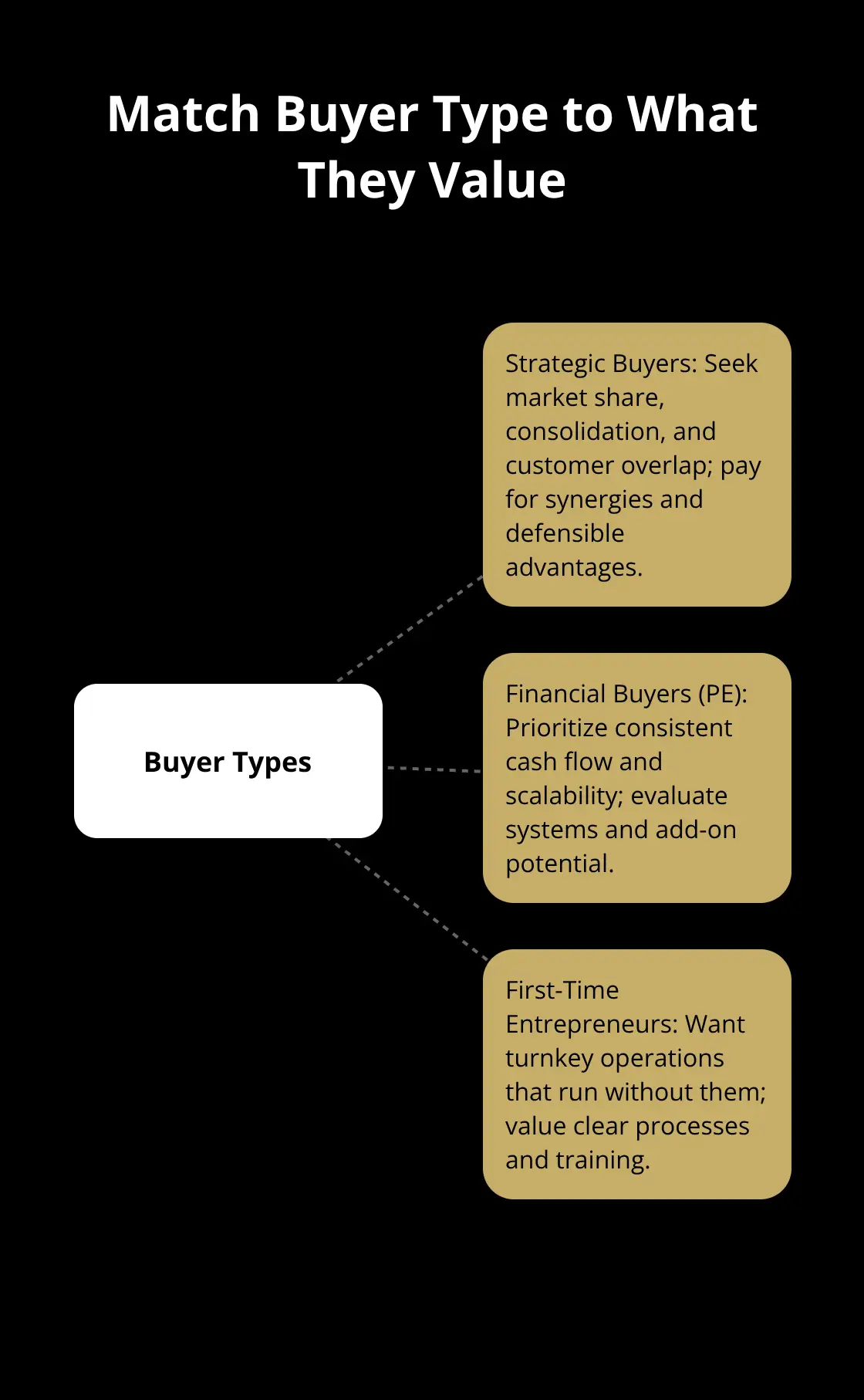
Use industry networks, trade associations, and LinkedIn to reach qualified prospects instead of hoping a general listing attracts the right person. Highlight defensible competitive advantages (your proprietary processes, exclusive customer relationships, brand recognition, or market position) since these factors justify premium valuations and attract serious offers rather than lowball bids.
With your business positioned as a premium opportunity backed by solid metrics, you’re ready to move into Phase 4, where serious buyers emerge and negotiations determine whether you capture maximum value from your sale.
Phase 4: Close the Deal Without Leaving Money on the Table
Hire an M&A advisor or attorney who specializes in business sales before you sit down with a buyer-this single decision typically adds 10-15% to your final proceeds by preventing bad deal structures and unfavorable terms. When a buyer presents a purchase agreement, your attorney must review every clause before you sign, especially provisions around earn-outs, non-competes, and representations and warranties that create post-close liability. Capital gains tax planning directly affects how much money lands in your account after closing, so structure the sale (asset versus stock) with your CPA to minimize tax impact. Professionals keep emotions out of negotiations and anchor discussions on your valuation and market comparables instead of accepting lowball offers. Buyers will exploit any hesitation if you negotiate alone.
Due diligence requests will arrive in waves, and your response speed determines deal momentum and final price. Organize your documentation now so you produce customer contracts, employee records, tax returns, and operational data within 48 hours instead of weeks-slow responses signal disorganization and trigger buyer skepticism that kills deals. Don’t volunteer information beyond what buyers ask for, and flag any potential red flags through your attorney rather than hoping they disappear during review.
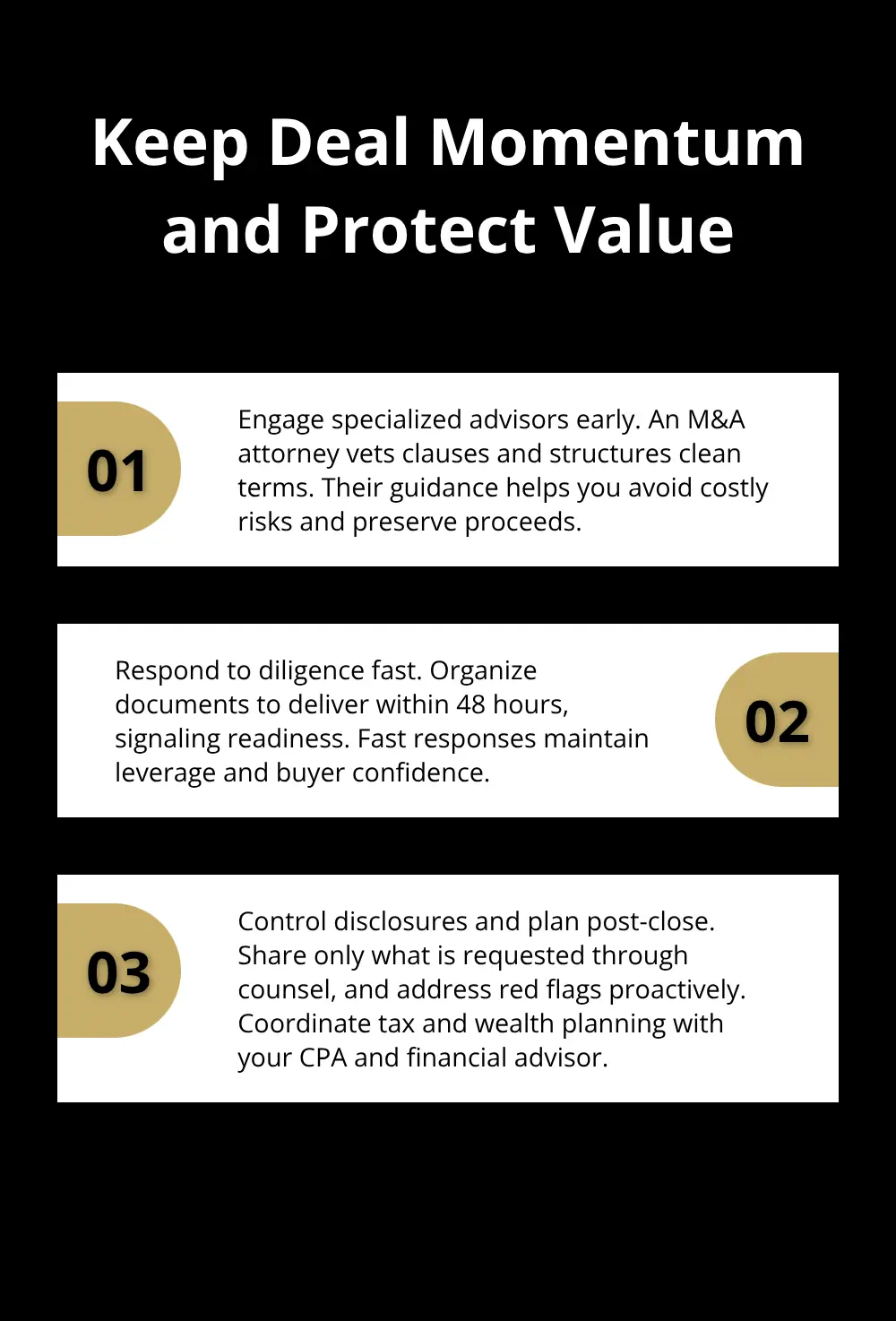
A financial advisor working alongside your attorney and CPA coordinates post-close planning and ensures you understand exactly what happens to your proceeds and how they fit your retirement timeline. With your professional team handling technical details, you focus on whether the offer meets your personal financial goals-and that clarity positions you to move into the final phase where you structure the deal terms and prepare for life after the sale.
Final Thoughts
You’ve now walked through all four exit phases, from assessing your business’s true value to closing a deal that protects your interests. The path from owner to seller requires discipline, professional guidance, and realistic timelines-most business sales take six to twelve months from initial listing to closing, though complex deals or multiple buyer rounds can extend that window. Starting your exit planning five years before you want to leave gives you time to fix operational gaps, build management depth, and position your business as a premium acquisition target rather than a distressed sale.
Assemble your professional team early: an M&A advisor or attorney, a CPA who understands deal structure and tax implications, and a financial planner to map your post-sale life. These professionals pay for themselves by preventing costly mistakes and negotiating terms that keep more money in your pocket. The difference between a well-structured deal and a poorly negotiated one often exceeds the cost of expert guidance by tens of thousands of dollars.
Your next step depends on where you stand right now. If you’re still years away from selling, focus on building systems that work without you and documenting your competitive advantages. If you’re within two years of your target exit date, pull together your financial records and get an independent valuation to understand what buyers will actually pay for your business.