Most business owners accept the first decent offer they receive, leaving significant money on the table. Research shows that competitive bidding can increase sale prices by 15-40% compared to single-buyer negotiations.
We at Unbroker have seen this pattern repeatedly: businesses with multiple interested buyers consistently achieve higher valuations and better terms. The difference often amounts to hundreds of thousands of dollars in additional proceeds.
Why Competition Multiplies Your Sale Price
Competition transforms business sales from price negotiations into wars between buyers. When multiple buyers compete for the same business, the dynamics shift dramatically in the seller’s favor. The mathematics are straightforward: when two qualified buyers compete, each must exceed the other’s offer to win. This dynamic creates upward pressure that single-buyer negotiations simply cannot generate.
The Scarcity Effect Drives Premium Prices
Buyers behave differently when they know competition exists. Strategic acquirers who normally negotiate aggressively will submit their highest offer immediately when they face competition. Private equity firms, accustomed to lengthy due diligence processes, accelerate timelines and improve terms to secure deals. Speed benefits sellers because motivated buyers make fewer demands and accept more seller-friendly terms.
Market Data Proves Competition Works
Small business sales data shows compelling evidence of competition’s impact. The median sale price reached $329,000, rising to $352,000 in Q2 of 2025. The majority of businesses sold for less than $1,000,000. The increase isn’t limited to sale price.
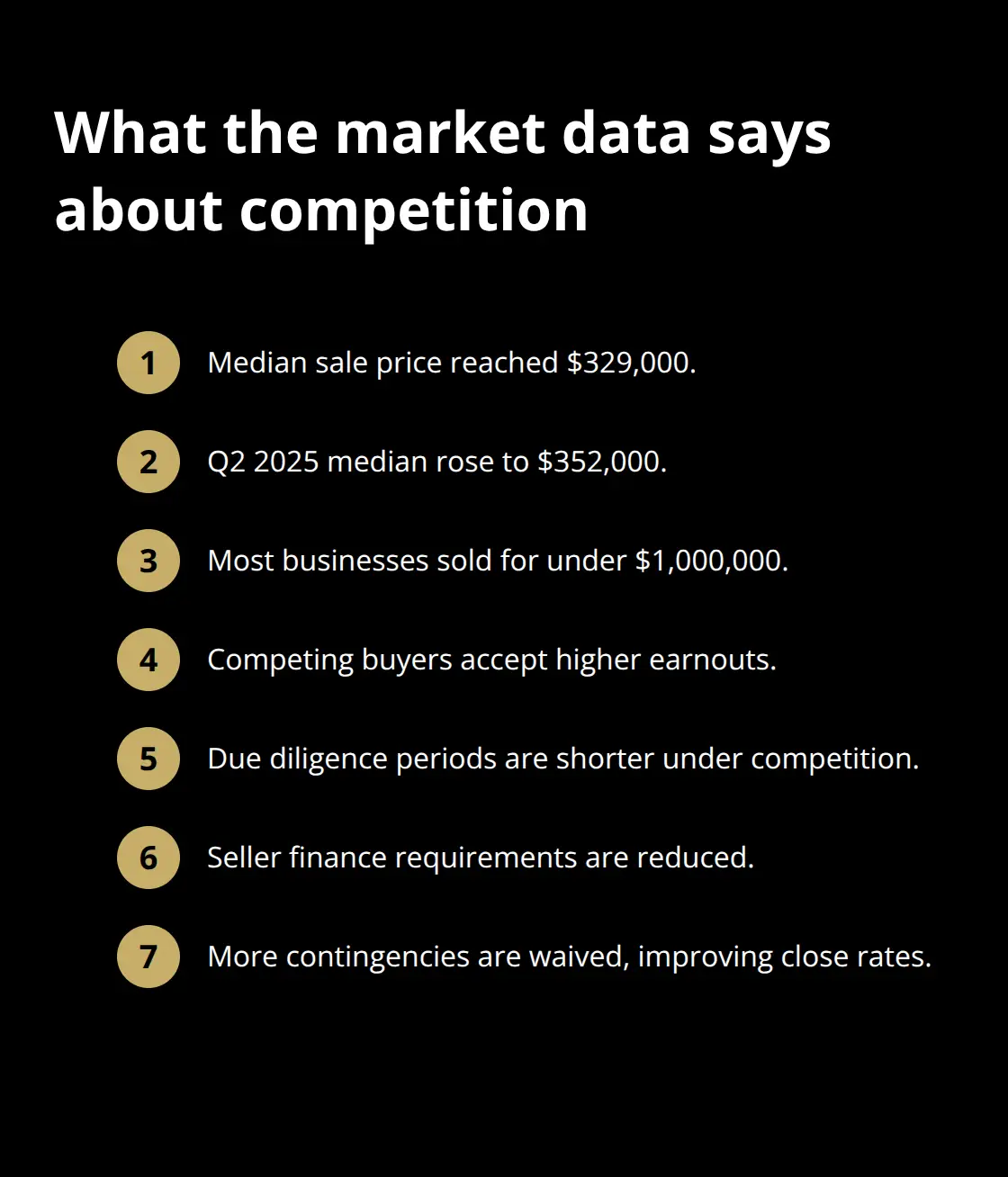
Buyers in competition accept higher earnouts, shorter due diligence periods, and reduced seller finance requirements. They also waive contingencies that single buyers typically demand, which creates cleaner transactions with higher close probabilities.
Strategic Buyers Pay More Under Pressure
Corporate acquirers change their approach when they face competition. They skip their usual lowball initial offers and present their best terms upfront knowing that delays cost them deals. First-time buyers who normally request extensive seller finance will offer cash deals to stand out. This shift in buyer behavior explains the premium prices that competitive sales generate. Well-prepared businesses can command higher sale prices and attract more qualified buyers through strategic positioning.
The key question becomes: how do you generate this competition for your business?
How Do You Create a Bidding War for Your Business?
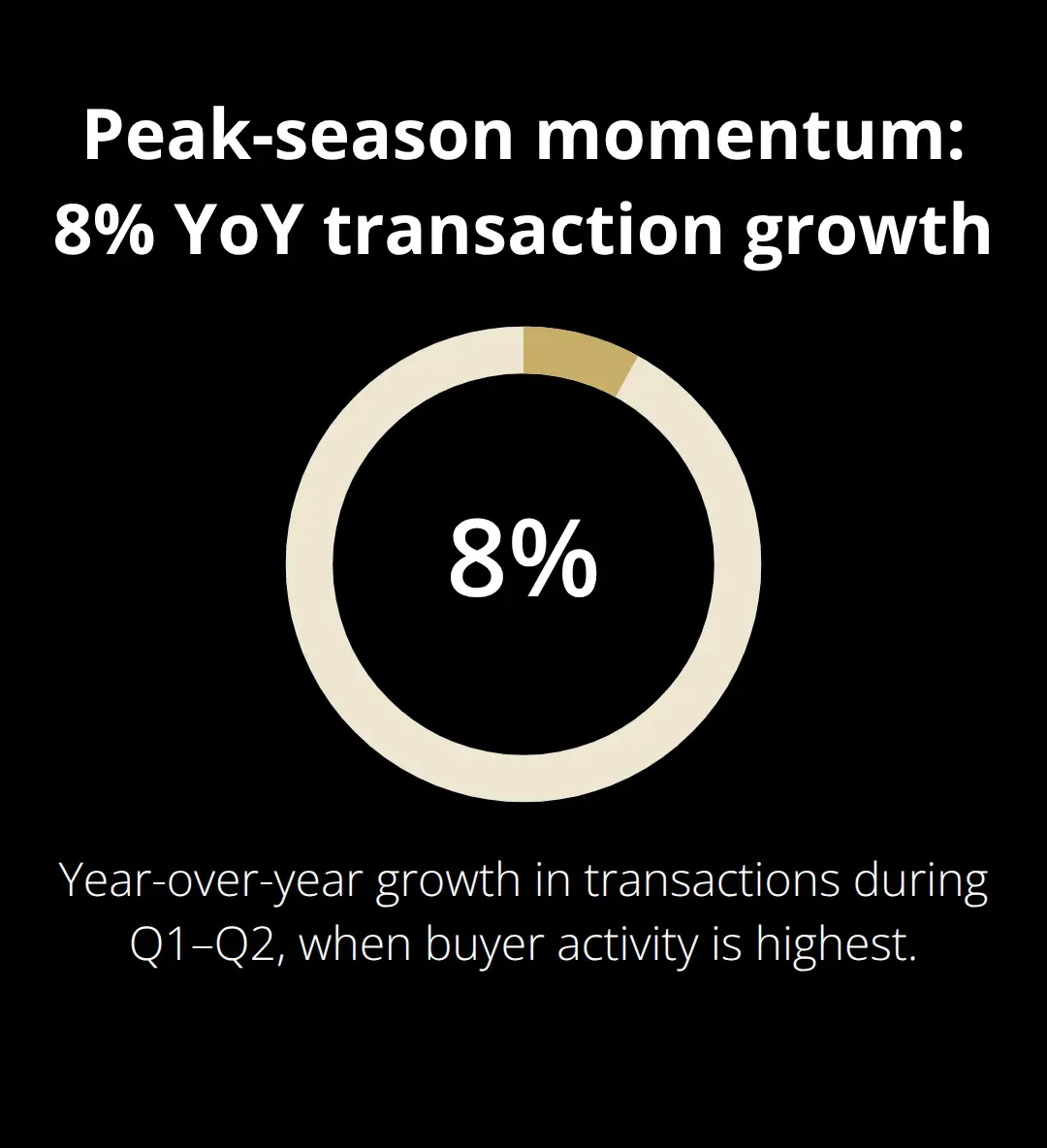
Market timing separates successful sellers from those who struggle to find buyers. Q1 and Q2 consistently produce the highest buyer activity, with business buying intensifying and transactions growing 8% year-over-year. Corporate buyers allocate budgets in January, which makes spring the optimal season for sales. Avoid summer months when decision-makers take vacations, and December when buyers focus on year-end priorities rather than new acquisitions.
Prepare Documentation That Sells Your Business
Professional buyers evaluate dozens of opportunities monthly. Your business memorandum must stand out within the first two pages or buyers move on. Include three years of audited financials, detailed customer concentration analysis, and specific growth drivers with supporting data. Add photographs of facilities, equipment, and operations.
Management teams that provide comprehensive documentation receive more qualified inquiries than those with basic information packages. Having comprehensive, up-to-date financial statements is critical during a business sale, and buyers are sure to scrutinize every detail. Create separate technical appendices for complex operations, but keep the main document under 25 pages. Buyers who request additional information after they review your memorandum represent genuine interest, while those who disappear typically found gaps in your initial presentation.
Maximize Exposure Through Strategic Channels
Professional networks generate higher-quality buyers than general business-for-sale websites. Industry associations, trade publications, and competitor suppliers know qualified acquirers who actively seek businesses like yours. Regional business brokers maintain buyer databases that segment by industry and transaction size.
Investment bankers who specialize in your sector can access strategic buyers who pay premium prices for market consolidation. Online platforms like BizBuySell reach individual buyers, but focus on businesses under $5 million. LinkedIn outreach to industry executives often produces unexpected strategic interest.
Target multiple potential buyers across various channels to generate serious inquiries, which typically yields formal offers. Consider whether auctioning your business might create additional competitive pressure among buyers. Once you have multiple interested parties, the real challenge begins: how do you manage these competing offers to maximize your sale price?
How Do You Handle Multiple Offers Without Losing Control?
Establish Non-Negotiable Deadlines From Day One
Set identical response deadlines for all buyers and communicate these dates in writing. Give buyers 72 hours maximum to submit initial offers, then 48 hours for best and final offers. Shorter deadlines create urgency while longer periods allow buyers to lose interest or find alternative deals. Send deadline reminders 24 hours before expiration via email with read receipts enabled.
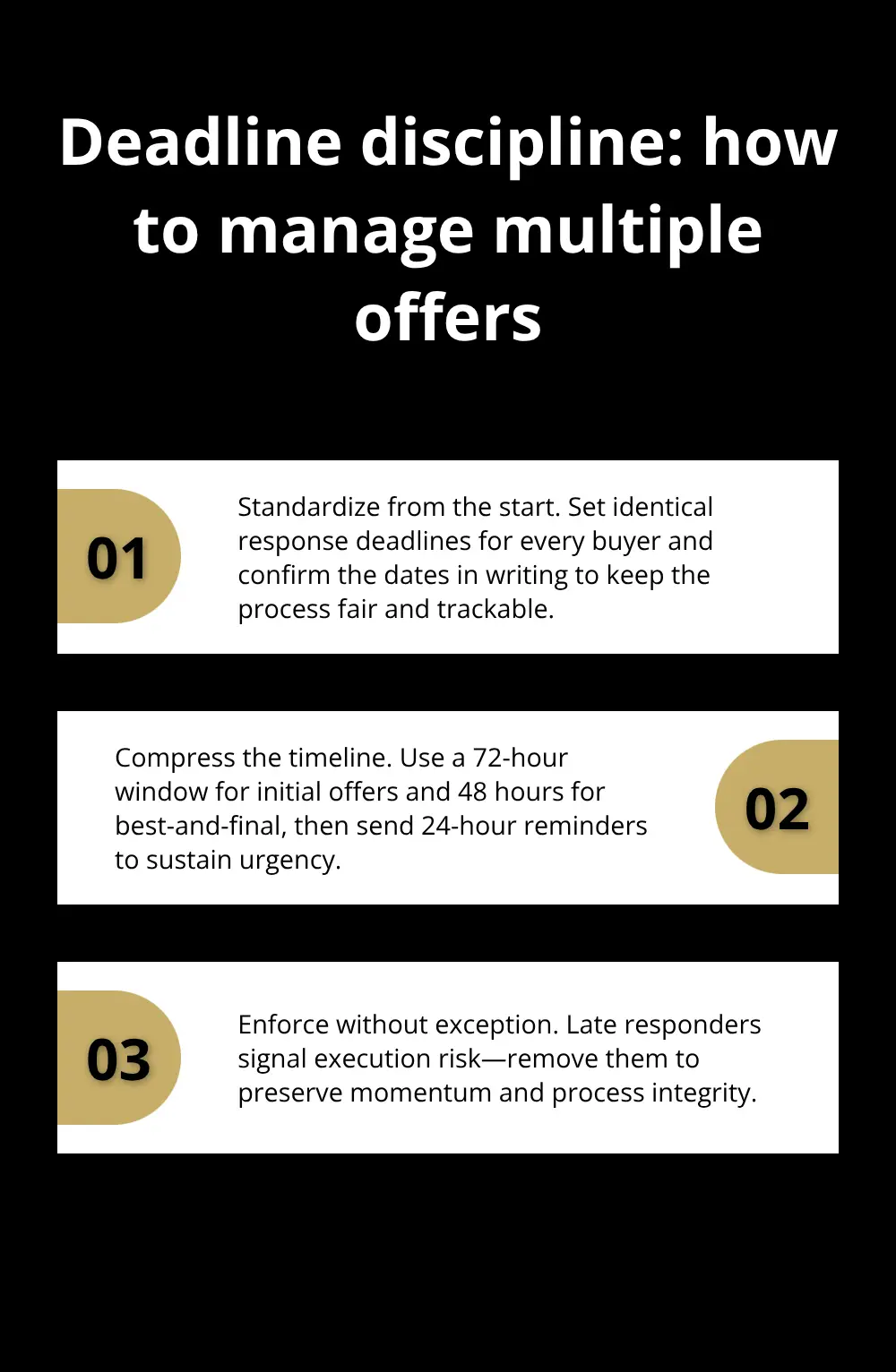
Buyers who miss deadlines demonstrate poor execution capability and will likely create problems during due diligence. Remove late responders from consideration immediately to maintain process integrity. This approach separates serious buyers from those who lack commitment or resources to complete transactions.
Look Past the Purchase Price to Find the Real Deal Value
Purchase price represents only part of your total transaction value. Examine payment structure first: all-cash offers provide greater certainty than deals that require seller finance. Evaluate earnout provisions carefully because earnouts often face payment disputes over accounting or business performance issues.
Check due diligence timelines since extended periods increase deal failure rates and create opportunities for price renegotiation. Review post-closing employment requirements, non-compete restrictions, and representation warranties that could cost you money after the sale. Calculate net proceeds after taxes, legal fees, and potential earnout shortfalls to identify the true winner.
Use Competition to Improve Terms Without Price Wars
Share offer summaries with other buyers without names or specific financial details. Tell Buyer A that other offers include shorter due diligence periods, then ask if they can match those terms. Inform Buyer B that other buyers waived certain contingencies and request similar concessions.
This approach improves deal terms without bidding wars that can collapse when buyers reach their maximum price. Schedule final offer submissions simultaneously to prevent last-minute withdrawals. Most buyers will improve their initial terms when they know competition exists, but avoid auction-style processes that create winner’s curse scenarios where the highest bidder overpays and later seeks price reductions.
Maintain Professional Communication Throughout
Document all buyer interactions in writing and respond to inquiries within 24 hours. Provide identical information to all buyers to maintain fairness and prevent accusations of favoritism. Create standardized response templates for common questions about financials, operations, and deal structure.
Keep buyers informed about process timelines and next steps without revealing confidential details about other offers. Professional communication builds trust and keeps qualified buyers engaged while you evaluate their proposals. By avoiding common mistakes such as lack of preparation and failing to structure flexible deals, you can maximize your sale value throughout the negotiation process.
Final Thoughts
Multiple offers transform business sales from negotiations into competitive bidding situations that consistently deliver higher sale prices. The data proves this approach works: businesses with competing buyers achieve 15-40% price premiums compared to single-buyer transactions. Success requires strategic timing, professional documentation, and disciplined process management.
The biggest mistake sellers make is accepting the first reasonable offer without testing market demand. Others fail when they set unrealistic deadlines, focus solely on purchase price while ignoring deal terms, or lose control of the process through poor communication. These errors cost sellers hundreds of thousands in potential proceeds (sometimes more than their entire retirement fund).
Start preparation for your business sale at least 12 months before you plan to exit. Clean up financial records, address operational weaknesses, and develop comprehensive marketing materials. We at Unbroker help business owners navigate competitive sales through our transparent, low-cost platform that provides access to extensive buyer networks and marketing tools.