Selling an electrical contracting company is a significant decision that requires careful planning and execution. At Unbroker, we’ve guided numerous business owners through this process, and we understand the unique challenges faced by electrical contractors.
Exit planning for electrical contracting firms involves several critical steps, from accurately valuing your business to effectively marketing it to potential buyers. In this post, we’ll walk you through the essential first steps to ensure you’re well-prepared for a successful sale.
What’s Your Electrical Contracting Business Worth?
Financial Performance: The Core of Your Valuation
Determining the value of your electrical contracting business starts with a thorough examination of your financial statements. Focus on your revenue trends, profit margins, and cash flow over the past 3-5 years. NECA has found that webinars have proven successful in communicating timely, relevant updates to their membership on new regulations, industry developments, and growth areas. This information can be valuable for understanding industry trends that may affect your business’s value.
Tangible Assets: The Visible Value
Your physical assets form a significant part of your business’s worth. This includes vehicles, tools, equipment, and inventory. The Bureau of Labor Statistics provides national industry-specific occupational employment and wage estimates calculated with data collected from employers of all sizes, in metropolitan and non-metropolitan areas. This data can help you understand how your business compares to industry standards in terms of employment and wages.
Intangible Assets: The Hidden Treasures
While less tangible, certain assets carry substantial weight in your valuation. Your customer relationships (especially long-term contracts or service agreements) are invaluable. Research has shown that accurate valuation of existing and new technologies and grid services is important for stimulating investment in grid modernization. This could be relevant if your business is involved in or affected by grid modernization efforts.
Your company’s reputation and industry certifications also play a crucial role. Awards or high ratings on platforms like Angi or HomeAdvisor serve as concrete evidence of your business’s quality and reliability. Make sure to highlight these achievements in your valuation process.
Market Conditions: The External Factors
The current state of the electrical contracting industry and local market conditions influence your business’s value. Factors such as demand for electrical services, competition in your area, and economic forecasts all play a role. Research industry reports and local economic data to understand how these external factors might impact your valuation.
Professional Valuation: The Expert Opinion
While you can estimate your business’s worth, a professional valuation provides an objective, comprehensive assessment. Business appraisers use various methods (such as asset-based, market-based, and income-based approaches) to determine a fair market value. This expert opinion not only gives you a solid starting point for negotiations but also lends credibility to your asking price.
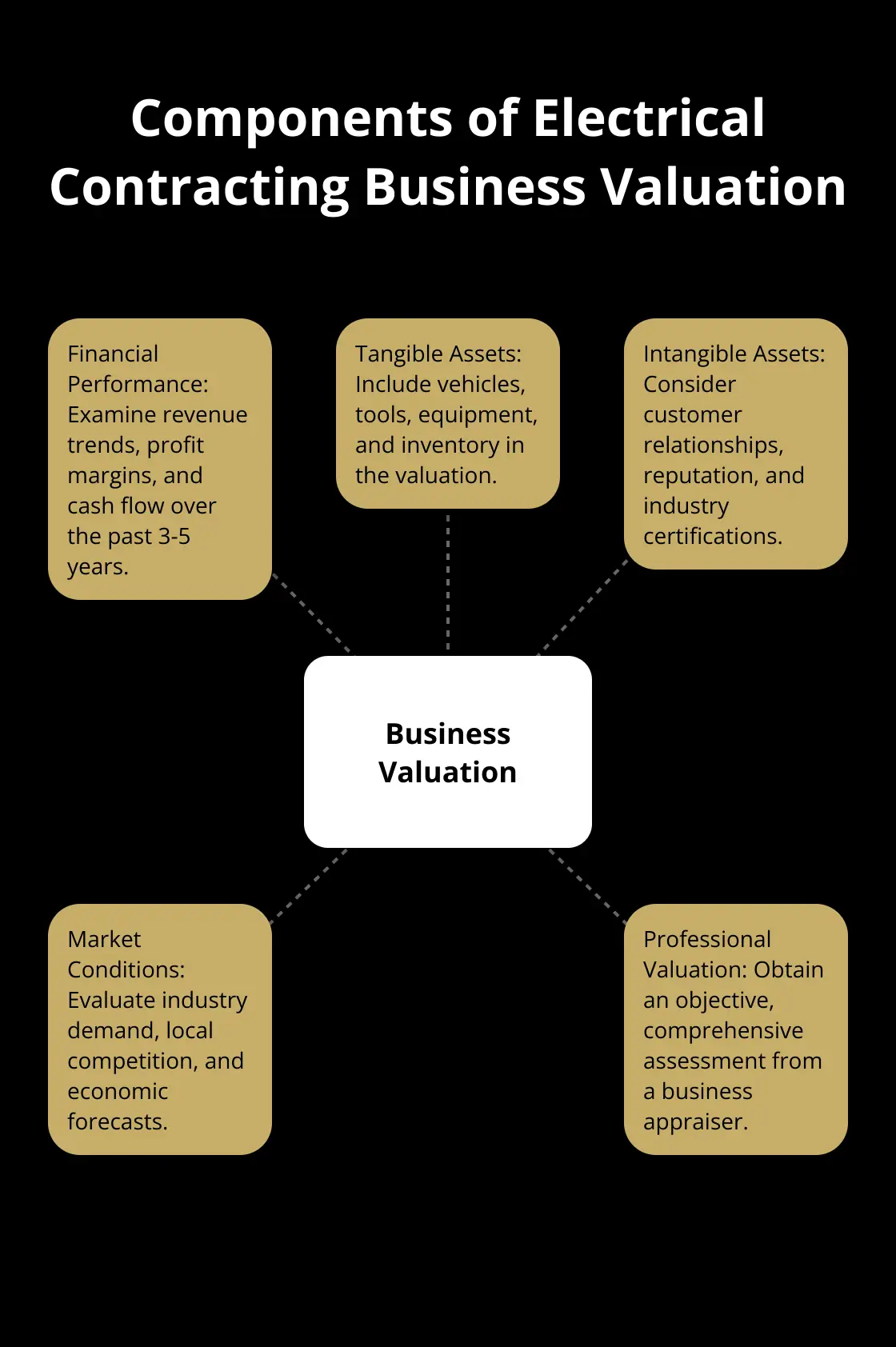
Valuing your electrical contracting business involves more than just number crunching. It requires a comprehensive assessment of your company’s financial health, physical assets, intangible strengths, and market position. With this thorough evaluation complete, you’re ready to move on to the next critical step: preparing your business for sale.
How to Prepare Your Electrical Contracting Business for Sale
Preparing your electrical contracting business for sale requires meticulous planning and execution. A well-prepared business can command a higher sale price and attract more qualified buyers. Let’s explore the key steps to get your business ready for the market.
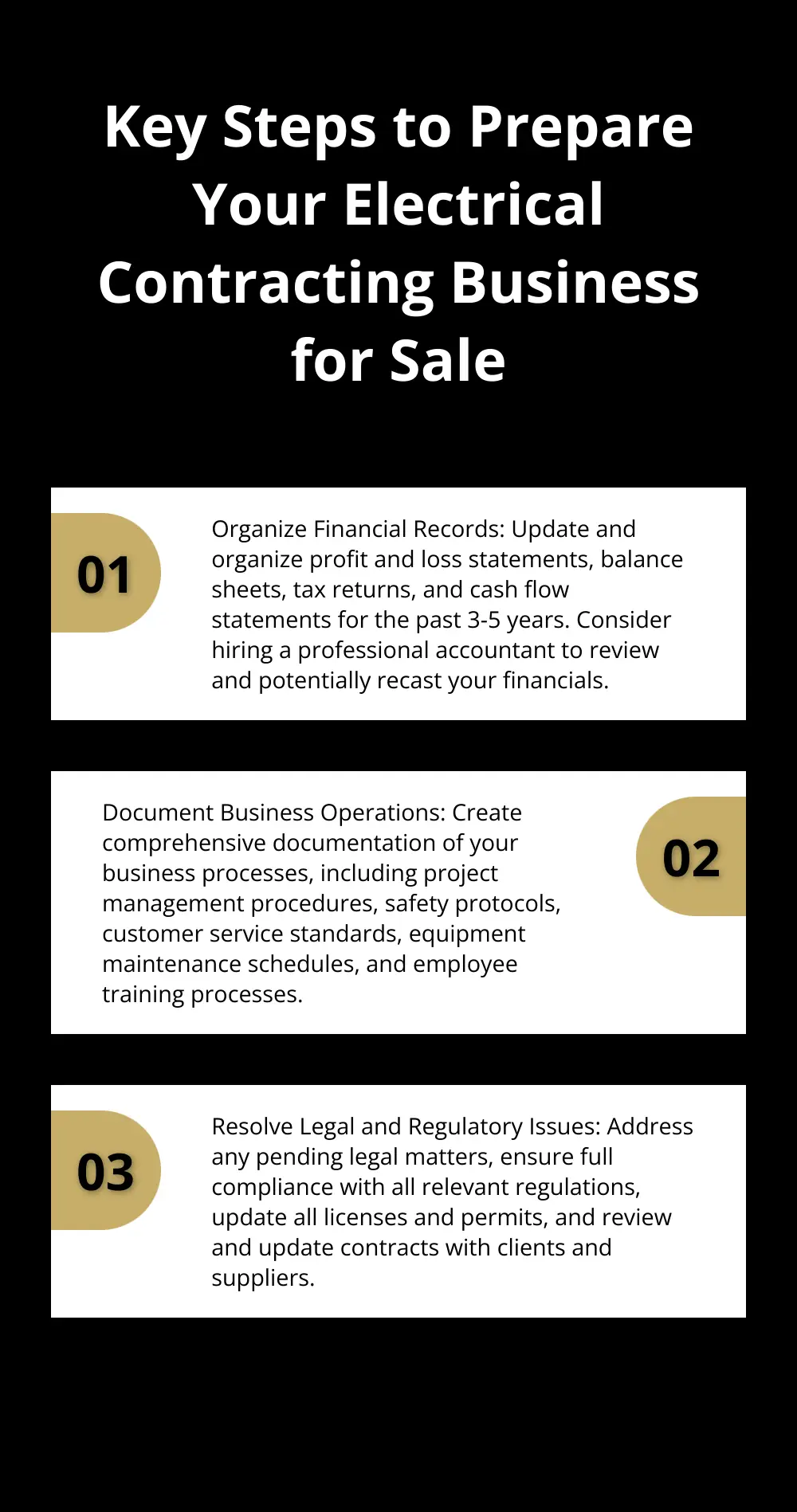
Organize Your Financial Records
The foundation of a successful sale lies in clean, accurate financial records. Update and organize your:
- Profit and loss statements
- Balance sheets
- Tax returns
- Cash flow statements (for the past 3-5 years)
Consider hiring a professional accountant to review and potentially recast your financials. This process can uncover areas where your business’s true profitability might be understated due to personal expenses or one-time costs.
Document Your Business Operations
Create comprehensive documentation of your business processes. This includes:
- Project management procedures
- Safety protocols
- Customer service standards
- Equipment maintenance schedules
- Employee training processes
Electrical business forms ensure smooth business operations and eliminate errors. Develop an operations manual that covers all these aspects, making your business more attractive to potential buyers.
Resolve Legal and Regulatory Issues
Address any pending legal matters and ensure full compliance with all relevant regulations:
- Update all licenses and permits
- Resolve outstanding litigation
- Ensure compliance with OSHA standards
- Review and update contracts with clients and suppliers
The National Electrical Contractors Association reports that businesses with clear regulatory compliance are viewed more favorably by buyers and can command higher sale prices.
Strengthen Your Team and Customer Base
A stable workforce and diverse customer base significantly increase your business’s value. Review your staffing structure and implement retention strategies for key employees (such as bonuses or equity plans). Work on diversifying your client relationships, focusing on long-term contracts.
Upgrade Your Technology
Invest in modern software and tools to streamline operations. Implementing a robust project management system or a customer relationship management (CRM) tool can make your business more attractive to buyers.
As you complete these preparation steps, you’ll not only increase the value of your electrical contracting business but also make it more appealing to potential buyers. The next challenge is to effectively market your business to the right audience. Let’s explore how to identify and reach potential buyers in the next section.
How to Market Your Electrical Contracting Company
Identify Your Ideal Buyer
Create a profile of your ideal buyer. Consider larger electrical contracting firms looking to expand, investors seeking to enter the industry, or key employees interested in taking over the business. Understanding your target buyer will shape your marketing approach.
The National Electrical Contractors Association (NECA) reports that full-line electrical distributors still probably sell 70% or more of all electrical products. This statistic underscores the importance of networking within your industry.
Craft a Compelling Business Overview
Your business overview must make a strong first impression. Focus on what makes your electrical contracting company unique. Do you specialize in a particular niche, like smart home installations or industrial electrical work? Have you developed proprietary processes that increase efficiency?
Include key financial metrics, but don’t stop there. Highlight your company’s growth potential, stable client base, and any contracts or recurring revenue streams. If you’ve implemented cutting-edge technology or have a particularly skilled workforce, emphasize these points.
Leverage Industry-Specific Networks
Tap into industry-specific networks to reach potential buyers. NECA and other trade associations often have forums or events where business sales are discussed. Online platforms dedicated to electrical contracting can also connect you with potential buyers.
Don’t overlook local business networks. Chambers of Commerce and regional business associations can be excellent resources for finding buyers who understand your local market.
Maintain Confidentiality
While marketing your business, you must maintain confidentiality. A leak about your intention to sell could unsettle employees and clients, potentially damaging your business value. Use blind ads and non-disclosure agreements to protect sensitive information.
Utilize Professional Marketing Services
Consider using professional marketing services to reach a wider pool of qualified buyers. Companies like Unbroker offer processes to match sellers with potential buyers while maintaining strict confidentiality. These services can provide access to a vast buyer network and premium marketing tools (without the high brokerage fees typically associated with traditional business brokers).
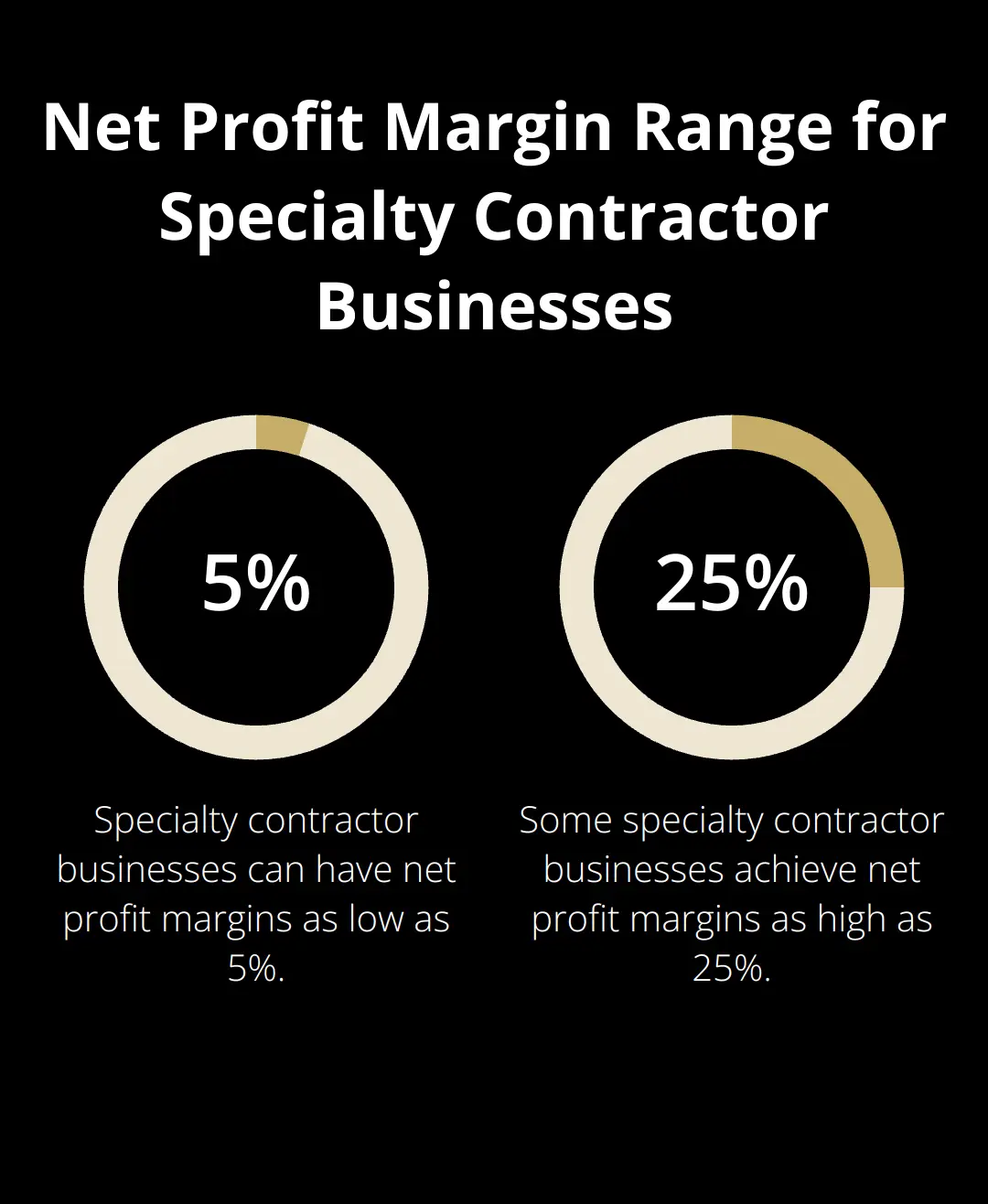
Specialty contractor businesses typically have net profit margins ranging from 5-25% depending on business size and specialization. Highlighting your company’s financial performance in relation to this benchmark can be a strong selling point.
Final Thoughts
Exit planning for electrical contracting firms requires careful preparation and strategic execution. The process starts with an accurate valuation of your business, considering financial performance, assets, and market conditions. You must then prepare your company for sale by organizing records, documenting operations, and resolving any legal issues.
Effective marketing of your electrical contracting company is essential to attract potential buyers. Identify your ideal buyer, craft a compelling business overview, and leverage industry-specific networks while maintaining confidentiality. These steps can significantly impact the success of your sale, potentially leading to a higher sale price and smoother transaction.
Unbroker offers a modern platform for selling businesses with transparent, low-cost options that eliminate high brokerage fees. We provide the tools and support you need to navigate the sale of your electrical contracting company successfully (whether you prefer a hands-off approach or a more involved process). Our goal is to ensure that your company’s sale reflects its true value and potential.