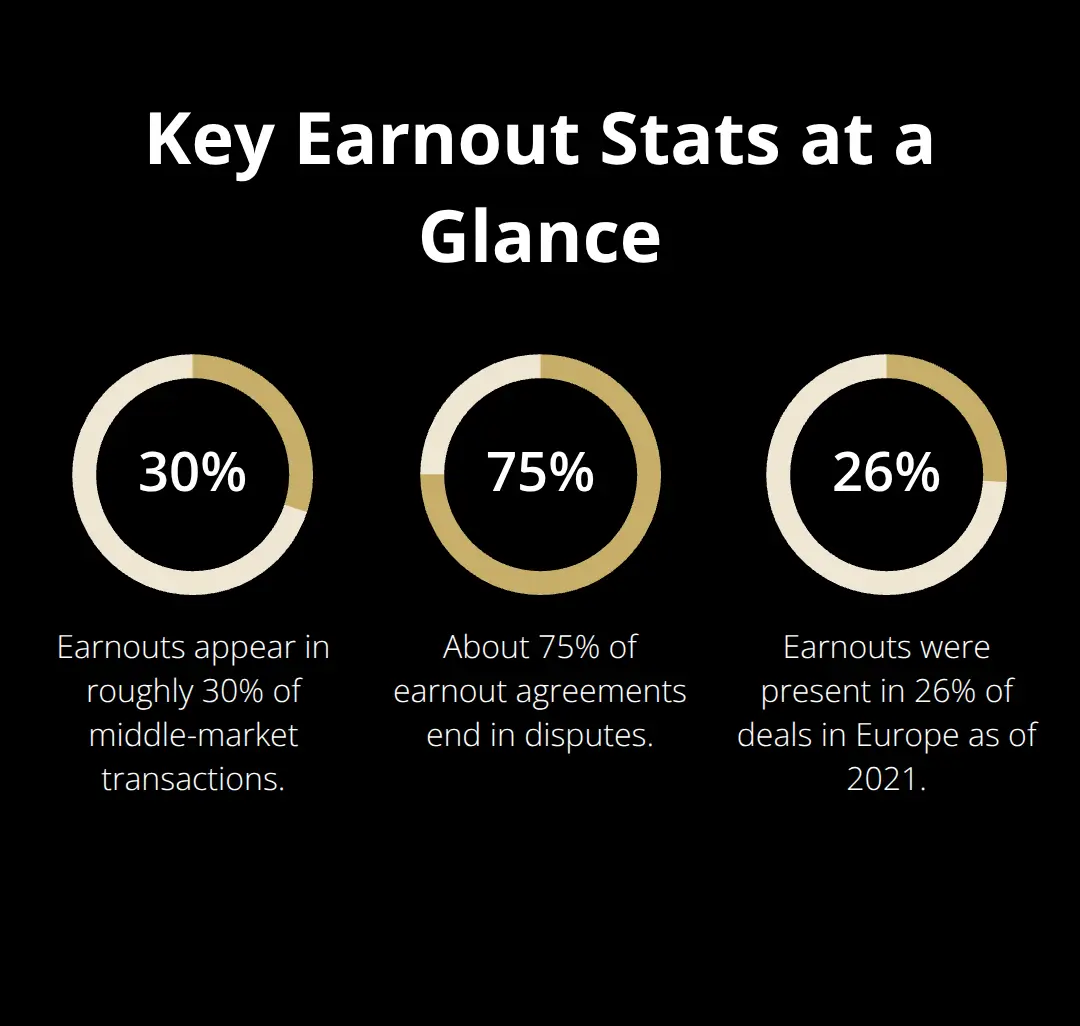
Selling your business often involves complex deal structures that go beyond a simple cash transaction. Earnout deals have become increasingly common, with studies showing they appear in roughly 30% of middle-market transactions.
We at Unbroker regularly see sellers wrestling with earnout offers that promise higher valuations but come with significant strings attached. The decision requires careful analysis of your specific situation, risk tolerance, and the buyer’s credibility.
How Do Earnouts Actually Work
An earnout functions as a conditional payment mechanism where buyers pay sellers additional compensation based on specific performance metrics the business achieves after the sale closes. The buyer makes an upfront payment at the transaction’s completion, then commits to future payments if the business hits predetermined targets during a measurement period that typically lasts one to three years.
Payment Structure and Metrics
Most earnouts represent 10% to 25% of the total purchase price in middle-market deals, though high-tech and service companies can see earnouts that comprise 60% to 80% of transaction values according to industry data. Revenue-based earnouts appeal to sellers because they resist manipulation, while buyers prefer EBITDA-based structures since they tie payments to actual profitability.
Graduated payment scales work better than all-or-nothing arrangements and reduce disputes that plague approximately 75% of earnout agreements. The American Institute of CPAs reports that poorly defined metrics cause most earnout conflicts, which makes precise calculation methods essential from day one.
Common Performance Targets
Buyers structure earnouts around various metrics depending on the business type and industry. Revenue targets work well for stable businesses with predictable income streams, while EBITDA targets suit companies where expense control matters more than top-line growth. Some earnouts focus on non-financial metrics like customer retention rates (often set at 90% or higher) or key employee retention targets.
Service businesses frequently see earnouts tied to client contract renewals or new customer acquisition numbers. Technology companies might face targets related to user growth, subscription renewals, or product development milestones that buyers consider critical for future success.
When Earnouts Surface in Negotiations
Earnouts emerge when valuation gaps exceed 15% to 20% between buyer and seller expectations, particularly in volatile industries where future performance remains uncertain. Private equity buyers frequently propose earnouts in transactions under $50 million to reduce upfront risk while they maintain seller motivation post-sale.
Service businesses dependent on key relationships see earnout proposals more often, as buyers want assurance that customer retention and revenue streams continue after the ownership change. Sellers face earnout offers when their businesses show strong growth potential not yet reflected in current financials, or when they represent the primary driver of sales and customer relationships.
These structural elements set the foundation for earnout success or failure, but the real question becomes whether the potential benefits outweigh the inherent risks that come with conditional payments.
What Are the Real Trade-offs of Earnout Deals
Earnouts can boost your total sale price by 15% to 40% when performance targets hit, but research from Harvard Law School shows that 75% of these arrangements end in disputes. The upside potential attracts sellers who believe their business has untapped growth, especially in technology and service sectors where earnouts are present in 26% of deals in Europe as of 2021. However, this higher valuation comes with substantial risks that many sellers underestimate during negotiations.
The Payment Reality Check
Revenue-based earnouts offer sellers the clearer path to payment since buyers find it harder to manipulate top-line numbers compared to profit metrics. EBITDA-based structures favor buyers who can adjust expenses, depreciation, and other costs to reduce earnout payments. Earnings-based earnouts face the highest manipulation risk, which makes revenue targets the safer choice for sellers. Payment periods typically span one to three years, but post-COVID trends show buyers push for longer measurement periods that increase non-payment risks.
Control Loss Creates Performance Gaps
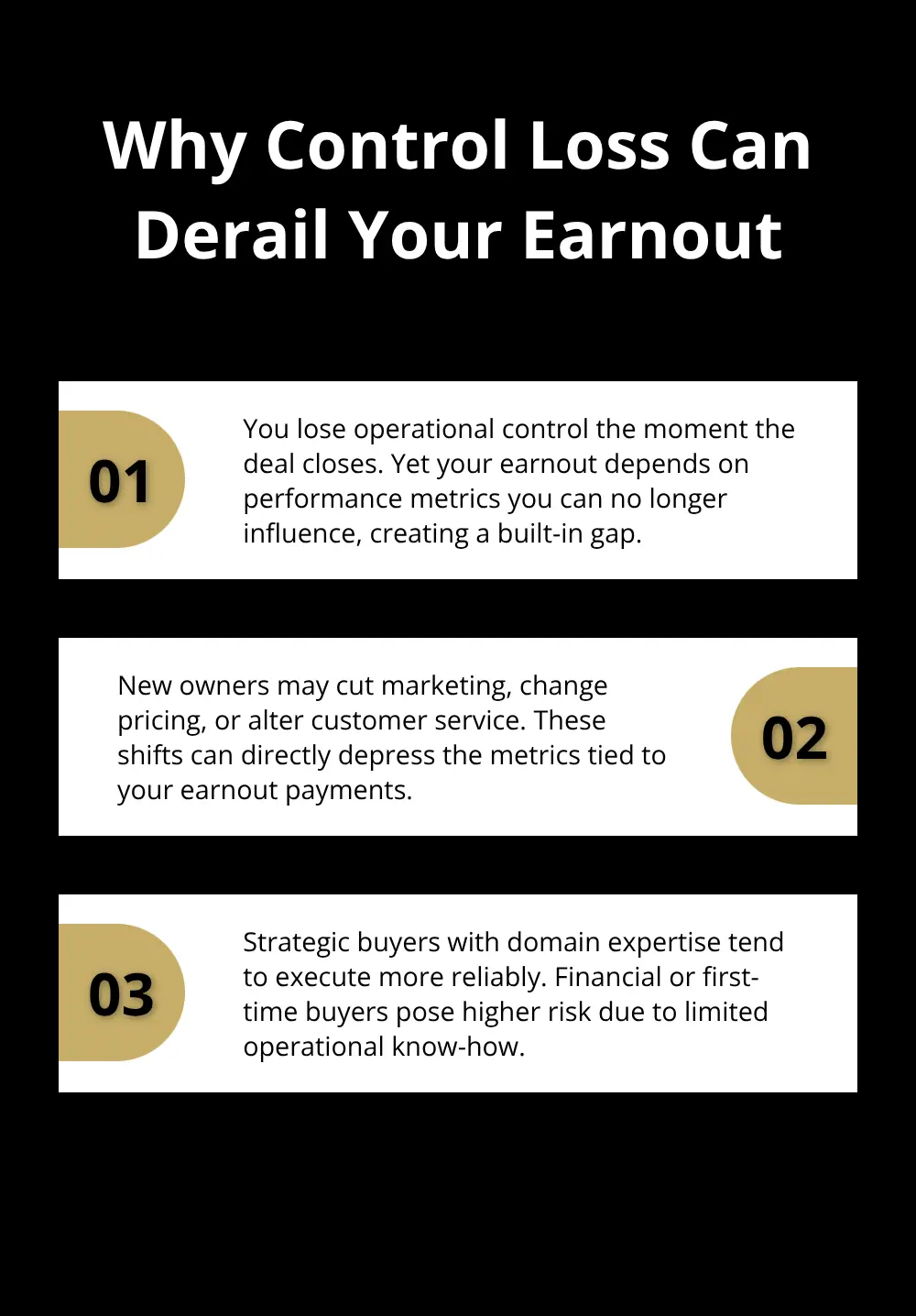
Sellers lose operational control immediately after the deal closes, yet their earnout payments depend on business performance they no longer influence. New owners may cut marketing budgets, change prices, or alter customer service approaches that directly impact the metrics tied to your earnout. Strategic buyers with industry experience pose lower risks than financial buyers or individual purchasers who lack operational expertise.
Service Business Challenges
Service businesses face particular challenges since client relationships often depend on the original owner’s involvement. This makes earnout achievement harder when sellers exit early or reduce their day-to-day participation. Smart sellers negotiate specific protections that limit buyer authority over decisions that affect earnout metrics (though buyers resist these constraints). The disconnect between seller expectations and buyer priorities creates the foundation for most earnout disputes that plague these deals.
These structural challenges raise important questions about whether earnouts align with your specific financial needs and risk tolerance. Buyer financing options can significantly impact earnout success, while selling to competitors requires different earnout strategies than other buyer types.
What Should You Evaluate Before Saying Yes
Your Cash Flow Requirements Come First
Your immediate cash needs after the sale should drive your earnout decision more than potential upside. If you need the full sale proceeds for debt repayment, retirement funds, or new investments, earnouts create dangerous liquidity gaps that can last up to three years. Calculate the minimum cash amount you require at closing, then subtract that from your total valuation to determine how much earnout risk you can actually afford.
Financial advisors recommend that you keep earnout portions below 20% of your total expected proceeds if you have immediate cash requirements or lack other income sources during the measurement period. This conservative approach protects you from the payment delays that can occur when targets are missed.
Buyer Financial Strength Matters More Than Promises
Private equity buyers with $100 million-plus funds under management show significantly lower earnout default rates compared to individual buyers or smaller investment groups. You should request audited financial statements from the buyer and verify their capital sources before you accept any earnout structure.
Strategic buyers in your industry typically perform better on earnout payments because they understand your business model and customer base. Individual buyers or buyers new to your industry pose higher non-payment risks in mid-market transactions. You must investigate the buyer’s previous acquisitions and contact former sellers directly to verify their earnout payment history.
Market Conditions Impact Success Rates
Economic downturns significantly impact earnout achievement rates across all industries, which makes current market conditions a critical factor in your decision. Technology and healthcare sectors show higher earnout success rates during growth periods but face severe challenges during market contractions.
Service businesses dependent on discretionary spending see earnout payments drop fastest during economic uncertainty. If recession indicators appear strong or your industry faces regulatory headwinds, you should demand higher upfront cash and lower earnout percentages. Market volatility makes revenue-based earnouts safer than EBITDA targets, since buyers cannot manipulate top-line numbers as easily during challenging periods.
Final Thoughts
Earnout deals work best when you have strong cash flow from other sources and can afford to wait up to three years for full payment. Service businesses with predictable revenue streams and experienced strategic buyers show the highest success rates. Technology companies with proven growth trajectories also benefit from earnout structures that capture future upside.
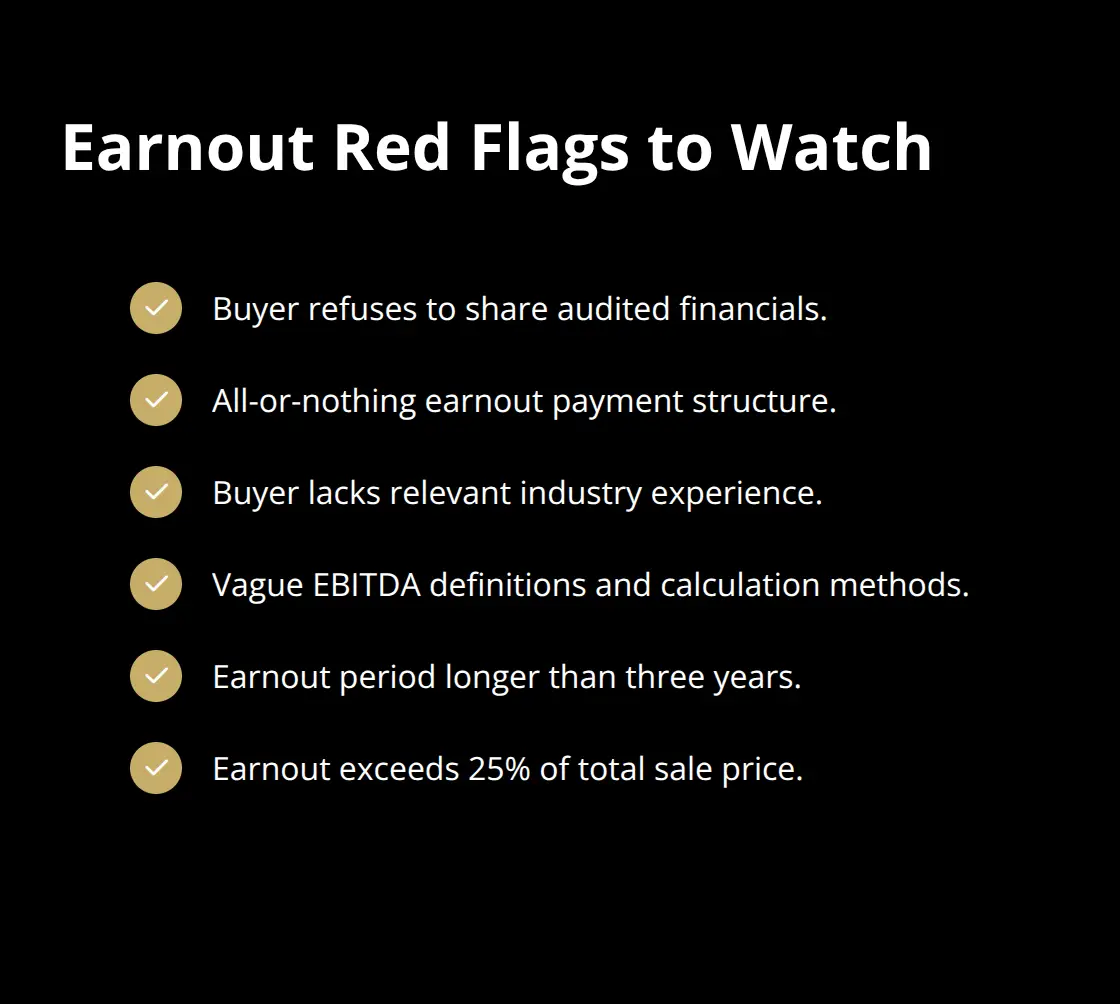
Red flags include buyers who refuse to share financial statements, propose all-or-nothing payment structures, or lack industry experience. EBITDA-based earnouts with vague calculation methods signal trouble ahead. Buyers who push for earnout periods longer than three years or represent more than 25% of your total sale price create unnecessary risk.
Your decision should align with your financial situation and risk tolerance (if you need immediate liquidity for debt payments or retirement, demand higher upfront cash regardless of potential earnout upside). We at Unbroker help sellers navigate these complex decisions throughout the entire sale process. The right earnout structure can boost your total proceeds, but only when the terms protect your interests and the buyer demonstrates genuine financial strength.