Most small business owners spend decades building their companies but give little thought to how they’ll exit. The statistics are sobering: 75% of business owners who sell receive less than expected because they waited too long to plan.
We at Unbroker see this pattern repeatedly. A well-planned small business exit can mean the difference between financial security and disappointment in your golden years.
What Happens When Business Owners Skip Exit Planning
The numbers tell a devastating story. According to the Exit Planning Institute, only 22% of business owners have a formal exit plan, yet 73% of privately held companies plan to transition ownership within the next decade. This massive gap creates a $14 trillion opportunity that most owners will squander through poor preparation.
The Procrastination Trap Destroys Value
Business owners consistently underestimate the time needed for proper exit preparation. Harvard Business Review research shows that businesses without exit plans risk significant value loss during a sale. The Exit Planning Institute found that 63% of owners believe it’s too early to start preparation, even as they approach retirement age.
This delay costs real money. An estimated 70-80% of business sales fall through due to inadequate preparation, which leaves owners scramble to find alternatives or accept drastically reduced offers.
Financial Devastation From Last-Minute Decisions
The financial impact of delayed preparation is brutal. A well-prepared exit strategy can increase a business’s sale price by up to 50%, while unprepared owners often accept offers 30-40% below market value just to complete a transaction.
Gallup research reveals that business owners who plan to sell report median profits of $100,000, compared to just $20,000 for those who plan to shut down. The difference stems from strategic preparation versus reactive decision-making.

The Cascade Effect on Family and Legacy
Owners who wait until the last minute face compressed timelines, limited buyer options, and weakened negotiation positions that destroy years of wealth accumulation. This financial shortfall doesn’t just affect the owner-it impacts retirement plans, family security, and the ability to leave a meaningful legacy.
The ripple effects extend to employees who face uncertainty about their jobs and customers who worry about service continuity. What should be a celebration of decades of hard work becomes a source of stress and regret affecting both personal relationships and business reputation.
These consequences become even more severe when owners fail to understand the specific components that make exit preparation effective, including common valuation mistakes and proper business sale timelines.
Key Components of Effective Exit Planning
Effective exit planning requires three non-negotiable foundations that most owners overlook until it’s too late. Professional business valuation should happen every 18-24 months, not just when you’re ready to sell. When choosing an exit strategy, 70% of business owners prefer internal transfers, 17% opt for external sales, and 13% remain undecided. This shift reflects awareness that regular valuations drive strategic decisions and identify value gaps before they become deal-breakers.
Business Valuation and Financial Preparation
Your financial preparation must extend far beyond basic bookkeeping. Clean financial records that span at least three years become mandatory, but smart owners maintain five years of detailed documentation. Potential buyers scrutinize every expense, so eliminate personal costs mixed with business expenses immediately.
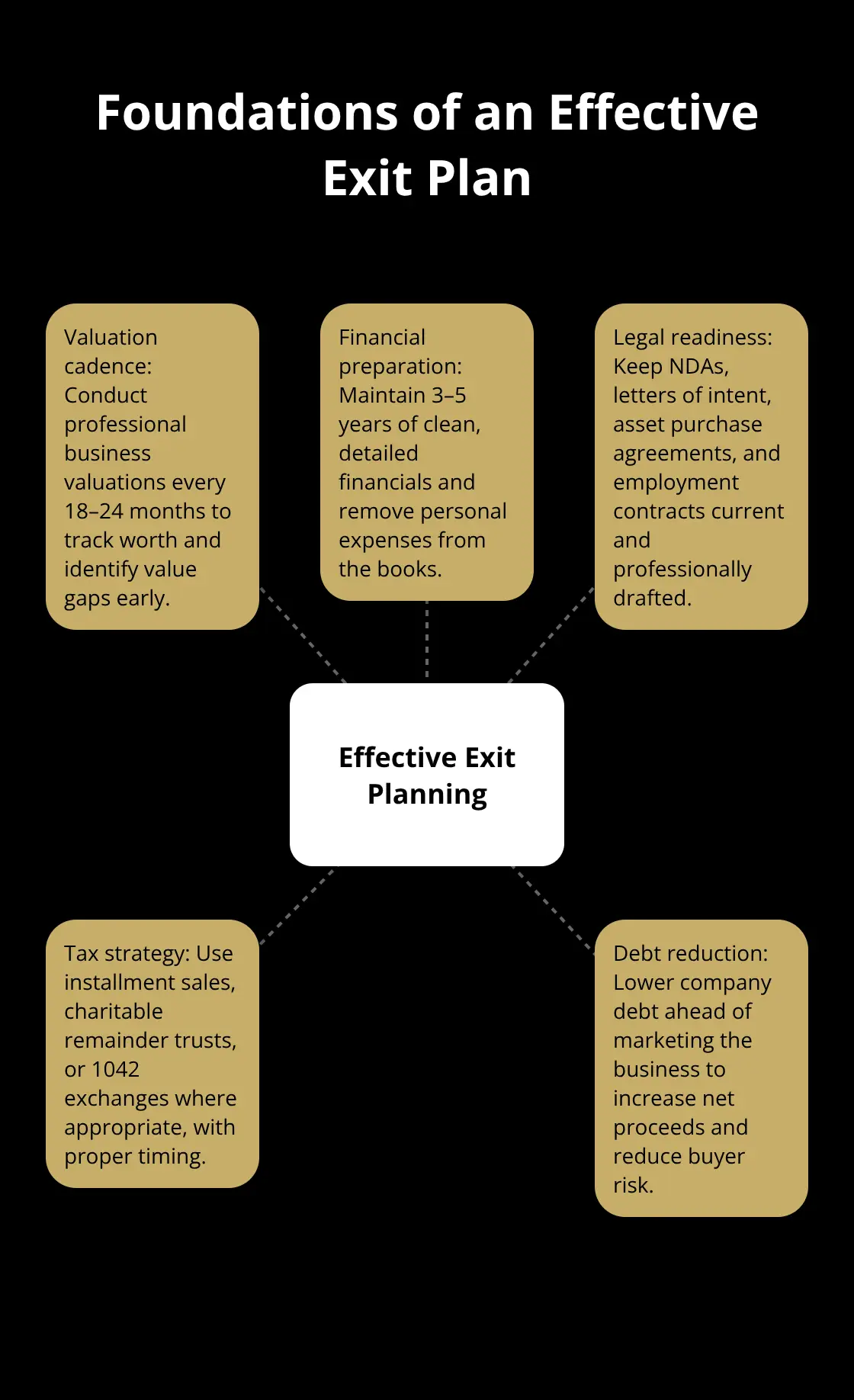
Reduce company debt aggressively before you market your business. Lower debt levels directly increase your net proceeds at closing. The math is simple: every dollar of debt reduction equals a dollar more in your pocket, plus it makes your business more attractive to buyers who prefer lower-risk acquisitions.
Legal Structure and Documentation Requirements
Documentation requirements for business sales are extensive and unforgiving. Non-disclosure agreements, letters of intent, asset purchase agreements, and employment contracts must be professionally drafted and regularly updated. Outdated legal structures can derail deals at the last minute (costing months of time and thousands in legal fees to correct).
Commercial lease terms deserve special attention since favorable lease conditions add measurable value to your business. Problematic lease clauses can eliminate entire categories of potential buyers who cannot assume unfavorable terms.
Tax Optimization Strategies and Timing
Tax implications can significantly impact your sale proceeds if you don’t plan strategically. Structure your sale to minimize capital gains taxes through installment sales, charitable remainder trusts, or 1042 exchanges (if you qualify for ESOP transactions). Each strategy requires specific timing and documentation that takes months to implement properly.
Asset sales versus stock sales create different tax consequences for both buyers and sellers. Work with tax professionals who specialize in business transactions to model various scenarios and choose the structure that maximizes your after-tax proceeds while remaining attractive to buyers.
However, even the most thorough preparation can fail if owners make common mistakes that sabotage their exit strategy from the start.
Common Exit Planning Mistakes and How to Avoid Them
Business owners consistently sabotage their exits through three predictable mistakes that destroy value and torpedo transactions. The most damaging error involves wildly overestimating business worth and ignoring market realities. Exit Planning Institute data shows 45% of owners rate their business readiness as best-in-class, yet many attempted sales collapse due to unrealistic expectations.
Overestimating Business Value and Market Conditions
Owners routinely price their businesses 40-60% above market value, then refuse to adjust when buyers present lower offers backed by solid financial analysis. This stubborn approach kills deals before negotiations even begin. Market conditions change rapidly, and what worked for similar businesses two years ago may not apply today.
Professional valuations provide objective assessments that prevent this costly mistake. Schedule annual valuations to track your business worth accurately and understand how market shifts affect your company’s value. Accept that emotional attachment to your business doesn’t translate into market value.
Failing to Build a Strong Management Team
The second fatal mistake involves operating businesses that cannot function without the owner present. Buyers want businesses that generate profits independently, not glorified jobs that require constant owner involvement. Companies with established management structures can command higher valuations compared to owner-dependent businesses.
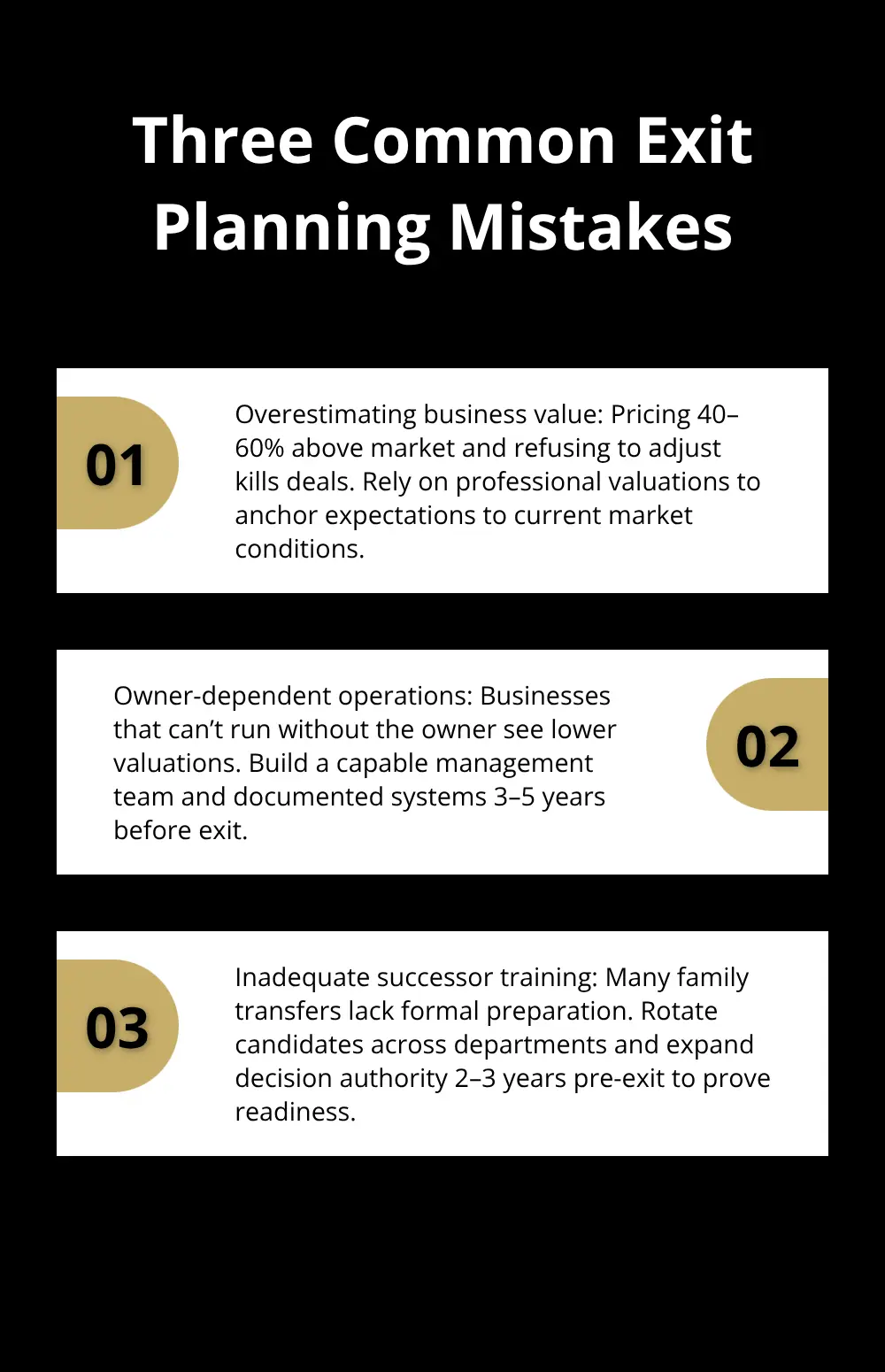
Smart owners spend 3-5 years before their planned exit building strong management teams and documented processes. These systems prove the business runs smoothly during owner absences (which buyers test through due diligence). Start delegating major decisions immediately, hire capable managers, and create detailed operational procedures that eliminate single points of failure.
Neglecting Successor Training and Transition Planning
The third mistake destroys family business transitions and management buyouts through inadequate successor preparation. Ideas42 research reveals 54% of owners plan family transfers, yet most provide zero formal training for successors. Management buyouts fail when key employees lack financial knowledge or leadership skills needed to run the company effectively.
Begin successor development immediately by rotating candidates through different departments and providing formal business education. Gradually increase their decision-making authority over 2-3 years before your exit date. This approach builds confidence in both successors and potential buyers who evaluate management strength during acquisitions. By avoiding common mistakes when selling a business, you can maximize your exit value and ensure a smooth transition.
Final Thoughts
Early small business exit preparation transforms potential financial disaster into strategic advantage. Data proves that advance preparation increases sale prices by up to 50% while it protects your family’s financial future and preserves the legacy you built over decades. The difference between success and failure lies in immediate action rather than procrastination.
Your path forward demands action on three fronts within the next 90 days. Obtain a professional business valuation to establish your baseline worth, build management systems that operate independently of your daily involvement, and assemble a team of exit planning professionals who specialize in transitions. These steps create the foundation for a successful small business exit that maximizes your financial outcome.
We at Unbroker connect you with serious buyers through our transparent platform that eliminates excessive brokerage fees while it maintains complete confidentiality. Your business represents decades of hard work and sacrifice that deserves proper preparation. Start your exit process now while you still have time to secure the financial future you deserve (rather than accepting whatever the market offers when desperation forces your hand).