Business valuations rarely align perfectly between buyers and sellers. The gap can stretch from 20% to over 100% in complex deals, creating significant roadblocks.
We at Unbroker see these valuation disputes daily in middle-market transactions. Most disagreements stem from emotional attachment, different methodologies, and incomplete information sharing.
The good news? Smart negotiation strategies and proper deal structuring can bridge even the widest gaps.
What Drives Valuation Disagreements
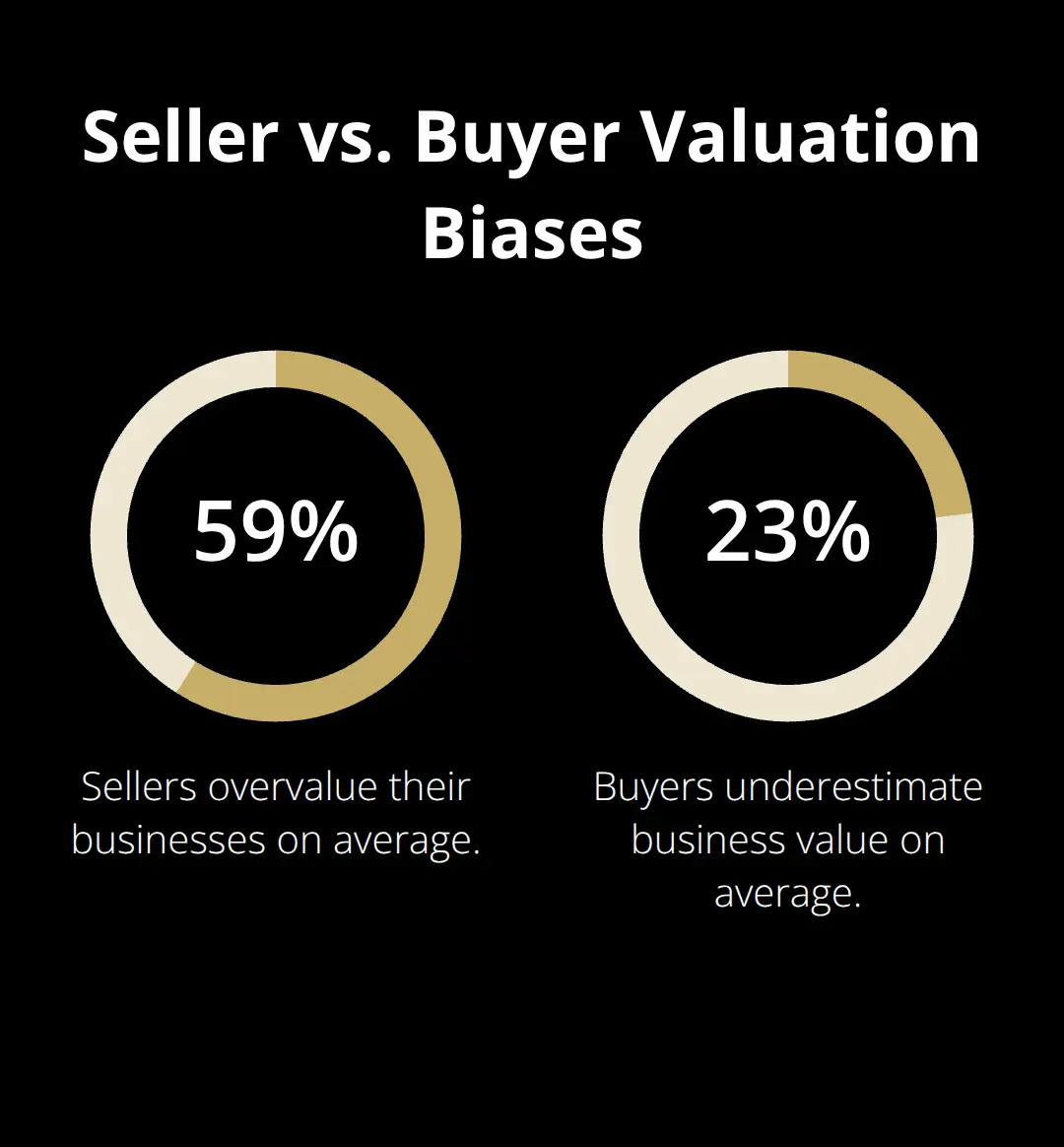
Sellers overvalue their businesses by an average of 59% according to recent market studies, while buyers typically underestimate value by 23%. This massive gap stems from three fundamental disconnects that plague most transactions.
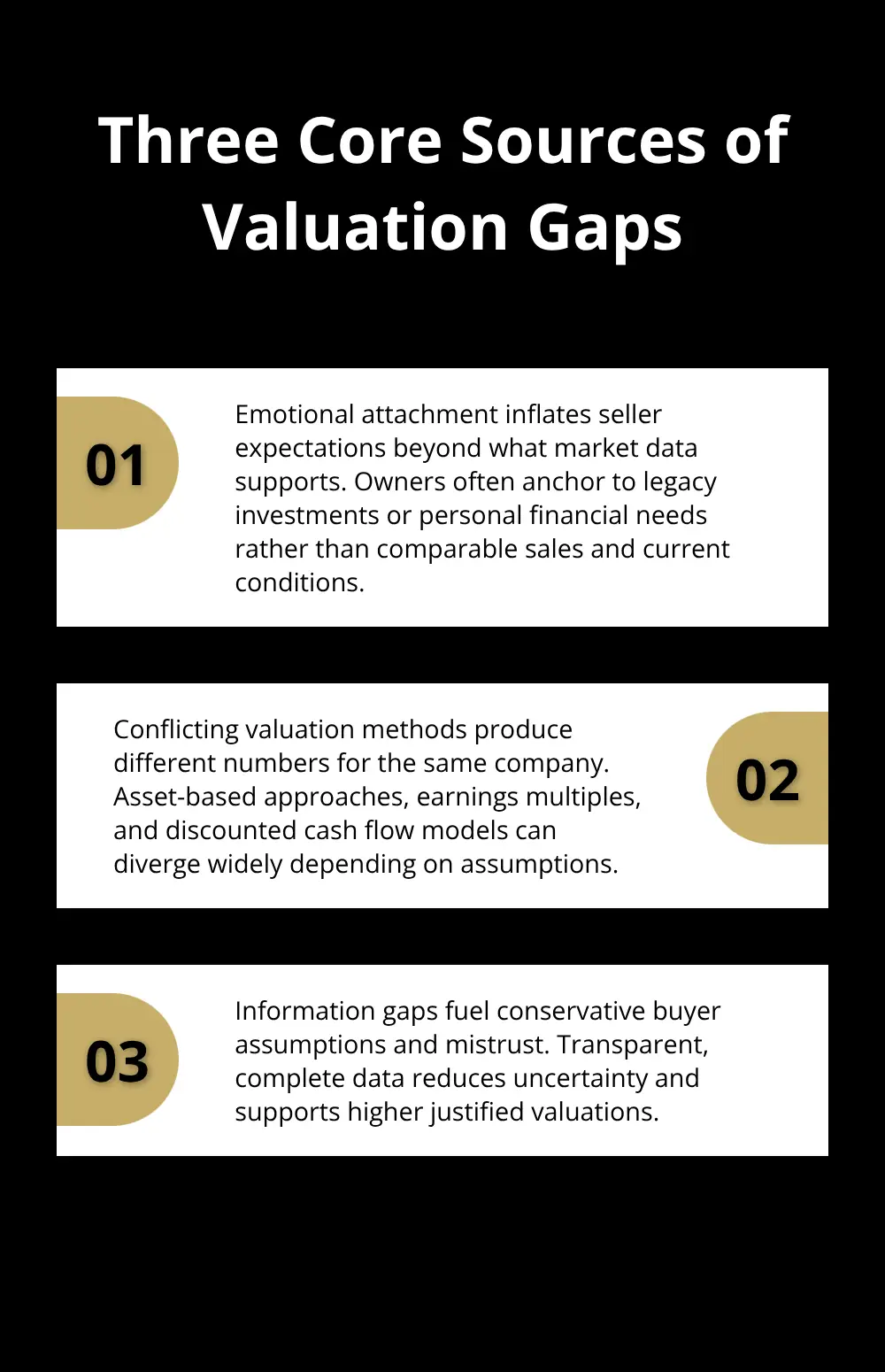
Emotional Attachment Inflates Seller Expectations
Business owners who spent decades building their companies assign emotional premiums that market data simply doesn’t support. A manufacturing company owner might value their 30-year-old equipment at replacement cost, ignoring depreciation and technological obsolescence. The market sees outdated machinery that requires immediate upgrades.
Financial attachment compounds this problem when sellers need specific amounts for retirement or debt repayment. These personal financial pressures force unrealistic price expectations that ignore comparable sales data and current market conditions.
Valuation Methods Create Conflicting Numbers
Asset-based valuations often produce different results from earnings multiples for the same business. Sellers gravitate toward asset approaches when they own valuable real estate or inventory, while buyers prefer earnings multiples that reflect actual profitability.
Technology businesses average 3.19x earnings multiples compared to food service businesses at 2.16x multiples, yet owners frequently apply inappropriate industry comparisons. Professional appraisers who use discounted cash flow models can produce results that vary by 30% from comparable transaction analyses (depending on growth assumptions and discount rates).
Information Gaps Fuel Mistrust
Buyers who work with limited financial data make conservative assumptions, while sellers withhold information that could justify higher valuations. Incomplete customer concentration details, missing contract terms, or undisclosed operational dependencies create valuation uncertainty.
Smart sellers provide three years of audited financials, detailed customer analyses, and growth projections backed by market research. This transparency eliminates guesswork and supports their asking price while building buyer confidence.
These fundamental disagreements require strategic approaches that address both emotional and analytical barriers. The next step involves implementing proven strategies that bridge these valuation gaps through professional guidance and creative deal structures.
How Do You Close Valuation Gaps
Professional third-party appraisals provide the objective foundation that resets unrealistic expectations from both sides. Certified business appraisers who follow American Society of Appraisers standards produce defensible valuations that courts accept and lenders rely on.
These appraisals cost $5,000 to $15,000 for middle-market companies but eliminate months of circular arguments about business worth. The appraisal process forces sellers to confront market reality while it gives buyers confidence in their offers.
Earnouts Bridge Performance Expectations
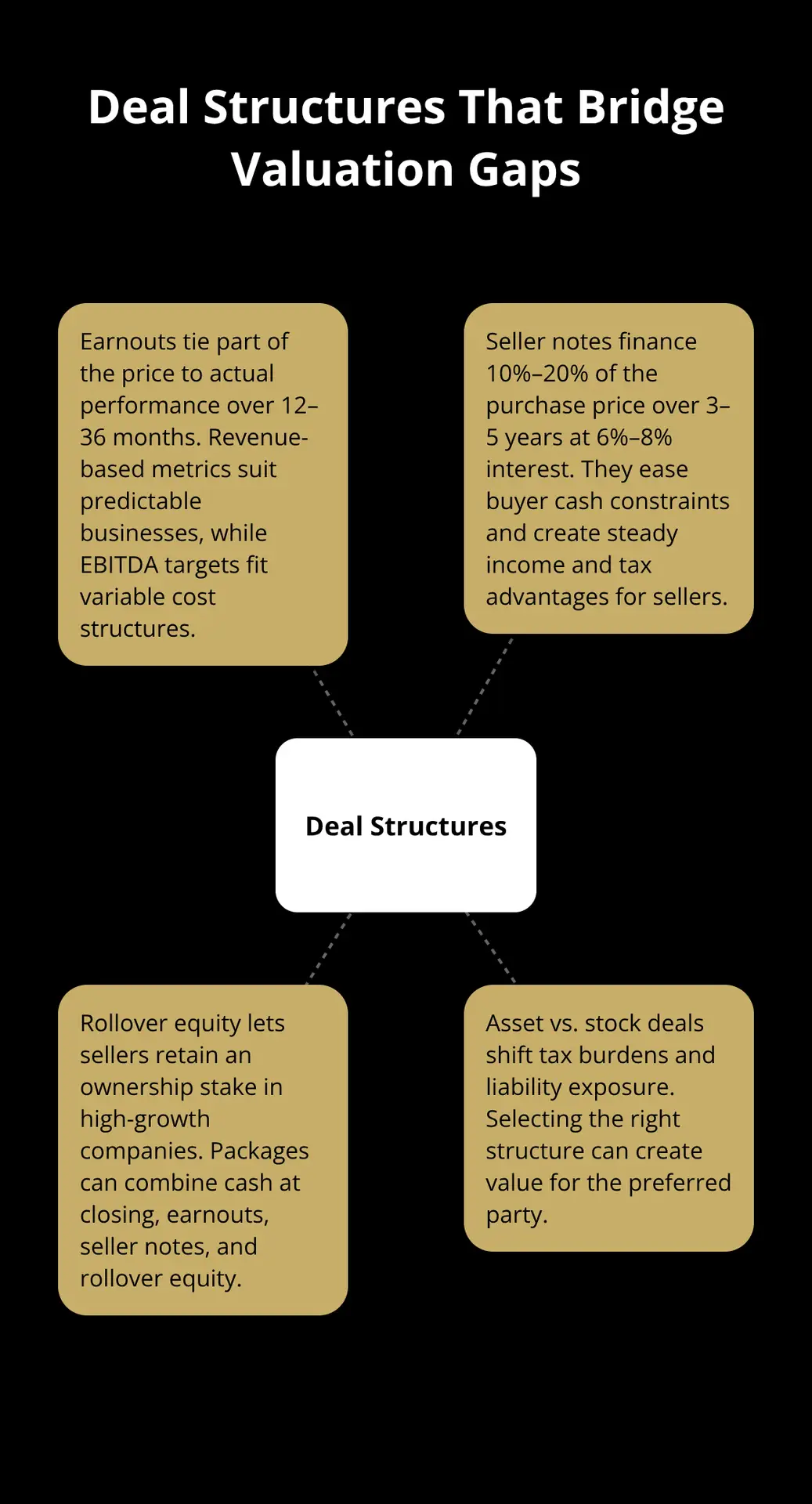
Earnouts help resolve purchase price disputes in transactions, with more disputes occurring over post-closing calculations following the uneven economic conditions in 2023. These contingent payments tie future compensation to actual business performance over 12 to 36 months post-closing.
Revenue-based earnouts work best for predictable businesses, while EBITDA targets suit companies with variable cost structures. Sellers who accept earnouts typically receive 60% to 80% upfront with the remainder contingent on specific milestones. The key lies in clear, measurable targets that both parties can track without disputes.
Creative Deal Structures Beat Price Wars
Seller notes allow buyers to pay 10% to 20% of the purchase price over three to five years at 6% to 8% interest rates. This approach helps cash-constrained buyers while it gives sellers steady income streams and tax advantages through installment sales treatment.
Rollover equity structures let sellers maintain ownership stakes in high-growth businesses, with deal structures varying by industry and including cash at closing, earnouts, seller notes and rollover equity. Asset deals versus stock deals also shift tax burdens and liability exposure, creating value for the right party.
Smart negotiators focus on total economic value rather than headline purchase prices. These structural solutions often matter more than the initial disagreement over business worth, but they require skilled execution to work effectively.
How Do You Win Valuation Negotiations
Lead with Market Data, Not Opinions
Successful negotiators present comparable sales data from the past 18 months rather than theoretical valuations. Restaurant buyers who reference recent transactions at 2.16x EBITDA multiples carry more weight than sellers who cite 4x multiples from 2021 peak markets. Manufacturing companies sold for an average of 1.8x revenue in 2024, down from 2.3x in 2022 according to DealStats data.
Smart negotiators compile 5-10 comparable transactions within their industry and geographic region, then walk through each deal’s specifics (size, growth rate, and market conditions). This approach forces emotional sellers to confront market reality while it builds buyer credibility through documented evidence.
Structure Deals That Reward Performance
Win-win solutions emerge when buyers pay for actual results rather than projected ones. Technology companies that use revenue-based earnouts over 24 months often achieve better outcomes than fixed-price deals. Sellers who accept 70% cash upfront plus 30% tied to specific EBITDA targets often receive higher total compensation than those who demand full payment at closing.
The key lies in measurable milestones both parties can track without interpretation disputes. Revenue targets work better than profit-based earnouts because they eliminate disputes over accounting methods. Smart negotiators also include buyer operational covenants that prevent post-closing changes designed to sabotage earnout achievements.
Know Your Walk-Away Point Before You Start
Failed negotiations cost significant professional fees and months of lost time. Set your minimum acceptable terms before you enter discussions and stick to them when sellers demand 40%+ premiums over market value.
Buyers who walk away from overpriced deals often return to the table within 90 days as sellers adjust expectations downward. The strongest position comes from multiple opportunities in your pipeline rather than fixation on one transaction that exceeds your parameters (this prevents emotional decision-making that leads to overpayment).
Final Thoughts
Valuation disputes between buyers and sellers follow predictable patterns that smart negotiators address systematically. Professional appraisals provide objective baselines that reset unrealistic expectations, while earnouts and seller notes create pathways to agreement when fixed-price negotiations stall. The most successful transactions combine market data with flexible deal structures that reward actual performance over projected results.
Buyers who present comparable sales evidence alongside creative payment terms often achieve better outcomes than those who argue over headline prices. Professional guidance becomes essential when valuation gaps exceed 30% or when emotional attachment clouds judgment. Experienced advisors help structure deals that satisfy both parties’ core objectives while managing the complex legal and financial details that derail amateur negotiations.
Sellers who accept that 2024 multiples reflect current economic reality position themselves for successful exits, while buyers who offer fair terms with performance incentives often secure the best opportunities. We at Unbroker help bridge these valuation disputes through our transparent platform that connects serious buyers with motivated sellers (eliminating the guesswork that fuels most disagreements). Our expert support creates smoother transactions for everyone involved.