Business flipping isn’t a get-rich-quick scheme-it’s a calculated strategy that requires understanding valuation, operational improvements, and buyer psychology. We at Unbroker have seen firsthand that most people fail because they skip the fundamentals.
This guide walks you through the exact process: finding undervalued businesses, fixing what’s broken, and selling for maximum profit.
What Price Should You Actually Pay for a Business
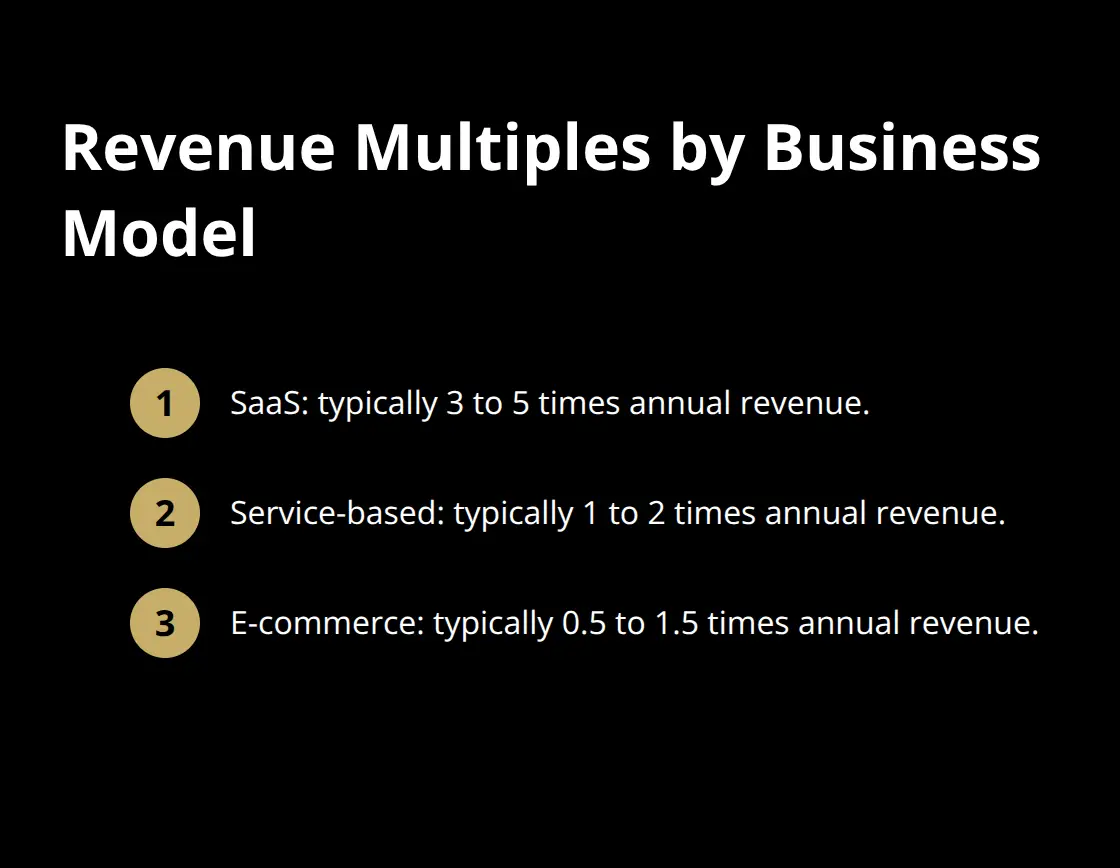
Most people calculate business value using a single revenue multiple and call it done. That’s how you overpay. Revenue multiples vary wildly depending on industry, profitability, growth trajectory, and buyer competition. A SaaS business with predictable recurring revenue sells for 3 to 5 times annual revenue, while a service-based business typically commands 1 to 2 times revenue because it depends heavily on the owner’s personal relationships. E-commerce businesses often trade at 0.5 to 1.5 times revenue because margins are thin and inventory risk is real.
The number that actually matters is EBITDA, not revenue. EBITDA (earnings before interest, taxes, depreciation, and amortization) tells you what cash the business actually generates. Take the annual EBITDA, multiply it by an industry-appropriate multiple (usually 3 to 6 for healthy businesses), and you get your realistic valuation range. A business generating $50,000 in annual EBITDA with a 4x multiple is worth roughly $200,000.
Verify the Numbers Before You Commit
Most flippers fail because they don’t verify EBITDA claims. Request tax returns, bank statements, and profit and loss statements going back at least two years. Sellers often provide inflated numbers, so cross-check everything against actual deposits and withdrawals. If the seller resists providing documentation, that’s your signal to walk away immediately.
Spot Undervalued Businesses with Fixable Problems
Undervalued businesses share specific characteristics. The owner is burned out and wants a quick exit, which means they’ll accept below-market pricing if you move fast. The business has inconsistent marketing or relies on a single traffic source, which means a buyer with basic marketing skills can immediately boost revenue. The business sits in a niche with rising search volume or trending interest, but the current owner hasn’t capitalized on it.
Check Google Trends and Reddit communities in your target niche to confirm momentum. Look for businesses with declining traffic or revenue that experienced sudden drops rather than gradual decline, because sudden drops often signal a fixable problem like a Google algorithm update or a departed key employee, not a fundamentally broken model. Avoid businesses where the decline reflects shrinking market demand.
The best deals come from marketplaces that report transparent data. Empire Flippers recorded average purchase prices around $52,974 and average selling prices around $65,523, yielding roughly 24% average ROI. However, the data shows significant variation: 15 of 41 recorded flips achieved over 100% ROI, while 8 experienced negative returns.

This spread exists because successful flippers target specific problems they can solve, not random undervalued assets.
Deal Breakers You Cannot Ignore
Walk away from businesses where the owner cannot document revenue. No tax returns, no bank statements, no proof of earnings means the numbers are fabricated. Walk away from businesses heavily dependent on a single traffic source that the current owner doesn’t control, such as a Facebook algorithm change or a single affiliate partner.
Walk away from businesses in declining niches where search volume has fallen year over year. Walk away from businesses with high customer acquisition costs and low lifetime value, because you’ll inherit a money-losing operation regardless of what you pay.
Walk away from any business where the owner is unwilling to provide a transition period after the sale. Without the previous owner introducing you to key customers, suppliers, and processes, you’ll spend months rebuilding relationships that should have been handed over.
The most dangerous red flag is a business that generates revenue through methods the seller refuses to explain. If they won’t show you their link-building strategy, their email marketing sequences, or their customer acquisition process, assume it involves tactics that Google will eventually penalize. You’ll inherit that penalty and have no way to recover the asset’s value.
Once you’ve identified a business that passes these tests, your next move is negotiating a price that reflects both the current state and the improvements you’ll make. The difference between what you pay and what you sell for depends entirely on how well you execute the acquisition and the operational changes that follow.
Strategies for Acquiring and Improving Your Target Business
Negotiate Terms That Protect Your Profit Margin
Most flippers leave money on the table during negotiations because they focus only on purchase price and ignore deal structure. The price you pay matters far less than the terms you secure. A seller willing to accept $150,000 instead of $160,000 is irrelevant if they demand a 24-month earn-out where you only receive the discount if revenue hits specific targets. Negotiate for a lower upfront payment with minimal contingencies instead.
Request a 30 to 60-day transition period where the seller remains available to introduce you to key customers, explain operational workflows, and answer questions about supplier relationships. This transition period is worth thousands in avoided mistakes and lost customer relationships. Insist on seller financing for a portion of the purchase price if the seller is confident in the business. When sellers hold a note, they have skin in the game and won’t misrepresent the business’s actual performance.
Structure the deal so you pay the seller $100,000 upfront and they finance $50,000 over 24 months at a reasonable interest rate. This protects you because if the business underperforms, you have leverage to renegotiate or the seller loses their financed portion. Avoid earn-outs entirely unless the business requires minimal work. Earn-outs trap you in ongoing operations for years while the previous owner second-guesses your decisions. If a seller insists on an earn-out, cap it at 12 months maximum and tie it to metrics you control, like traffic or email subscribers, not vague revenue targets influenced by factors outside your influence.
Fix What Actually Matters First
The businesses that flip for the highest returns target specific, fixable problems rather than attempting wholesale overhauls. Content-heavy sites generate quick returns when you expand content volume and improve backlink quality. Data from marketplace transactions shows that sites purchased around $52,974 and sold for approximately $65,523 within 407 days on average, but flips targeting content improvements achieved 1,164% ROI by adding 32 ready-to-publish articles and disavowing low-quality backlinks within 303 days.
Start by auditing the existing traffic sources. If 80% of traffic comes from Google organic search, your priority is updating underperforming content and building white-hat backlinks through guest posting and resource page placements. If traffic relies heavily on Pinterest or social channels, your priority is expanding that content library in formats that perform on those platforms. For e-commerce businesses, the fastest profit boost comes from reducing fulfillment costs through third-party logistics providers and negotiating better product sourcing.
For SaaS businesses, focus ruthlessly on churn reduction before acquiring new customers. A SaaS business losing 5% of customers monthly requires acquiring 60% new customers annually just to stay flat. Reduce churn through onboarding improvements and customer success follow-ups, and your existing revenue base becomes the foundation for profitable growth. Document every change you make and its financial impact. Track how many new articles you published, what percentage of traffic they generated, how much email list growth accelerated, and what that translated to in revenue increase. These metrics become your selling points when it’s time to exit.
Build Systems That Attract Buyers
Buyers pay premiums for businesses with documented processes because they reduce the risk of revenue collapse when you transition ownership. Create a standard operating procedures document for every repeatable task: how you publish content, how you manage customer support, how you handle affiliate relationship outreach, how you process refunds, how you schedule social media. A business where everything lives in the founder’s head is worth significantly less than an identical business where a new owner could hire an assistant to execute established workflows.
Build an email funnel that runs on automation. One successful flip added 926 opt-in emails with automated follow-up sequences that promoted recurring revenue offers, transforming the business from a one-time purchase model into a recurring revenue stream. Buyers value recurring revenue at higher multiples than one-time sales. Diversify revenue streams before you sell. A content site monetized solely through Google Adsense might trade for 20 times monthly revenue. The same site monetized through Adsense, Amazon Associates, and three affiliate programs trades for 30 times monthly revenue because revenue loss from any single source won’t crater the business.
Implement basic financial tracking that shows monthly revenue, traffic trends, and customer acquisition costs. Spreadsheets work fine. Buyers want to see that you’ve operated this business with discipline and can predict its future performance based on historical data. Once you’ve built these systems and documented your improvements, you’re ready to position the business for sale to qualified buyers who recognize the value you’ve created.
Finding and Selling to the Right Buyer
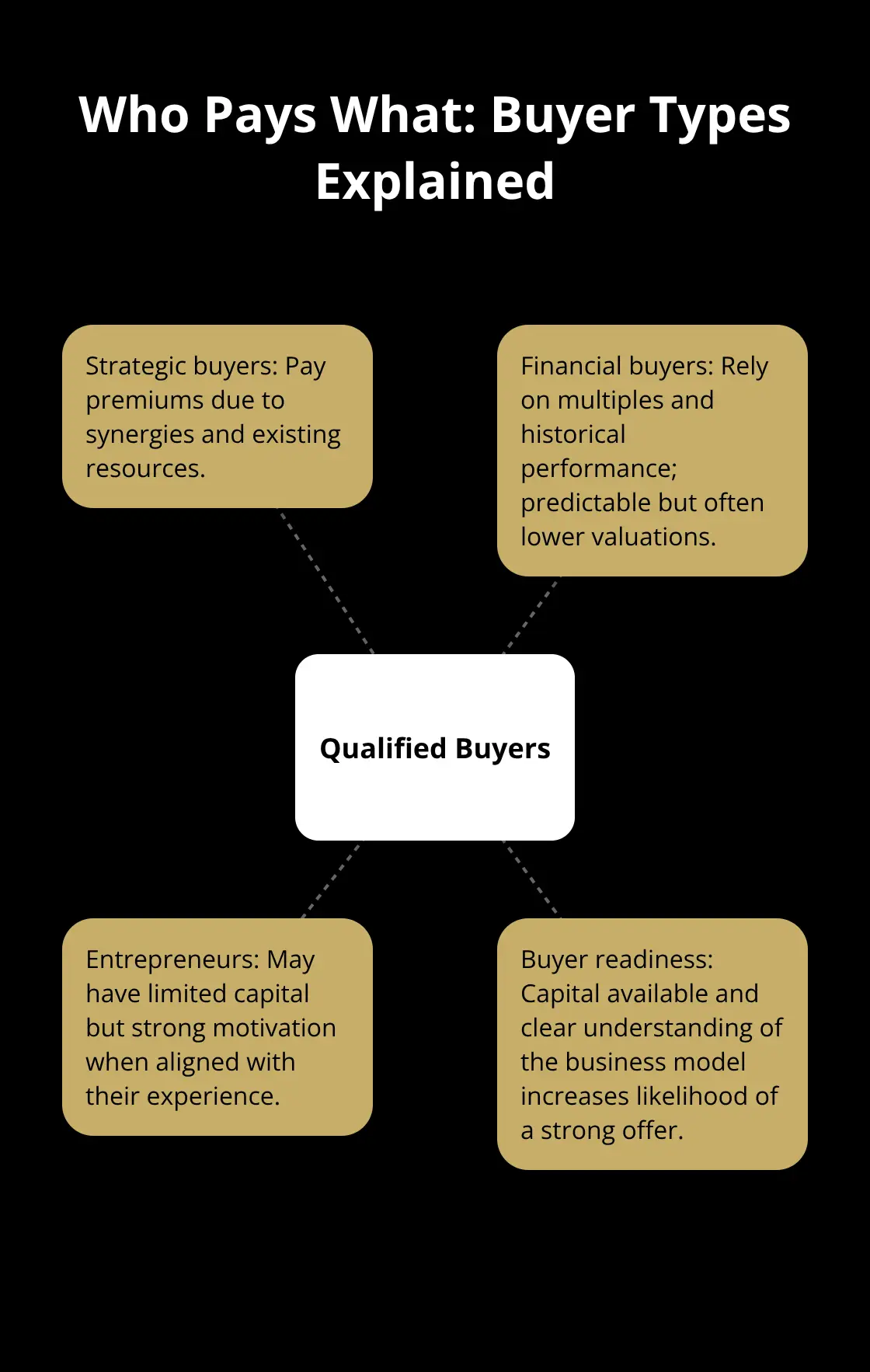
The biggest mistake flippers make when selling is treating all buyers as equal. You need qualified buyers who understand the business model, have capital ready to deploy, and won’t negotiate you down by 40% at closing. Qualified buyers fall into three categories: strategic buyers who operate in your industry and see your business as complementary to their existing operations, financial buyers who purchase for cash flow and growth potential, and entrepreneurs who want to own a business in that specific niche. Strategic buyers typically pay the highest prices because they realize synergies-they already possess customer relationships, marketing infrastructure, or operational expertise that makes your business worth more in their hands than in anyone else’s. Financial buyers pay based on multiples and historical performance, so they’re predictable but often offer lower valuations. Entrepreneurs usually have limited capital but strong motivation if the business fits their experience.
Market Your Business to Serious Buyers
List on platforms where serious purchasers actively search. Marketplaces that attract buyers with verified capital and serious intent matter far more than generic business listing sites where tire-kickers waste your time. Prepare a one-page executive summary that highlights the three biggest improvements you made, current monthly revenue broken down by source, traffic numbers with year-over-year growth rates, and the specific systems and processes you’ve documented. Include customer acquisition cost, lifetime value, churn rate if applicable, and any recurring revenue elements. Serious buyers want specifics, not marketing language.
Price your business with a clear asking price rather than a range. Ranges signal uncertainty and invite lowball offers. If your business generates $5,000 monthly profit with a 4x multiple standard in your industry, price it at $240,000 and prepare to negotiate down to $220,000 if the buyer demonstrates serious intent and has capital verified. Avoid entertaining offers below $200,000 because negotiating from a weak position wastes everyone’s time.
Structure the Sale to Protect Your Interests
Structure the sale to protect yourself from post-closing liability while maximizing what you actually receive. Most flippers accept terms that look good on paper but deliver less cash than expected. If a buyer offers $250,000 with $150,000 at closing and $100,000 held in escrow for 12 months pending performance metrics, you need to understand what happens if they claim the business underperformed and withhold the escrow.
Negotiate escrow releases based on metrics you control-traffic numbers, email subscriber counts, documented customer lists-not revenue targets influenced by the buyer’s operational decisions. Request that escrow funds release automatically after six months regardless of performance unless the buyer can prove specific breach of your representations. Avoid earn-outs entirely unless the business requires minimal work. Earn-outs trap you in ongoing operations for years while the previous owner second-guesses your decisions. If a seller insists on an earn-out, cap it at 12 months maximum and tie it to metrics you control, like traffic or email subscribers, not vague revenue targets influenced by factors outside your influence.
Navigate Due Diligence and Close the Deal
During due diligence, the buyer will request access to all documentation you’ve created: tax returns, bank statements, traffic analytics, email subscriber lists, customer contracts, supplier agreements, and your standard operating procedures. Organize these documents in advance in a secure shared folder so you can provide access within 24 hours of request. Delays create doubt and signal disorganization.
The buyer will hire an accountant to verify your numbers, so ensure your financial records match your claims exactly. Discrepancies of even a few hundred dollars create friction and give buyers leverage to renegotiate. When closing the deal, use a lawyer to draft the purchase agreement, not a template from the internet. A business attorney will help gather and review due diligence materials and correct legal deficiencies-include representations and warranties that protect both parties, clear indemnification language if something you didn’t disclose emerges post-sale, and transition support expectations so the buyer knows exactly how much time you’ll spend introducing them to customers and explaining processes.
Final Thoughts
Business flipping succeeds when you treat it as a systematic process, not a gamble. The flippers who generate consistent returns follow the same pattern: they verify numbers ruthlessly, identify fixable problems, implement specific improvements, and exit to qualified buyers. They understand EBITDA multiples, avoid declining niches, and reject earn-outs that trap them in ongoing operations.
The mistakes that destroy returns are predictable and avoidable. Skipping financial verification costs you thousands when you discover inflated revenue claims after closing. Attempting wholesale overhauls instead of targeting specific problems wastes months and capital. Selling to unqualified buyers forces you to negotiate from weakness and accept unfavorable terms. Accepting escrow structures tied to revenue metrics you don’t control leaves money on the table.
Your competitive advantage comes from execution discipline. Document every improvement you make and its financial impact. Build systems that run without you. Diversify revenue streams before selling. Price with confidence based on industry multiples, not guesswork. When you’re ready to sell a business you’ve built or improved, Unbroker connects you with serious buyers while eliminating high brokerage fees.