Selling your business without professional help is possible-but only if you prepare properly. Most owners who skip the groundwork leave thousands on the table.
We at Unbroker have seen what separates successful DIY sale preparation from costly mistakes. This guide walks you through the financial, operational, and marketing steps that actually move the needle.
Financial Preparation and Valuation
What Numbers Do Buyers Actually Want to See?
Your financial records are the first thing serious buyers examine, and they’re looking for specific signals about business health. Most sellers present messy spreadsheets or incomplete tax returns, which immediately raises red flags about what’s being hidden. You need clean, organized financial statements covering at least the last three years: profit and loss statements, balance sheets, and cash flow statements. Buyers want to see consistent revenue patterns, healthy profit margins, and realistic expense breakdowns. If your numbers jump around wildly or show declining trends, you’ll either struggle to find buyers or face aggressive price negotiations.
Start by reconciling your bank statements against your accounting records and fix any discrepancies. Ensure every transaction is properly categorized. This isn’t busywork-buyers often hire accountants to audit your books, and they’ll discover errors you missed. The cleaner your financial foundation, the faster the sale moves forward.
Understanding What Valuations Actually Measure
Business valuation isn’t one-size-fits-all, and buyers use different methods depending on your industry and business model. The most common approach is the earnings multiple method, where buyers multiply your annual profit by a specific number based on industry standards and growth potential. Service businesses with recurring revenue often command higher multiples because they’re more predictable, while seasonal businesses get lower valuations due to income fluctuations.
Revenue-based valuation matters less than profit-a business generating $500,000 in annual revenue with 15% profit margins is worth significantly less than one with 40% margins, even if they have similar top-line sales. Asset-based valuation focuses on what your business owns, which is relevant if you have physical inventory, equipment, or real estate. Understand which method applies to your situation before marketing your business, because buyers will use it to justify their offers. If you’re unclear, spend time analyzing comparable business sales in your industry to see what multiples similar businesses actually sold for.
The Red Flags That Kill Deals
Buyers are trained to spot problems that cost them money after purchase. Over-reliance on a single customer is a massive red flag-single customer dependency risk means buyers will heavily discount your valuation. Similarly, revenue that depends entirely on your personal relationships or skills signals risk; businesses that can’t function without you are worth far less because the buyer is essentially purchasing a job, not an asset.
Declining revenue trends over the past year are another killer, as are unexplained expenses or missing documentation. Pending lawsuits, unpaid taxes, or unresolved employment disputes will surface during due diligence and tank deals or force significant price reductions. High customer acquisition costs relative to customer lifetime value suggest your business model isn’t sustainable. Missing contracts with key suppliers or clients create uncertainty about whether those relationships continue post-sale.
Address these issues before listing-not during buyer negotiations when you have zero leverage. Once you’ve cleaned up your financial house and identified your valuation method, the next step is to strengthen the operational foundation that buyers actually care about.
Operational Improvements That Boost Sale Value
Map and Document Every Critical Process
Buyers do not purchase financial statements or organizational charts. They purchase businesses that function without the owner’s constant involvement and generate predictable revenue from customers who stay. The gap between what you think makes your business valuable and what buyers actually pay for is usually operational. You need documented processes, customer retention data, and proof that your business survives if you walk away tomorrow.
Start by mapping every critical process in your business and writing it down. This is not about creating perfect manuals-it is about proving that someone else can execute what you do. Document your top ten customer acquisition steps, your service delivery workflow, your financial closing process, and your quality control checks.
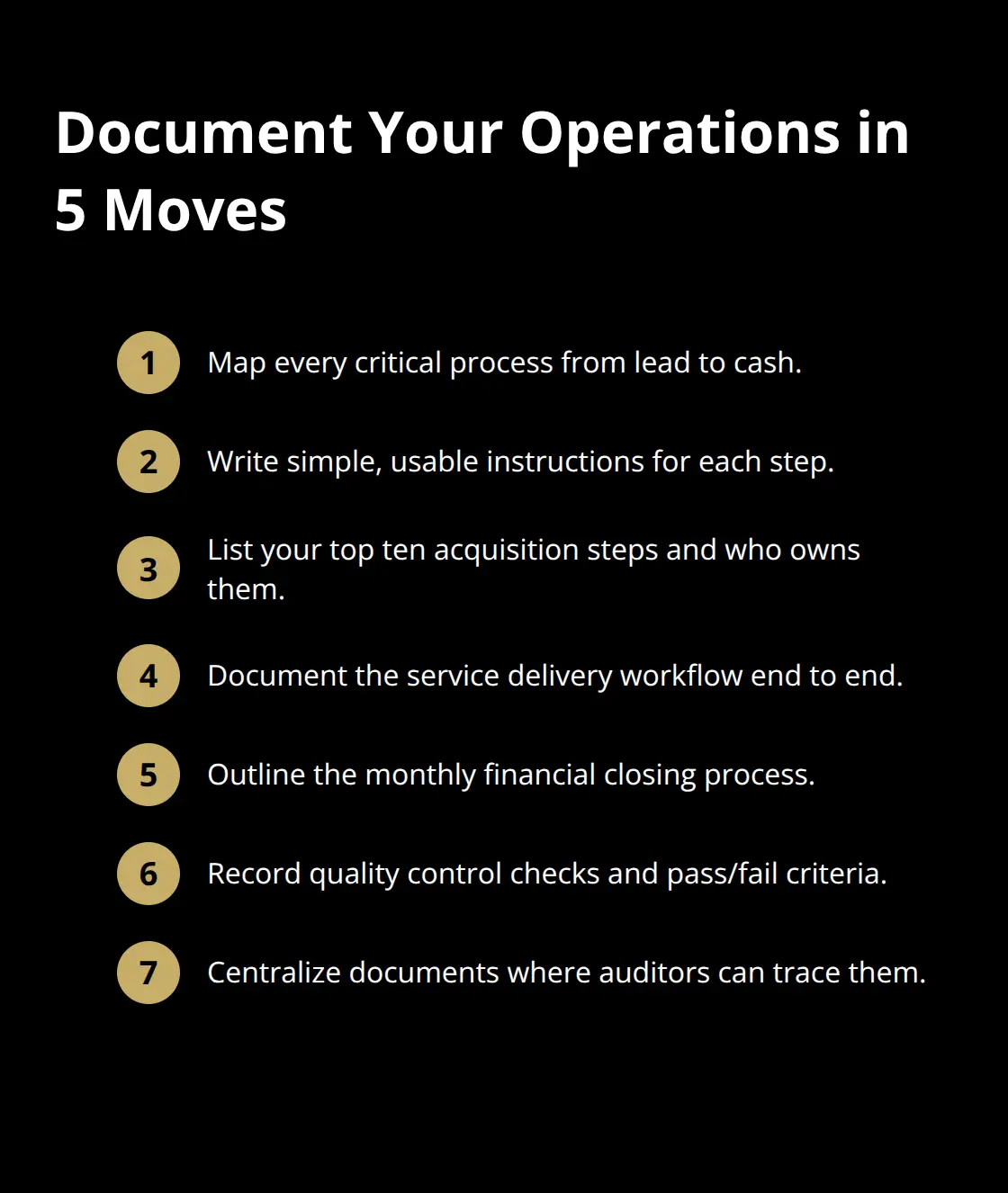
Buyers hire auditors to trace these processes, and if they cannot find documentation, they assume chaos and price accordingly.
Build Recurring Revenue and Lock It to Your Business
Service businesses with recurring revenue contracts attached to the company rather than the owner sell for significantly higher multiples. If 60 percent of your revenue comes from customers on annual retainers, that is worth substantially more than if 60 percent comes from one-time project work that depends on your personal relationships.
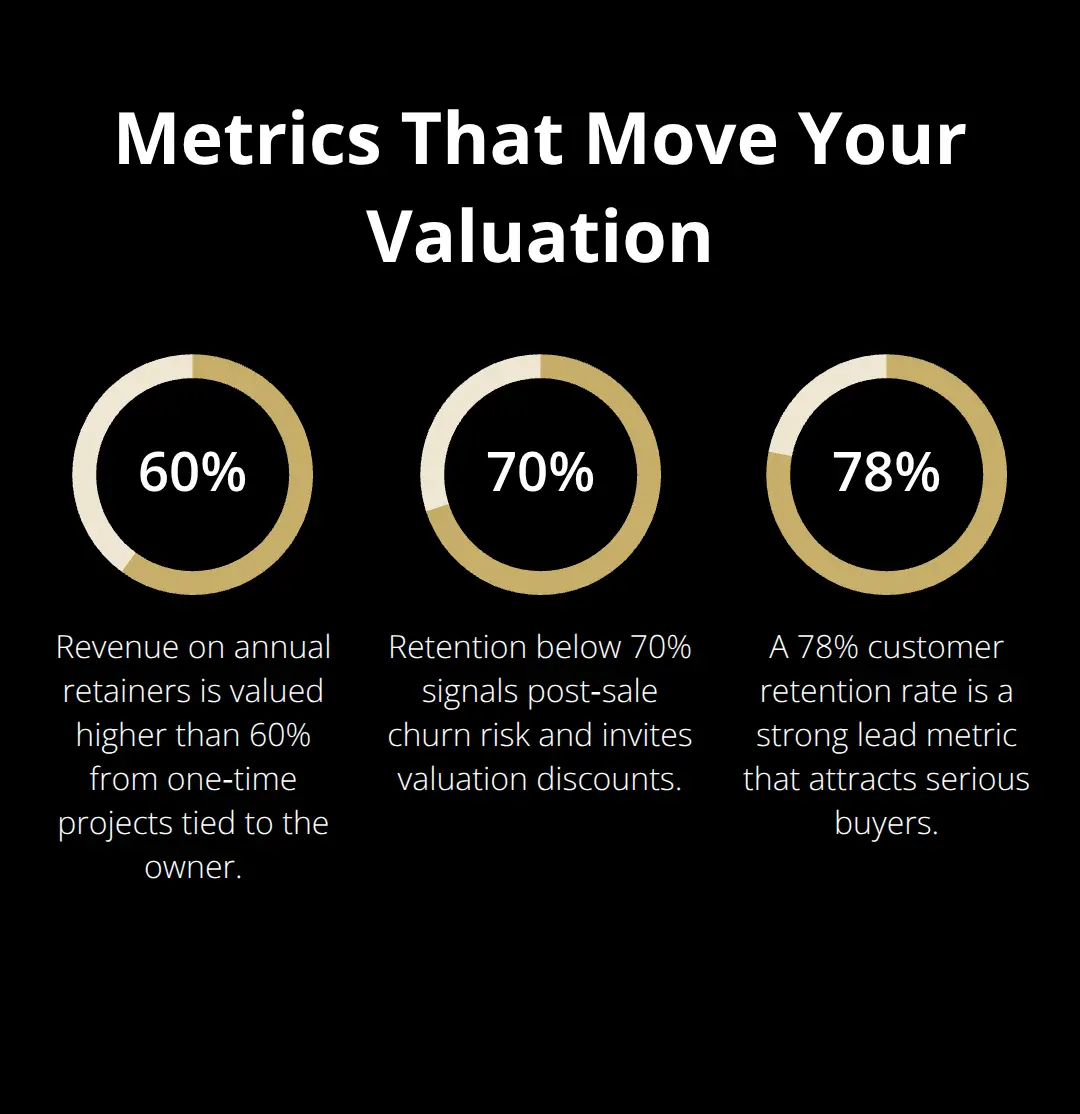
Calculate your customer retention rate over the past two years-if it falls below 70 percent, buyers will heavily discount your valuation because they expect to lose clients after the sale. Customers who stay long-term are worth significantly more than new customers acquired each year.
Identify which customers generate recurring revenue and which ones you personally manage. Separate these two buckets completely. Recurring revenue customers should be locked into contracts with the business, not with you individually. If your top five customers work with you because you built the relationships, those relationships do not transfer. Buyers see this and price it as a risk they are absorbing.
Eliminate Your Operational Dependency
If you are the only person who knows how to close deals, manage finances, or handle customer problems, your business is not worth what you think it is. Hire or train someone to handle your core responsibilities. This person does not need to be perfect-they just need to prove they can execute the work consistently enough that the business does not collapse if you take a month off.
Spend the next 60 days documenting everything this person does and everything you do. This documentation becomes your operational manual, which is exactly what buyers need to evaluate whether they can run the business profitably. Once you have reduced your personal dependency and locked recurring revenue to the business itself, your next focus shifts to how you present these strengths to potential buyers.
How to Present Your Business to Serious Buyers
Most business sellers create their first listing as a financial document rather than an asset worth buying. You’ve spent years building operational systems and recurring revenue contracts, but poor presentation means buyers won’t investigate further. The presentation stage determines whether qualified buyers spend time evaluating your business or move on to the next listing.
Lead With Your Strongest Metrics
Professional photography matters for physical products, but service and software businesses succeed through clarity, specificity, and proof. Serious buyers want to see your actual financial performance, customer retention data, and revenue breakdown by source within the first five minutes. If they can’t find these metrics immediately, they assume you’re hiding something and walk away.
Your listing should lead with your strongest operational advantage first-whether that’s a 78 percent customer retention rate, $400,000 in annual recurring revenue, or a documented sales process that doesn’t depend on you. Place this above everything else.
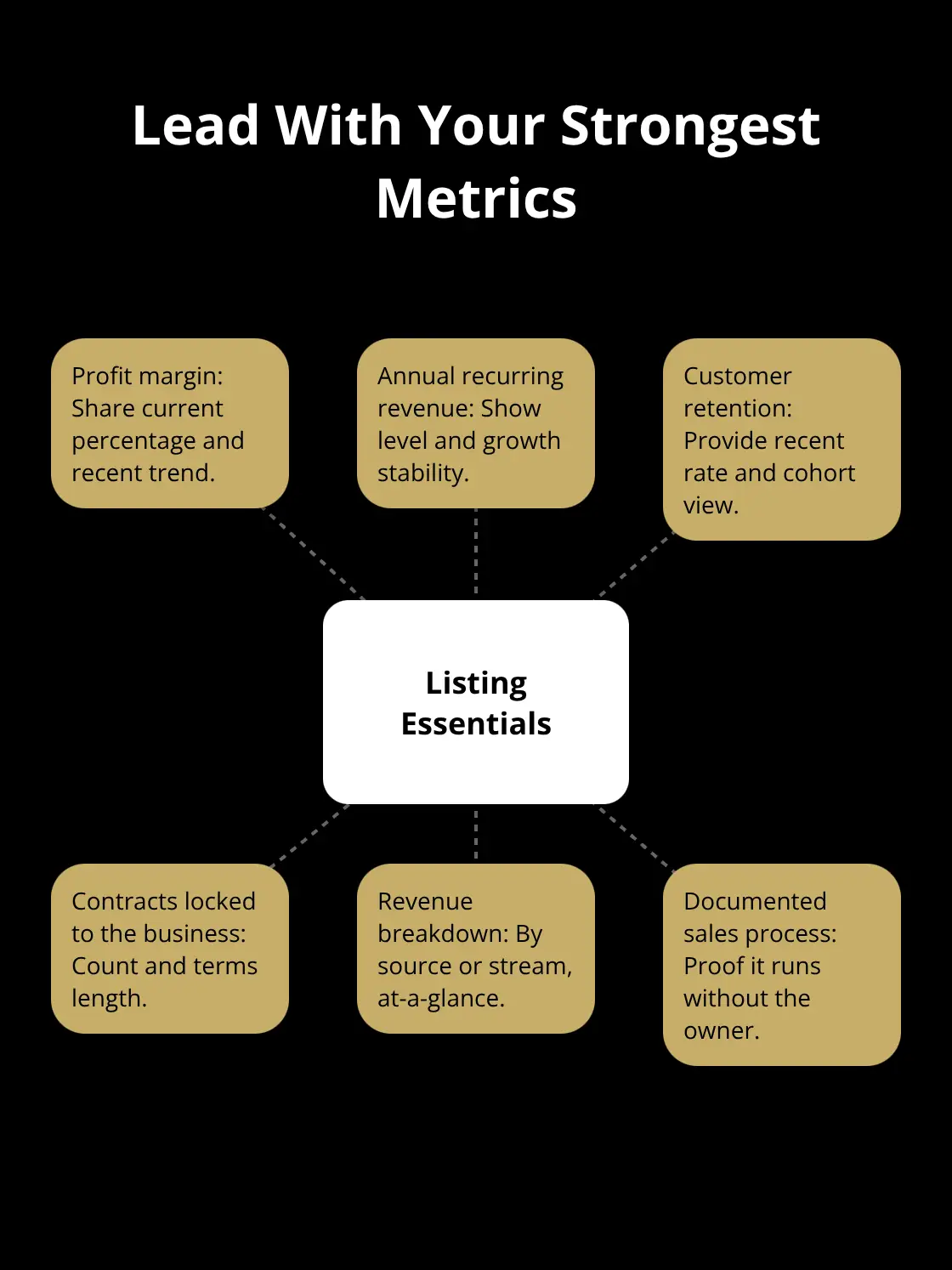
Include your profit margin percentage, your average customer lifetime value, and the number of customers locked into contracts. These numbers answer the fundamental question every buyer asks: can this business generate predictable cash flow without me working in it?
Explain Your Operations Without Overwhelming Detail
Add a one-page operational overview that explains your documented processes without excessive detail. Buyers need proof that systems exist, not a 50-page manual they’ll never read. Show your top three revenue streams, your customer acquisition cost, and your churn rate. If your customer acquisition cost is $500 and your average customer lifetime value is $8,000, that’s a 16x return that deserves prominent placement.
If you’ve reduced your personal involvement in daily operations and hired someone to manage key functions, highlight this directly. Buyers see owner dependency as massive risk, and reducing it increases your valuation multiple significantly.
Distribute Your Listing Across Multiple Channels
Distribution of your listing across multiple channels determines how many qualified buyers actually see it. Listing your business on a single platform dramatically limits your reach. Services like BizBuySell, Flippa for digital assets, or industry-specific marketplaces should all receive your listing simultaneously. Each platform reaches different buyer segments, and some buyers search only on platforms relevant to their industry.
If you’re selling an e-commerce business, Flippa reaches digital entrepreneurs who never check BizBuySell. If you’re selling a service business, LinkedIn and industry forums matter as much as traditional business brokers. Consider reaching out directly to your industry contacts, complementary business owners, and former employees who might want to acquire their former employer. These warm introductions often move faster than cold marketplace inquiries.
Create a Scannable Executive Summary
Prepare a one-page executive summary that you can email directly to prospects, highlighting your strongest metrics and operational foundation. This summary should be scannable in 90 seconds and include your annual revenue, profit margin, customer count, and average customer lifetime value. Keep the language straightforward and remove jargon. If your business operates in a specialized field, one sentence explaining what the business actually does matters more than assumed industry knowledge.
Your marketing effort should focus on attracting buyers who understand your business model and see the operational improvements you’ve made, not on reaching the broadest possible audience. Qualified buyers who recognize your business’s value will move faster through negotiations and close at better terms than tire-kickers who need education about your industry.
Final Thoughts
The mistakes that cost you the most money happen before you list your business. Hiding financial problems, keeping customer relationships tied to yourself instead of the business, and presenting your listing as a financial document rather than an operational asset all signal to buyers that risk exists-and they price that risk into their offers. Buyers who discover undocumented processes, customer concentration risk, or owner dependency during due diligence will either walk away or demand significant discounts to compensate for what they’re inheriting.
Successful DIY sale preparation comes down to three concrete actions: clean up your financial records so buyers trust what they see, document your operations so the business functions without you, and present your strongest metrics first so qualified buyers take you seriously. Most sellers skip at least one of these steps and watch their valuation drop by 20 to 40 percent as a result. The preparation work you do now determines your final sale price far more than any marketing tactic or negotiation technique ever will.
Your next step depends on how much support you want during the sale process. If you’re confident in your preparation and comfortable negotiating directly with buyers, you can list independently on multiple platforms and manage inquiries yourself. If you want expert guidance on valuation, legal documents, and negotiation strategy without paying traditional broker fees, Unbroker offers assisted options that give you access to professional support at a fraction of standard costs.