Selling through traditional marketplaces means fighting against outdated systems, hidden fees, and limited buyer networks. At Unbroker, we’ve seen how these constraints hold sellers back from reaching their full potential.
A digital sale platform changes everything. Automation, transparency, and national reach transform how you connect with qualified buyers and close deals faster.
Why Traditional Marketplaces Struggle to Connect Buyers and Sellers
Closed Networks Limit Your Reach
Traditional marketplaces operate on closed networks where access depends on who you know, not what you’re selling. Most marketplace operators prioritize their own margins over seller success, which means limited buyer exposure and inflated fee structures that eat into your proceeds. When you list on a traditional marketplace, you compete against thousands of other sellers for attention from a geographically scattered audience that may never see your listing. The network effect works against you, not for you. Sellers report waiting weeks or months for qualified inquiries, only to discover that the buyers accessing these platforms are tire-kickers, not serious purchasers. Meanwhile, the marketplace takes its cut regardless of whether you close a deal or waste months going nowhere.
Manual Workflows Create Friction at Every Step
Behind the scenes, traditional marketplaces rely on outdated manual processes that create friction at every step. Your buyer and seller communications get lost in email chains or portal messages. Document sharing happens through clunky file uploads. Price negotiations happen offline because the platform lacks built-in tools. Legal paperwork requires you to hire your own attorney or navigate templates scattered across the internet. Each step adds delays and complications that slow down your sale.
Hidden Fees Destroy Trust and Transparency
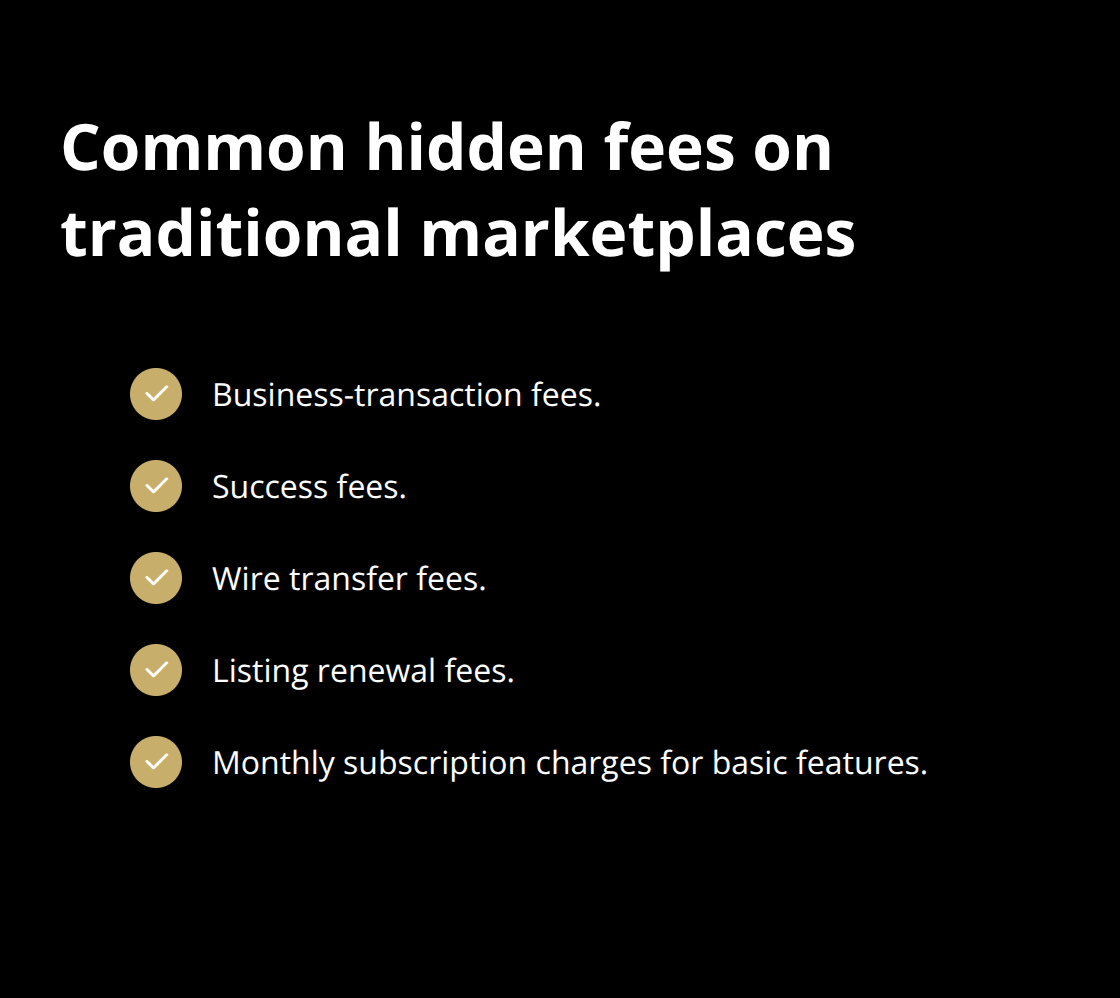
The lack of transparency compounds these problems. Traditional marketplaces bury their fee structures in terms of service documents, and sellers frequently discover hidden charges only after listing their business-transaction fees, success fees, wire transfer fees, listing renewal fees. Some platforms charge monthly subscriptions just for access to basic features. You never know the true cost of selling until the process ends. This opacity creates mistrust and leaves sellers wondering if they’re getting fair value.
Modern Platforms Operate Differently
A modern digital sale platform eliminates these obstacles. Transparent pricing replaces hidden fees. AI-driven buyer matching connects you with serious purchasers instead of tire-kickers. Automated workflows replace manual email chains and clunky file uploads. National reach expands your opportunity far beyond what traditional marketplaces can offer. These platforms invest in seller success because their model aligns incentives-they only profit when you profit. The result is faster sales, better outcomes, and sellers who actually know what they’ll pay upfront. This shift from opacity to transparency, from closed networks to national reach, and from manual processes to automation represents a fundamental change in how businesses sell. Understanding what separates modern platforms from traditional marketplaces reveals why your next move matters.
How Modern Platforms Connect Buyers with Sellers
AI-Driven Matching Replaces Passive Browsing
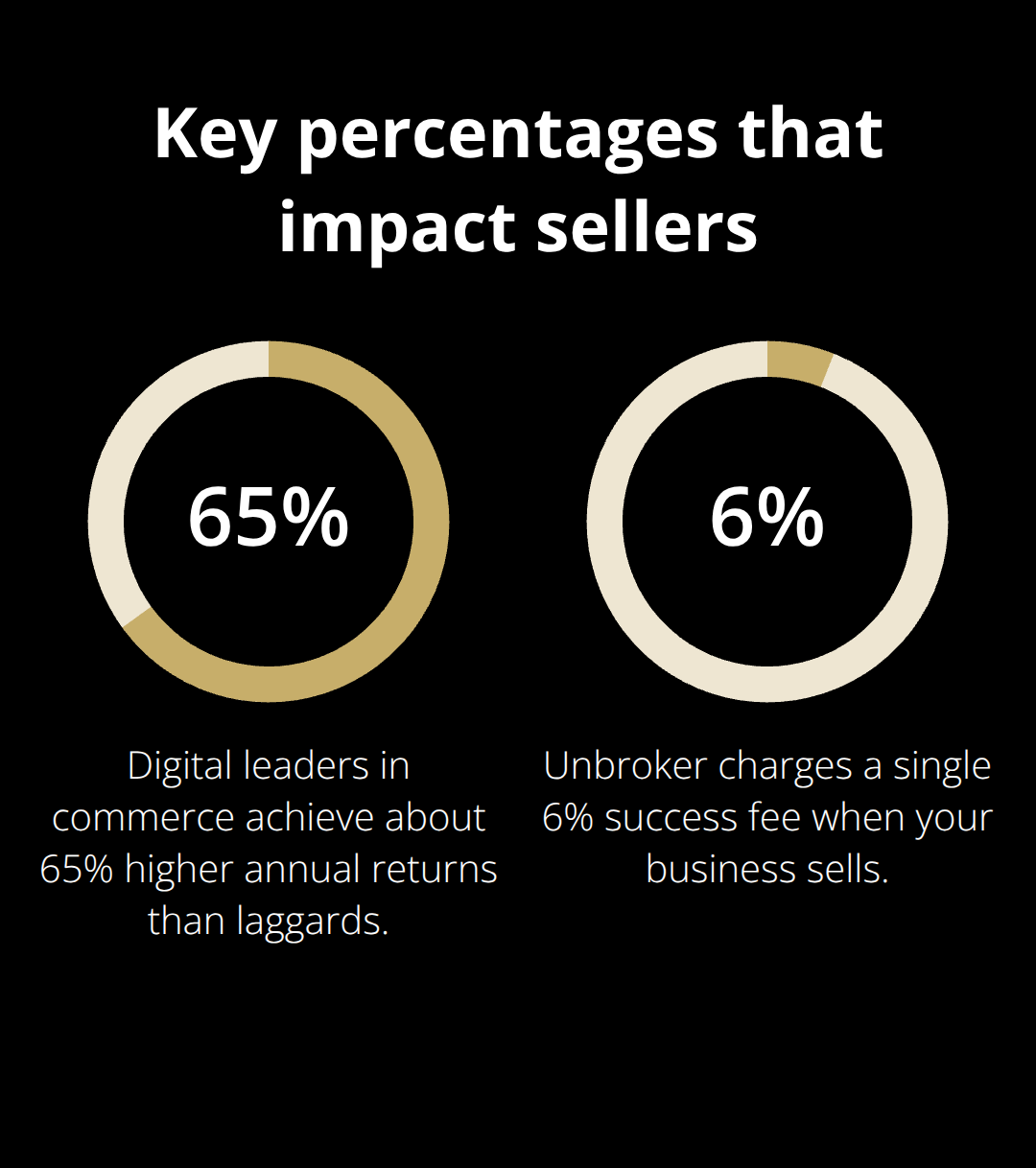
Traditional marketplaces rely on passive browsing where sellers post listings and hope the right buyer eventually finds them. Modern platforms flip this approach entirely. AI-driven matching analyzes buyer profiles, investment criteria, and business preferences to surface relevant opportunities automatically. Instead of waiting months for inquiries, sellers connect with pre-qualified buyers who actually match their business profile. This isn’t theoretical-the McKinsey Digital Index shows digital leaders in commerce achieve about 65% higher annual returns than laggards. When matching happens intelligently, both sides move faster.
Sellers stop wasting time on tire-kickers. Buyers see opportunities aligned with their actual investment thesis.
Automated Workflows Compress Timelines
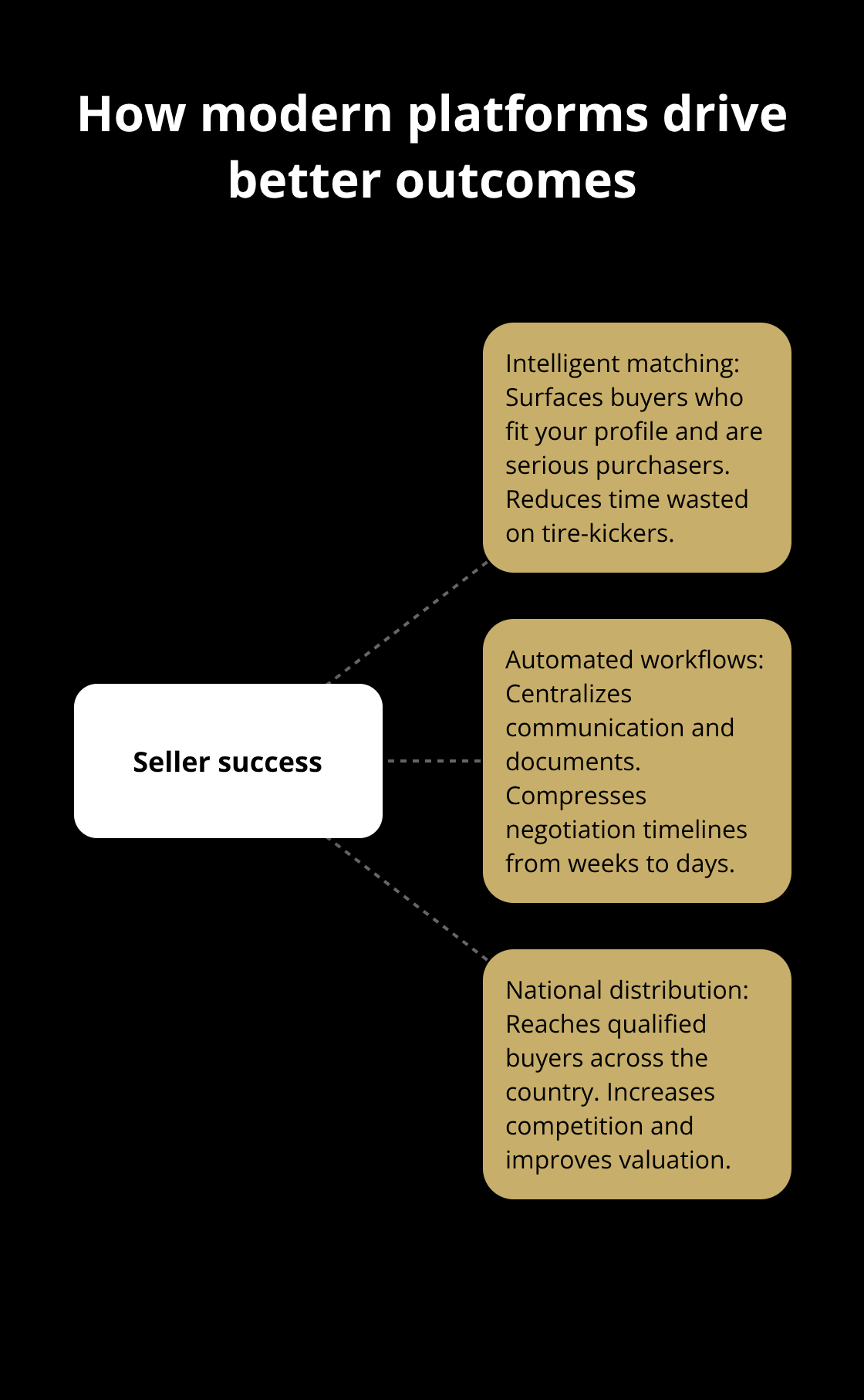
The automation extends beyond matching. Document workflows that once required email chains and manual file uploads now happen in a unified platform. Legal templates save sellers from hiring separate attorneys just to prepare standard agreements. Negotiation timelines compress from weeks to days because all communication, offers, and counteroffers flow through one system rather than scattered email threads. Baymard Institute research on checkout usability shows that streamlined workflows reduce friction at every decision point-the same principle applies to business sales. Sellers gain visibility into every step of the process, eliminating the opacity that plagues traditional marketplaces.
National Reach Expands Your Buyer Pool
Traditional marketplaces operate regionally or serve only the networks their operators control. Modern platforms syndicate listings to multiple channels and reach qualified buyers across the entire country. A seller in Portland gains access to the same buyer pool as a seller in Miami. Geographic limitations disappear. This expanded reach directly impacts deal velocity and final valuation because competition among interested buyers increases naturally. Sellers no longer compete within artificial geographic boundaries that limit their opportunity.
The Right Platform Aligns Incentives
These three elements-intelligent matching, automated workflows, and national distribution-work together to transform how business sales happen.
Platforms that invest in seller success operate differently than traditional marketplaces because their model aligns incentives: they only profit when sellers profit. This fundamental shift means the platform actively works to connect you with serious buyers, streamline your process, and maximize your outcome. The next step is understanding which specific features actually drive better results for sellers.
Key Features That Protect Your Information and Accelerate Your Sale
Confidentiality Controls Information Access
Selling a business exposes sensitive financial data, customer lists, and operational details that competitors would love to access. Traditional marketplaces treat this information carelessly, often displaying it publicly or sharing it with unvetted parties. Modern platforms protect seller information at every stage through structured access controls. Buyers sign non-disclosure agreements before accessing detailed financials. Marketing materials highlight your business strengths without revealing identifying details until serious interest emerges. This confidential approach attracts qualified buyers who respect the process rather than tire-kickers fishing for competitive intelligence. Sellers who control information access report higher confidence in negotiations and better final outcomes because they work with genuine purchasers, not competitors gathering market research.
Legal Templates Reduce Costs and Delays
Most sellers lack the bandwidth to draft purchase agreements, earn-out terms, or representations and warranties clauses. Hiring attorneys for these tasks costs thousands of dollars and extends timelines unnecessarily. Modern digital sale platforms provide legal templates that cover standard provisions, reducing legal costs while accelerating deal progression. Negotiation assistance built into the platform keeps conversations structured and documented, preventing misunderstandings that derail deals. Sellers move through the transaction faster without sacrificing legal protection or clarity on key terms.
Premium Marketing Reaches Qualified Buyers
Traditional marketplaces rely on passive listing sites where your business competes for attention alongside thousands of others. Premium marketing amplifies your reach through syndication partners, targeted buyer outreach, and strategic positioning that attracts investors aligned with your business profile. This targeted approach surfaces your opportunity to serious buyers rather than casual browsers. The combination of confidentiality, legal support, and targeted marketing transforms the sale from a stressful, opaque process into a structured, professional transaction where you maintain control and visibility throughout.
Final Thoughts
Selling a business through traditional marketplaces means accepting slow timelines, hidden fees, and limited buyer access. A digital sale platform changes that equation entirely by automating workflows, matching you with serious buyers instead of tire-kickers, and providing legal templates that eliminate unnecessary delays. Speed matters because every month your business sits on the market costs you momentum, buyer interest, and negotiating leverage.
Sellers working with platforms that prioritize transparency and buyer matching report faster closings, better valuations, and significantly less stress throughout the process. You know your costs upfront, control who sees sensitive information, and work with qualified buyers aligned with your business profile. This represents a fundamental shift in how business sales happen-not incremental improvement, but a complete transformation of the traditional marketplace model.
We at Unbroker built our platform around this reality, combining expert advisors, AI-driven buyer matching, and national marketing to connect you with serious purchasers across the country. You pay a single 6% success fee when your business sells, with no hidden charges or monthly subscriptions. Explore how Unbroker can help you sell your business faster and with greater confidence.