Selling your business without professional help sounds appealing-lower costs, more control, complete privacy. But DIY sale tools often leave business owners frustrated, underprepared, and leaving money on the table.
At Unbroker, we’ve seen countless entrepreneurs struggle with valuation mistakes, buyer sourcing challenges, and legal pitfalls they didn’t anticipate. This guide walks you through what DIY tools can and cannot do, and when professional guidance becomes non-negotiable.
Why DIY Tools Limit Your Exit Potential
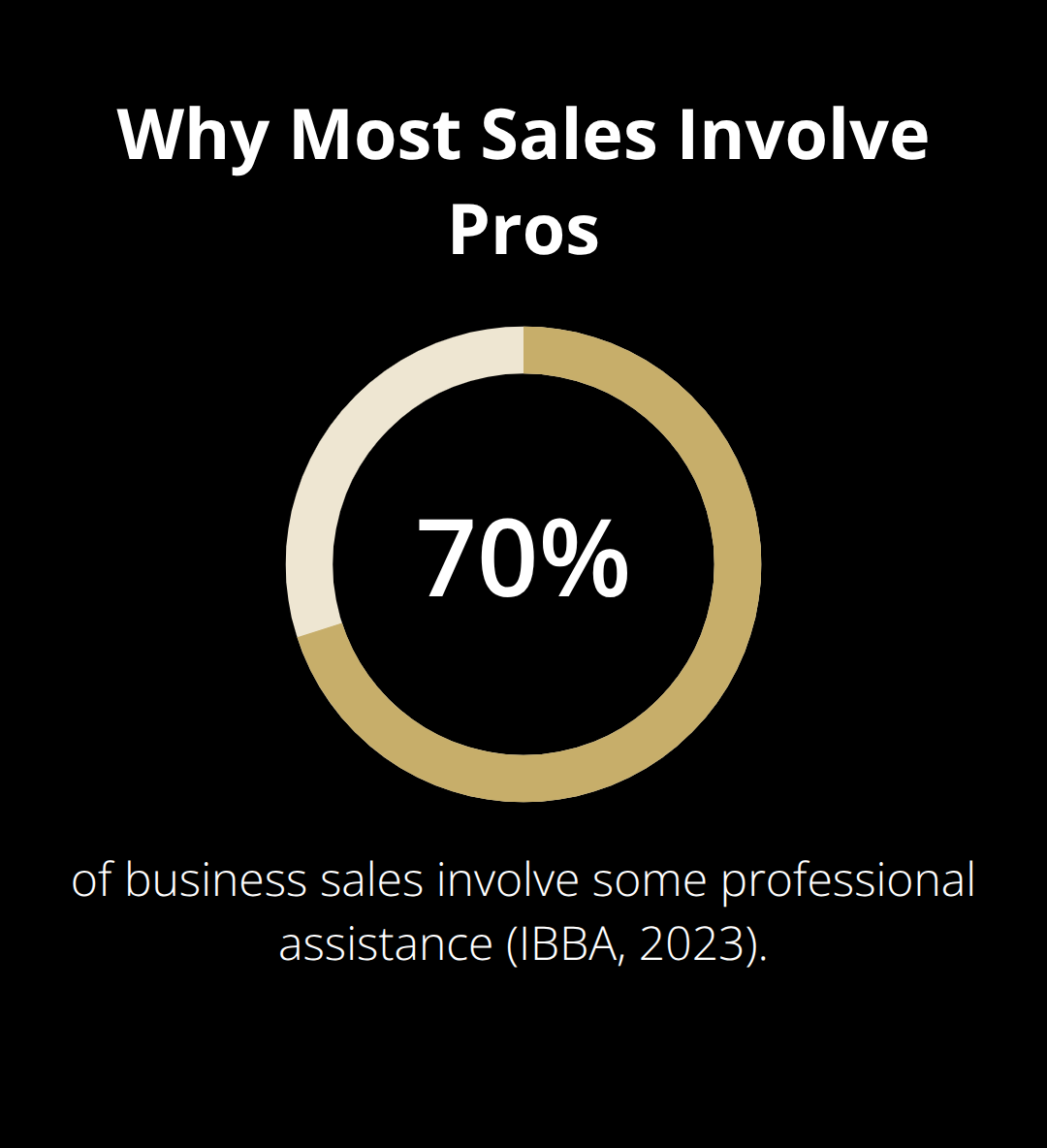
The reality of selling your business solo is that you’re competing against professional brokers who have spent years building buyer networks. Most DIY sellers rely on general marketplaces or local networking, which reach only a fraction of qualified purchasers. A 2023 study by the International Business Brokers Association found that 70% of business sales involve some professional assistance, primarily because brokers access private buyer pools that DIY platforms simply cannot replicate. When you post your business on public sites, you advertise to tire-kickers and competitors doing market research, not serious acquirers with capital ready to close.
The Buyer access problem
Qualified buyers-those with actual capital and intent to close-don’t browse public listing sites. They work with brokers, contact business advisors, or use proprietary networks. DIY platforms connect you with general buyers, but serious acquirers, private equity firms, and strategic competitors rely on broker relationships. This means your best potential buyers never see your listing.
The Valuation Expertise Gap
You face the valuation trap without access to comparable transaction data and industry benchmarks. Most owners either overprice their business and watch it sit unsold, or underprice it and leave six figures on the table. Professional brokers use proprietary valuation models and recent transaction comparables you won’t find in free online tools.
Pricing your business requires understanding EBITDA multiples, growth trajectories, industry-specific risk factors, and comparable transactions in your sector. Free valuation calculators online use generic formulas that ignore what actually moves the needle in your market. Professional advisors know that a software company with recurring revenue commands a 6-8x EBITDA multiple, while a service business might fetch 3-4x. Getting this wrong is expensive.
The Time and process management reality
On average, it takes about 10 to 12 months to complete the sale of a business, including choosing a buyer and completing the closing process. DIY sellers often stretch this timeline because they lack systems for managing the process efficiently. The longer your business sits on the market, the more buyer skepticism grows about why it hasn’t sold.
Handling every aspect of a sale while operating your business splits your focus dangerously. Buyers expect fast responses, clean documentation, and professional communication. DIY sellers often miss follow-up emails, delay financial information, or fumble negotiations because they’re juggling operations. This signals weakness to buyers and kills deals.
These limitations reveal why many business owners eventually turn to professional guidance-not because DIY tools lack value, but because they lack the infrastructure that serious buyers expect.
Essential Tools and Resources for Selling Your Business
Financial Documentation Platforms
QuickBooks Online and Xero help you pull clean historical data, but the gap between organized financials and investor-ready materials remains substantial. Most DIY sellers hand over three years of tax returns and call it due diligence. Serious buyers want normalized financial statements, detailed revenue breakdowns by customer or product line, and documented recurring revenue. Tools like Stripe dashboards help you export transaction data, but assembling this into a compelling financial narrative requires understanding what buyers actually scrutinize.
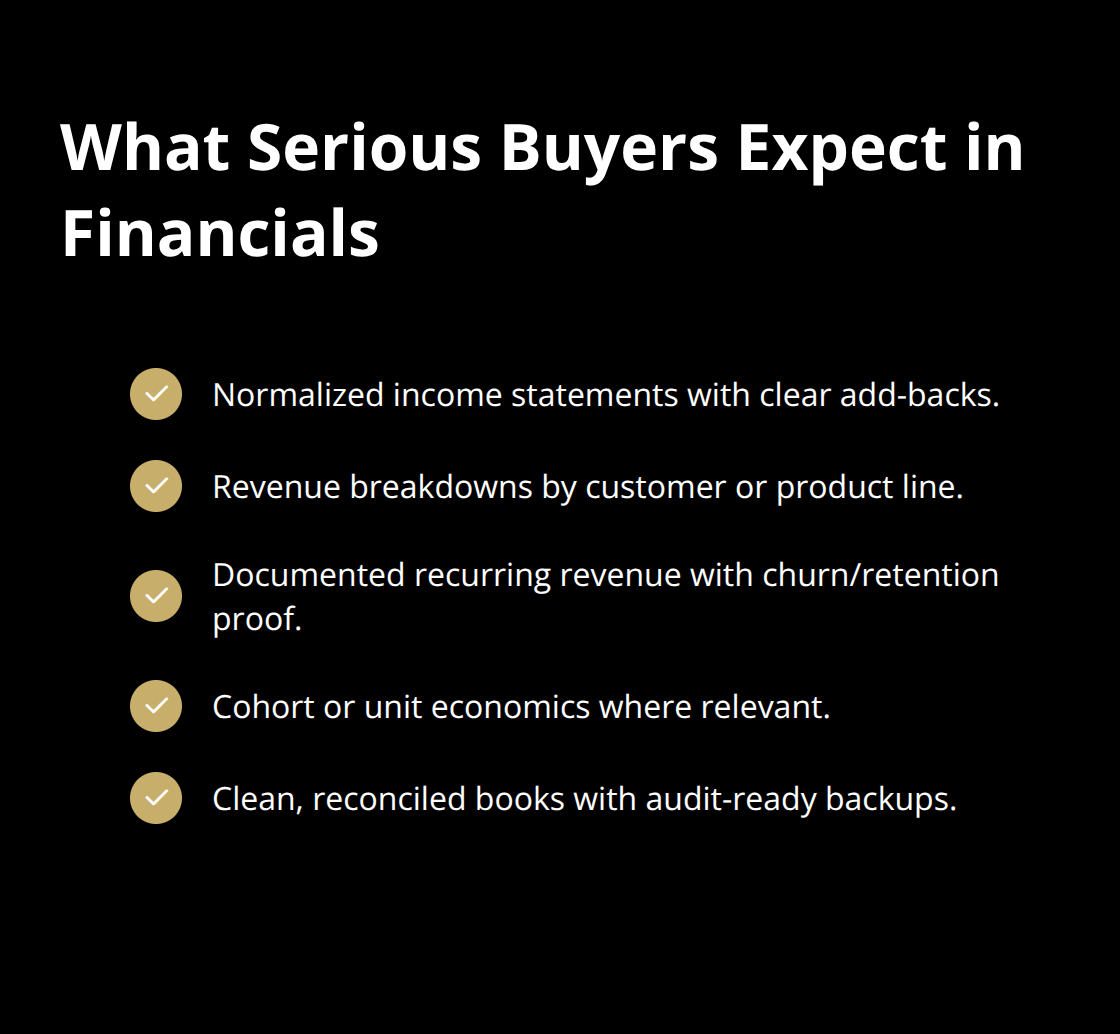
A 2024 survey by the Small Business Administration found that incomplete or poorly presented financial documentation creates significant friction in negotiations. You need to show not just what you earned, but why those earnings are stable and repeatable.
Valuation Platforms and Their Limitations
Valuation platforms like Forge and Quiet Light offer ballpark estimates, but they function as starting points, not closing prices. These tools typically use industry multiples and revenue figures you input, generating a range rather than a defensible valuation. The problem is that they ignore deal structure, earnout terms, and buyer-specific synergies that actually determine what someone pays. Without access to comparable transaction data and industry benchmarks, you face the valuation trap. Professional advisors know that a software company with recurring revenue commands a 6-8x EBITDA multiple, while a service business might fetch 3-4x. Getting this wrong costs you significantly.
Legal Templates and Document Precision
Legal templates from LawDepot or Rocket Lawyer cover basic purchase agreements and NDAs, but business sale documents demand precision around representations, warranties, indemnification, and earn-out mechanics. One misplaced clause can cost you tens of thousands in post-closing disputes. These templates work for straightforward transactions, yet they lack the customization that protects you in complex scenarios.
Marketing and Buyer Matching Solutions
Marketing your business without a broker network forces reliance on public listing sites or local networking, reaching only passive buyers. Platforms with real traffic exist, but they also broadcast your sale to competitors and employees who might not appreciate the news. AI-powered buyer matching services are emerging as an alternative, though they lack the relationship networks that established brokers leverage. These newer solutions show promise, yet they still operate at a disadvantage compared to professionals with decades of buyer relationships.
The Real Cost of DIY Infrastructure
If you’re determined to handle this yourself, you must invest significant time in financial presentation, legal documentation review, and buyer vetting. The tools exist, but they’re designed for efficiency within professional workflows, not as replacements for expertise. This reality becomes especially clear when you face multiple offers or complex negotiation scenarios that require experience and leverage you simply don’t possess.
When Professional Help Becomes Necessary
Managing Complex Ownership Structures
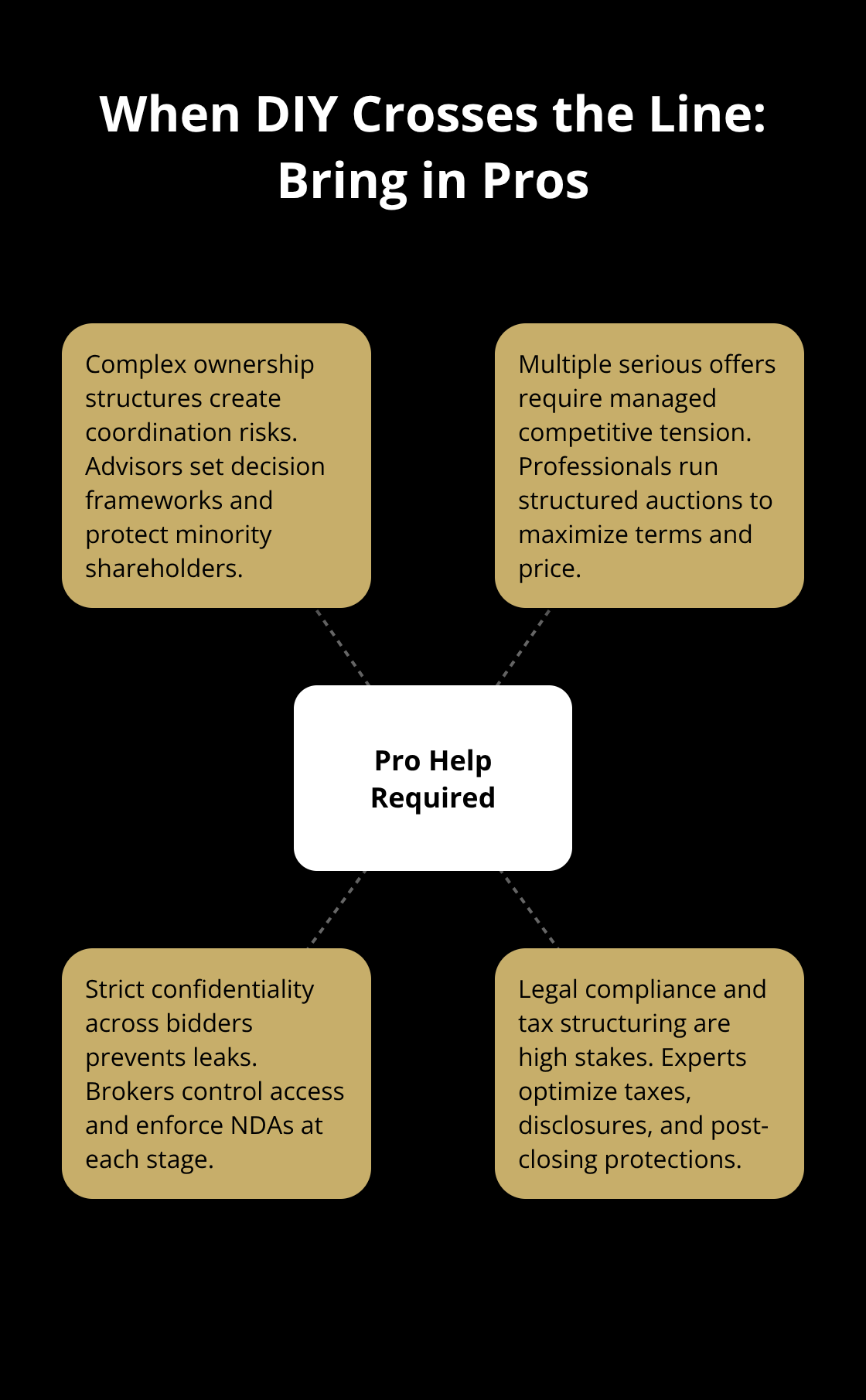
Selling a business with multiple owners, complex cap tables, or layered corporate structures demands expertise that DIY tools simply cannot provide. If your business operates as an S-corp with preferred shareholders, has passive investors who need approval on sale terms, or involves co-founders with different exit timelines, you face coordination challenges that kill deals. Each additional owner adds a veto point in negotiations. Professional advisors establish clear decision-making frameworks upfront, manage conflicting interests, and protect minority shareholders through proper documentation.
Without this structure, buyers walk away because they don’t trust that all parties will actually close.
Similarly, if your business operates across multiple entities, has international operations, or carries significant contingent liabilities, the legal complexity exceeds what templates address. A professional identifies structural issues before they derail negotiations and cost you money.
Orchestrating Competitive Bidding
When multiple serious offers arrive simultaneously, the negotiation leverage shifts entirely in your favor-but only if you know how to manage it. Most DIY sellers panic when they face competing bids and accept the first serious offer out of fear it will evaporate. This is a catastrophic mistake. Professional advisors orchestrate competitive tension, negotiate terms strategically, and extract maximum value through structured auction processes.
They understand that earnout periods, seller financing components, and non-compete terms matter as much as headline price. They also know when to walk away from a buyer whose diligence demands become unreasonable or whose financing appears shaky. The difference between accepting the first offer and running a proper auction often amounts to hundreds of thousands of dollars.
Protecting Confidentiality Across Multiple Bidders
Confidentiality becomes non-negotiable once you manage multiple bidders. Information leaks destroy deals and damage your business reputation. Professionals maintain strict information barriers, use NDAs strategically, and control who learns about your sale at each stage. They prevent competitors from accessing sensitive data, stop employees from learning prematurely, and keep customers unaware until the right moment.
This level of control requires systems and relationships that DIY platforms simply don’t provide. One leaked email or careless conversation can tank your entire process.
Navigating Legal Compliance and Tax Structuring
Legal compliance in the sale process-proper disclosure, tax structuring, regulatory approvals, and representation warranties-requires specialized knowledge. One missed disclosure or improperly structured earnout can expose you to post-closing claims that wipe out your proceeds. Professional advisors structure deals to minimize your tax liability, handle regulatory filings correctly, and draft representations that protect you rather than expose you to liability.
They also manage the mechanics that DIY sellers overlook: escrow arrangements, indemnification caps, survival periods, and post-closing adjustments. These details determine whether you actually receive the money you negotiated for or face clawbacks months after closing.
Final Thoughts
The decision between DIY sale tools and professional guidance isn’t about pride or cost-cutting. It’s about what your business is actually worth and whether you’ll capture that value when it matters most. DIY tools help you organize financials, draft basic documents, and understand valuation ranges, but they operate within real constraints that prevent you from accessing buyer networks, obtaining comparable transaction data, or managing multiple competing offers with professional leverage.
The math favors professional guidance in most scenarios. If your business sells for $500,000 and a professional advisor costs 6%, you pay $30,000 for expertise that typically increases your final proceeds by far more. A professional who helps you negotiate an additional $100,000 in sale price or protects you from post-closing disputes that would have cost $50,000 makes that fee vanish entirely. Most business owners who attempt DIY sales either accept lower offers out of exhaustion or face legal complications that cost them far more than professional guidance would have.
Simple, single-owner businesses with straightforward financials and no competing interests can succeed with DIY sale tools and careful legal review. Anything more complex-multiple owners, significant assets, competitive buyers, or regulatory considerations-demands professional coordination. We at Unbroker built our platform specifically for this reality, combining expert advisors, AI-driven buyer matching, and national marketing to handle what DIY sale tools cannot. Discover how we help business owners maximize their exit.