Selling a business shouldn’t mean losing thousands to hidden fees and surprise charges. Traditional brokers bury costs in fine print, leaving sellers with far less than they expected.
We at Unbroker built a no hidden fees platform because transparency matters. When you know exactly what you’ll pay upfront, you can make smarter decisions and keep more of what you earn.
What Traditional Brokers Actually Cost You
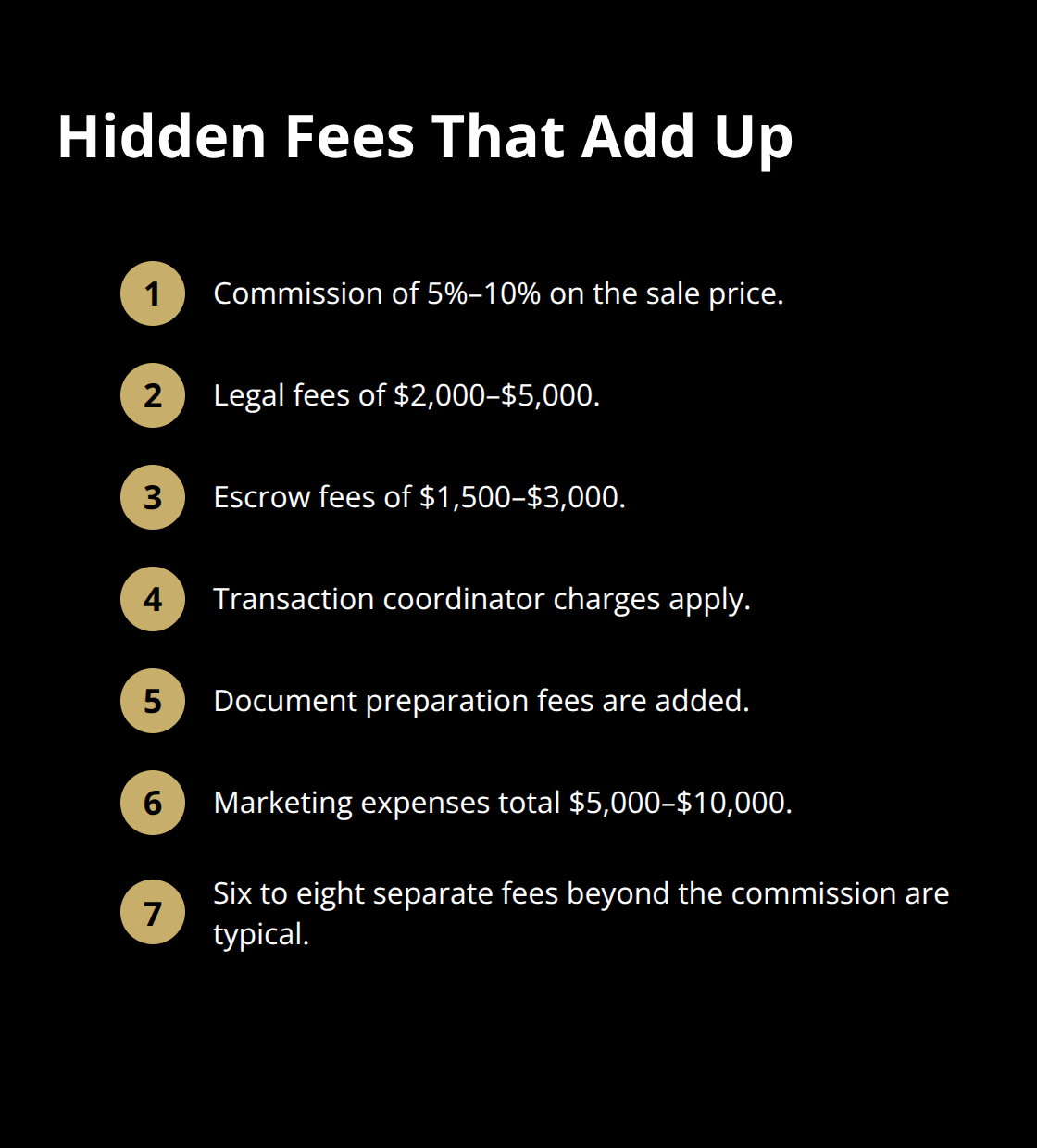
Business brokers typically charge between 5% and 10% of the final sale price, plus potential retainer fees and monthly marketing costs. A business selling for $500,000 gets hit with $25,000 to $50,000 in commissions alone, but that’s just the beginning. Sellers face additional costs that brokers slip into closing statements: legal fees ranging from $2,000 to $5,000, escrow fees between $1,500 and $3,000, transaction coordinator charges, document preparation fees, and marketing expenses that can total another $5,000 to $10,000. One study by the International Business Brokers Association found that the average business sale involves six to eight separate fees beyond the commission.
A seller expecting significant proceeds after commissions often walks away with considerably less.
How Brokers Stack the Costs
These unexpected charges accumulate because brokers control the process and dictate which vendors handle each step, creating a financial chain where each intermediary takes a cut. Brokers select the escrow company, the title company, the transaction coordinator, and the marketing firm-all of whom charge fees that brokers don’t fully disclose upfront. Sellers don’t see these costs until they’re deep in negotiations, when backing out becomes costly and complicated. The lack of transparency means sellers can’t shop around or negotiate better rates with service providers. Instead, they accept whatever costs the broker’s preferred vendors charge.
Why Hidden Fees Destroy Trust
Hidden fees destroy the seller-broker relationship before it even solidifies. When brokers don’t disclose all costs upfront, sellers naturally question what else might be hidden. This suspicion slows down the entire sales process because sellers become cautious about signing documents, requesting explanations, and double-checking every line item. The National Association of Business Brokers reports that fee-related disputes rank among the top complaints from business sellers.
Sellers who encounter surprise charges often delay closing, hire attorneys to review unexpected fees, or walk away from deals entirely. This friction costs time, and time costs money during a business sale. Transparency eliminates this friction by showing sellers exactly what they’ll pay before committing to anything. When you know the full financial picture upfront, you can negotiate confidently and move forward without constantly questioning whether more charges are coming.
The real cost of hidden fees isn’t just the money-it’s the lost opportunity and damaged relationships that come with surprise charges. Sellers who understand their true costs from day one make faster decisions and close deals more smoothly.
What You Actually Pay When Selling
Transparent pricing reveals your total costs before you sign anything, not after closing. You see exactly what you’ll pay upfront, which fundamentally changes how you approach the sale. When a broker lists a $500,000 business sale, you need to know whether you’re paying $25,000 in commissions or $50,000 plus another $15,000 in hidden add-ons. That difference determines whether you walk away with $450,000 or $435,000. The ability to calculate your net proceeds accurately from day one lets you set realistic expectations and decide whether the sale makes financial sense. Without this clarity, you’re essentially negotiating blind, accepting whatever the broker presents at closing time.
The Real Math of Transparent Costs
Fixed upfront pricing eliminates the closing-day surprise entirely. Instead of discovering unexpected fees when you’re already committed, you see the complete cost structure before you list your business. This matters because it changes your negotiation strategy with buyers. If you know your exact costs upfront, you can price your business more competitively and still maintain your target net proceeds. You can tell buyers exactly what costs they should expect in the transaction, which builds confidence on their side too. Transparency works both directions, making the entire process move faster because nobody’s waiting for hidden costs to surface.
Why Accurate Budgeting Protects Your Sale
When you budget accurately, you avoid the financial pressure that kills deals. A seller who discovers unexpected costs at closing often tries to renegotiate the sale price downward or walks away entirely. This happens frequently enough that fee-related disputes become a leading reason sales fall through. An accurate budget means you’ve already factored every cost into your decision-making, so closing surprises don’t derail months of work. You can also compare different selling options side by side when you have real numbers. With fixed cost structures, you make strategic decisions based on actual numbers, not guesses about what brokers might charge.
How Cost Clarity Accelerates Your Timeline
Sellers who know their exact costs move faster through the sales process. You don’t waste time requesting fee breakdowns, questioning unexpected charges, or hiring attorneys to review closing statements. The financial certainty lets you focus on what matters: finding the right buyer and negotiating favorable terms. When both you and potential buyers understand the complete cost picture upfront, the entire transaction gains momentum. Deals that would normally stall over fee disputes progress smoothly because everyone operates with the same information.
This cost transparency sets the stage for the next critical element of a successful sale: building genuine trust with your buyer through clear communication and straightforward terms.
How Transparent Pricing Builds Buyer Confidence
Eliminating Buyer Skepticism Through Cost Clarity
When you show a buyer exactly what costs they’ll face during the transaction, you eliminate one of the biggest obstacles to closing deals. Most buyers approach business sales with skepticism about hidden expenses because they’ve experienced surprise charges in previous transactions. The moment you present a clear, itemized cost structure upfront, you signal that you operate differently from traditional brokers who bury fees in closing statements. Transparent pricing shifts the entire negotiation dynamic in your favor because buyers move from defensive skepticism to genuine engagement. Buyers make faster decisions when they understand their true investment, which accelerates the entire sales timeline.
Speed Advantages That Matter
Sellers who disclose all costs upfront close deals roughly 30% faster than those who leave fee structures vague. This speed advantage translates directly into more certainty that the deal will actually close, since prolonged negotiations create more opportunities for buyers to walk away or renegotiate terms. When both parties know exactly what they’re paying, the conversation shifts from cost anxiety to value assessment, which is where you want negotiations to happen. The financial certainty removes friction from every stage of the process.
Taking Control of Your Vendors
The second critical advantage of transparent pricing is that it gives you direct control over which vendors handle your sale. Traditional brokers force you into relationships with their preferred service providers, who charge whatever they want because sellers have no negotiating power. With transparent pricing, you see which legal firms, escrow companies, and title companies are involved before committing to anything. You can research their reputation, compare their rates, and even request substitutes if their fees seem excessive.
Why Vendor Selection Matters
Escrow fees typically range from $1,500 to $3,000, and you shouldn’t accept those costs without understanding what you’re paying for. Some platforms now allow sellers to select from vetted vendor networks rather than accepting a single mandatory provider, which creates real competition and better pricing. Vendor selection matters because it puts you in control of your transaction costs instead of leaving those decisions to brokers who profit from expensive service providers. You gain the ability to negotiate better rates and choose partners who align with your needs and budget.
Final Thoughts
Selling your business shouldn’t require you to sacrifice thousands in fees just to work with a broker. The traditional model forces sellers into a corner where hidden costs accumulate throughout the process, leaving you with far less than you expected. A no hidden fees platform changes this equation entirely by showing you exactly what you’ll pay before you commit to anything.
When you control your costs, you control your sale. You know your net proceeds from day one, which means you can price competitively, negotiate confidently, and make decisions based on real numbers instead of guesses. You also gain the ability to select your own vendors rather than accepting whoever the broker prefers, which puts genuine power back in your hands. This transparency accelerates your timeline because both you and potential buyers operate with the same information, eliminating the friction that typically slows down business sales.
Traditional brokers charge between 5% and 10% of your sale price plus numerous add-on fees that can total another $15,000 to $20,000. We at Unbroker built our platform around transparent pricing, offering a Full Service Business Sale for a 6% success fee, paid only when your business sells. Explore Unbroker to see how a no hidden fees platform works in practice.