Selling a SaaS business is fundamentally different from selling traditional companies. Buyers evaluate your company through metrics like MRR, churn rate, and CAC payback period-not just revenue and profit.
At Unbroker, we’ve seen countless founders leave money on the table because they didn’t understand what buyers actually want to see. This guide walks you through the exact preparation steps and valuation factors that matter most.
What Buyers Actually Pay For in SaaS
SaaS valuations operate in a completely different universe than traditional businesses. While a brick-and-mortar company might sell for three to five times EBITDA, SaaS valuations operate based on annual recurring revenue multiples, ranging from two to twelve times ARR depending on growth rate and churn. This massive difference exists because SaaS businesses generate predictable, recurring income that doesn’t require constant reinvestment to maintain. A SaaS company with five million ARR and sixty percent year-over-year growth will sell for dramatically more than one with five million ARR and five percent growth, even if both are equally profitable.
The metrics that actually move the needle
Buyers obsess over specific numbers, and you need to know them cold. Monthly recurring revenue growth rate matters more than absolute revenue size. Churn rate as the biggest determinant of valuation because it shows whether your customer relationships are stable or deteriorating. Net revenue retention, which measures how much existing customers expand or contract, signals business health far better than new customer acquisition alone. Customer acquisition cost relative to lifetime value tells buyers whether your unit economics make sense. Magic number, calculated as quarterly revenue growth multiplied by twelve divided by total sales and marketing spend, shows how efficiently you convert marketing dollars into revenue. If your magic number sits below zero point five, most strategic buyers will pass. If it exceeds one, you’re operating at an efficiency level that justifies premium valuations. Rule of forty, which adds growth rate percentage and EBITDA margin percentage, should ideally exceed forty for a healthy SaaS business commanding strong multiples.
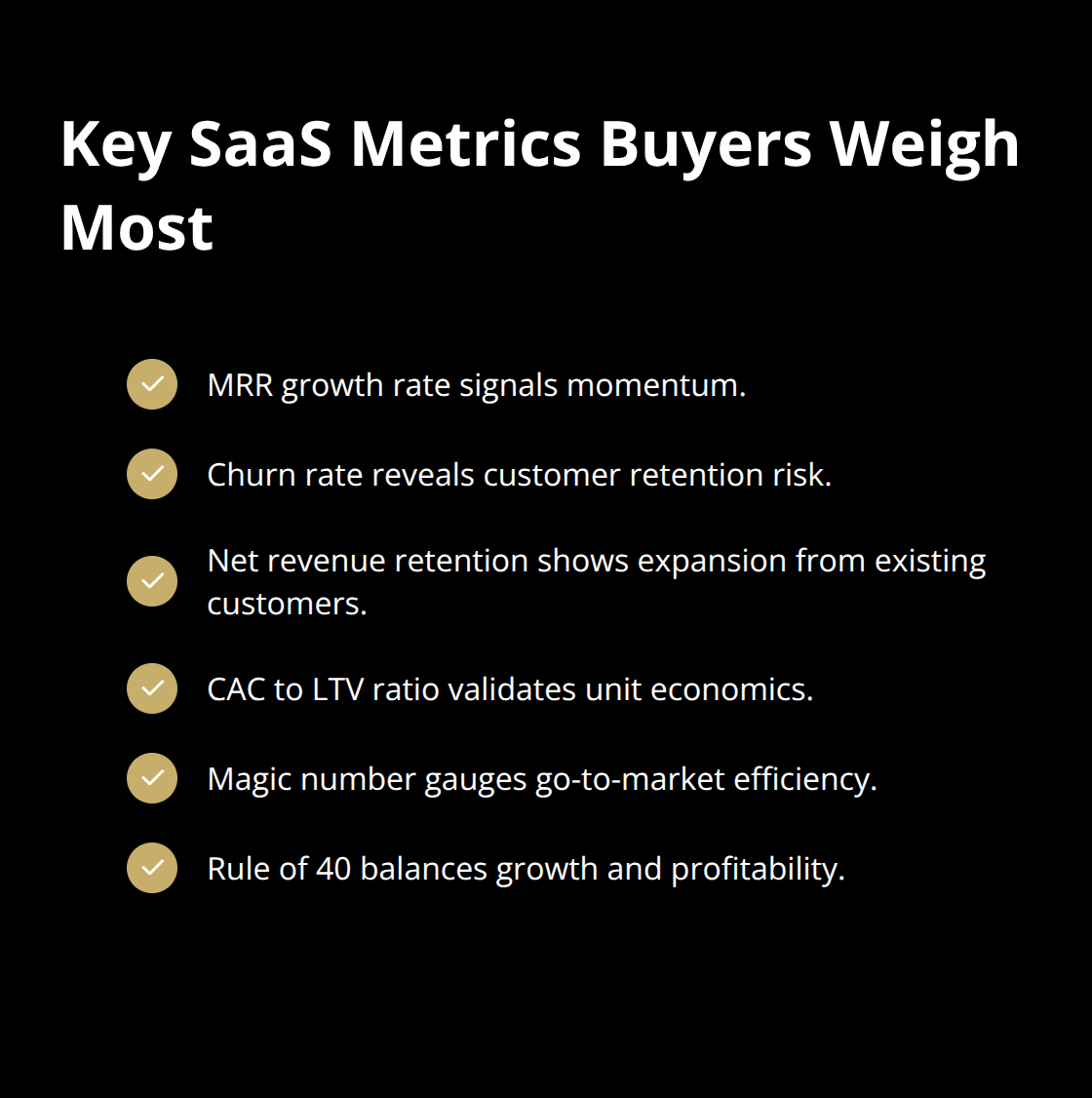
These metrics aren’t academic exercises-they determine whether a buyer sees your business as a screaming bargain or a risky bet.
Mistakes that tank your valuation
Most founders overestimate what their business is worth because they focus on revenue instead of profitability and efficiency. Hiding customer concentration, where your top five customers represent sixty percent of revenue, is a dealbreaker that sophisticated buyers will uncover during due diligence. Sellers who can’t articulate why their churn rate is what it is create massive red flags. If your churn sits at ten percent monthly but you don’t know why, buyers assume the problem is worse than stated. Underinvesting in financial systems before sale costs you money. Buyers expect clean, auditable records showing exactly how much revenue comes from which customer segments and how much you spend acquiring them. Many founders also make the mistake of trying to spike metrics right before sale. If you suddenly double your marketing spend in the final quarter to boost growth numbers, sophisticated buyers spot this and discount your valuation accordingly. They want to see sustainable metrics, not artificial spikes.
What comes next
Understanding what buyers value is only half the battle. The other half involves preparing your business to showcase these metrics in the most compelling way possible.
Preparing Your SaaS Business for Sale
The gap between a SaaS business that sells quickly at full valuation and one that languishes on the market often comes down to preparation. Buyers want to see clean financial records that tell a consistent story, metrics that demonstrate real growth rather than one-time spikes, and infrastructure documentation that proves your technology can survive the transition to new ownership. Most founders underestimate how much work this requires, then scramble when they realize their accounting system doesn’t clearly separate revenue by customer cohort or that nobody has documented how their core product architecture actually works. Starting this preparation three to six months before you plan to list gives you time to fix problems without creating the artificial metric inflation that sophisticated buyers immediately discount.
Financial clarity separates serious sellers from the rest
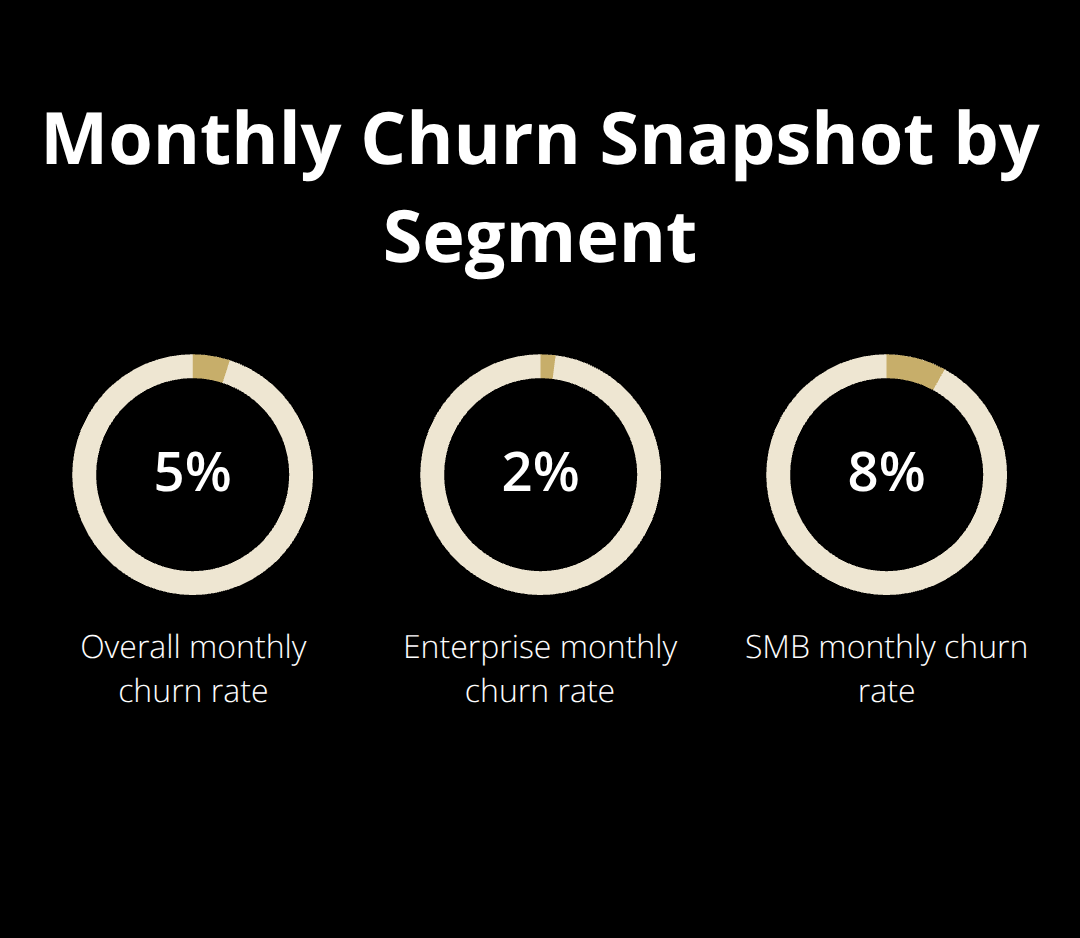
Your financial records need to tell the story that buyers want to hear, which means going far beyond standard P&L statements. Separate your revenue into clearly defined categories: subscription revenue from your core product, revenue from add-ons or upsells, professional services revenue, and one-time implementation fees. This breakdown shows buyers exactly which revenue streams are recurring and which are volatile. Document your customer acquisition costs by cohort and month, not just as a company-wide average. A buyer needs to understand whether your CAC increased because you expanded into a more expensive market or because your efficiency actually deteriorated. Track your churn monthly for at least the past twenty-four months, broken down by customer segment if possible. If your overall churn sits at five percent monthly but your enterprise customers churn at two percent while SMB customers churn at eight percent, that distinction matters enormously for valuation.
Create a customer aging report that shows exactly when each customer joined and when they last renewed or expanded. This document reveals whether your growth comes from new customer acquisition or from existing customers staying and expanding. Most founders discover during this process that their revenue recognition practices have been sloppy or that they’ve mixed one-time revenue with recurring revenue in ways that obscure actual business health. Fix these issues before a buyer’s accountant finds them and uses them as leverage to reduce your asking price.
Your technology stack needs to be documented, not mythologized
Buyers care deeply about whether your technology can scale without you, whether critical knowledge lives only in your head, and whether you’ve built technical debt that will become their problem. Document your entire technology architecture in plain language that a non-technical buyer or their CTO can understand. Explain what your core systems do, how they connect to each other, which third-party tools you depend on, and what happens if any single component fails. List every subscription, API integration, and vendor relationship your business relies on, along with the annual costs. If your product depends on a particular cloud provider or uses specialized infrastructure, explain why. Create a runbook for your most critical processes: how customer data gets backed up, how you handle security incidents, how you deploy new product features. This documentation serves two purposes. First, it proves to buyers that your business isn’t held together by your personal expertise. Second, it prevents them from discovering missing pieces during due diligence and using those gaps to renegotiate terms. If your tech stack relies on outdated frameworks or languages that are hard to hire for, acknowledge this directly and explain your plan for modernization. Buyers respect honesty about technical challenges more than they respect silence followed by discovery.
Customer retention metrics tell the real story
Your churn rate and net revenue retention numbers reveal whether your business is genuinely healthy or just growing through aggressive spending. Document your monthly churn for at least twenty-four months, and separate it by customer segment, product tier, and acquisition channel. Buyers will ask why your churn is what it is, and vague answers destroy credibility. If your churn increased after you raised prices or changed your product roadmap, explain this directly. If certain customer segments churn at dramatically different rates, investigate why and document your findings. Net revenue retention shows how much recurring revenue you keep and grow from existing customers over a period, and it matters as much as new customer acquisition. A business with eighty percent net revenue retention and moderate growth often sells for more than a business with one hundred twenty percent net revenue retention but high churn, because the first business demonstrates stable, predictable revenue. Calculate your magic number (quarterly revenue growth multiplied by twelve, divided by total sales and marketing spend) for the past eight quarters. This metric shows buyers how efficiently you convert marketing dollars into revenue growth. If your magic number has been declining, understand why and prepare an explanation. If it’s been improving, highlight this trend prominently.
Organize your customer data for buyer confidence
Buyers need to understand your customer base composition, not just your total customer count. Create a detailed customer list that shows each customer’s name, monthly recurring revenue, contract start date, renewal date, and any expansion or contraction history. Identify your top twenty customers and note what percentage of total revenue they represent. If your top five customers represent more than forty percent of revenue, this concentration risk will reduce your valuation multiple, but hiding it will destroy the deal entirely. Document your customer acquisition channels and the cost to acquire customers through each channel. Show which channels produce customers with the lowest churn and highest lifetime value. This information helps buyers understand whether your growth is sustainable or dependent on expensive, short-lived customer relationships. If you have long-term contracts or multi-year commitments from customers, document these separately. Buyers value revenue that’s locked in for multiple years far more than month-to-month revenue. Prepare a cohort analysis showing how customers acquired in different time periods have performed. This analysis reveals whether your product-market fit has improved over time or whether you’re acquiring lower-quality customers as you scale.
Infrastructure and operations readiness
Beyond your technology stack documentation, buyers need to understand your operational infrastructure and whether your team can transition smoothly. Document your key business processes: how you onboard customers, how you handle support requests, how you manage billing and renewals, how you make product decisions. Identify which processes depend heavily on specific team members and which are systematized. If your VP of Sales is the only person who understands your enterprise sales process, this creates risk that buyers will discount. Create standard operating procedures for your most important functions. This doesn’t require elaborate documentation, but it should be clear enough that someone new could follow it.
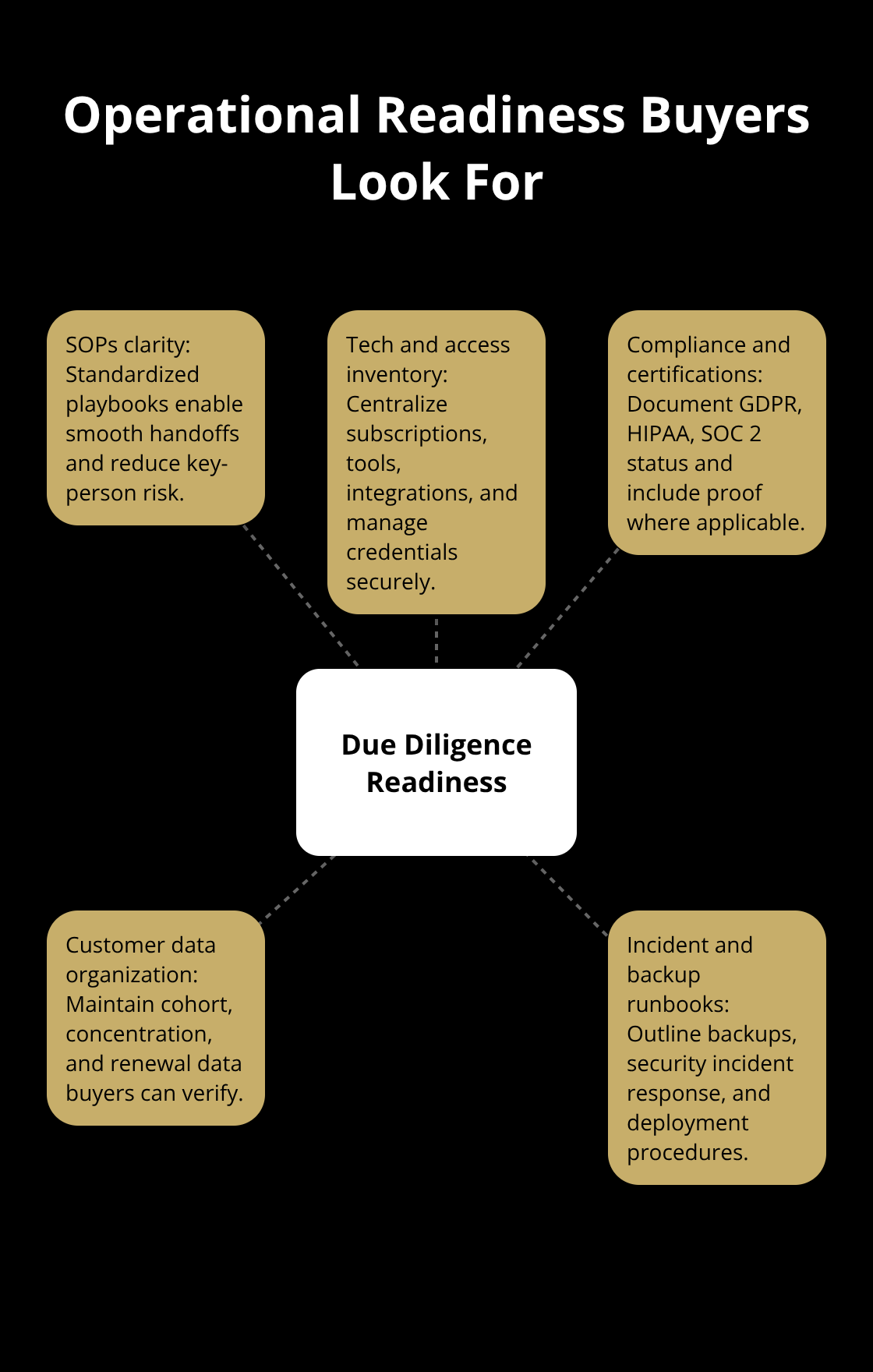
List all your software subscriptions, tools, and integrations, along with login credentials stored securely (consider using a password manager that you can share with buyers during due diligence). Document any compliance requirements your business must meet: GDPR, HIPAA, SOC 2, or industry-specific regulations. If you’ve achieved any certifications, include proof. If you haven’t but operate in an industry where they’re expected, explain your timeline for achieving them. These preparation steps transform your business from a collection of spreadsheets and tribal knowledge into a professional asset that buyers can confidently evaluate and integrate into their operations.
How to Position Your SaaS Business for Maximum Appeal
Buyers decide whether to move forward based on how you present your competitive position and financial trajectory. Most founders assume their metrics speak for themselves, then wonder why buyers undervalue their business or walk away entirely. The reality is that buyers see dozens of SaaS businesses every year, and they need you to connect the dots between your numbers and what those numbers mean for their investment. Your competitive advantages matter far less than your ability to show buyers that those advantages produce measurable, defensible revenue growth.
Connect Your Differentiation to Financial Outcomes
Start by identifying what actually differentiates your product from competitors, then translate that into customer outcomes that buyers can quantify. If you’ve built a product that reduces implementation time for enterprise customers from twelve weeks to four weeks, that’s not just a feature-it’s a customer acquisition advantage because faster implementation means faster time to value, which reduces churn. Document how this advantage appears in your unit economics: lower churn, higher net revenue retention, or faster payback periods compared to industry benchmarks. Buyers don’t want to hear that your product is better; they want to see evidence that your superiority creates financial outcomes they can replicate or improve after acquisition.
If your competitive advantage comes from your team’s domain expertise, show this through customer retention data and expansion rates. If it comes from your technology, demonstrate that through infrastructure documentation and customer feedback. The strongest positioning connects your differentiation directly to the metrics that determine your valuation multiple.
Break Down Your Revenue Growth Into Components
Your revenue model clarity determines how seriously buyers take your growth trajectory. Many founders present growth numbers without explaining the composition of that growth, which creates skepticism about sustainability. Break down your revenue growth into three components: new customer acquisition, expansion revenue from existing customers, and any price increases you’ve implemented. Show buyers the contribution of each component to your overall growth rate.
If seventy percent of your growth comes from expansion revenue, this signals a healthy business with strong product-market fit and customer satisfaction, which justifies premium multiples. If ninety percent comes from new customer acquisition with declining net revenue retention, buyers will assume your growth is fragile and discount your valuation accordingly. Present your revenue model alongside your unit economics to tell a complete story. If you’ve achieved a magic number above one point zero, highlight this explicitly because it shows your growth is efficient and profitable. If you operate at a loss but have a clear path to profitability, explain your unit economics at scale and show how your margins improve as you grow.
Buyers understand that many SaaS companies operate at losses during growth phases, but they need to see that your business model eventually produces healthy margins. Present at least eight quarters of historical growth data, not just last quarter’s performance. This timeframe reveals whether your growth rate is accelerating, decelerating, or holding steady, and it’s impossible for you to artificially inflate without appearing suspicious. If your growth rate has decelerated, explain why and show what you’re doing to reignite growth. Sophisticated buyers respect honesty about challenges more than they respect silence.
Present Your Customer Concentration and Retention Metrics
Present your customer concentration risk directly rather than hoping buyers won’t notice. If your top five customers represent forty percent of your revenue, state this upfront and explain why these customers are sticky and unlikely to churn. Show the contract terms and renewal history for your largest accounts to prove they’ve consistently renewed. If customer concentration is genuinely a risk factor in your business, acknowledge it but offset this risk by demonstrating that your mid-market and SMB segments are growing rapidly and have low churn. Buyers respect transparency about concentration far more than they respect discovery of hidden risk during due diligence.
Present your churn metrics by customer segment and acquisition channel because different customer types have dramatically different retention profiles. Enterprise customers acquired through direct sales might churn at two percent monthly while SMB customers acquired through your free trial churn at ten percent monthly. This variation is normal and expected, but buyers need to see that you understand your customer base composition and have strategies tailored to each segment. Show your customer cohort analysis for at least the past four years if available. This analysis reveals whether your product-market fit has improved over time and whether newer customers have higher or lower lifetime value than older customers. If your cohorts are improving, highlight this trend because it signals that your business is getting stronger and more efficient. If newer cohorts are weaker, explain what changed in your go-to-market strategy and how you’re addressing the issue.
Showcase Net Revenue Retention Separately From Churn
Present your net revenue retention separately from your churn rate because these metrics tell different stories. A business with ninety percent churn but one hundred ten percent net revenue retention shows that remaining customers expand significantly, which can offset acquisition challenges. Show the absolute dollar value of your expansion revenue alongside the percentage, because buyers care about both the rate of expansion and the dollar impact on your business.
Final Thoughts
Selling a SaaS business requires you to think like a buyer before you ever list. The founders who sell quickly at strong valuations understand that metrics alone don’t move deals forward-you need clean financial records that tell a consistent story, documented infrastructure that proves your business runs without you, and a clear narrative connecting your competitive advantages to measurable financial outcomes. This preparation work transforms your business from a collection of spreadsheets into a professional asset that buyers can confidently evaluate.
The preparation phase directly translates into valuation multiples. A buyer who sees organized financial data, understands your unit economics, and can verify your growth trajectory will pay more than a buyer who uncovers problems during due diligence and uses those problems as negotiating leverage. Separating revenue by cohort, documenting your technology stack, calculating your magic number across eight quarters, and breaking down your churn by customer segment takes time, but this work pays off in higher offers and faster sales.
A SaaS business sale succeeds or fails based on how thoroughly you prepare before marketing begins. Start three to six months before you plan to list, fix your accounting systems, document your technology, organize your customer data, and prepare clear explanations for every metric that matters. We at Unbroker can help you navigate buyer conversations and negotiate terms through our modern platform for selling businesses, but preparation is your responsibility.