Selling your business is one of the biggest financial decisions you’ll make. Most business owners underestimate how much planning it takes to get a good outcome.
At Unbroker, we’ve seen firsthand that exit planning strategies separate owners who walk away satisfied from those who leave money on the table. This guide walks you through the three pillars of a resilient exit: financial preparation, strategic structuring, and effective marketing to buyers.
Financial Preparation for Your Exit
Getting Your Business Valuation Right
Your business valuation sets the floor for everything that follows in your exit. Get this wrong and you either price yourself out of the market or leave millions on the table. Most owners rely on outdated revenue multiples or gut feeling, which explains why the average business sells for 20-30% below its actual market value according to data from the American Business Valuation Association. We recommend starting with a professional appraisal using the income approach, which calculates your business value based on the cash it generates. This method works better than asset-based valuations because buyers care about what your business can earn them, not just what it owns.
The multiple you apply depends on your industry, growth rate, and customer concentration. A SaaS company with recurring revenue might command a 6-8x EBITDA multiple, while a service business with customer churn might only fetch 3-4x. If your business relies heavily on one customer or client, expect a 15-25% valuation haircut because buyers see concentration risk. The best time to fix this is before you sell, not during negotiations. Spend 6-12 months diversifying your revenue streams and proving your business works without you at the helm.
Strengthen Your Financials Before Marketing
Buyers scrutinize your last three years of tax returns and financial statements obsessively. If your numbers are messy, you signal either mismanagement or hidden problems, and buyers will discount aggressively. Clean up your accounting now by ensuring your books match your tax returns exactly, removing personal expenses that shouldn’t be there, and documenting all revenue properly.
Many business owners deduct personal vehicle expenses, meals, and travel that buyers will add back, but only if your accountant can justify them. The goal is to show normalized earnings, which means presenting what a typical owner would actually make running your business. If you’ve had unusual one-time expenses or revenue dips, document them clearly so buyers understand they’re not permanent. Your cash flow matters as much as profit. A business earning $500,000 in profit but burning cash every month looks riskier than one earning $300,000 with strong cash reserves.
Improve your cash conversion cycle by collecting receivables faster, extending payables intelligently without damaging supplier relationships, and reducing inventory if applicable. These moves take 6-18 months, so start now.
Tax Planning Saves Real Money at Close
Federal and state taxes can consume 20-40% of your sale proceeds if you structure the deal wrong. An asset sale triggers double taxation because the business pays corporate tax and you pay personal tax on proceeds. A stock sale avoids the corporate tax layer but might trigger capital gains taxes on appreciated assets. The right choice depends on your corporate structure, how much debt you have, and your state’s tax environment.
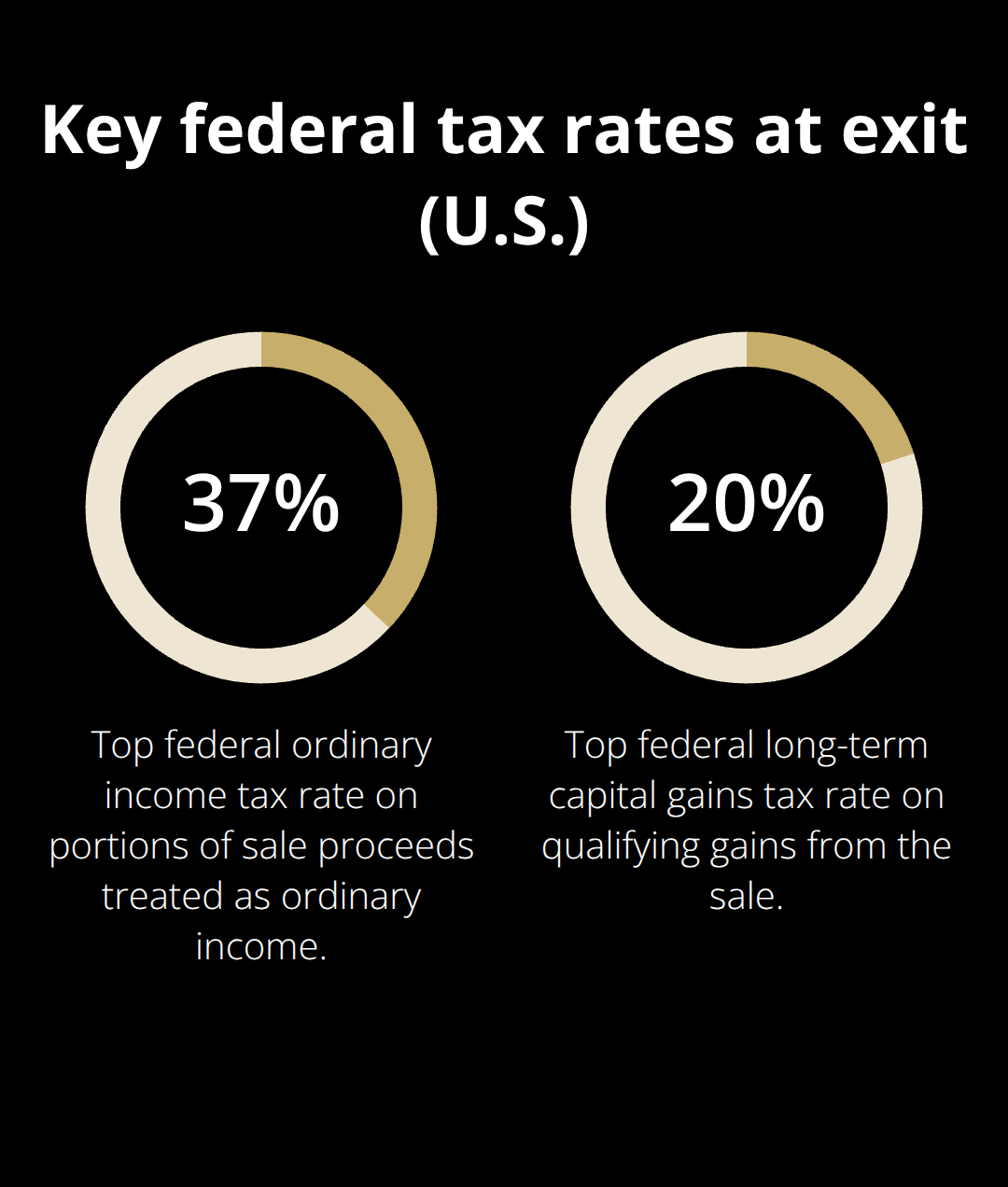
If you’re in a high-tax state like California or New York, consider whether restructuring before the sale makes sense, though this must happen well before you list. Ordinary income tax rates run 37% federally plus state rates, while long-term capital gains top out at 20% federally. That difference matters enormously. If your business is structured as an S-corp or partnership, your accountant can help time the sale to spread gains across tax years if a multi-year earnout is possible.
Consulting with an exit advisor and a business transaction attorney 12-18 months before you plan to exit costs $5,000-15,000 but routinely saves hundreds of thousands. Don’t skip this step thinking you’ll figure it out after you have an offer. With your financials and tax strategy locked in, you’re ready to evaluate which exit structure actually fits your goals and timeline.
Structuring Your Exit Strategy
Strategic Buyers Move Fast and Pay Premium Prices
Strategic buyers-typically larger competitors or companies in your industry-close deals in 60-90 days and pay the highest multiples because they spot immediate cost synergies and revenue cross-selling opportunities. They’re not just buying your business; they’re buying market share, customer relationships, and operational efficiencies they can extract immediately. A strategic buyer sees your SaaS company with predictable recurring revenue and calculates exactly how much they’ll save by eliminating duplicate functions and bundling your product with theirs. That calculation justifies paying premium prices when a financial buyer might only offer lower multiples.
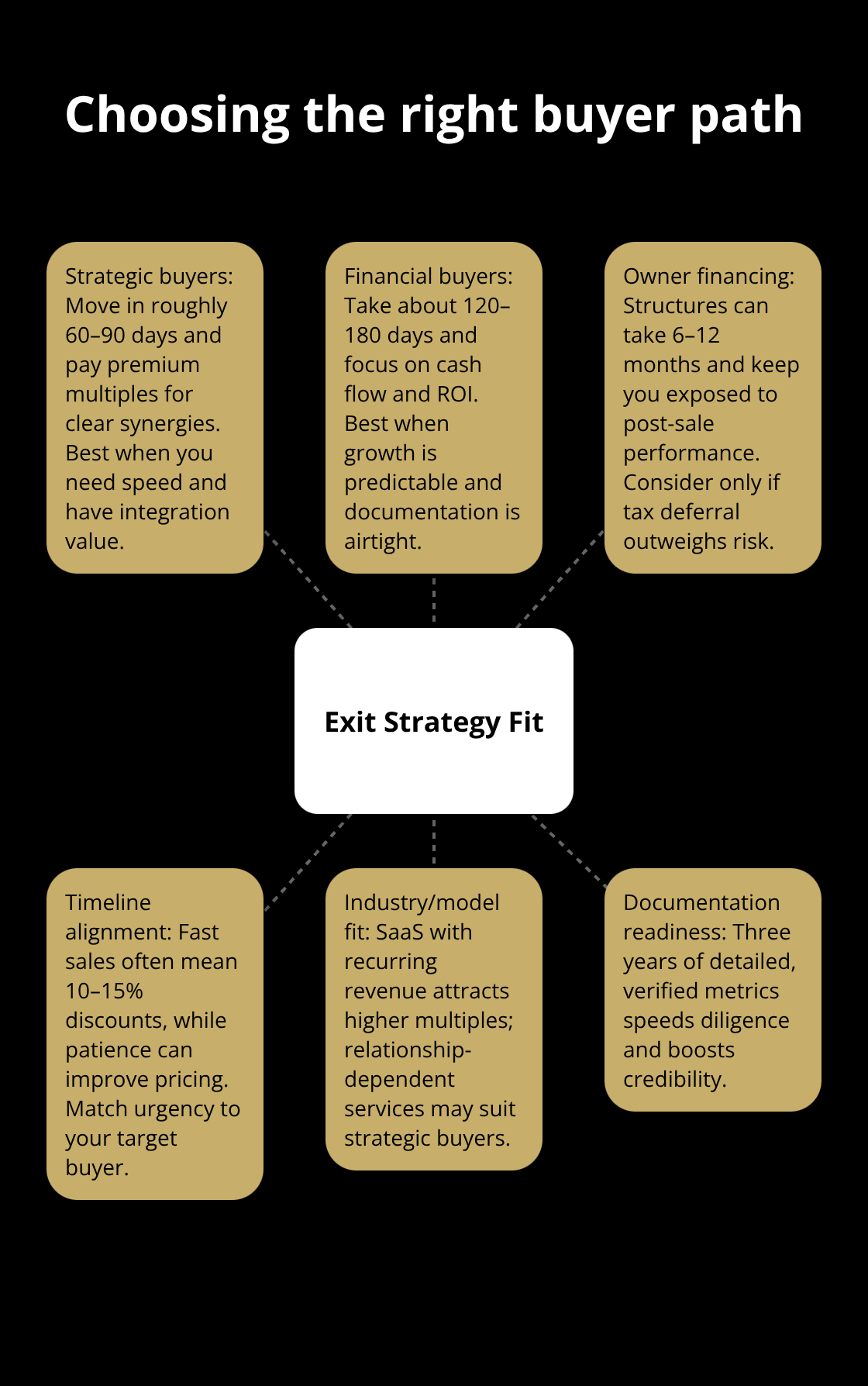
The speed matters too. If you need liquidity within the next year, a strategic buyer is your only realistic path because financial buyers won’t move that fast and owner financing doesn’t deliver immediate cash.
Financial Buyers Demand Documentation and Scrutiny
Financial buyers like private equity firms care primarily about cash flow and return on investment, so they’ll demand detailed documentation and scrutinize your margins relentlessly. They typically take 120-180 days to close because their due diligence requirements and financing contingencies run deep. They want to understand your business model, customer retention rates, and growth trajectory with precision. Document your business performance meticulously for the past three years, including monthly revenue, customer acquisition costs, churn rates, and gross margins. Financial buyers will request this data within days of expressing interest, and having it organized and verified means you respond immediately instead scrambling. If your business has grown 30% annually for three years, that’s a major selling point to financial buyers. If growth is flat or declining, strategic buyers become your better option because they’re buying your customer base and relationships, not future growth.
Owner Financing Creates Exposure You May Not Want
Owner financing means you become a lender to the buyer, which sounds appealing for tax deferral but leaves you exposed if the business underperforms after you leave. These deals often take 6-12 months to structure properly because you’re essentially creating a commercial loan with all the legal protections that entails. You’ll carry the risk that the buyer can’t service the debt or that the business deteriorates under new management. Most owners underestimate this exposure until they’re stuck collecting payments from a struggling business they no longer control.
Match Your Timeline to the Right Buyer Type
Your timeline and financial goals should drive this decision, not the other way around. If you can wait 18-24 months, financial buyers become viable and often yield better prices because they’re not under acquisition pressure. The biggest mistake owners make is saying they want to sell quickly but then holding out for a premium price that requires a longer sale process. That’s a contradiction. Fast sales typically command 10-15% discounts compared to patient sales because buyers know you’re motivated. Conversely, if you’re selling to a strategic buyer who sees massive synergy potential, they’ll pay premium prices even on a fast timeline because they’re confident in their integration plans.
Industry and Business Model Determine Your Options
Your industry and business model matter enormously here. A SaaS company with predictable recurring revenue attracts financial buyers willing to pay top multiples, while a service business dependent on your personal relationships might only attract a strategic buyer willing to pay less because they’re betting on retention risk. Show financial buyers what’s driving your revenue increases and whether that momentum is sustainable without you involved. With your exit structure and timeline aligned to your business reality, you’re ready to market your business effectively to the right buyer types.
Marketing Your Business to Potential Buyers
Lead with your business model, not your story
Buyers decide within the first few interactions whether your business warrants their attention. Most owners make the mistake of leading with financial metrics when they should lead with why the business works and why it will keep working after the sale. Your business story isn’t about your personal journey or how you started the company in your garage. It’s about the problem you solve, the customers who depend on you, and the operational systems that generate consistent cash flow without requiring your constant involvement.
Strategic buyers want to understand your competitive advantages and customer relationships immediately. Financial buyers want to see the revenue model and growth pattern. Neither wants to hear about your passion or vision. Frame your story around what makes your business defensible and repeatable. When choosing who to sell to, it’s crucial to align your objectives with those of the potential buyer and talk openly and honestly about your business operations.
Document exactly how many customers you have, how long they typically stay, and what percentage of revenue comes from repeat business versus new customers. This data tells buyers your business will survive transitions and market shifts.
Expand your buyer universe beyond your industry
Most owners severely underestimate how many potential buyers exist for their business. You probably think your industry has maybe 50-100 qualified buyers, but the real number is much larger when you include adjacent industries, international buyers, and private equity firms looking for add-on acquisitions. Limiting yourself to one marketing channel means you’ll miss significant opportunities to connect with serious buyers.
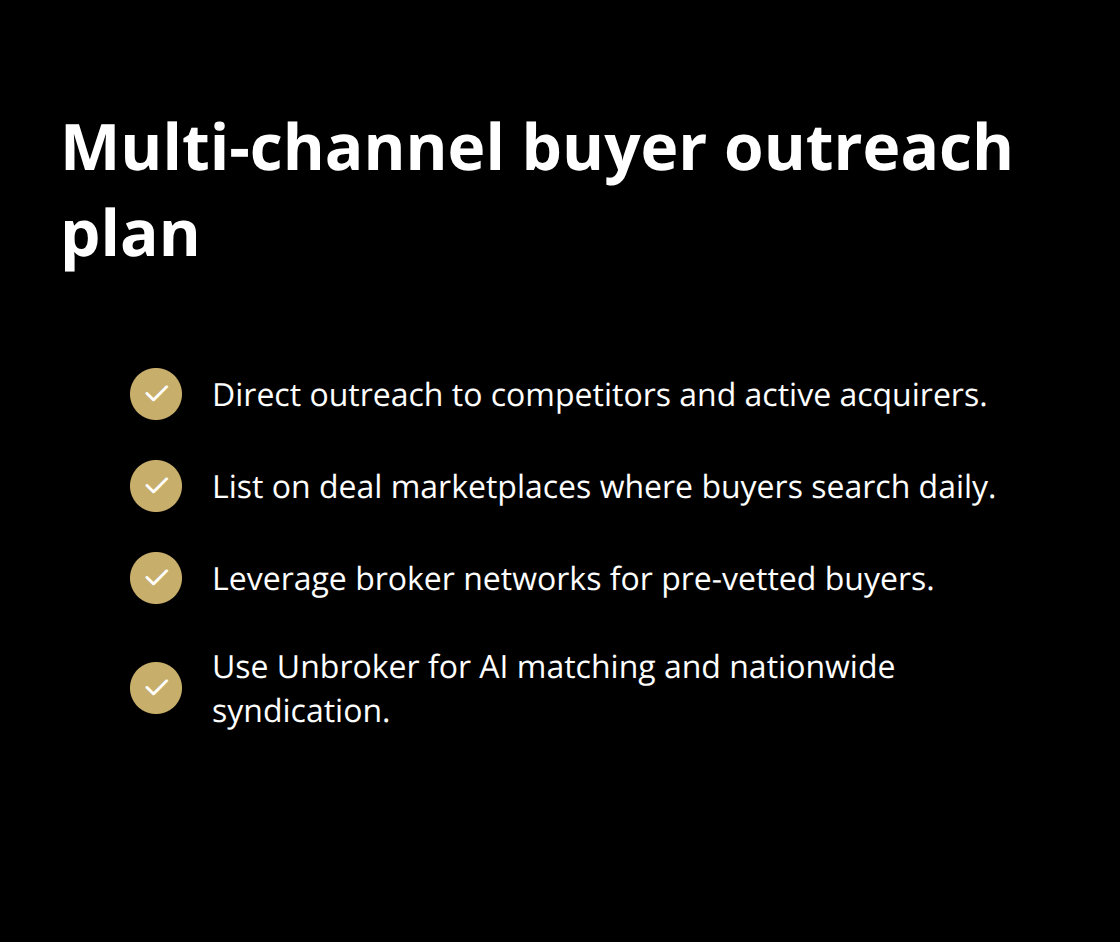
Reach out directly to known competitors and industry acquirers who have acquired similar businesses in the past three years. Post on platforms where business buyers actively search and screen deals. Engage business brokers who have existing buyer networks, though understand they typically charge 8-10% commission. A modern platform like Unbroker combines expert advisors, AI-driven buyer matching, and national marketing through syndication partners to connect you with qualified buyers across multiple channels.
Present your business with clean, accurate data
Create a professional information memorandum that presents your business clearly with three years of audited or reviewed financial statements, customer concentration data, revenue trends, and growth drivers. Include detailed information about your customer acquisition costs, lifetime value, and churn rates because these metrics directly drive valuation multiples.
Buyers will scrutinize these numbers for 30-60 days during due diligence, so accuracy matters enormously. Present your financial data in clean spreadsheets with clear labeling and consistent formatting. If your numbers have inconsistencies, buyers assume you’re either incompetent or hiding something, and both assumptions tank your deal value.
Final Thoughts
A resilient exit plan separates owners who achieve their financial goals from those who scramble through a chaotic sale process. The three pillars we’ve covered-financial preparation, strategic structuring, and effective buyer marketing-work together to maximize your sale price and minimize surprises at closing. Start with your numbers by obtaining a professional valuation, cleaning up your financials, and planning your tax strategy 12-18 months before you want to sell.
Match your exit structure to your timeline and business reality because strategic buyers move fast and pay premiums for synergy opportunities, while financial buyers take longer but often pay higher multiples for predictable cash flow. Market your business strategically by leading with your business model and operational systems rather than your personal story, and expand beyond your immediate industry to find qualified buyers you haven’t considered. Present clean, accurate financial data that buyers can verify quickly, because inconsistencies tank your deal value.
Exit planning strategies require discipline and honest assessment of what your business is actually worth and who genuinely wants to buy it. We at Unbroker combine expert advisors, AI-driven buyer matching, and national marketing through syndication partners to connect you with serious buyers across multiple channels. Start your exit planning now with professional guidance, even if you don’t plan to sell for another year or two.