Selling your business is one of the biggest decisions you’ll make. The wrong buyer can derail the entire process, waste your time, and leave you with regrets.
At Unbroker, we’ve seen how a solid buyer qualification process separates smooth transactions from messy ones. This guide walks you through exactly how to identify qualified buyers, screen them efficiently, and spot the red flags before they become problems.
What Qualifies as a Serious Buyer
A qualified buyer isn’t just someone with money and interest. They’re someone who can actually close the deal, has the expertise to run your business successfully, and won’t destroy what you’ve built. Three core dimensions separate serious buyers from tire-kickers, and you should evaluate each one carefully.
Money Talks, but Proof Matters More
Don’t accept vague statements about funding. A serious buyer provides documented proof of funds before any real negotiations begin. This means bank statements, investment letters, or proof of asset liquidation that shows they have access to capital. Ask your broker or legal advisor to verify funds independently. Request a pre-qualification letter from their lender if they’re financing the purchase. If a buyer hesitates to provide proof, that’s your first red flag. Money that can’t be documented simply doesn’t exist.
Experience Prevents Buyer Regret
A buyer with relevant industry experience closes faster and manages the business better after purchase. Someone who’s run a similar operation understands your margins, supply chain, and customer relationships. They won’t overpay based on fantasy projections, and they won’t panic during the transition. A first-time buyer in your industry often overestimates their ability to improve operations, which leads to disputes during earnout periods or post-closing adjustments. Ask potential buyers about their specific experience with comparable businesses. How many similar operations have they managed? What was the revenue range? How long did they own them? A buyer who can articulate specific operational improvements they’ll make proves more credible than one who speaks only in generalities.
Alignment Reduces Post-Sale Conflict
Your business has a culture, values, and a specific way of treating customers and employees. A buyer who fundamentally disagrees with your approach creates friction that extends far beyond closing day. This matters especially if you have earnout provisions tied to performance metrics or if you stay involved in any capacity. A buyer focused solely on cost-cutting may alienate your team. A buyer with different customer service standards might damage your brand reputation. Before serious negotiations, have direct conversations about how the buyer intends to operate the business. Their answers reveal whether they respect what you’ve created or view it merely as a cash-generating asset.
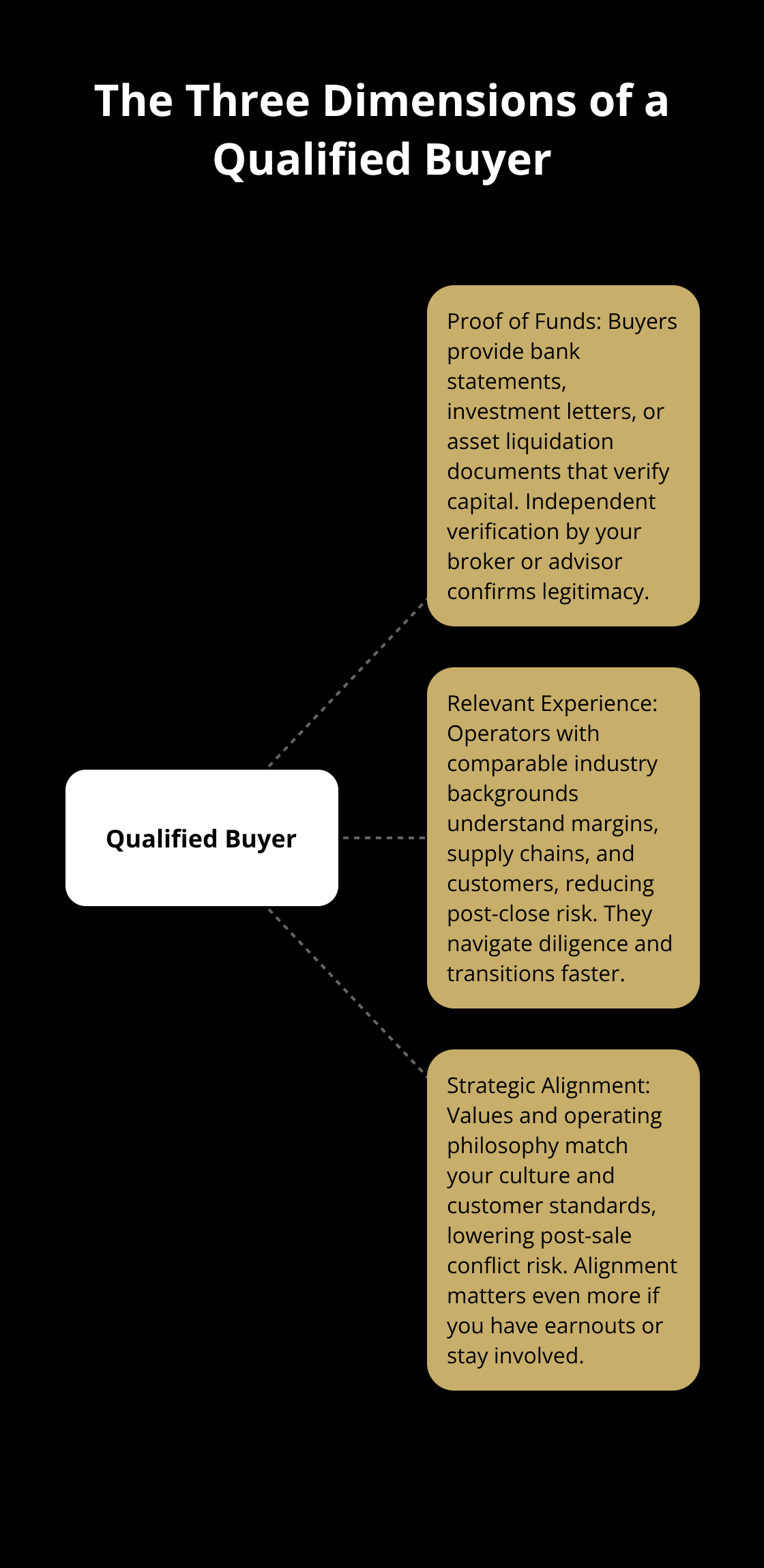
These three dimensions form your foundation for screening. Once you’ve identified buyers who meet these standards, the next step involves building systems that make the qualification process efficient and repeatable-so you can handle multiple interested parties without losing control of the timeline.
How to Streamline Your Qualification Process
Set Your Standards Before Buyers Arrive
The biggest mistake sellers make is treating every inquiry the same way. You need specific criteria locked in before you list your business, not invented on the fly when buyers start calling. Write down exactly what financial capacity looks like for your business-not just a number, but documented proof. Define what industry experience you actually need. Decide whether a buyer must have managed a similar revenue size, operated in your specific market, or built comparable customer relationships. Decide if you care more about someone who built a business from scratch or someone who acquired and scaled existing operations. Get specific about strategic fit too.
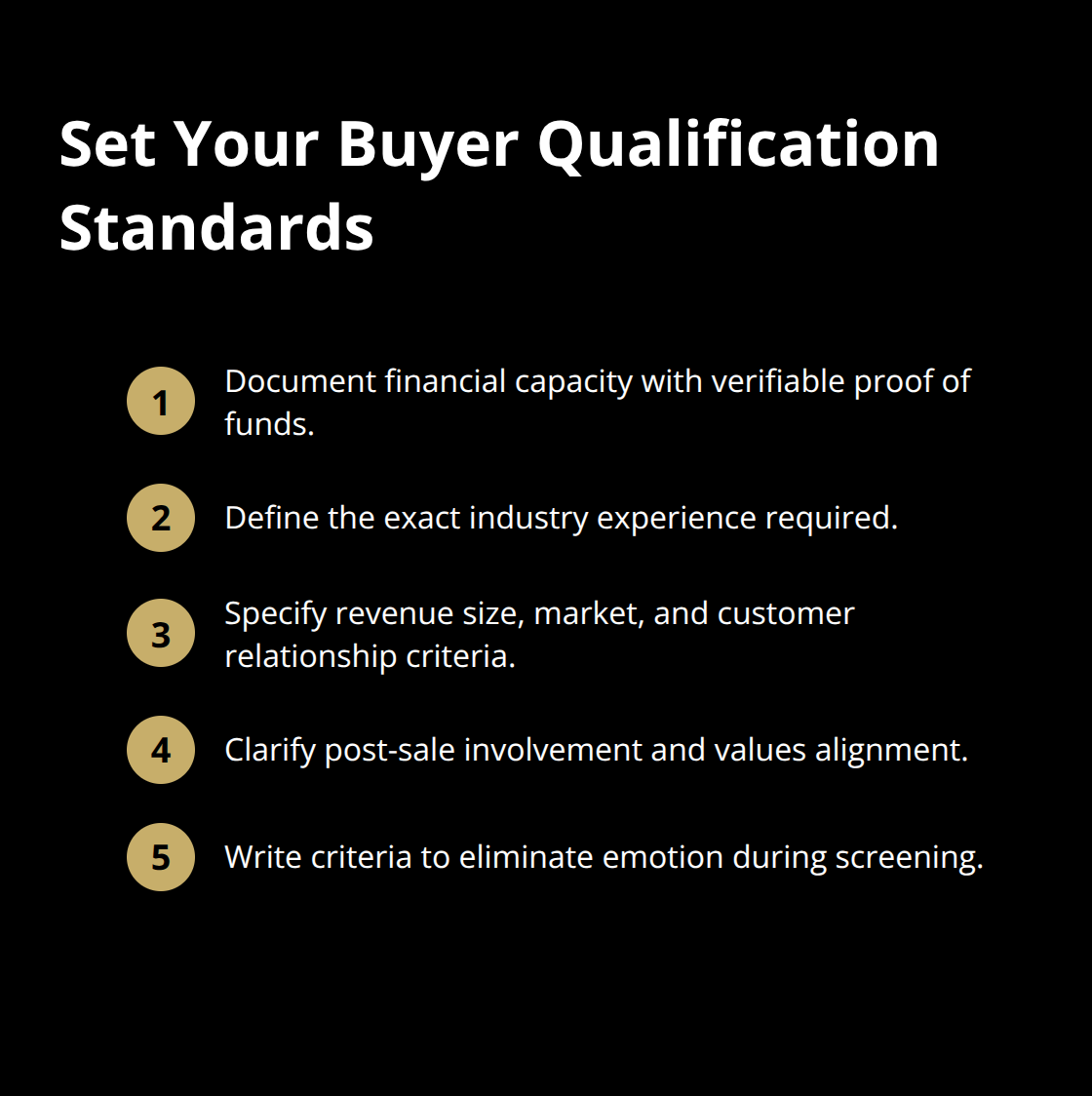
Will you stay involved post-sale? Then alignment on values matters enormously. Are you exiting completely? Then the buyer’s operational philosophy becomes less critical. Document these criteria in writing before you start screening. This eliminates emotional decision-making and keeps you focused when multiple buyers emerge.
Use Technology to Validate Buyers Fast
Technology accelerates screening when used correctly. Verification tools like Dun & Bradstreet can validate buyer financials and business history in hours instead of weeks. Request that serious buyers complete a standardized buyer questionnaire early-before meetings, before documents, before anyone wastes time. Include questions about funding sources, timeline expectations, industry experience, and any contingencies. Buyers who hesitate to complete basic questionnaires often lack genuine intent. A structured questionnaire (one that asks the same questions of every candidate) reveals patterns quickly and prevents you from overlooking red flags because you liked someone personally.
Filter Early, Move Fast on Serious Candidates
Schedule your initial conversations strategically. Have your broker or advisor conduct preliminary calls first, asking the hardest questions about proof of funds and experience. This filters out tire-kickers before you invest your time. Once a buyer passes preliminary screening, move to thorough due diligence immediately rather than stretching out early conversations. Request proof of funds verification, professional references from previous acquisitions, and bank statements showing liquid capital within the first two weeks of serious interest. Speed matters here-qualified buyers expect this quickly and won’t object. Unqualified buyers often disappear when asked for documentation or drag out the process with excuses. The faster you move serious buyers through verification, the faster you identify who can actually close. This momentum also signals to qualified candidates that you run a professional process, which attracts better offers and smoother negotiations.
Red Flags and Deal Breakers to Watch For
Unrealistic Pricing Expectations Signal Trouble
A buyer who fixates on an artificially low price relative to your financials often lacks genuine understanding of what they’re buying or plans to strip assets post-closing. If someone insists your business is worth 30% below market multiples in your industry without substantive operational critiques, they’re either financially desperate or planning to restructure aggressively in ways that contradict their stated intentions. Serious buyers anchor their offers to specific metrics: EBITDA multiples, revenue multiples, or comparable transaction data. They explain their valuation logic clearly. A buyer who throws out a number and refuses to justify it wastes your time. Similarly, a buyer who pressures you to accept their offer before you’ve conducted full screening reveals they’re uncomfortable with scrutiny. This pressure often masks funding issues or undisclosed contingencies. Move these buyers to the bottom of your priority list immediately.
Opacity Around Funding Sources Creates Risk
A buyer who can’t or won’t clearly explain where their capital originates creates legal and operational risk for you. If funds come from a third party, you need to understand the relationship and any conditions attached to that financing. If they’re liquidating assets, you need proof those assets actually exist. If they’re using seller financing or earnouts, their vague funding story becomes your problem when they can’t perform. Ask directly: Where is the money coming from? How much is liquid right now? What documentation can you provide within 48 hours? Buyers with legitimate capital answer immediately with specifics.
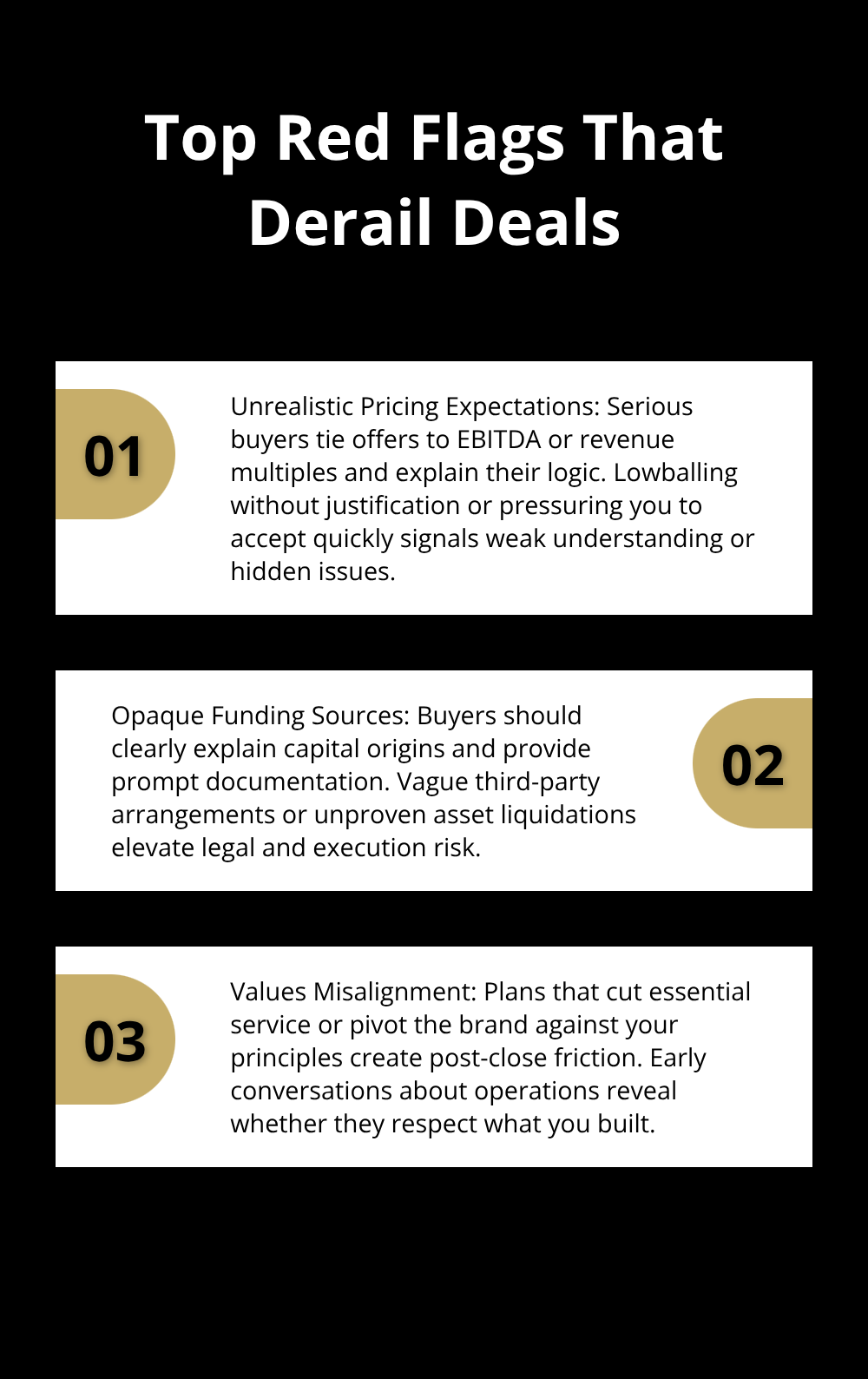
Those who deflect, change the subject, or provide circular explanations signal trouble ahead.
Misalignment with Your Business Values Creates Friction
A buyer whose values fundamentally contradict yours will create friction that extends months or years post-closing, especially if earnout provisions tie your financial interests together. If they plan to cut costs by eliminating customer service positions you consider essential, or they want to pivot your brand toward markets you deliberately avoided, these operational conflicts will surface during transition and damage both your reputation and their business performance. Have direct conversations about how they’ll operate the business within the first two meetings. Their specificity and alignment with your vision matter far more than their politeness. A buyer focused solely on cost-cutting may alienate your team. A buyer with different customer service standards might damage your brand reputation. These operational differences reveal themselves quickly when you ask specific questions about their post-acquisition plans.
Final Thoughts
A rigorous buyer qualification process protects you far more than it burdens you. Sellers who skip screening or rush through it face delayed closings, failed deals, and post-sale conflicts that cost far more than the time spent upfront. We at Unbroker have watched transactions collapse because sellers accepted the first offer without verifying funds or checking whether the buyer could actually operate the business. Qualified buyers move decisively and close faster because they have nothing to hide and expect professional screening.
Proper screening saves months of your life and protects your business reputation. When you eliminate tire-kickers early, you focus energy on buyers who can close. When you verify funds before negotiations begin, you avoid discovering halfway through due diligence that a buyer’s capital doesn’t exist. A buyer misaligned with your values can damage customer relationships and employee morale within months, while a buyer without relevant experience often struggles operationally and affects earnout payments if you have them.
Implement the standards we’ve outlined: document your criteria before listing, use verification tools to validate buyers quickly, and filter aggressively early. Ask hard questions about funding, experience, and values. Trust your instincts when something feels off. If you’re ready to sell your business with confidence, Unbroker combines expert advisors with AI-driven buyer matching to connect you with qualified candidates from the start.