Business exits involve complex legal requirements that can make or break your deal. Many entrepreneurs wonder whether hiring an exit planning attorney is worth the significant cost.
We at Unbroker see founders struggle with this decision daily. The wrong choice can cost you thousands in legal fees or millions in missed opportunities and compliance issues.
When Legal Representation is Essential
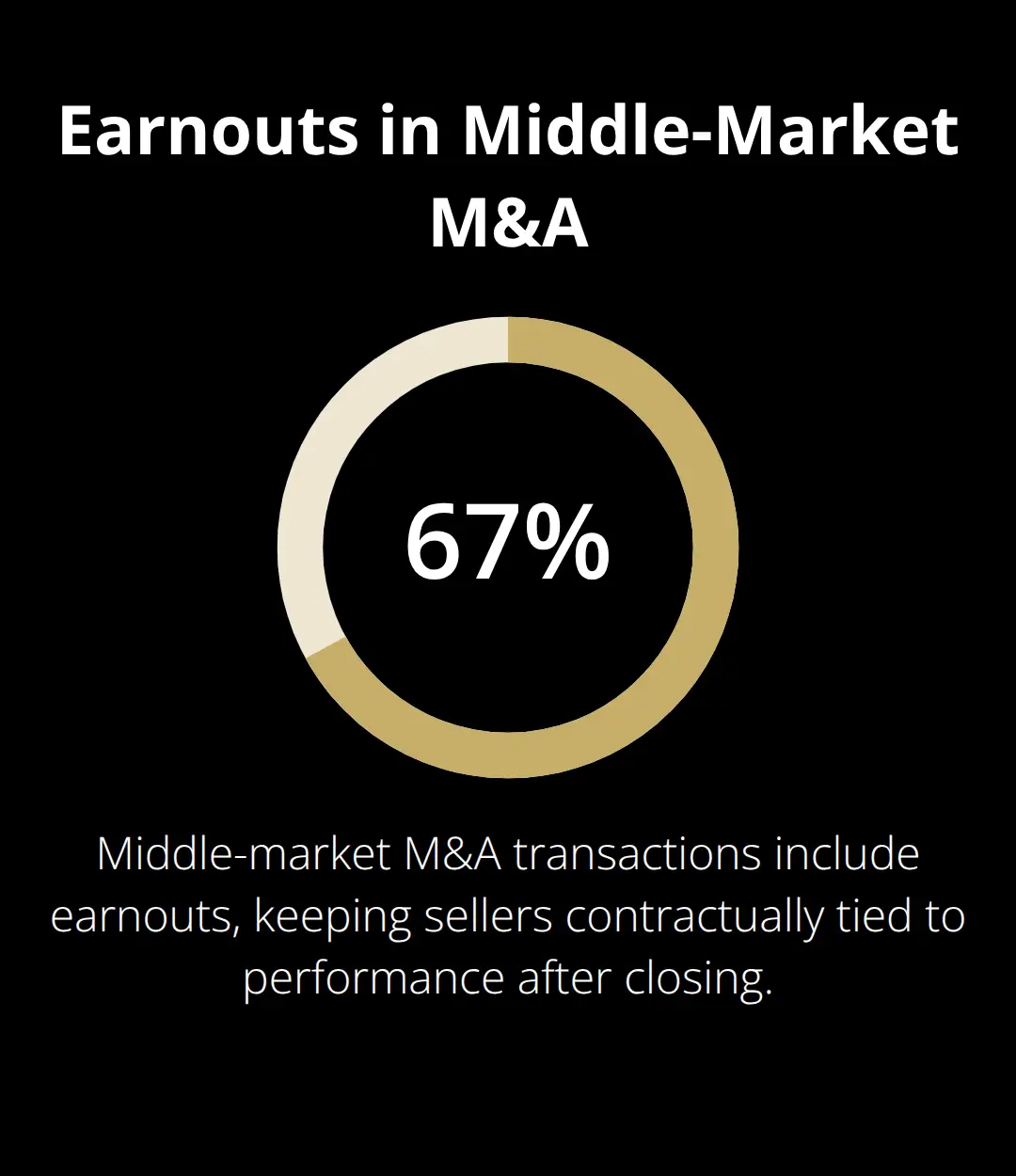
Complex transactions require legal expertise that saves millions in mistakes. Deals with earnouts, rollover equity, or seller financing create liability exposures that extend years beyond closing. The Association for Corporate Growth reports that 67% of middle-market transactions include earnout provisions, which means sellers remain contractually bound to buyers long after the sale. Management buyouts with seller financing need sophisticated documentation to protect against default scenarios. Private equity acquisitions often involve representation and warranty insurance policies that exceed $10 million, where incorrect disclosure language voids coverage entirely.
Industry-Specific Legal Requirements
Healthcare businesses face HIPAA compliance transfers and medical license assignments that demand specialized legal knowledge. Technology companies must navigate data privacy regulations, with GDPR violations that cost up to 4% of annual revenue according to European regulators. Manufacturing businesses need environmental liability assessments and regulatory permit transfers that vary by state. Financial services exits require regulatory approval processes that take 6-12 months without proper legal preparation. Restaurant chains must transfer liquor licenses and franchise agreements across multiple jurisdictions.
High-Stakes Transaction Thresholds
Transactions that exceed $5 million typically involve sophisticated buyers with experienced legal teams. Stock sales create personal liability for unknown corporate debts (which makes legal representation non-negotiable). Asset purchase agreements require detailed allocation schedules for tax optimization, where mistakes cost 15-25% in additional taxes. International buyers introduce foreign investment regulations and currency hedging requirements that demand expert navigation.
However, not every business exit requires expensive legal representation. Many smaller transactions can benefit from alternative approaches that balance cost with protection.
Smart Legal Alternatives That Actually Work
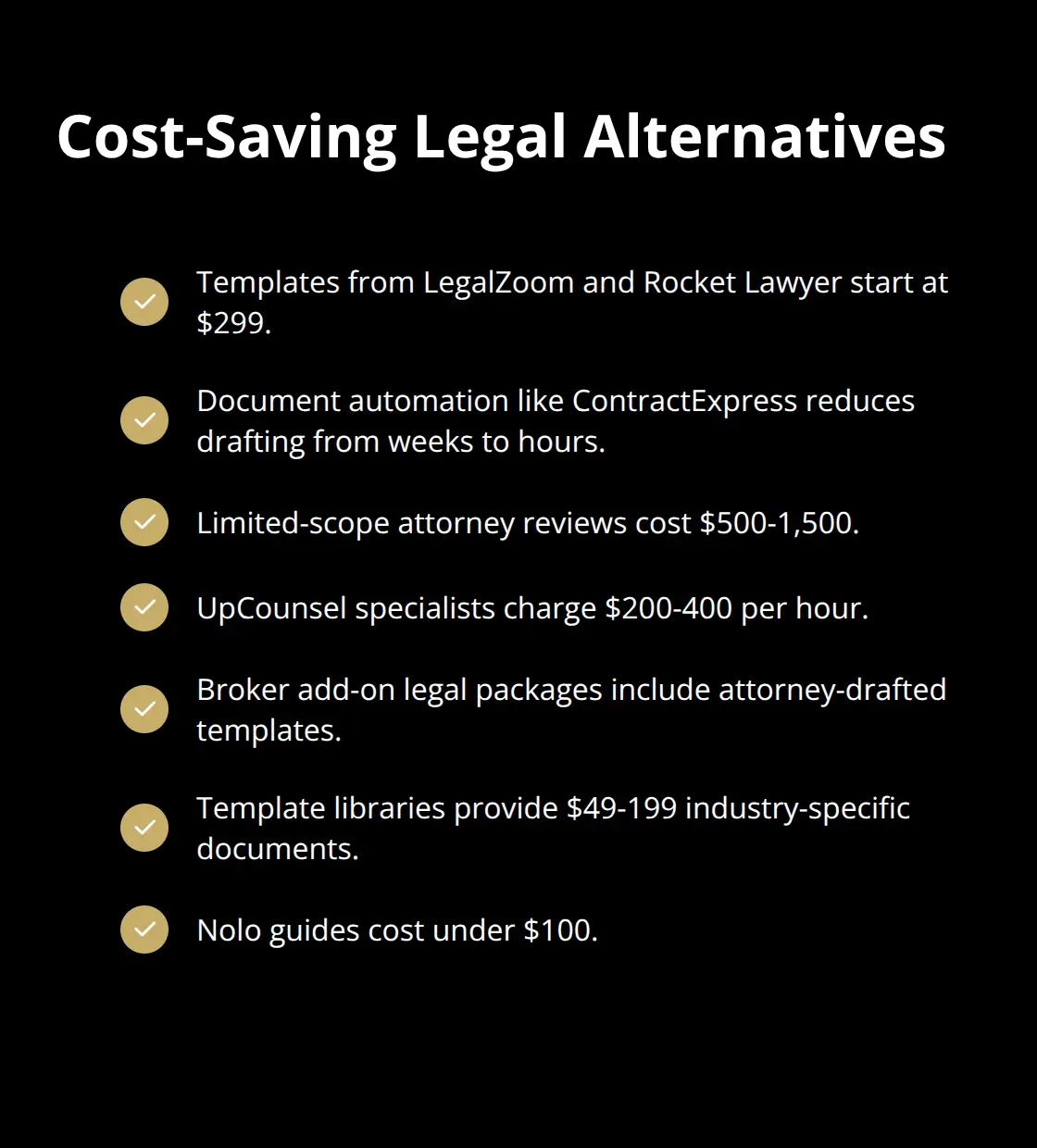
Online legal platforms have transformed business exit documentation. LegalZoom and Rocket Lawyer offer purchase agreement templates that start at $299 (compared to $15,000 attorney fees). Document automation tools like ContractExpress generate customized sale agreements based on transaction specifics and reduce preparation time from weeks to hours. LegalTemplates provides industry-specific exit documents for $49-199, while Nolo offers comprehensive business sale guides with step-by-step instructions that cost under $100.
Limited Scope Legal Reviews Save Thousands
Unbundled legal services allow attorneys to review specific contract sections without full representation. Many law firms now offer document review services for $500-1,500 and focus on liability clauses and representations that create post-closing exposure. This approach works particularly well for transactions under $2 million where buyers use standard purchase agreements. Legal marketplaces like UpCounsel connect sellers with specialized attorneys who charge $200-400 per hour for targeted advice, compared to $800+ hourly rates at traditional firms.
Professional Hybrid Models Reduce Risk
Business brokers increasingly offer legal document packages as transaction add-ons and provide attorney-drafted templates customized for your deal structure. Many sellers use attorneys for initial document review, then handle routine modifications independently with template libraries and online resources. This hybrid approach combines professional oversight with cost control.
Template Libraries and Self-Service Options
Major legal publishers now offer comprehensive template libraries specifically designed for business sales. These resources include purchase agreements, disclosure schedules, and employment transition documents that cover most standard transaction scenarios. Self-service platforms provide guided questionnaires that generate customized documents based on your specific deal terms and state requirements.
However, these cost-effective alternatives come with significant limitations that every seller must understand before proceeding without full legal representation.
DIY Approach Risks and Limitations
Self-directed business exits create expensive mistakes that cost sellers millions. Contract negotiations represent the biggest risk area where inexperienced sellers accept unfavorable terms without understanding long-term implications. Standard purchase agreements contain liability clauses that commonly extend seller responsibility for 12-18 months after closing, yet DIY sellers often agree to unlimited indemnification periods. Businesses that use template agreements face higher post-closing disputes compared to attorney-drafted contracts.
Contract Terms That Trap Sellers
Earnout calculations frequently favor buyers when sellers lack legal guidance, with payment triggers that become impossible to achieve. Working capital adjustments routinely surprise DIY sellers with unexpected deductions that reduce final sale proceeds by $50,000-200,000. Purchase price allocation mistakes in asset sales create additional tax burdens of 15-35% that professional guidance prevents. Sellers often accept broad indemnification clauses that expose them to unlimited liability for unknown issues.
Documentation Gaps Create Massive Liability
Incomplete disclosure schedules expose sellers to breach of warranty claims that exceed original sale prices. Environmental compliance documentation requires specialized knowledge where missing permits void entire transactions after months of negotiation. Employment law violations during ownership transitions trigger Department of Labor investigations that result in significant penalties.
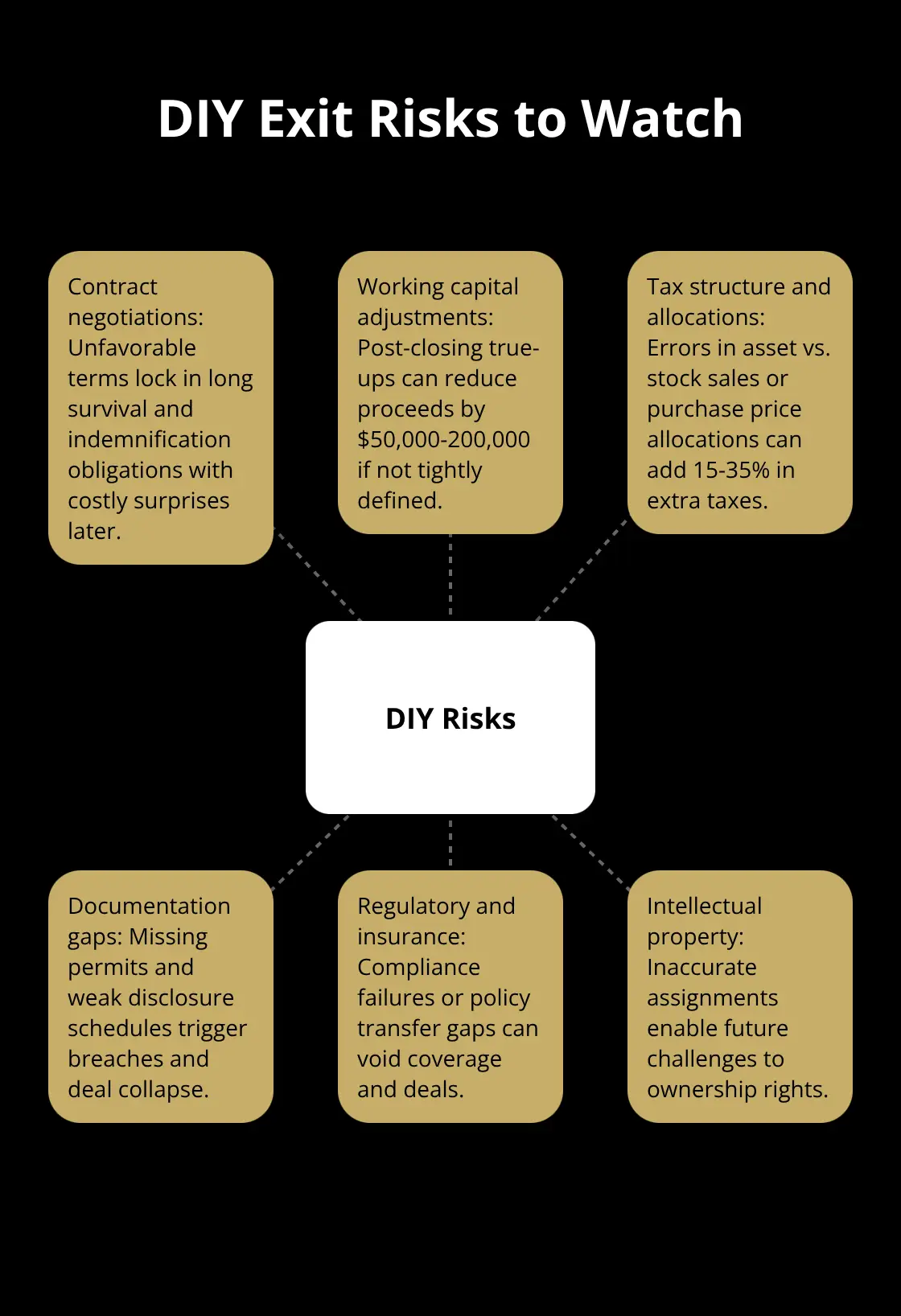
Intellectual property transfers need precise documentation to prevent buyer challenges that reclaim ownership rights years later.
Insurance and Compliance Oversights
Insurance policy transfers require specific language to maintain coverage, where gaps leave sellers personally liable for pre-closing incidents that surface months after the transaction closes. Tax structure mistakes in asset versus stock sales create substantial additional burdens that experienced attorneys routinely prevent. Regulatory compliance failures in licensed industries can void transactions entirely or trigger costly post-closing remediation requirements.
Final Thoughts
Your decision about an exit planning attorney depends on transaction value, complexity, and personal risk tolerance. Deals under $1 million with straightforward asset sales often succeed with template agreements and limited legal review. Transactions that exceed $5 million with earnouts, regulatory requirements, or sophisticated buyers demand full legal representation to prevent costly mistakes.
The hybrid approach offers the best balance for most sellers. Start with attorney consultation to identify major risks, then use templates and online platforms for routine documentation. This strategy reduces legal costs by 60-70% while maintaining protection for critical contract terms and liability exposures.
We at Unbroker understand these challenges and provide comprehensive support for business exits. Our platform combines professional guidance with cost-effective solutions that include legal document templates, negotiation assistance, and expert support throughout your sale process (whether you choose full-service support or assisted DIY options). The key lies in matching your approach to transaction complexity rather than defaulting to expensive representation or risky self-service options.