Selling your business to your management team represents one of the most personal exit strategies available to business owners. A management buyout can preserve your company’s legacy while rewarding the people who helped build its success.
However, this path comes with unique financial and operational challenges that external sales typically avoid. We at Unbroker see many owners weighing these complex trade-offs when planning their exit strategy.
Why Management Buyouts Protect Your Business Legacy
Cultural Preservation Through Internal Leadership
Management buyouts stand out as the only exit strategy that guarantees cultural continuity. Your management team already lives and breathes your company values daily. According to research from the Center for Creative Leadership, companies that maintain their existing leadership during ownership transitions see 89% retention of core cultural practices compared to just 34% in external acquisitions.
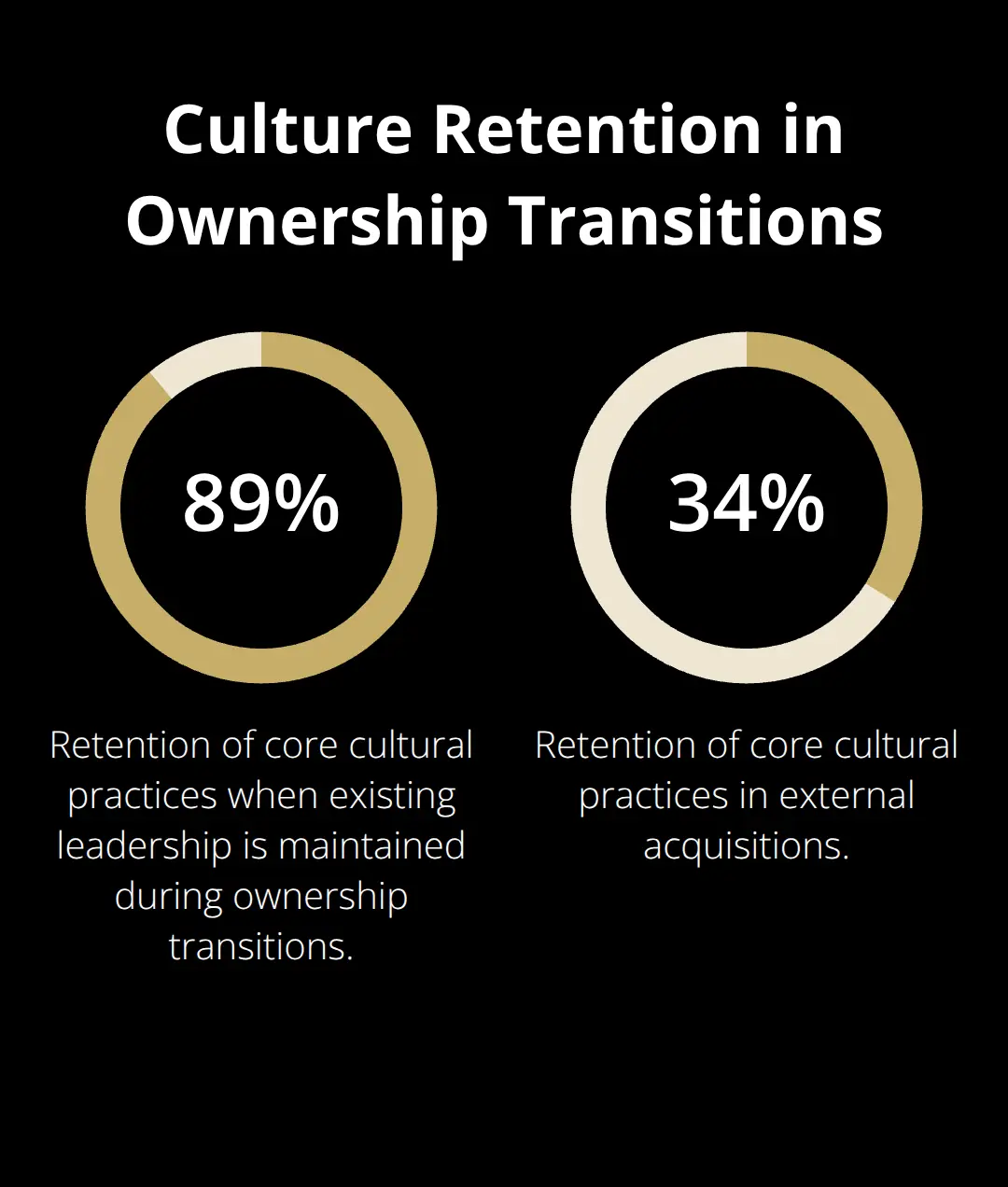
This matters because cultural disruption costs businesses significantly during the first year post-acquisition. Your management team won’t restructure departments, eliminate traditions, or impose foreign corporate policies that alienate long-term employees.
Accelerated Deal Timeline with Reduced Complexity
Internal sales move faster than external transactions because your management team already knows the business inside out. The average management buyout closes in 4-6 months versus 12-18 months for strategic sales to outside buyers. This speed advantage exists because management teams skip the lengthy due diligence phase that external buyers require. They don’t need months to understand your operations, customer relationships, or market position. Ernst & Young data shows that 73% of management buyouts proceed without major deal modifications, while external sales see contract revisions in 91% of cases. This efficiency translates into lower legal fees, reduced business disruption, and faster access to your sale proceeds.
Employee Stability During Ownership Transition
Staff retention rates in management buyouts are significantly higher than in external sales. Your employees trust existing leadership and feel secure about their future roles. External buyers often trigger immediate resignations from key personnel who fear layoffs or organizational changes. Management buyouts eliminate this exodus because employees see familiar faces in charge. This stability protects customer relationships, maintains operational knowledge, and preserves the human capital that drives your business value.
Financial Incentive Alignment
Management teams have skin in the game when they purchase your business. They understand that company performance directly impacts their investment returns. This creates powerful motivation to maintain and improve operations after the sale. Unlike external buyers who might strip assets or cut costs aggressively, your management team focuses on sustainable growth strategies. They know which investments pay off long-term and which cost-cutting measures would damage the business they now own.
These advantages make management buyouts attractive, but significant financial challenges can complicate the process.
What Financial Drawbacks Should You Expect?
Management Teams Rarely Match External Buyer Valuations
Management buyouts consistently deliver lower sale prices than strategic acquisitions. While PE buyout volumes rose in the first quarter of 2025, management teams lack the financial resources of strategic buyers and private equity firms.
Strategic buyers often pay premiums for synergies they can create through economies of scale, customer base integration, or operational efficiencies. Your management team cannot offer these advantages, which directly impacts their maximum bid. Management teams typically negotiate from a position of limited alternatives since they cannot easily walk away from the business they have invested years to build.
Financing Obstacles Create Major Barriers
Management teams face significant financing hurdles that external buyers avoid. Banks typically require personal guarantees from management team members, which puts their personal assets at risk.
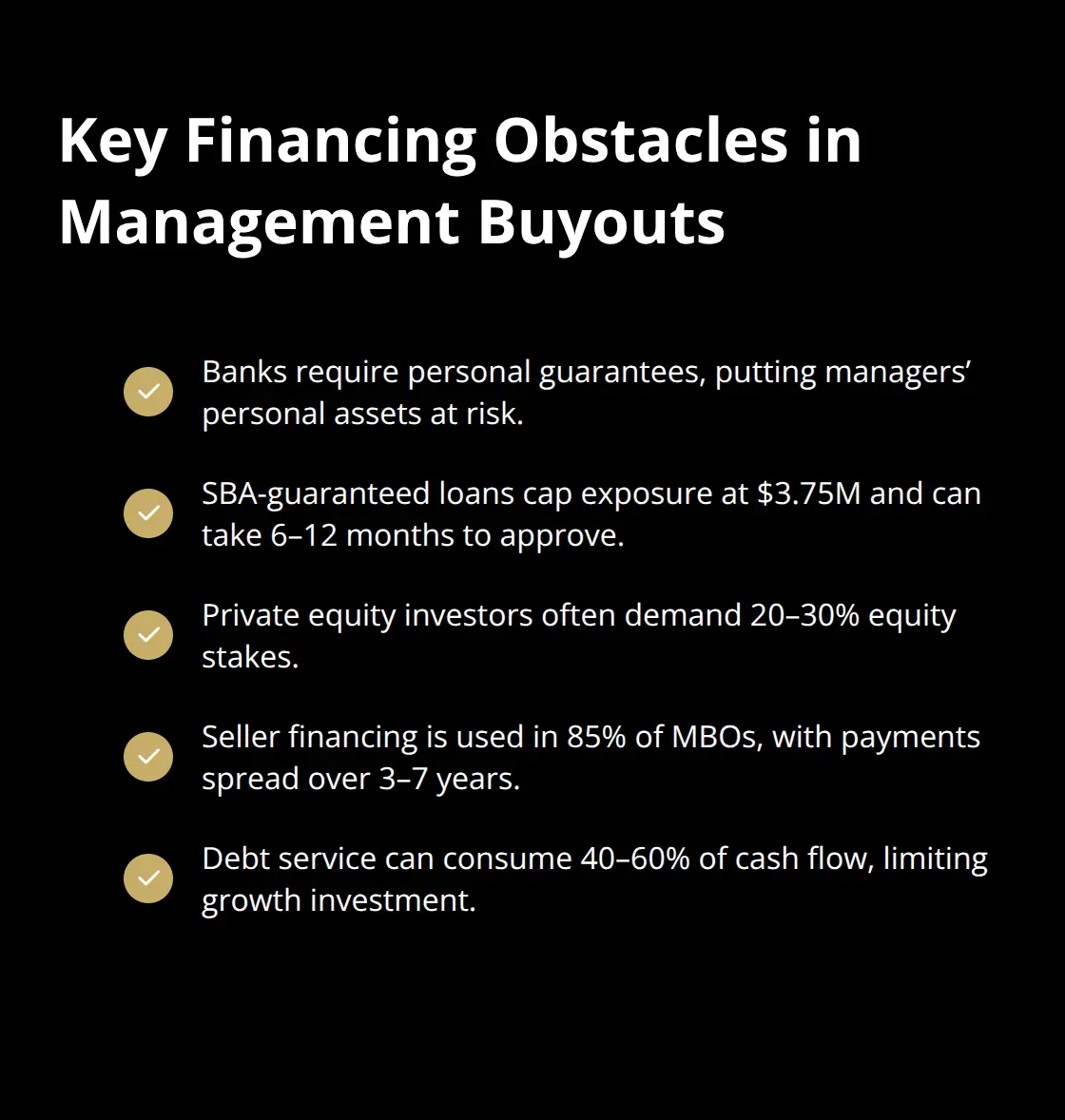
SBA loans have a maximum guaranteed exposure of $3.75 million and require extensive documentation, often taking 6-12 months for approval.
Private equity firms demand 20-30% equity stakes in management buyouts, which reduces the team’s ownership percentage. Seller financing becomes necessary in 85% of management buyouts (according to the International Business Brokers Association), meaning you receive payments over 3-7 years instead of cash at closing.
This extended payment structure increases your risk of non-payment if the business struggles under new ownership. Management teams also struggle with debt service requirements that can consume 40-60% of cash flow, which limits their ability to invest in growth or weather economic downturns.
Deal Collapse Rates Exceed External Sales
Management buyouts face higher failure rates than strategic sales, primarily due to financing complications. Your management team might spend months to negotiate terms only to discover that banks reject their loan applications or private equity partners withdraw support.
This uncertainty creates business disruption as employees and customers learn about potential ownership changes. Failed management buyout attempts also weaken your position with external buyers who view the failed internal sale as a sign of business problems or unrealistic valuation expectations.
These financial challenges require careful evaluation of your management team’s capabilities and your business circumstances before you proceed with internal sale discussions.
What Should You Assess Before Moving Forward
Management Team Financial Readiness
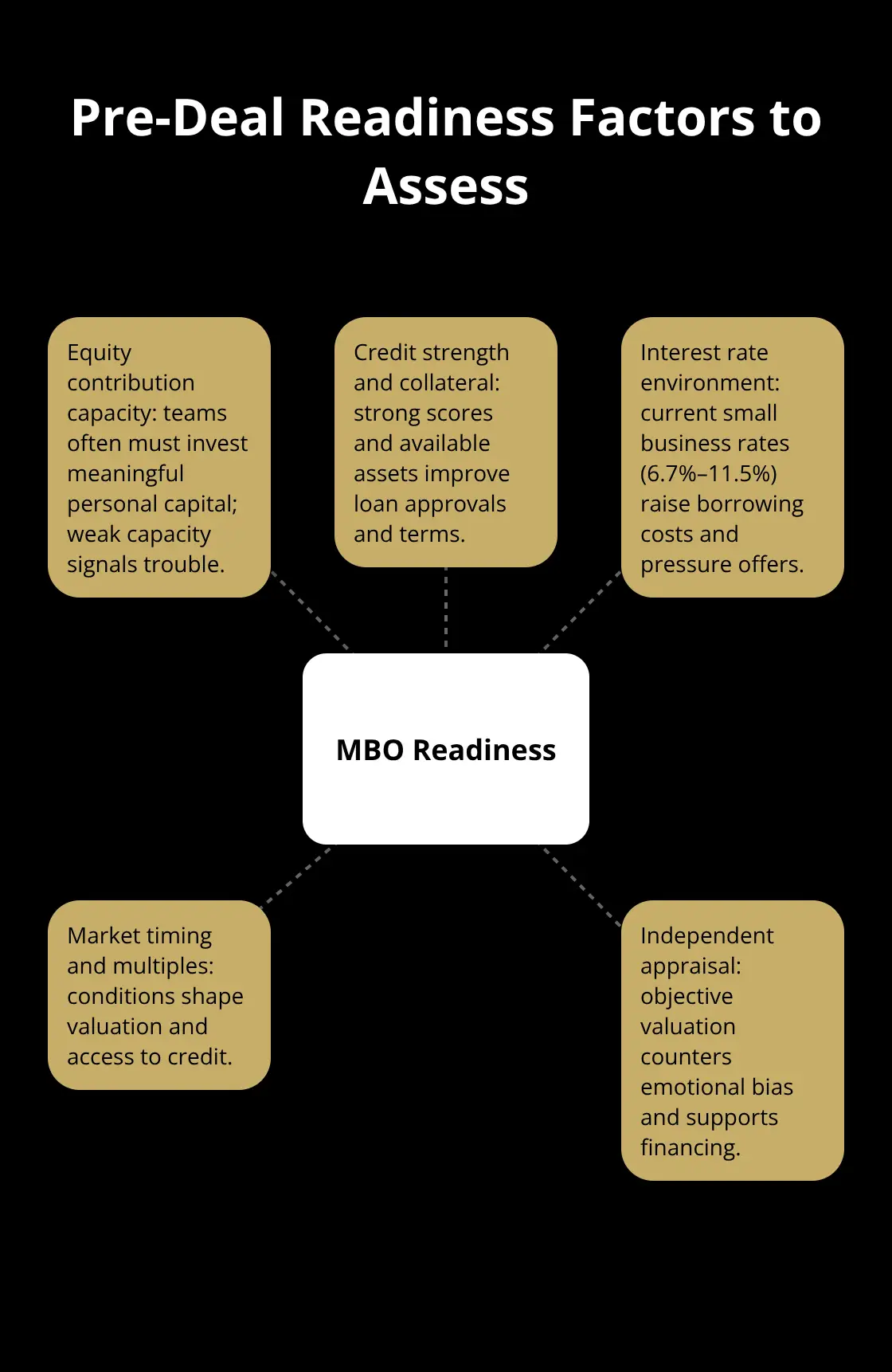
Your management team must demonstrate concrete financial capability beyond good intentions. Request personal financial statements from each manager to verify their net worth and liquidity. Most banks require management teams to contribute equity as part of the purchase price, which means a $5 million business sale demands significant personal investment from your team.
Review their credit scores, debt obligations, and available assets that can serve as loan collateral. Management teams with combined net worth below 25% of your business value will struggle to secure favorable terms. Banks scrutinize personal guarantees carefully, and weak financial positions lead to loan rejections or prohibitive interest rates.
Business Valuation and Market Conditions
Independent business appraisals are mandatory for management buyouts because emotional relationships can distort expectations. Seller-financed management buyouts require careful valuation analysis, while strategic buyers typically pay higher multiples for similar companies.
Current interest rates directly impact management team costs. Small business loan rates range from 6.7% to 11.5% according to Federal Reserve data. Higher rates reduce management team power and force lower offer prices. Market conditions affect both valuation multiples and available credit, which makes timing a critical factor in your decision.
Alternative Exit Options Worth Consideration
Strategic sales to competitors or industry consolidators consistently generate higher valuations than management buyouts. Private equity firms actively seek profitable businesses in the $2 million to $50 million revenue range and often pay cash at closing rather than require seller financing.
Employee Stock Ownership Plans provide tax advantages that management buyouts cannot match, allowing you to defer capital gains taxes while maintaining company culture. Asset sales to competitors eliminate risks entirely and typically close within 60-90 days once due diligence completes. Each alternative offers distinct advantages that may better serve your financial goals and timeline preferences.
Final Thoughts
Management buyouts work best when your team demonstrates strong financial capability and your business generates consistent cash flow. The cultural preservation and employee retention benefits make this exit strategy compelling for owners who prioritize legacy over maximum sale price. However, the financial trade-offs are substantial.
Management teams typically pay 15-25% less than strategic buyers, and seller financing requirements mean you receive payments over several years instead of cash at closing. Deal failure rates also run higher due to financing complications. Consider a management buyout when your team has proven leadership skills, combined net worth exceeding 25% of business value, and your company operates in a stable industry.
Before you make any decisions, obtain an independent business valuation and explore all exit options. Strategic sales, private equity partnerships, and employee stock ownership plans each offer distinct advantages that might better serve your goals. We at Unbroker help business owners navigate these complex decisions through our transparent platform that connects you with qualified buyers while providing expert guidance throughout the sale process.