Many business owners believe a struggling business has no market value. This assumption costs them potential opportunities and financial recovery.
We at Unbroker see distressed companies sell successfully every month. The key lies in understanding what buyers actually want and positioning your business accordingly.
Even declining revenues don’t eliminate sellability when the right assets and market position exist.
What Signs Indicate Your Struggling Business Can Still Sell
Revenue Patterns Reveal More Than Raw Numbers
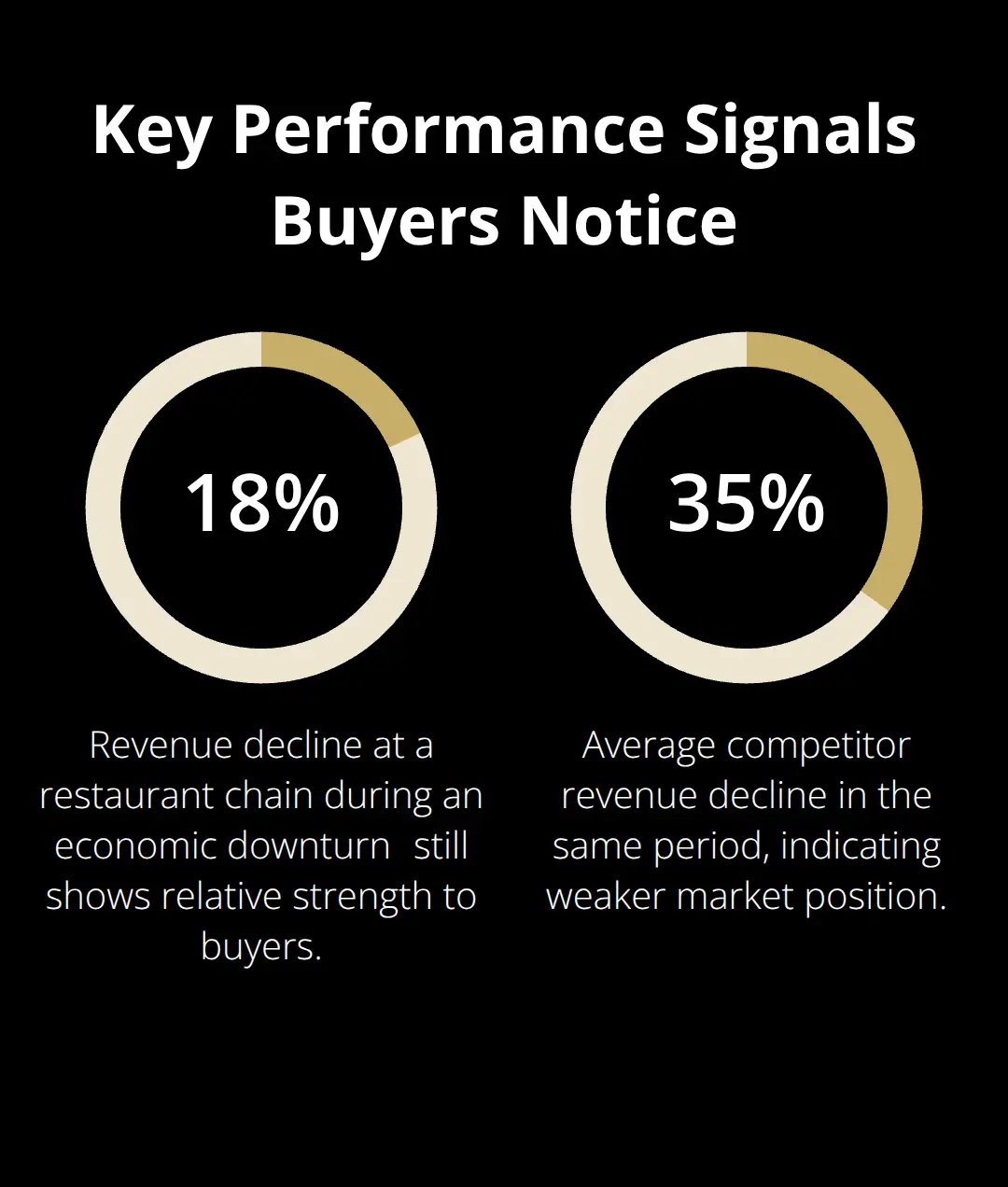
Monthly revenue drops of 15-20% don’t automatically destroy sellability when market position remains strong. Smart buyers analyze revenue decline patterns against industry benchmarks rather than absolute figures. A restaurant chain that loses 18% revenue during economic downturn while competitors lose 35% shows relative strength. Your customer retention rate matters more than total sales volume. Businesses that maintain 75.5% customer retention despite revenue decline attract serious buyers who recognize operational stability.
Operational Problems Create Buyer Opportunities
Inefficient inventory management, outdated technology systems, and poor vendor relationships represent fixable challenges for experienced buyers. Manufacturing companies with higher production costs still sell when buyers identify clear improvement paths through industry benchmarks. Staffing issues, lease problems, and marketing gaps create discount opportunities rather than deal-breakers. Investment groups specifically target businesses with operational inefficiencies they can resolve within 12-18 months (particularly in manufacturing and retail sectors).
Asset Value Survives Performance Struggles
Physical assets, intellectual property, and customer databases retain value independent of current profitability. Software companies with declining sales still command revenue multiples when proprietary technology exists, with valuation multiples varying based on market factors. Equipment, real estate, and inventory provide asset-based valuation floors that support minimum sale prices. Brand recognition, supplier relationships, and market presence create intangible assets that turnaround specialists value highly. Location advantages, regulatory permits, and established distribution channels often justify purchase prices that exceed current cash flow multiples (especially in regulated industries like healthcare or logistics).
The next step involves strategic positioning to maximize your business’s appeal to these potential buyers.
How Do You Transform a Struggling Business Into a Sale-Ready Asset
Clean Financial Records Drive Buyer Confidence
Buyers abandon deals with incomplete financial documentation within the first 30 days of due diligence. You must organize three years of tax returns, profit and loss statements, and cash flow records in digital format before you list your business. Professional accounting firms report that businesses with QuickBooks or similar systems provide improved organizational performance compared to manual bookkeeping. You should create monthly financial summaries that highlight seasonal patterns and explain revenue fluctuations with specific market events.
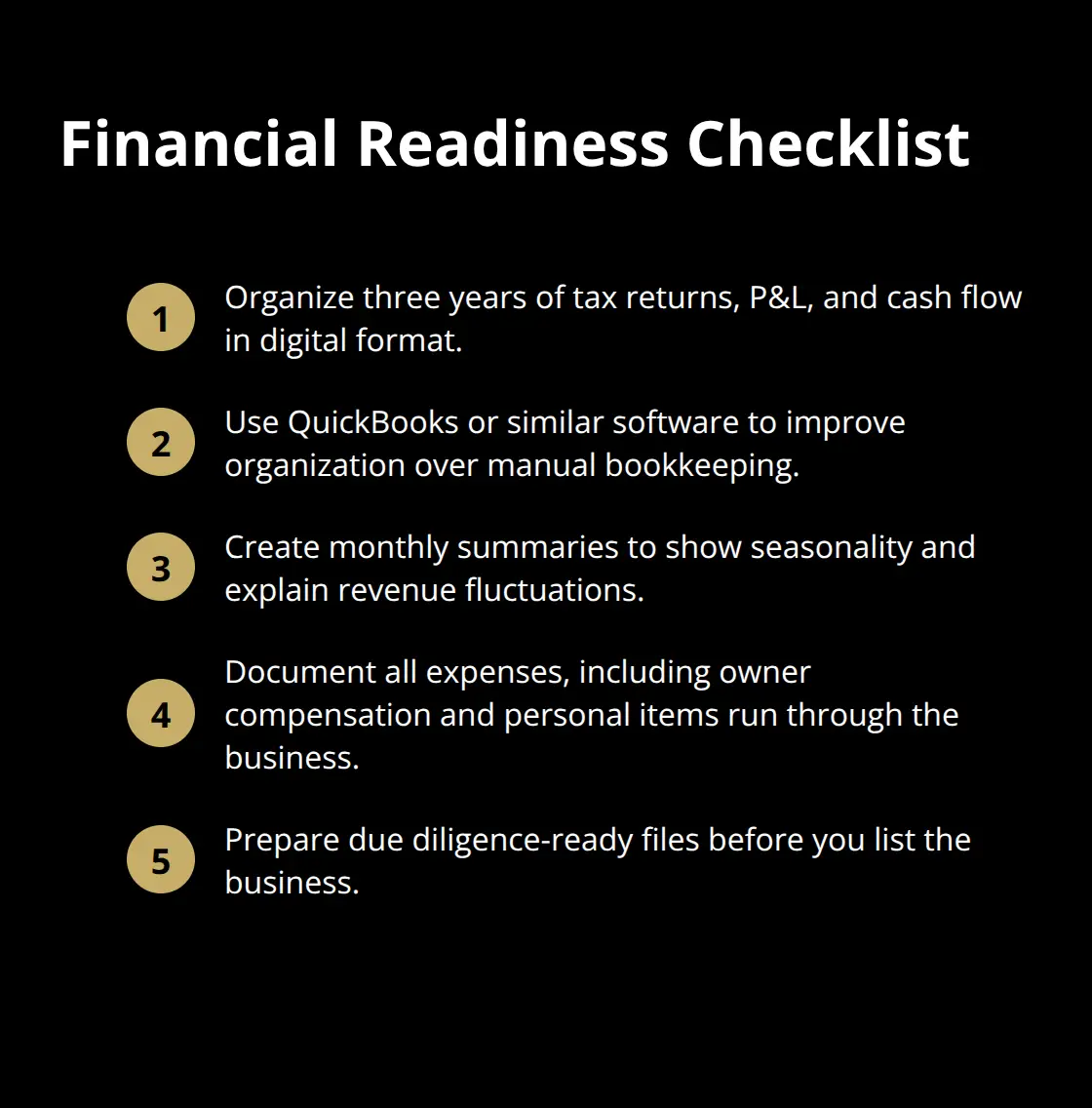
Document all business expenses, including owner compensation and personal expenses run through the business, as buyers need clear pictures of true operating costs.
Strategic Operational Changes Generate Immediate Value
You should replace underperforming managers and streamline inefficient processes during the pre-sale period rather than leave problems for buyers to solve. Renegotiate supplier contracts, consolidate vendors, and eliminate redundant software subscriptions to demonstrate cost control capabilities. Manufacturing businesses that implement process improvements can optimize workflows while increasing efficiency and production capabilities. You must implement basic customer relationship management systems and document standard operating procedures that new owners can follow immediately. Address obvious maintenance issues, update outdated equipment when cost-effective, and resolve any pending legal disputes that could complicate ownership transfer.
Market Presentation Determines Buyer Pool Size
You should position your business as a turnaround opportunity rather than a distressed asset when you create marketing materials. Highlight growth potential, market opportunities, and improvement areas that sophisticated buyers can capitalize on within 6-12 months. Create detailed business summaries that emphasize unique selling propositions, competitive advantages, and barriers to entry that protect market position. Professional business photography, updated websites, and organized facility tours influence buyer perceptions significantly more than financial metrics alone (especially in retail and hospitality sectors). Target your marketing toward investment groups, industry consolidators, and experienced entrepreneurs who specifically seek undervalued businesses with improvement potential rather than passive investors who want immediate returns.
The success of these preparation efforts depends heavily on your ability to identify and connect with the right type of buyers for your specific situation.
Who Should You Target as Potential Buyers
Private Equity Groups Specialize in Distressed Acquisitions
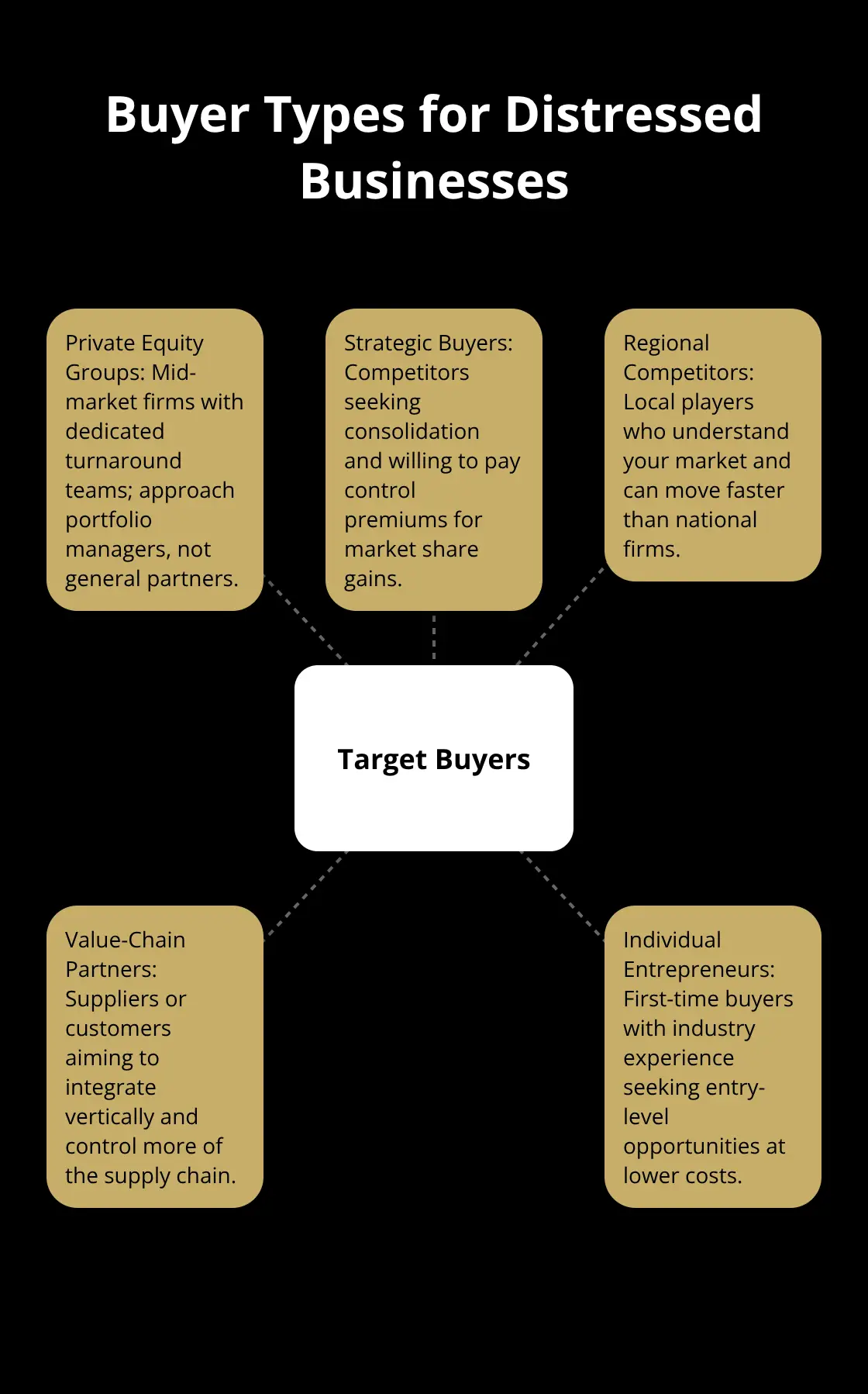
Private equity firms maintain dedicated turnaround teams with operational expertise in specific industries like manufacturing, retail, and healthcare. You should approach mid-market private equity firms with $50-500 million in assets under management rather than larger funds that focus on billion-dollar acquisitions. Searchfund entrepreneurs, backed by private equity, specifically target businesses with $1-10 million in annual revenue that need operational improvements. Contact firms through their portfolio managers who understand your industry sector, as cold outreach to general partners yields response rates below 5%.
Strategic Buyers Pursue Market Consolidation Opportunities
Competitors view your troubled business as an opportunity to eliminate competition while they acquire customers, locations, or technology at discounted prices. Industry consolidation accelerates during economic downturns, with strategic buyers offering higher valuations since they can afford higher control premiums for market share gains. Research your top five competitors and identify which companies have completed acquisitions within the past 24 months, as these buyers demonstrate active growth strategies. Suppliers and customers in your value chain also represent strategic buyers who want to integrate vertically and control more of their supply chain (particularly in manufacturing and distribution sectors). Target regional competitors first, as they understand your market dynamics and can move faster than national players who need extensive due diligence.
Individual Entrepreneurs Seek Entry-Level Opportunities
First-time business buyers actively search for distressed companies that offer lower entry costs compared to profitable businesses that trade at full market multiples. These buyers often have industry experience as employees or managers but lack the capital for premium acquisitions. Target entrepreneurs through industry associations, LinkedIn groups, and local business networks where they actively participate. Former employees, managers, or consultants familiar with your business represent the highest-probability buyers, as they understand operational challenges and see improvement potential that outside buyers might miss (especially in service-based industries).
Final Thoughts
Your struggling business remains sellable when you focus on the right factors. Asset value, market position, and operational improvement potential matter more than current profitability to experienced buyers. Revenue decline doesn’t eliminate sellability if you maintain customer relationships and competitive advantages.
Realistic valuations for distressed businesses typically range from 0.5-2x annual revenue, significantly below healthy business multiples of 3-5x. Expect 6-12 months for sale completion, as buyers need extensive due diligence time to assess turnaround potential. Private equity groups and strategic buyers move faster than individual entrepreneurs who require approval for their deals (especially when external capital sources are involved).
Your preparation determines success more than market conditions. Clean financial records, documented processes, and honest problem disclosure build buyer confidence. We at Unbroker help business owners navigate these complex sales through our transparent platform that connects struggling business owners with qualified buyers.