Selling a medical device manufacturing company is a complex process that requires careful planning and execution. At Unbroker, we’ve guided numerous business owners through this challenging journey.
This guide will walk you through the essential steps, potential risks, and key factors in finding the right buyer for your medical device manufacturing business. We’ll provide practical insights to help you navigate this intricate process and maximize the value of your company.
How to Prepare Your Medical Device Manufacturing Business for Sale
Financial Records: Your Business’s Backbone
Start by compiling comprehensive financial records for the past 3-5 years. This includes profit and loss statements, balance sheets, cash flow statements, and tax returns. Ensure these documents are accurate and up-to-date. Buyers will scrutinize these numbers, so transparency is key.
Pro tip: Have your financials audited by a reputable accounting firm. This adds credibility and can potentially increase your business’s value.
Valuation: Knowing Your Worth
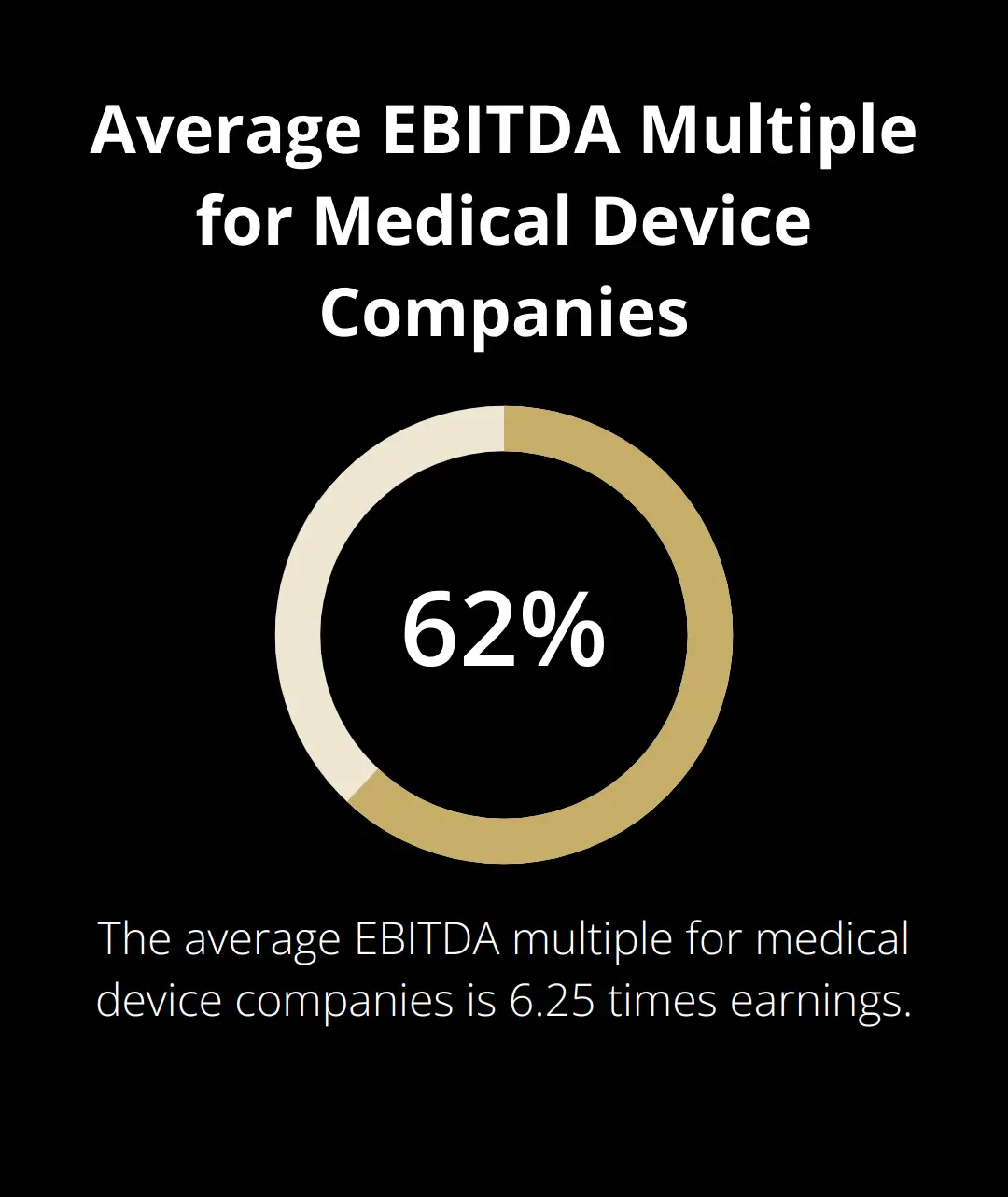
A professional business valuation is essential. The EBITDA multiple for medical device companies generally varies from 4.5 to 8. However, your specific valuation will depend on various factors.
Engage a valuation expert with experience in the medical device sector. They’ll consider factors like:
- Revenue growth rates
- Market share
- Intellectual property assets
- Regulatory approvals
- Research and development pipeline
Valuation isn’t just about numbers. It’s about telling your business’s story through data.
Intellectual Property: Your Competitive Edge
In the medical device industry, intellectual property (IP) is often a company’s most valuable asset. Recent data shows that approximately 90% of the S&P 500’s value is attributed to intangible assets, highlighting IP’s importance.
Take these steps to protect and showcase your IP:
- Conduct an IP audit to identify all patents, trademarks, and trade secrets.
- Ensure all IP registrations are current and properly maintained.
- Document any pending patent applications or ongoing R&D projects.
- Create a clear IP strategy that demonstrates future growth potential.
Regulatory Compliance: A Non-Negotiable
In the medical device industry, regulatory compliance isn’t just important-it’s essential. Ensure your business is up-to-date with all relevant FDA regulations and international standards (if applicable).
Key areas to focus on:
- Quality Management System (QMS) documentation
- FDA clearances or approvals for all products
- Compliance with Good Manufacturing Practices (GMP)
- Records of successful FDA inspections
Pro tip: Consider conducting a mock FDA audit to identify and address any potential compliance issues before buyers do their due diligence.
The preparation phase sets the stage for a successful sale. However, selling a manufacturing business also comes with unique considerations and risks. Let’s explore these in the next section to ensure you’re fully prepared for the challenges ahead.
Key Risks in Selling Your Medical Device Company
The sale of a medical device manufacturing company presents unique challenges. Understanding these risks will help you navigate the sale process more effectively.
Regulatory Landscape Changes
The medical device industry operates under strict regulations, and shifts in healthcare policies can impact your company’s value. The FDA’s recent emphasis on cybersecurity in medical devices has introduced new guidelines, including recommendations on cybersecurity considerations and information to include in premarket submissions. Buyers find companies that address these concerns proactively more attractive.
To reduce this risk:
- Monitor upcoming regulatory changes
- Develop a strong regulatory affairs strategy
- Document all compliance efforts meticulously
Quality Control During Transition
Product quality stands as a cornerstone in medical device manufacturing. Any quality lapse during the sale process can result in severe consequences. A 9.8% increase in defective units was reported in the first nine months of 2024, highlighting the critical nature of quality control.
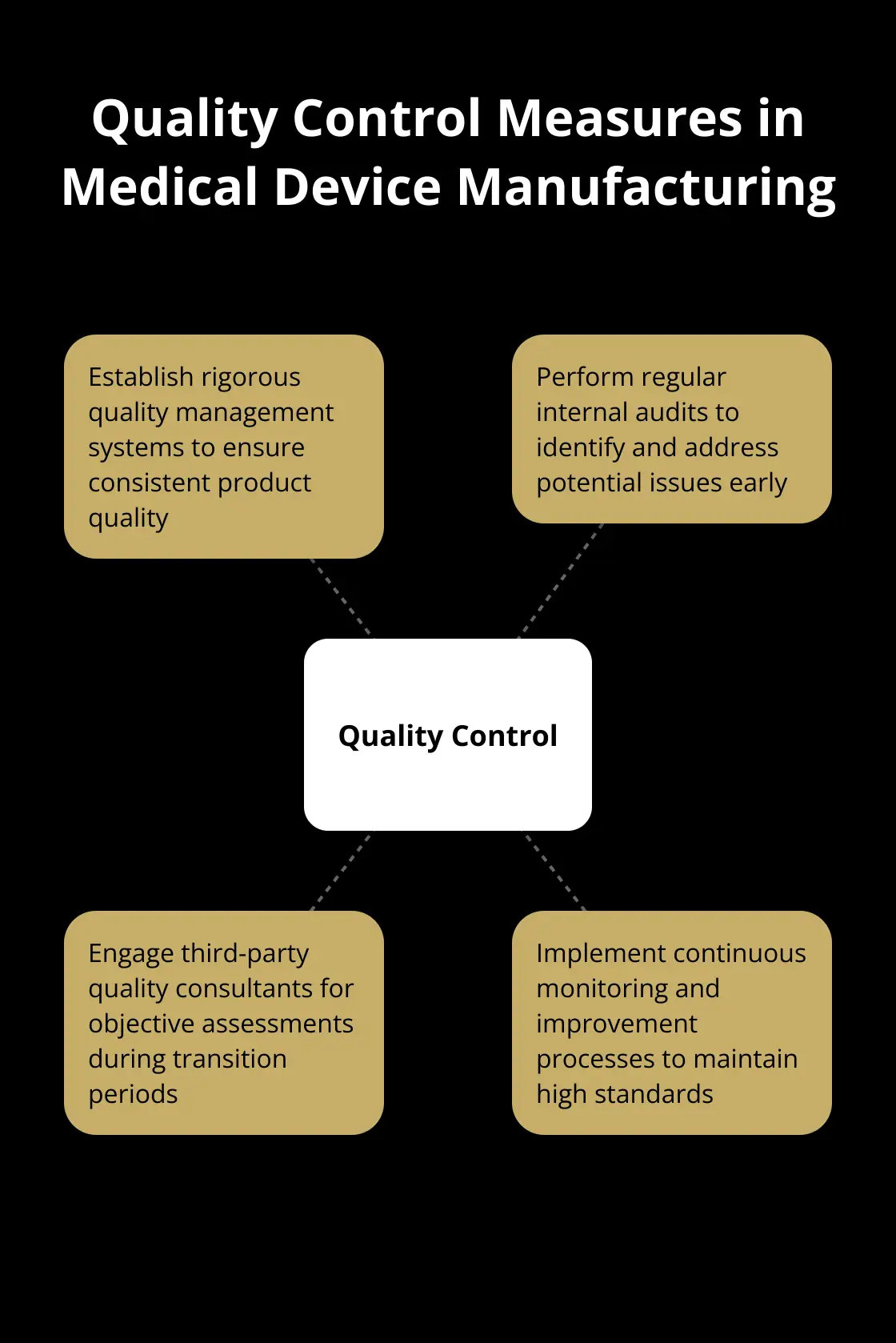
To maintain quality:
- Establish rigorous quality management systems
- Perform regular internal audits
- Engage third-party quality consultants for the transition period
Key Talent and Partnership Retention
Your company’s value extends beyond its products to its people and relationships. Talent attraction and retention have been identified as a key trend in the medical device industry for 2024.
To address this risk:
- Identify essential personnel and create retention plans
- Communicate openly with staff about the sale process
- Secure critical supplier and customer relationships through long-term contracts
Confidentiality Preservation
Maintaining confidentiality throughout the sale process is essential. Information leaks can lead to staff uncertainty, customer concerns, and competitor opportunism.
To safeguard your information:
- Use non-disclosure agreements (NDAs) with all involved parties
- Restrict knowledge of the sale to a select few
- Consider using a code name for your company during the process
These risks require expert navigation and careful planning. While significant, these challenges are not insurmountable. The next section will explore how to identify the ideal buyer for your medical device manufacturing business, a critical step in ensuring a successful sale and smooth transition.
Who’s the Ideal Buyer for Your Medical Device Company?
Strategic vs. Financial Buyers: Understanding the Difference
Strategic buyers are typically larger companies within the medical device industry that want to expand their product lines or market share. Recent data shows average EBITDA and revenue multiples being paid for private healthcare companies in 2025.
Financial buyers, such as private equity firms, focus on the potential for financial returns. They typically offer lower multiples but may provide more flexibility in deal structure.
Industry Experience: A Critical Factor
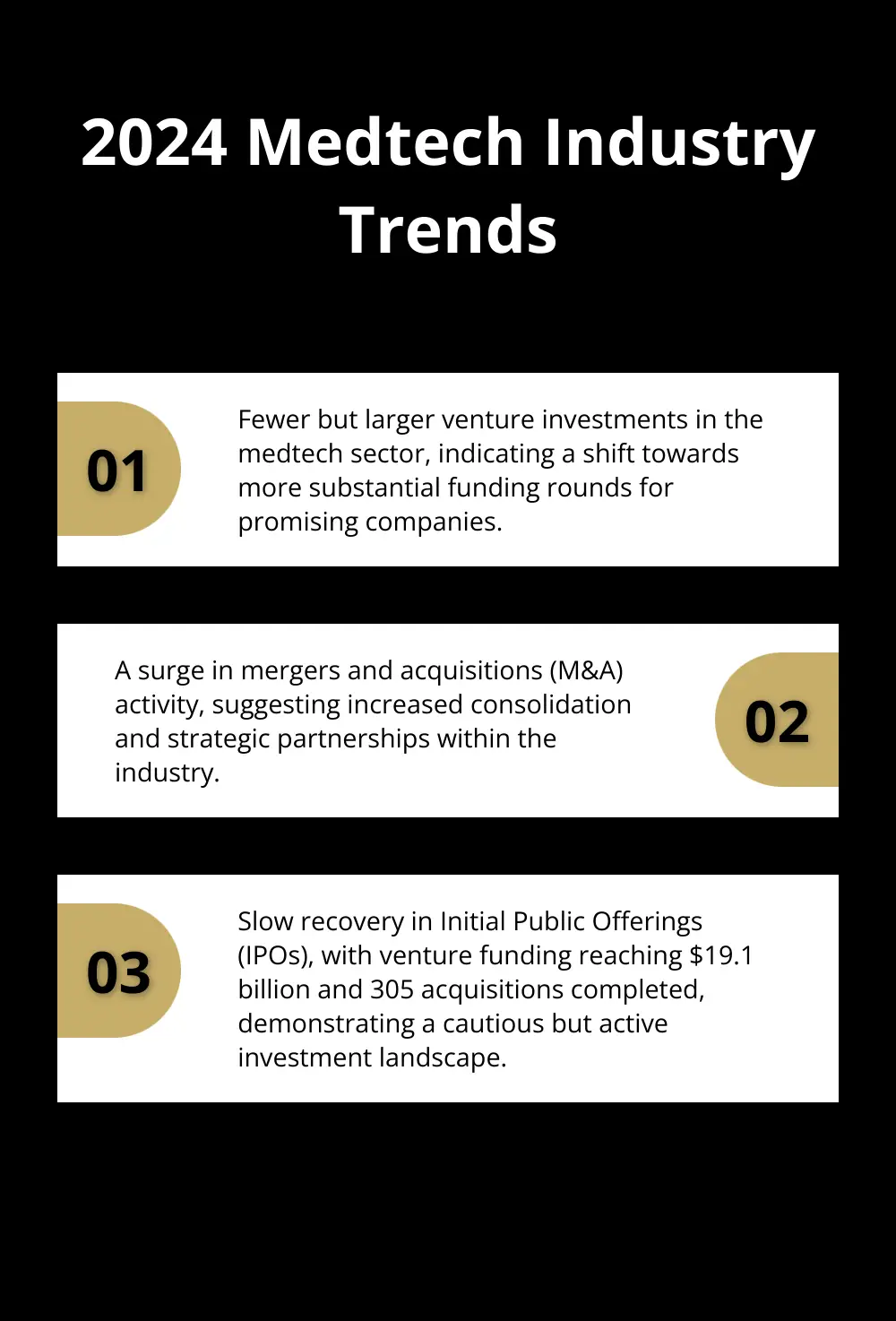
A buyer’s industry knowledge can significantly impact the transition process and future success of your company. In 2024, medtech saw fewer but larger venture investments, a surge in M&A, and a slow IPO recovery. Venture funding reached $19.1B, with 305 acquisitions.
When you evaluate potential buyers, consider:
- Their track record in the medical device sector
- Understanding of regulatory landscapes
- Existing relationships with healthcare providers and payers
Financial Capacity and Long-Term Vision
You must ensure your buyer has the financial means to not only purchase your company but also invest in its future growth.
Ask potential buyers about their:
- Funding sources
- Plans for capital expenditures
- Strategy for research and development
Cultural Alignment: An Essential Element
Don’t underestimate the importance of cultural fit. Studies show that the failure rate of mergers and acquisitions is somewhere between 70% and 90%.
To assess cultural fit:
- Arrange face-to-face meetings with key decision-makers
- Discuss company values and management styles
- Consider how the buyer’s culture might impact your employees and customers
The right buyer isn’t just about the highest offer. It’s about finding a partner who can carry your company’s legacy forward while providing the resources for future growth. Unbroker uses its extensive network and AI-driven matching process to help you find that ideal buyer (ensuring a successful sale and a bright future for your medical device manufacturing business).
Final Thoughts
Selling a medical device manufacturing company requires careful planning and strategic thinking. The process involves organizing financial records, conducting valuations, protecting intellectual property, and ensuring regulatory compliance. Understanding industry-specific risks, such as regulatory changes and quality control challenges, will help you navigate the sale process effectively.
Finding the right buyer is essential for a successful transition. Consider factors like industry experience, financial capacity, long-term vision, and cultural alignment when evaluating potential buyers. The ideal match goes beyond the highest offer and focuses on securing your company’s legacy and future growth.
For expert guidance on how to sell a medical device manufacturing company, Unbroker offers specialized support. Our modern platform provides transparent, low-cost options for selling businesses, eliminating high brokerage fees while connecting you with potential buyers. We strive to streamline your sale process and help you achieve the best possible outcome for your business.