Pricing your business sale is one of the most consequential decisions you’ll make as a business owner. Get it wrong, and you leave money on the table or scare away qualified buyers. We at Unbroker see sellers make the same valuation mistakes repeatedly-and they cost real money.
This guide walks you through proven methods to find your fair market price, avoid common pitfalls, and position your business for the strongest possible offer.
What Methods Actually Work to Value Your Business
Your business value depends on what a real buyer will pay for it today, not what you think it’s worth emotionally or what you invested to build it. The gap between these numbers destroys deals. Most business sales happen between 0.5 and 2 times annual revenue, though this varies significantly by industry and profitability. A software company with strong recurring revenue might command 3 to 4 times revenue, while a service business with high owner dependency might fetch only 0.75 times revenue.
The only way to know where your business lands is to calculate value using multiple approaches and see where they overlap.
Discounted Cash Flow Analysis Works Best for Stable Businesses
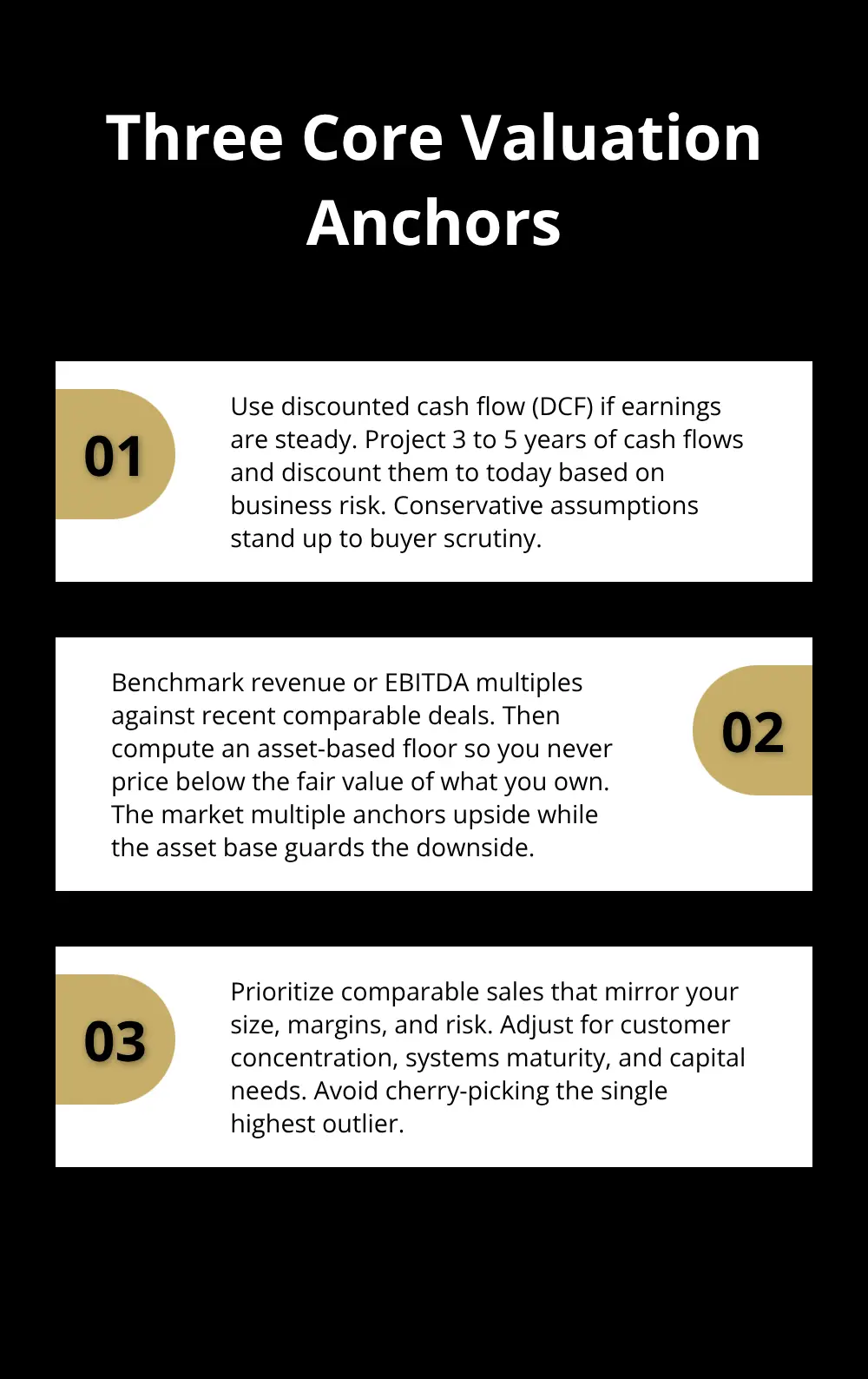
Start with discounted cash flow analysis if your business has consistent, predictable earnings. This method projects your cash flow for the next three to five years, then discounts it back to today’s dollars using a discount rate that reflects your business risk. A lower-risk, stable business might use a 10% discount rate, while a volatile one could warrant 20% or higher. If your business generates $200,000 in annual cash flow with a 15% discount rate, you’re looking at roughly $800,000 to $1 million in value depending on growth assumptions. The challenge here is accuracy-buyers will scrutinize your growth projections heavily, so conservative estimates beat optimistic ones every time.
Revenue and EBITDA Multiples Anchor Your Price to Market Reality
Next, use revenue or EBITDA multiples to benchmark against comparable businesses. If similar businesses in your industry sold for 1.8 times revenue and your annual revenue is $500,000, that suggests a $900,000 valuation. Check with industry peers, business brokers, or databases that track actual sales to find credible multiples for your sector. Asset-based valuation serves as your floor. Add up the fair market value of your equipment, inventory, real estate, customer lists, intellectual property, and brand value, then subtract all liabilities. This rarely produces your final number because it ignores earnings power, but it prevents you from pricing below what your tangible and intangible assets are actually worth. Most buyers pay for future cash generation, not just what sits on your balance sheet.
Comparable Sales Provide Your Most Realistic Valuation Anchor
Finding businesses similar to yours that recently sold is harder than it sounds, but it’s the most realistic valuation anchor you have. If a competitor sold for $1.2 million and your business is slightly larger with better margins, you have concrete evidence to work from. The challenge is access-private sale data isn’t public, so you’ll need to tap brokers, industry associations, or advisors who track transactions in your space. When you find comparables, adjust for differences. If the comparable business had a single large customer representing 40% of revenue and yours has revenue spread across 50 customers, your business carries less risk and deserves a higher multiple. Similarly, if the comparable had outdated systems and you’ve invested in modern software, that adds value. Apply a 30% to 50% discount if you’re comparing your private business to public company valuations-public companies trade at premiums because their shares are liquid and easy to sell. Don’t cherry-pick the highest comparable sale and assume that’s your price. Instead, identify a range where most recent sales clustered, then position your business within that range based on strengths and weaknesses.
Intangible Assets Often Represent Half Your Business Value
Your customer list, brand reputation, proprietary processes, and management team frequently represent 50% or more of your business value. A buyer acquiring your business wants to retain your customers and the systems that keep them happy. If you’ve documented your processes, trained a capable management team that can operate without you, and built customer loyalty that isn’t dependent on your personal relationships, you’ve created real, sellable assets. Calculate the value of your customer base by looking at customer acquisition cost and lifetime value calculation. If acquiring a new customer costs $5,000 and each customer generates $50,000 in lifetime profit, then a customer list of 100 loyal customers represents $5 million in intangible value before applying a discount for retention risk. Your brand and reputation matter too. A business with strong online reviews, industry recognition, or a trusted name can charge premium prices and retain customers more easily than an unknown competitor. Quantify this by comparing your price premium to generic competitors-if you charge 20% more than commodity alternatives and customers accept it, that pricing power is worth money at sale. Intellectual property including patents, trademarks, proprietary software, or unique methodologies adds significant value if it’s defensible and creates competitive advantage. Document everything: trademark registrations, patent filings, confidentiality agreements with employees, and proprietary systems. A buyer wants evidence that your competitive advantages are real and will survive the ownership transition. The strength of these intangible assets directly influences how much a buyer will pay above your baseline financial metrics-which is why the next section on common pricing mistakes matters so much.
Where Sellers Leave Money on the Table
Most business sales fail or underperform because sellers ignore what the market actually values. Your emotional attachment to the business you built for years clouds judgment, and that costs real money. A seller built a $2 million revenue business over fifteen years, invested personal savings into growth, and believed the business was worth $4 million. The market disagreed. When comparable sales in the same industry closed between 1.2 and 1.5 times revenue, that seller’s $3 million ask sat 50% above market reality. Buyers walked away, and the business eventually sold for $2.4 million after six months of carrying costs and frustration. The gap between what you think your business is worth and what a buyer will actually pay destroys deal-making.
Emotional Pricing Blinds You to Market Reality
Emotional pricing happens because you’ve sacrificed for this business, and it’s personal. Strip that away. Your fair market price is determined by three factors: what comparable businesses sold for recently, what cash flow your business generates, and what a buyer can finance. If your business generates $300,000 in annual EBITDA and the market multiple for similar businesses is 4.5 times EBITDA, your price range is $1.35 million, not the $2 million you hoped for. This isn’t negotiable-it’s market reality. The numbers either align with what buyers will pay, or they don’t.
Hidden Liabilities and Operational Issues Tank Your Price
Operational issues and hidden liabilities destroy deals faster than any pricing mistake. A buyer uncovers during due diligence that your largest customer represents 60% of revenue, or that key employees plan to leave, or that you’ve deferred maintenance on critical equipment, and your price drops 15% to 30%. Most price adjustments occur during due diligence, not at the initial offer stage.
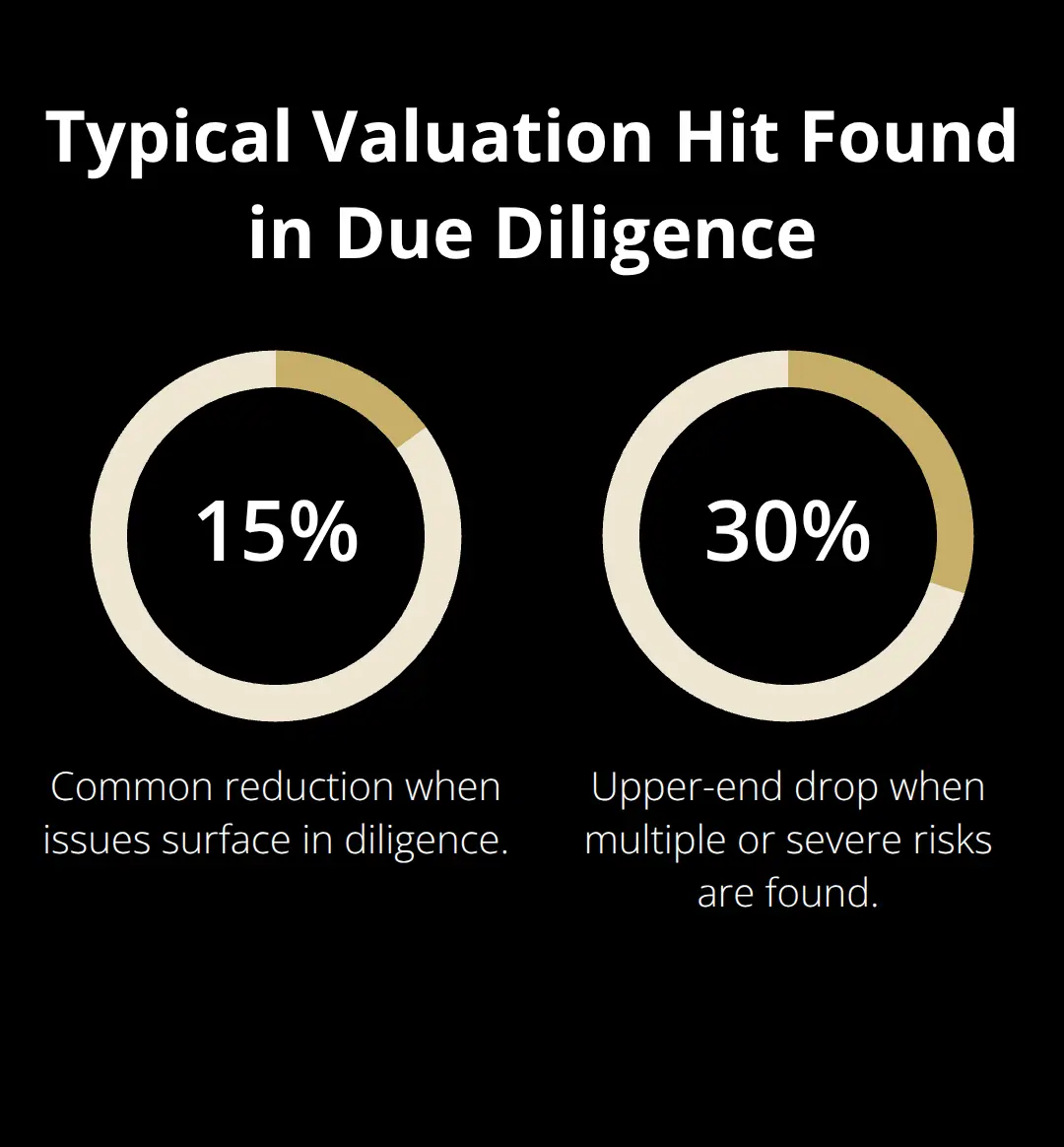
Buyers reduce their offer when they uncover undisclosed liabilities, customer concentration risk, or systems that depend entirely on you.
Customer Concentration and Key Person Risk Demand Discounts
If your business cannot operate without you, a buyer factors in the cost and risk of replacing your expertise, which means a lower valuation. You must document your processes, train a management team, and diversify your customer base before you list. A business where the top three customers represent less than 25% of revenue commands a significant premium over one where a single customer is critical. Similarly, if you’ve deferred maintenance, accumulated back taxes, or have pending litigation, a buyer will discount hard or walk away entirely.
Fix Problems Before the Sale Process Starts
Address these issues now, before the sale process starts. The cost of fixing problems proactively is always lower than the price reduction a buyer will demand during negotiations. Valuation accuracy prevents you from listing too high, which kills buyer interest, or too low, which leaves money on the table. A buyer scrutinizes your financial records, customer contracts, employee agreements, and asset condition during due diligence. Every undisclosed problem becomes a negotiation point that works against you. The stronger your operational foundation and the cleaner your records, the closer you’ll land to your target price.
How to Position Your Business as a Buyer’s Best Option
Your asking price means nothing if buyers don’t believe your business can deliver the returns you’re claiming. The gap between what you assert and what a buyer verifies during due diligence determines whether you hit your target price or watch it collapse. Sellers often lose 15% to 25% of their asking price because they fail to substantiate their numbers or present their business as a professional, transferable asset. Your financial records, growth story, and operational readiness are the only things that matter in negotiations.
Present Clean Financial Records That Buyers Can Trust
Start with three to five years of audited or reviewed financial statements that show consistent revenue, EBITDA, and cash flow trends. Clean financial records enhance valuation, streamline due diligence, and build buyer confidence. Buyers want to see clean tax returns, bank statements reconciled to accounting records, and customer contracts that document recurring revenue. If your financials are disorganized or your tax returns don’t align with your bank deposits, a buyer assumes you’re hiding problems. One seller claimed $800,000 in annual EBITDA but couldn’t produce customer contracts to support recurring revenue claims. The buyer reduced the offer by $400,000 because the cash flow projections became unreliable.
Document everything: customer acquisition channels, retention rates, average customer lifetime value, and churn rates. If you’ve invested in systems, software, or infrastructure that reduces your operational burden, quantify the time and cost savings. A business that runs with a lean team because of automation is worth significantly more than one that requires constant owner involvement. Organize your financial documents chronologically and thematically so buyers can quickly assess risk and understand your operational efficiency.
Demonstrate Credible Growth Potential and Competitive Advantages
Growth potential attracts buyers willing to pay premium multiples, but only if you present credible evidence. Show market research that demonstrates your addressable market is expanding. If your industry is growing at 12% annually and you’re currently capturing only 2% market share, a buyer sees room to scale without major innovation.
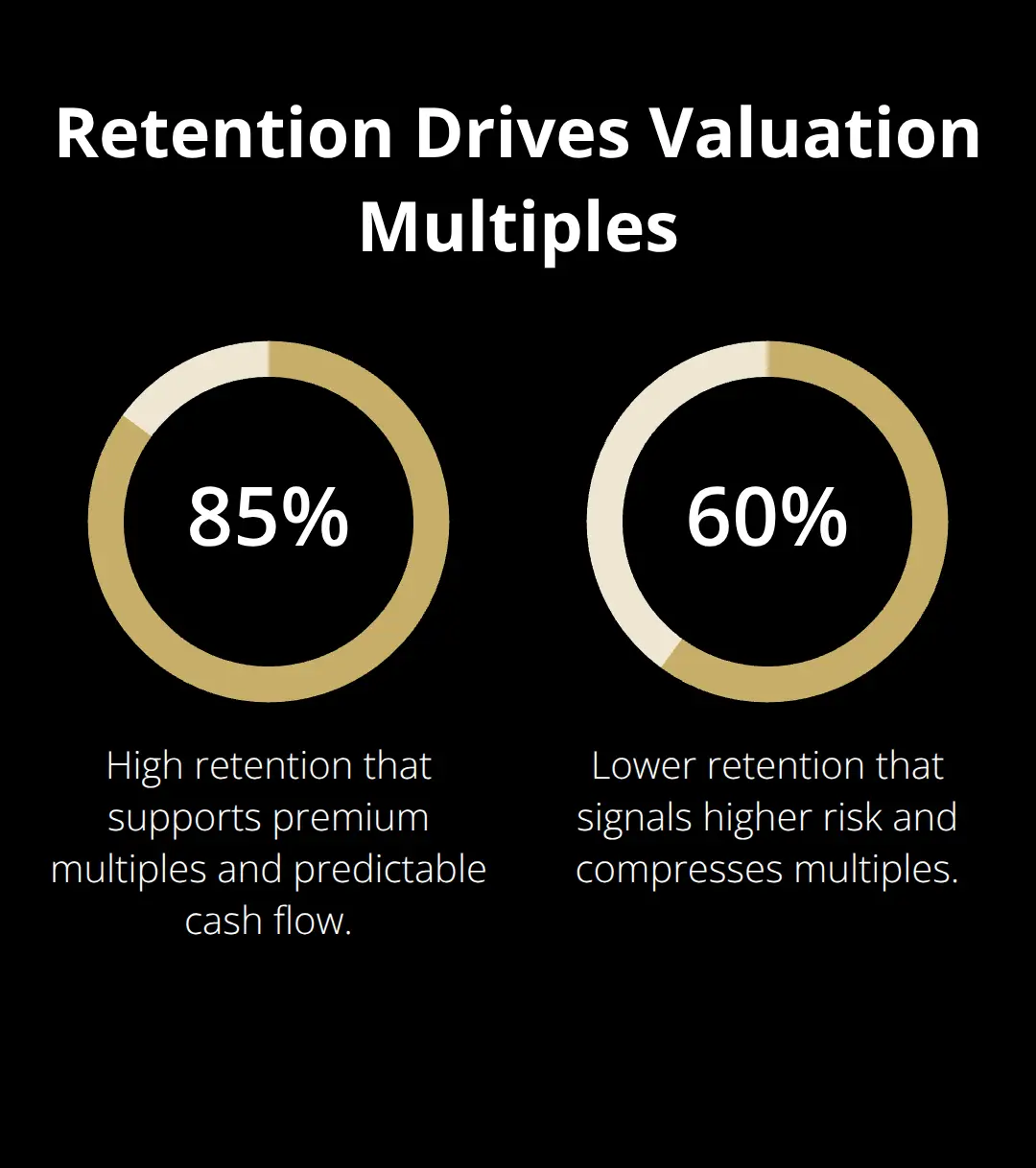
Identify specific competitive advantages that are defensible and transferable. If you’ve built a customer base that prefers you because of service quality, not personal relationships, document this through customer testimonials, Net Promoter Score data, and retention metrics. A business with 85% annual customer retention commands higher multiples than one with 60% retention because the cash flows are more predictable.
Time Your Sale to Market Conditions and Industry Cycles
Sell a seasonal business at peak revenue to inflate valuations, and avoid selling during the off-season when cash flow is weak. If your business operates in construction or retail, selling in Q4 or Q1 when cash flow is strongest positions you better than selling in the slow months.
Monitor industry consolidation trends and buyer activity. If larger competitors are acquiring smaller firms in your space, acquisition appetite is high and buyers are actively searching. Track whether your industry is attracting private equity investment, which often signals strong valuations. Conversely, if your sector is contracting or facing regulatory headwinds, move faster rather than wait for conditions to improve.
The longer your business sits on the market, the more buyers assume something is wrong. A well-marketed business that generates multiple offers in 60 to 90 days commands higher prices than one lingering for nine months. Price your business competitively within your valuation range from day one, market it aggressively through multiple channels, and let competitive tension among buyers drive the final price upward naturally.
Final Thoughts
Pricing your business sale accurately establishes the foundation for a successful exit. The methods we’ve covered-discounted cash flow analysis, revenue multiples, comparable sales, and intangible asset valuation-work together to establish a defensible price range grounded in market reality, not emotion. When you combine these approaches and adjust for your specific strengths and weaknesses, you eliminate the guesswork that destroys deals.
The real money comes from operational strength before you list. Clean financial records, documented processes, a capable management team, and a diversified customer base add 15% to 25% more in sale price than a business lacking these fundamentals. Buyers pay premiums for businesses they can operate without the founder and that generate predictable cash flow, so every operational issue you fix proactively saves you far more than the cost of fixing it.
Timing your business sale matters significantly-selling when your industry is hot, your cash flow is strong, and buyer activity is high naturally pushes your price upward. We at Unbroker help sellers navigate valuation, marketing, and negotiations with transparent, low-cost options designed to reach qualified buyers and close at fair market price. Our platform supports you whether you need full-service guidance or expert advice as you lead the process yourself.