Selling your business exposes sensitive financial data, buyer information, and confidential details that bad actors want to steal. A platform without strong security measures puts your entire transaction at risk.
At Unbroker, we’ve seen deals derailed by data breaches and fraud. The right platform security measures protect both you and potential buyers, building confidence in your sale from start to finish.
Why Your Business Data Needs Real Protection
When you list a business for sale, you hand over years of financial records, customer lists, employee information, and proprietary operations data to a platform and potentially dozens of buyers. According to the FTC, the average cost of a data breach in 2024 was $4.88 million for businesses, and that’s before accounting for lost deals, damaged reputation, and legal liability. A weak platform exposes all of this to attackers. Financial information like tax returns, bank statements, and profit-and-loss statements becomes a target the moment you upload it. Buyer data-names, contact information, financing details-gets harvested by scammers who know a business sale involves serious money. You risk not just your own information but also every potential buyer’s data, which kills deals faster than anything else. The FTC guidance on data security makes clear that businesses must implement reasonable safeguards for sensitive information or face legal consequences. Platforms without encryption, access controls, and secure document storage invite fraud, and you’ll hold the liability when something goes wrong.
What Real Protection Looks Like in Practice
Encryption must be standard-both when data travels to the platform and when it sits in storage. The FTC recommends using TLS encryption for data in transit and strong encryption standards for data at rest.
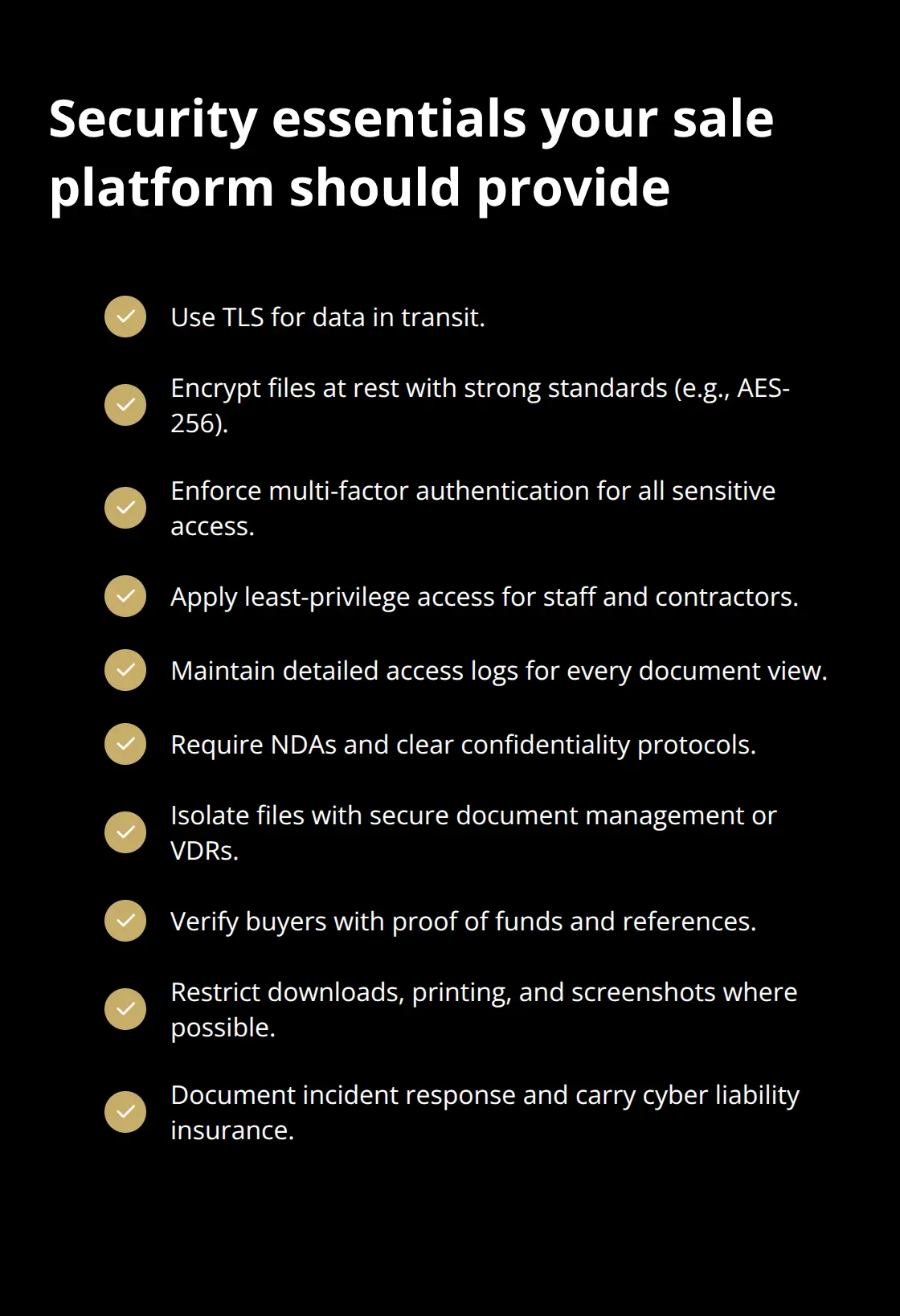
A platform worth your time enforces multi-factor authentication so only authorized users access sensitive files, implements the principle of least privilege so employees and contractors see only what they need, and maintains detailed access logs so you know exactly who viewed what and when. Non-disclosure agreements and confidentiality protocols create enforceable boundaries between you, the platform, and buyers-they’re not just legal theater. Secure document management means files sit in isolated environments, not scattered across shared servers or personal devices. When you evaluate a platform, ask for their security certifications, their data retention policy, and how they handle breaches. If they dodge the question or claim everything is fine without specifics, move on.
How Transparency Builds Buyer Confidence
Buyers hesitate when they sense weak security. They’re about to invest serious capital and want proof their financial information won’t end up sold to competitors or leaked on the dark web.
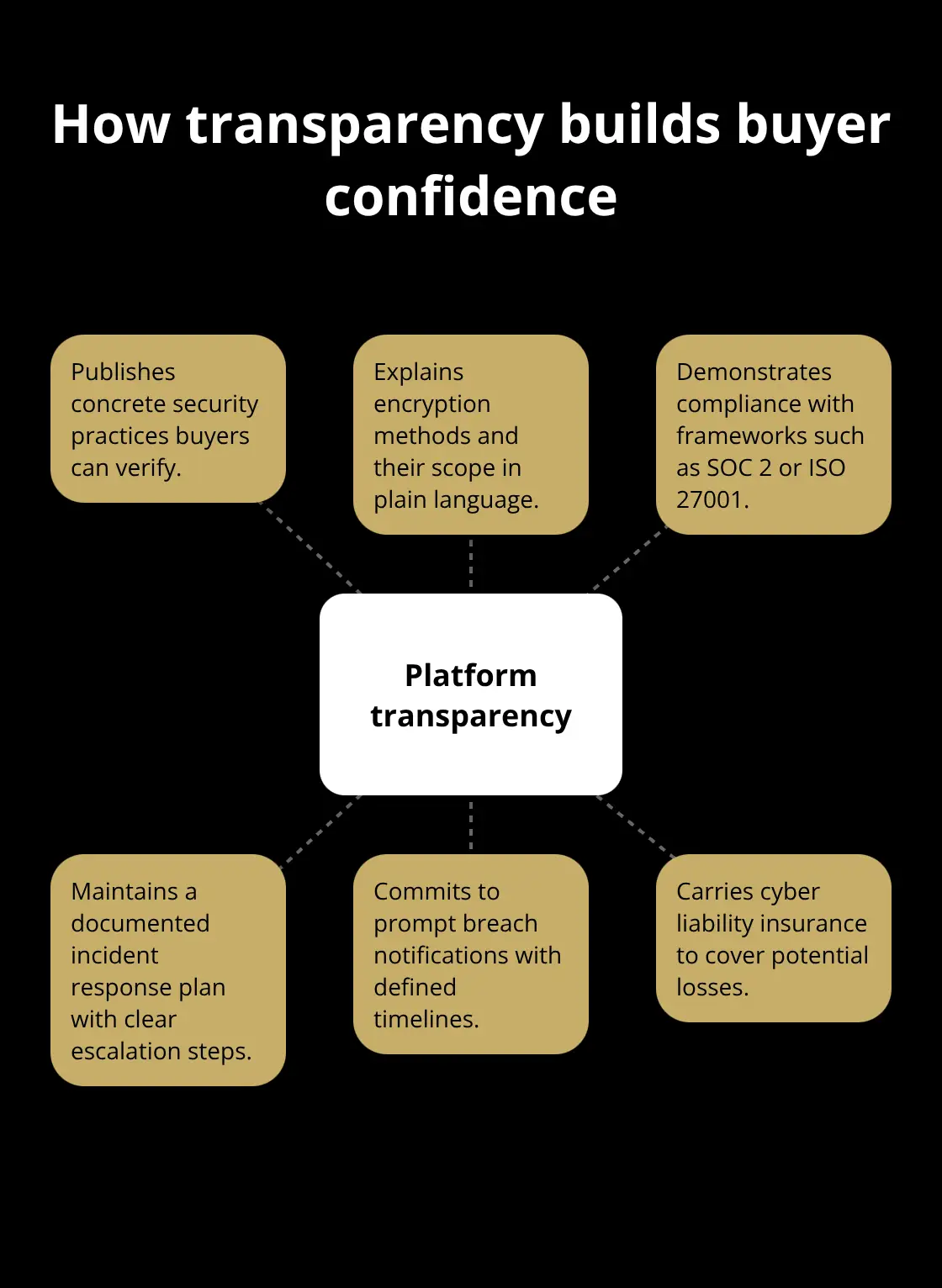
A platform that publishes its security practices, explains its encryption methods, and shows compliance with standards like SOC 2 or ISO 27001 removes friction from negotiations. When both parties trust the platform, deals close faster. You also need to know what happens if something goes wrong. Does the platform have an incident response plan? Will they notify you immediately if data is compromised? Do they carry cyber liability insurance? These details matter because a breach during your sale could kill the entire transaction and leave you fighting claims for years. The right platform makes security visible and verifiable, not hidden behind marketing language. This transparency becomes your foundation for moving forward with confidence-which is exactly what you need before you start evaluating the specific security features that separate trustworthy platforms from the rest.
What Security Features Actually Protect Your Business Data
Encryption Standards That Actually Work
Encryption standards matter far more than marketing claims about security. Too many sellers trust platforms that mention encryption without specifying what that means in practice. Real protection requires TLS 1.2 or higher for data moving between your device and the platform’s servers, combined with AES-256 encryption for files stored at rest. The FTC’s guidance on electronic security makes this distinction clear because weak encryption during transit leaves your financial statements vulnerable to interception, while unencrypted storage invites attackers who breach the platform’s servers.
When you evaluate a platform, ask directly whether they use TLS 1.2 and what encryption standard protects stored files. Platforms that offer robust encryption, secure data storage, and compliance with industry standards signal they have implemented proper safeguards. This specificity separates platforms serious about protection from those relying on vague security language.
Multi-Factor Authentication and Access Controls
Multi-factor authentication should be non-negotiable. This means you need both a password and a second verification method-usually a code from an authenticator app or text message-to access sensitive documents. Multi-factor authentication blocks 99.9 percent of account takeover attempts, which is the primary way attackers steal business sale documents. If a platform offers only passwords, scammers can buy stolen credentials on the dark web and access your confidential financials within minutes.
Access controls matter equally. The principle of least privilege means platform employees and support staff see only the specific documents they need to help you, not every file in your sale. If a platform employee can browse all buyer information and seller financials without restriction, that platform has created an internal security disaster waiting to happen. Ask whether the platform maintains detailed access logs showing who viewed which documents and when. These logs become critical evidence if something goes wrong and you need to understand how a breach occurred.
Legal Boundaries Through NDAs and Confidentiality Protocols
Non-disclosure agreements and confidentiality protocols create enforceable legal boundaries that encryption alone cannot provide. A strong NDA between you, the platform, and each buyer specifies exactly what information they can access, how long they can retain it, and what penalties apply if they misuse it. Every buyer signs a non-disclosure agreement before they see your sensitive details, and these agreements need to be specific to your transaction, not generic boilerplate language. The FTC emphasizes that written confidentiality agreements reduce legal exposure when data is shared with third parties.
Secure Document Management and Virtual Data Rooms
Secure document management systems isolate your files in dedicated spaces rather than storing them on shared servers. When a buyer requests documents, the platform should require them to view files within a controlled environment-not download them to their laptop where they might be lost, forwarded to competitors, or compromised by malware. Virtual data rooms help businesses control access and track document activity, creating an auditable record of buyer behavior.
This matters because you want to know if a buyer shared your confidential information with their accountant, their lender, or worse, a competitor. Ask whether the platform prevents screenshots, disables printing, and expires access automatically after a set period. If buyers can freely download and share your financial data without any tracking, the platform offers you no real protection. These controls transform your documents from passive files into actively monitored assets, which shifts the entire security equation in your favor and sets the stage for evaluating how platforms respond when threats actually emerge.
Red Flags and How to Avoid Common Security Risks
Unverified Buyers Expose Your Financial Data
Unverified buyers pose the biggest threat to your business sale data because scammers actively hunt for sellers willing to share financial information without proper vetting. When a buyer claims interest but skips background checks or refuses to sign confidentiality agreements, stop the conversation immediately. Unverified buyers expose your financial data-consumers reported losing more than $12.5 billion to fraud in 2024, which represents a 25% increase over the previous year, and most of these losses stem from sellers who shared sensitive documents with buyers who never intended to purchase.
Legitimate buyers expect to provide proof of funds, business references, and financing pre-approval before accessing your tax returns and customer lists. If someone pushes back on these requirements or rushes the vetting process, they are either inexperienced or malicious. Attackers also exploit weak verification processes by creating fake buyer profiles with stolen identities or corporate impersonations. Before granting anyone access to your sale documents, confirm their identity through independent channels-call their office number, verify their LinkedIn profile shows employment history, and request references from previous acquisitions.
Phishing Attacks Target High-Value Transactions
Phishing attempts arrive constantly during business sales because scammers know that high-value transactions create urgency and distraction. A fraudster might impersonate a buyer, a lender, or even your platform support team, requesting updated financial documents or asking you to confirm banking details through email.
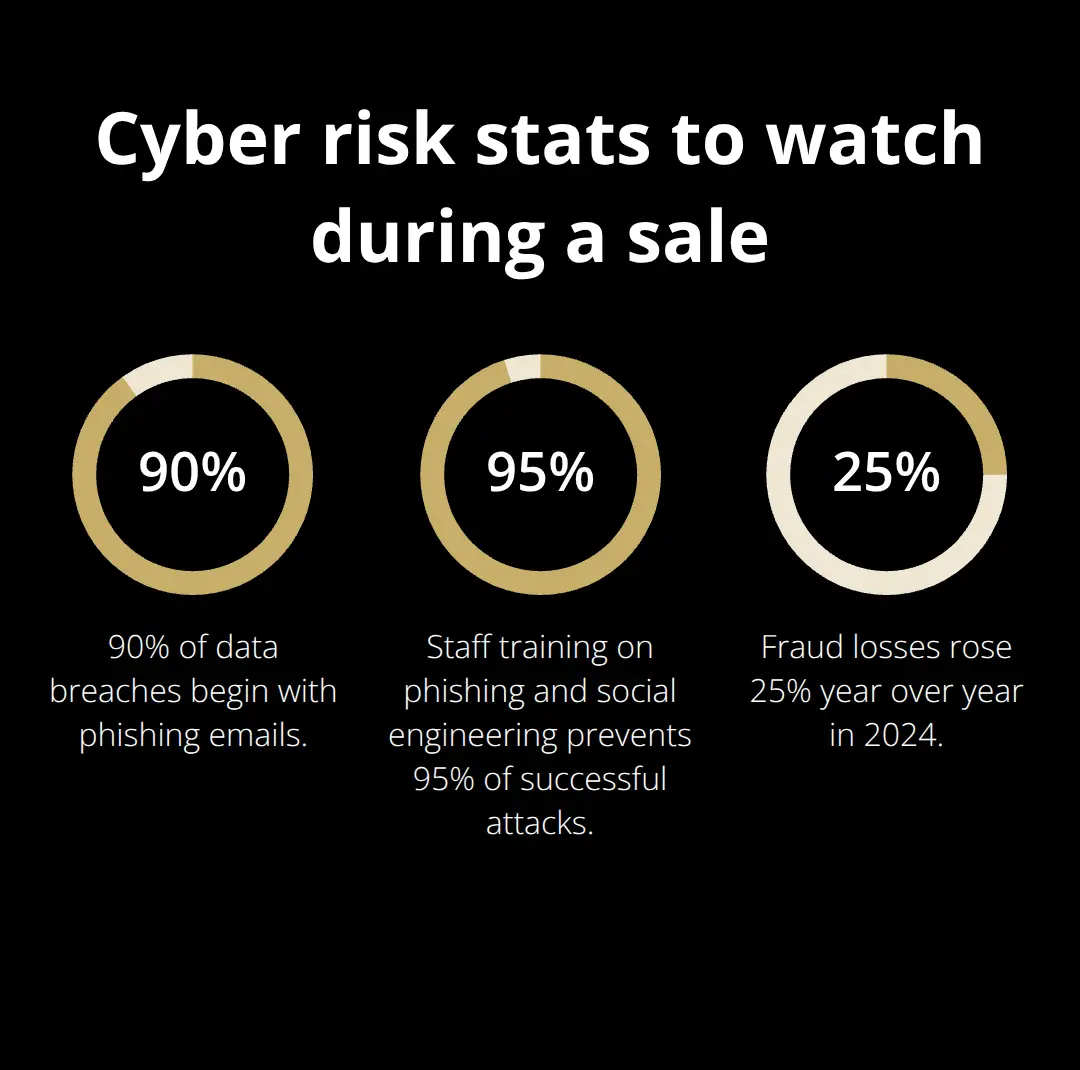
90 percent of data breaches begin with phishing emails, and business sales attract sophisticated attackers who research your company beforehand to craft convincing messages.
Never click links in unsolicited emails about your sale, never provide banking information via email, and always verify requests through official platform channels or by calling numbers you find independently. If an email asks you to re-enter passwords or confirm account details, that is phishing regardless of how legitimate it appears. Social engineering tactics extend beyond email to phone calls where someone claims to be from your platform’s support team requesting password resets or asking you to verify account access. Legitimate platform support never asks for passwords over the phone. Staff training on phishing and social engineering prevents 95 percent of successful attacks, so educate yourself on common tactics and remain skeptical of unexpected contact.
Platforms Without Transparent Security Policies Hide Critical Information
Platforms without transparent security policies hide their practices intentionally, which means they either lack proper safeguards or do not want you scrutinizing them. A trustworthy platform publishes its encryption standards, explains how it handles data breaches, discloses employee access controls, and provides audit reports or compliance certifications. If a platform refuses to answer specific questions about how it protects your data or claims that security details are proprietary, treat that as a major red flag.
You should know exactly how your financial information moves through their systems, who can access it, and what happens if something goes wrong. Platforms with nothing to hide provide this information readily because transparency builds confidence. Vague security policies combined with slow response times indicate a platform that prioritizes cost-cutting over your protection. Demand to know exactly how long a platform will wait before notifying you of a breach and whether they carry cyber liability insurance to cover losses. A platform worth your trust responds to security incidents within hours, not weeks, and has documented procedures for containment and investigation.
Final Thoughts
Platform security measures separate platforms that protect your business from those that expose it to fraud and data theft. Real protection requires encryption standards you can verify, access controls that limit who sees what, and transparent policies that explain exactly how your data moves through the system. Weak security costs money-the average data breach runs $4.88 million-but more importantly, it kills deals because buyers won’t invest capital on platforms they don’t trust.
Choosing a secure platform protects your business sale by removing friction from negotiations and preventing the breaches that derail transactions. When both you and potential buyers know your financial information sits behind TLS encryption, multi-factor authentication, and detailed access logs, confidence replaces skepticism. You move faster toward closing because security becomes a competitive advantage rather than a liability.
We at Unbroker built our platform with these principles at the core, offering transparent, low-cost options for selling your business without the high brokerage fees that drain your proceeds. Whether you choose our Full Service Business Sale or our Assisted Business Sale, you gain access to premium marketing tools, legal document templates, and a vast buyer network enhanced by AI-driven processes. Your business sale deserves a platform that treats platform security measures as non-negotiable, not optional.