Selling a business involves sharing sensitive financial data, client lists, and operational details with potential buyers. At Unbroker, we’ve built platform security measures that keep this information locked down throughout the entire process.
Your confidential information deserves protection that goes beyond basic passwords and standard encryption. We’ll walk you through the layers of security we’ve implemented to give you peace of mind.
How We Protect Your Data in Transit and Storage
When you upload financial statements, tax returns, or client information to our platform, that data faces two critical vulnerabilities: exposure during transmission and exposure while stored on our servers. We address both through encryption standards that meet or exceed what major financial institutions require.
Encryption Standards That Stop Interception
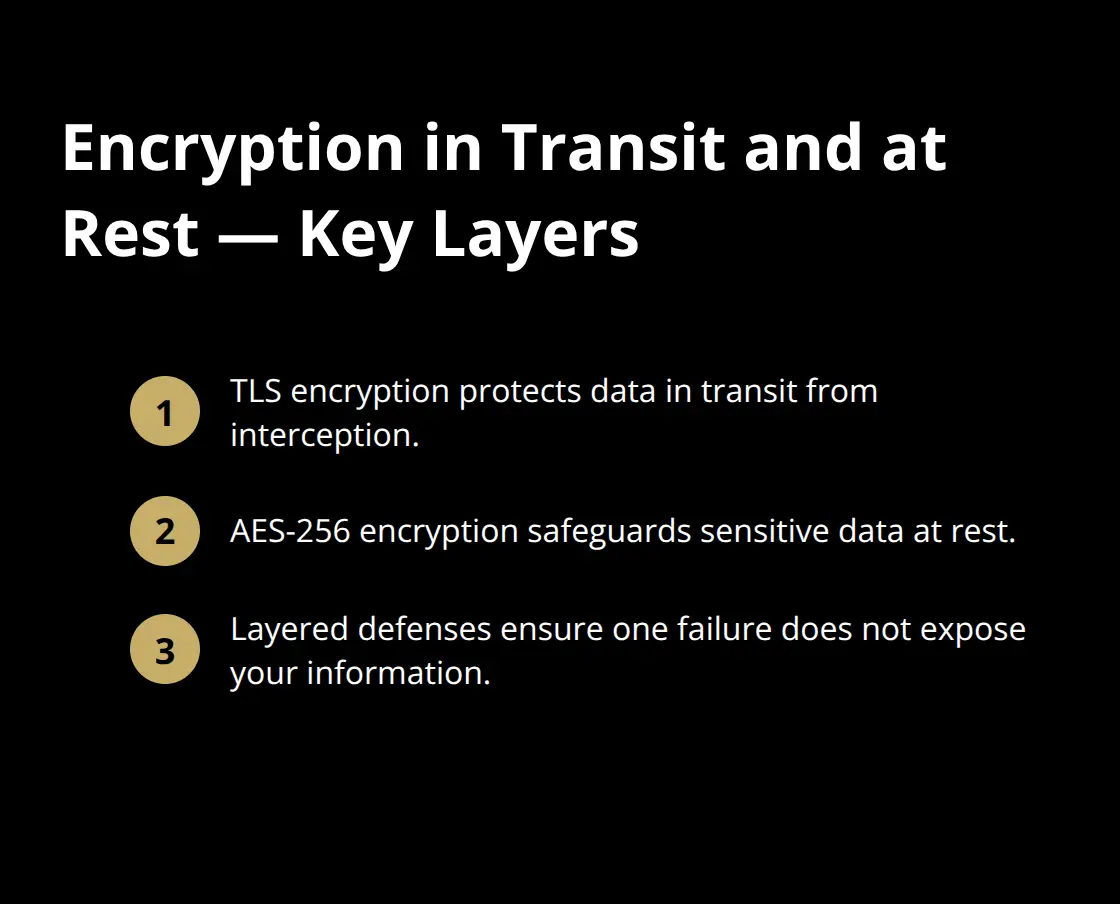
All communications between your browser and our servers use TLS encryption, the same technology that protects online banking. This prevents attackers from intercepting your data as it travels across the internet. On our servers, sensitive information is encrypted at rest using AES-256 encryption, meaning even if someone gained unauthorized access to physical hardware, the data would remain unreadable without the encryption keys. We implement multiple overlapping defenses so that compromising one layer doesn’t expose your business details.
Why Multi-Layer Security Matters More Than Single Solutions
Relying on encryption alone creates false confidence. Attackers exploit unencrypted backups, unpatched software, or weak access controls while encryption sits unused in the background. This includes network firewalls that block unauthorized connection attempts, intrusion detection systems that monitor for suspicious activity in real time, and centralized logging that tracks every access to sensitive files.
Testing Defenses Before Attackers Find Them
We conduct security audits at least quarterly, testing for vulnerabilities before attackers find them. These audits verify that encryption keys are properly managed, that no sensitive data accidentally gets stored in unencrypted form, and that our systems respond correctly to simulated breach scenarios. Third-party auditors validate our compliance with PCI DSS standards, which define security requirements to protect environments where payment account data is stored, processed, or transmitted. Regular testing isn’t optional-it’s the difference between detecting problems internally and discovering them after your information has been compromised.
Beyond technical safeguards, controlling who accesses your data matters just as much as how we store it.
Access Control and User Authentication
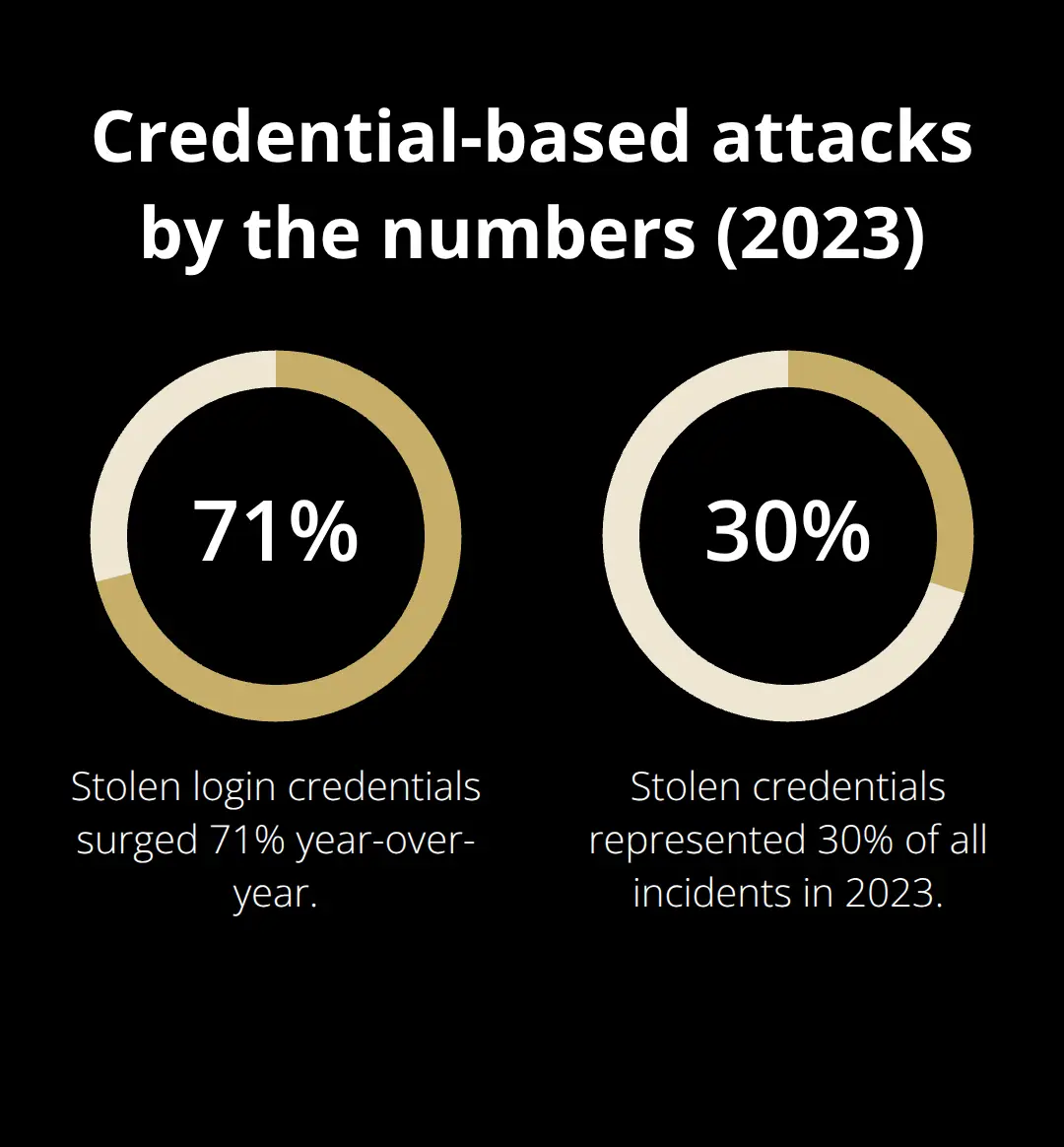
Encryption protects data from external attackers, but the real threat often comes from inside. IBM’s X-Force Threat Intelligence Index reported that stolen login credentials surged 71% over the previous year and represented 30% of all incidents in 2023, meaning weak access controls create far more risk than most sellers realize. Role-based permission systems ensure only the specific people handling your sale can view your confidential information. A seller’s financial statements go only to assigned buyers and team members directly supporting the transaction, not to every employee with a company email address. This principle of least-privilege access gives each person exactly the permissions they need and nothing more.
When a buyer completes their review, access gets revoked immediately rather than leaving credentials active indefinitely. This approach dramatically reduces the window where unauthorized access could happen.
Two-Factor Authentication Stops Credential Theft
A strong password means nothing if someone steals the login credentials and uses them from anywhere in the world. Two-factor authentication requires all accounts accessing sensitive sale information to provide both your password and a second verification method, such as a code from an authenticator app or a text message. This second factor creates a genuine barrier because even if credentials leak in a data breach somewhere else, attackers cannot access the platform without that second piece. Multi-factor authentication reduces fraud risk substantially compared to passwords alone. Authenticator apps like Google Authenticator offer better security than SMS codes, since SIM swapping attacks have become more common and apps remain more secure.
Session Management Prevents Unauthorized Access
Your login session should not remain active forever. Inactive sessions get automatically logged out after a set period, preventing someone who gains physical access to an unlocked device from accessing your information indefinitely. Each login generates a unique session token that expires, and returning to the platform requires fresh authentication. This matters especially when sellers or their advisors access the platform from coffee shops, airports, or other public networks where device theft or shoulder surfing becomes a real concern. Secure login protocols also prevent session hijacking, where attackers intercept the communication between your browser and our servers to steal the session token. TLS encryption protects this communication, but proper session management adds another layer by ensuring old tokens cannot get reused even if intercepted.
Role-Based Permissions Control Information Flow
Different people involved in a sale need different levels of access. A financial advisor might need to review tax returns and profit-and-loss statements, while a potential buyer’s legal team needs access to contracts and operational procedures. Role-based systems assign permissions based on job function rather than giving everyone blanket access to all files. This separation prevents accidental exposure (a team member viewing information outside their role) and limits damage if credentials get compromised. Access logs track who viewed what and when, creating accountability and helping detect suspicious activity patterns that might indicate a breach.
Revoking Access Closes the Door Immediately
The moment a buyer decides not to proceed or completes their due diligence, their access should terminate. Delayed revocation leaves your sensitive information exposed to someone who no longer has a legitimate business reason to view it. Immediate access termination (rather than waiting days or weeks) ensures that even if credentials were shared or compromised, the window for misuse closes quickly. This practice applies to advisors, consultants, and team members who leave your organization as well.
With access controls limiting who can view your information and authentication methods verifying their identity, the next layer of protection addresses what happens to your data after the sale concludes.
Confidentiality Safeguards for Business Information
Non-Disclosure Agreements Create Enforceable Boundaries
Legal agreements form the foundation of confidentiality, but most sellers treat them as formalities rather than enforceable tools. A non-disclosure agreement must specify exactly what information qualifies as confidential, how long the restriction lasts, and what happens if someone breaches it. The agreement needs teeth: financial penalties for unauthorized disclosure, injunctive relief that stops further sharing, and indemnification clauses that make the buyer responsible if their team members leak information. All potential buyers should sign binding NDAs before accessing any sale information, and these agreements must explicitly prohibit using your data for competitive purposes, reverse engineering, or sharing with third parties. The NDA also mandates that buyers return or destroy all materials once due diligence ends, creating a clear endpoint rather than leaving your information in limbo indefinitely. Without these specific provisions, an agreement becomes unenforceable noise that provides no real protection.
Network Isolation Prevents Cross-Deal Exposure
Controlling physical network access matters as much as legal language. Restricting buyer access to a segregated network environment means their team cannot access other sellers’ information, your operational systems, or anything beyond what directly supports evaluating your sale.
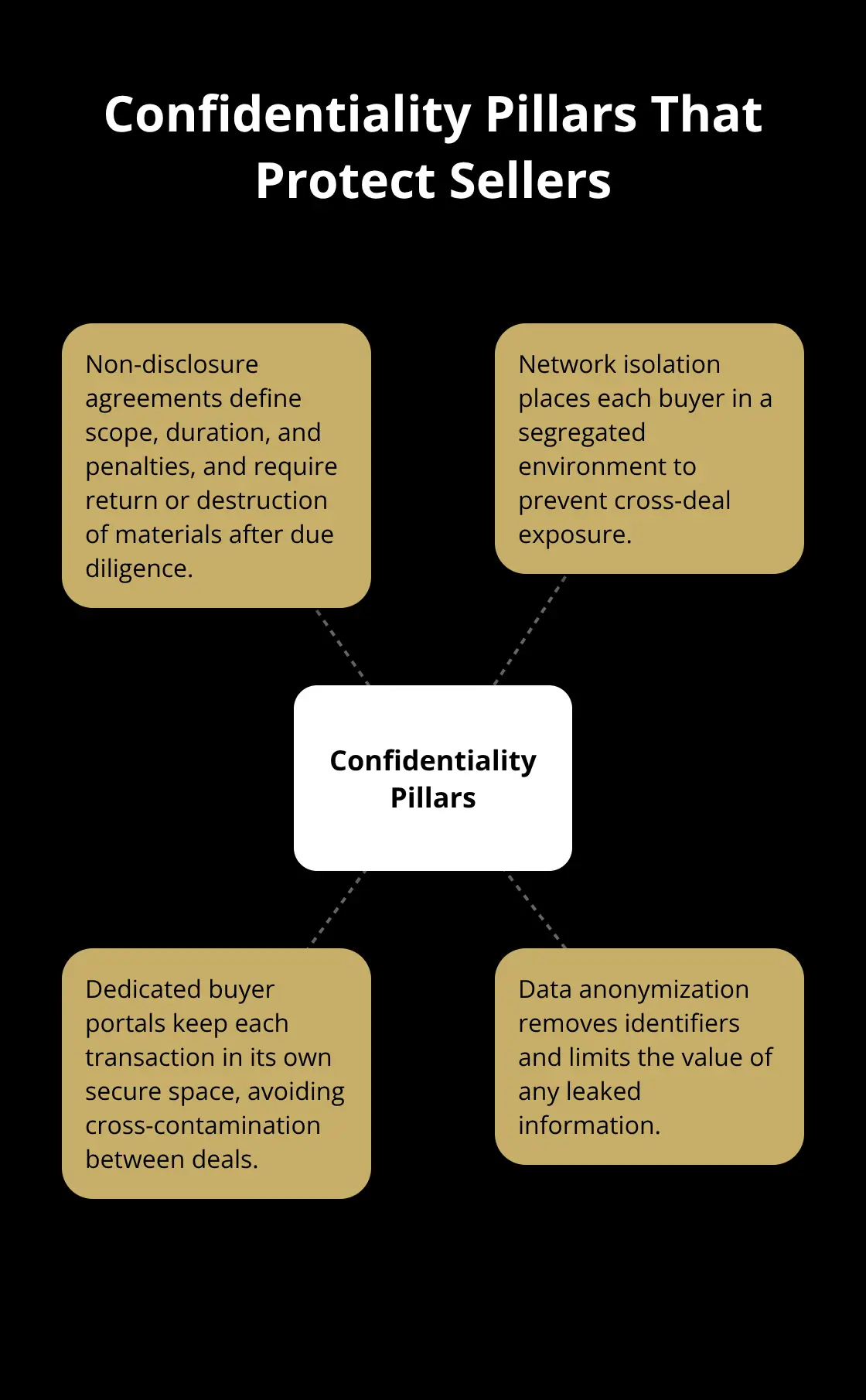
This network isolation prevents accidental exposure where a buyer’s employee clicks a wrong link and inadvertently reaches confidential data from another transaction. A dedicated buyer portal where each transaction occupies its own secure environment prevents cross-contamination between deals and keeps your information separate from other sales.
Data Anonymization Reduces Breach Impact
Data anonymization removes or obscures identifiers like specific employee names, customer account numbers, or exact transaction dates in financial summaries. This approach allows buyers to assess business health without accessing information that could enable them to directly contact your customers or employees if they breach the agreement. A buyer reviewing anonymized profit-and-loss statements and customer count trends learns what matters for valuation without gaining a ready-made customer list they could poach. Anonymization does not eliminate the need for NDAs or network isolation-it complements them by reducing the value of stolen data. If someone breaches confidentiality and leaks anonymized information, the damage is substantially limited because the data lacks the specific details needed for direct commercial exploitation, making the breach far less profitable for competitors or malicious actors.
Final Thoughts
Selling your business means trusting a platform with information that directly impacts your company’s value and competitive position. We at Unbroker have built platform security measures specifically designed to protect that trust at every stage of the sale process. The layers we’ve described-encryption that stops interception, access controls that limit who sees what, and confidentiality safeguards that create enforceable boundaries-work together to create a security posture that goes beyond what most business sale platforms offer.
Encryption alone doesn’t protect you, access controls alone don’t protect you, and legal agreements alone don’t protect you. The combination of all three, tested regularly and monitored continuously, is what actually keeps your sensitive information secure. Your financial statements, client relationships, and operational details represent years of work, and exposing them carelessly to the wrong people can destroy deal value, alert competitors to your sale, or enable someone to poach your customers before the transaction closes.
We’re committed to protecting your information not because it’s trendy or because regulations force us to, but because your success depends on it. When you share confidential data on Unbroker, you know exactly how we’re protecting it, who can access it, and what happens if someone tries to breach it. Transparency about security isn’t a marketing tactic-it’s a requirement for earning your confidence.