Selling your business without a broker doesn’t mean going in unprepared. We at Unbroker include document templates that handle the heavy lifting-from purchase agreements to due diligence checklists-so you can move forward with confidence.
Most DIY sellers waste months figuring out what paperwork they need. With the right templates ready to go, you skip that confusion and focus on closing the deal faster.
Why Templates Save You Money and Time
Hiring a lawyer to draft a business sale agreement costs an average of $800 on a flat fee basis. That’s money most DIY sellers can justify when they’re already managing the sale themselves. Templates eliminate this expense entirely. You get professionally structured documents that match what buyers and their attorneys expect, without the legal bill. A purchase agreement template includes all the essential elements-asset allocation, contingencies, representations and warranties-that took lawyers years to perfect. You start from a proven framework instead of a blank page. This alone justifies using templates because you avoid reinventing the wheel on every transaction.
Speed matters more than most sellers realize
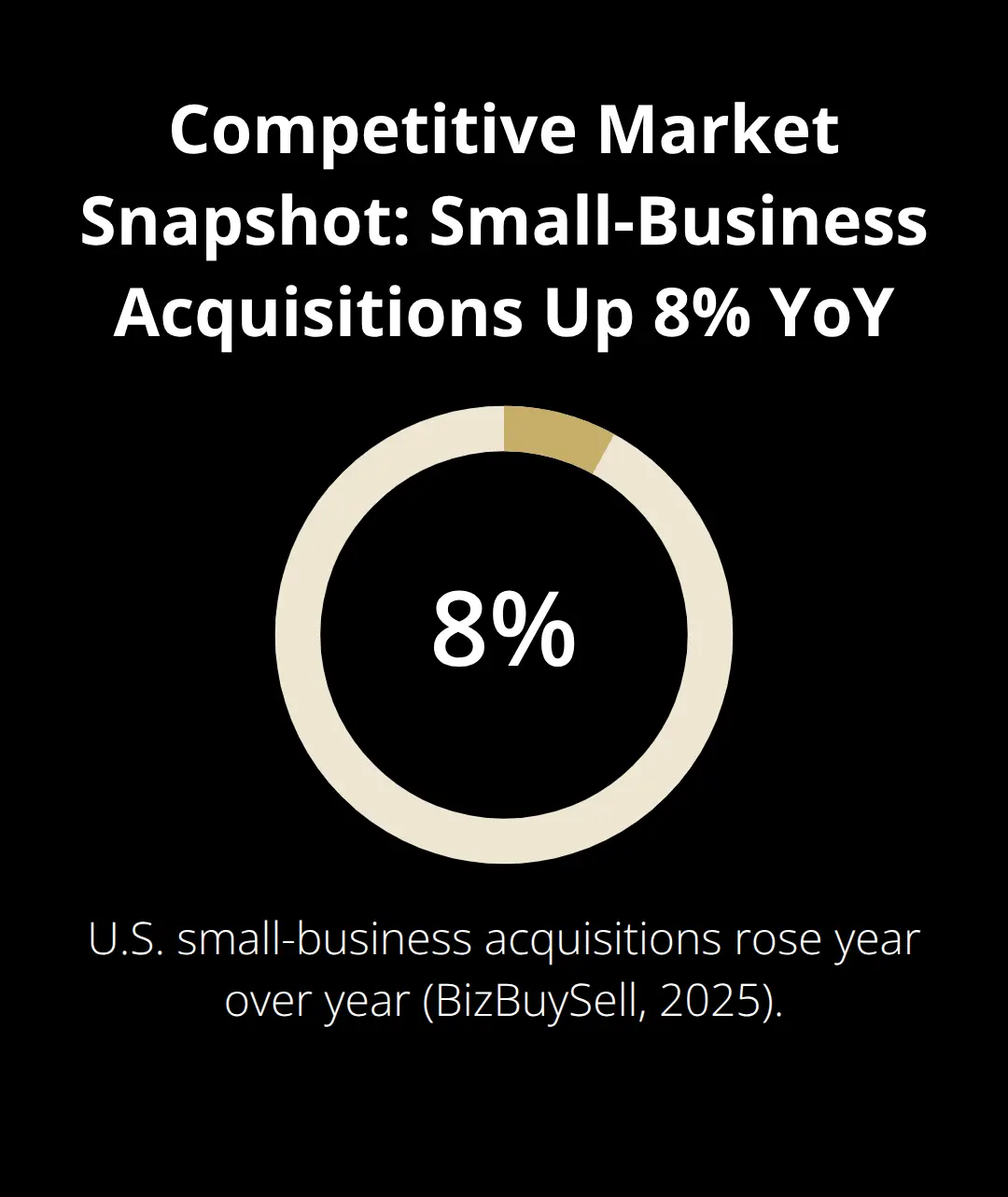
A 2025 survey from BizBuySell found that small-business acquisitions in the US rose about 8 percent year over year, with competitive buying pressure increasing across markets. When multiple buyers are interested, the one with organized documentation closes faster. Templates let you respond to offers within hours instead of days.
You don’t wait for legal review of basic documents because the structure is already solid. Due diligence checklists included in template packages help you gather the right information upfront-three years of tax returns, financial statements, customer contracts, employee data, and asset lists-so nothing surprises the buyer later. This organized approach typically reduces time to close by 30 to 45 days compared to DIY sellers who fumble through what paperwork they need. Every week saved is money in your pocket because you’re not managing a business that’s supposedly being sold while also running it.
Common mistakes in DIY sales are expensive and preventable
Sellers who skip templates often make critical errors. One frequent mistake is failing to properly allocate the purchase price between assets and goodwill, which creates tax complications for the buyer and makes your offer less attractive. Another is omitting key contingencies around lease approval or third-party consents, leaving both parties exposed. A third is mishandling the non-compete clause-setting unrealistic geographic or time restrictions that buyers reject, or worse, failing to include one at all, which tanks your credibility as a serious seller. Templates address these issues because they’re built on what actually closes deals. They include standard protections for both sides, which means buyers trust the process more. When a buyer sees a well-drafted asset purchase agreement with proper representations, warranties, and indemnity provisions, they move faster and negotiate less aggressively on price because the risk feels manageable. Professional-grade templates also ensure you disclose liabilities correctly, reducing the chance of post-close disputes that could cost you far more than any template ever would.
The right documents transform how buyers perceive your sale. What comes next is understanding exactly which templates you need and how to use them effectively.
What Templates You Actually Need for Your Sale
The Purchase Agreement: Your Sale’s Foundation
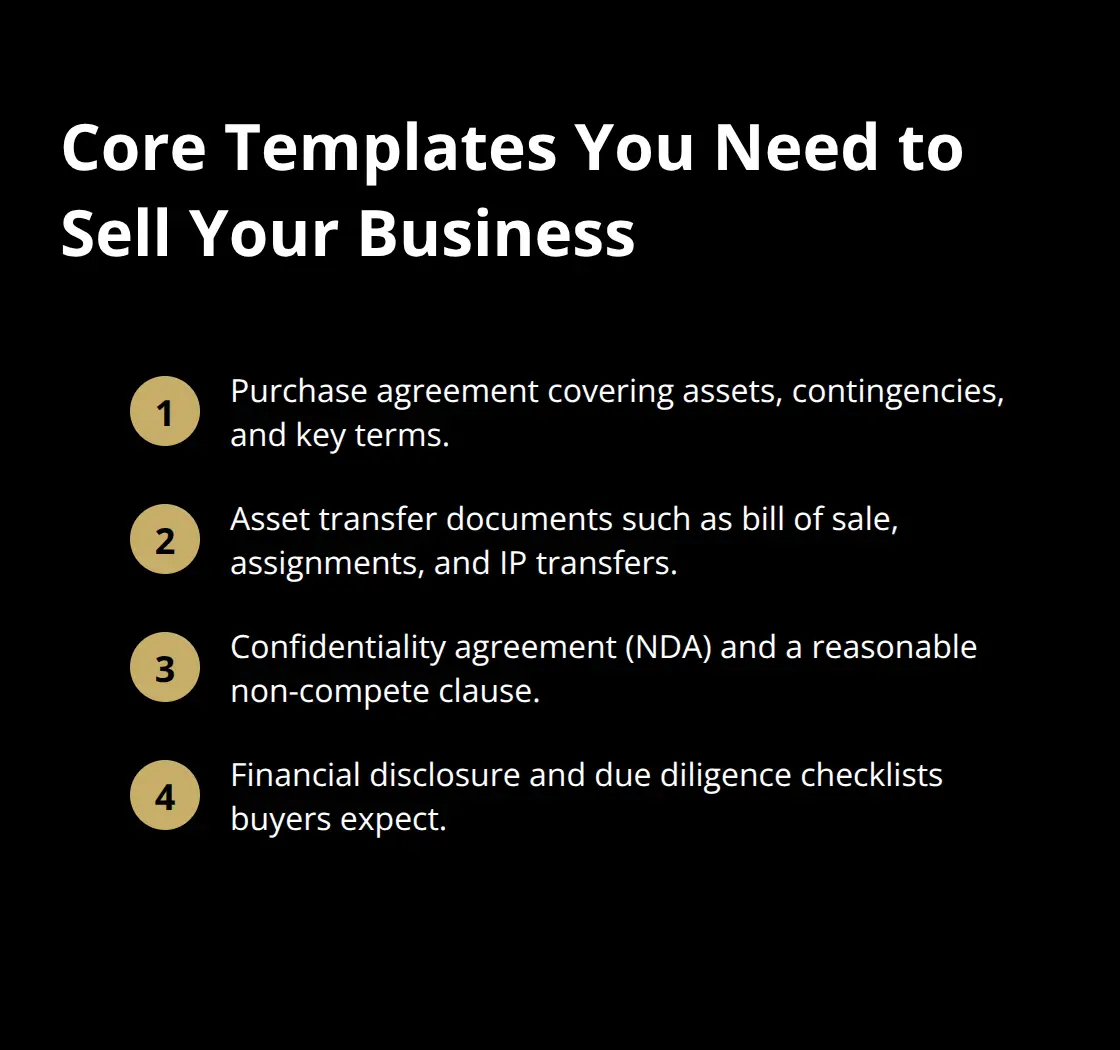
The purchase agreement determines whether your sale succeeds or fails. This document specifies what the buyer acquires, what they don’t, how much they pay, and what happens if something goes wrong. A proper purchase agreement includes asset allocation that breaks down the purchase price across inventory, equipment, fixtures, goodwill, and non-compete covenants. This matters because goodwill and non-compete payments face different tax treatment than hard assets, and buyers need clarity on this split to structure their financing and tax planning. The agreement must also outline contingencies like lease approval, third-party consents, and satisfactory due diligence completion with specific deadlines. Without these contingencies clearly written, disputes arise when a buyer tries to back out because they couldn’t assume your lease or a supplier wouldn’t transfer their contract.
Asset Transfer Documents: Proof of Ownership Change
Asset transfer documents work hand-in-hand with the purchase agreement. These include a bill of sale that formally conveys ownership of tangible assets, assignment agreements for contracts and leases, and IP transfer documents if your business owns trademarks or patents. Many DIY sellers overlook the bill of sale, thinking it’s redundant, but it provides the legal proof that ownership changed hands. Without it, the buyer could claim they never received certain assets after closing, creating liability you don’t need.
Confidentiality Agreements and Non-Compete Clauses
Confidentiality and non-disclosure agreements protect you before you even identify a buyer. When you shop your business to potential buyers, you share sensitive information about revenue, customer lists, margins, and supplier relationships. An NDA prevents these people from using that information against you or sharing it with competitors. The non-compete clause sits inside your purchase agreement and restricts you from owning, operating, managing, or being employed by a competing business within the restricted territory and time period. A reasonable non-compete typically runs 2 to 3 years, though this varies by industry and state law. Too restrictive and buyers reject it; too loose and it offers no real protection.
Due Diligence Checklists: Organize What Buyers Want
Financial disclosure and due diligence checklists serve as your roadmap for gathering what buyers actually want to see. Buyers expect three to five years of tax returns, profit and loss statements, balance sheets, and cash flow statements. They want a customer concentration analysis showing your top clients and revenue breakdown by product or service. They need an employee roster with compensation, key roles, and any non-compete or confidentiality agreements already in place. Include your asset inventory with current valuations, equipment lists with purchase dates and condition, real estate or lease documents with renewal dates, and any liens or encumbrances against the business. A solid due diligence checklist prevents the situation where a buyer asks for something in week eight that should have been ready in week one. It also signals to buyers that you’re organized and serious about closing, which typically accelerates negotiations and reduces price haggling.
With these templates in hand, you’re ready to move into the actual sale process-and that’s where the real momentum builds.
How Templates Speed Up Your Sale
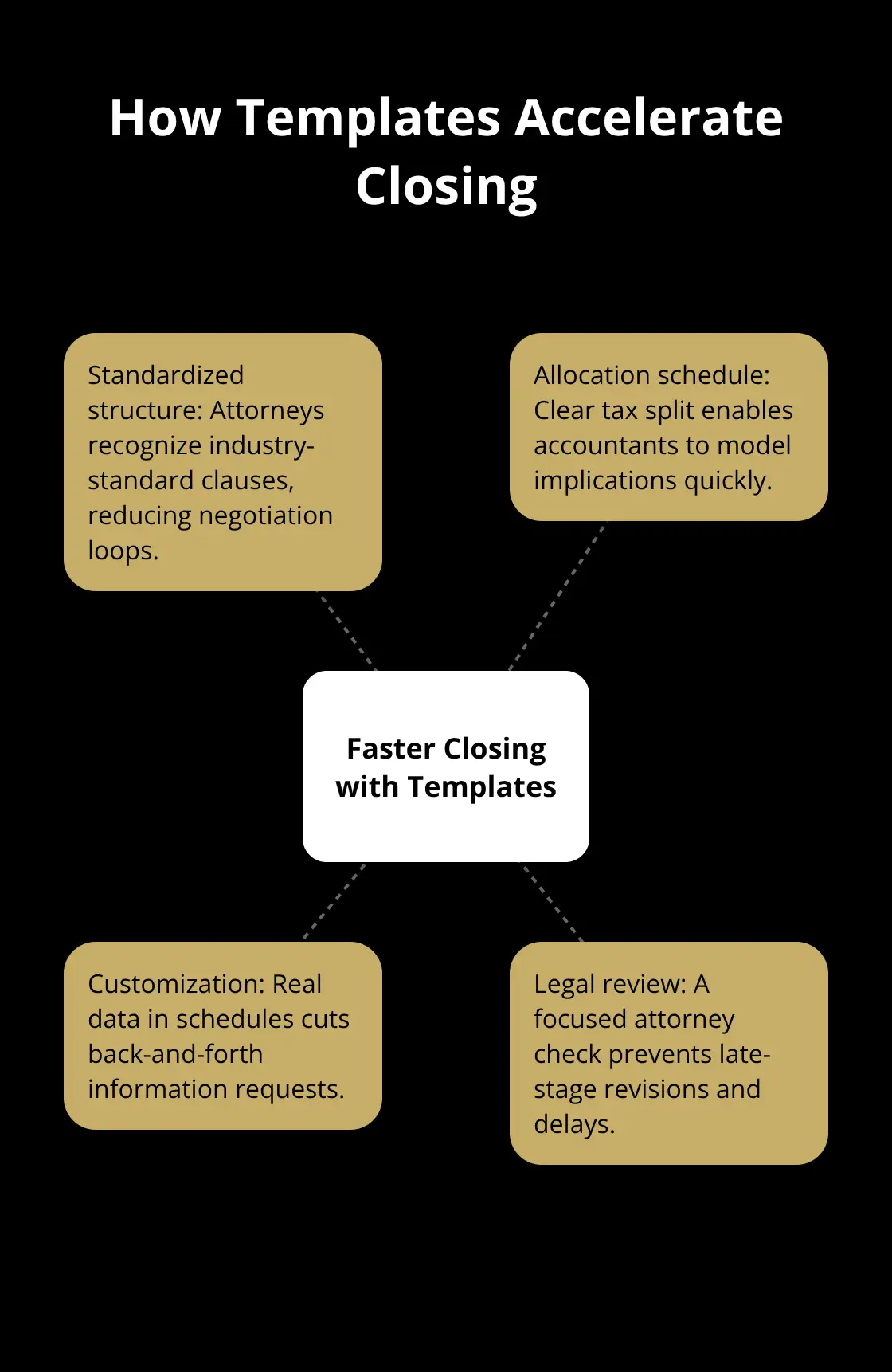
Templates eliminate the back-and-forth that kills momentum in DIY sales. When a buyer’s attorney receives your purchase agreement, they immediately recognize the structure because it matches industry standards. This recognition cuts negotiation cycles dramatically.
Instead of spending weeks debating whether a contingency clause belongs in section 3 or section 5, both sides focus on the actual business terms-price, earnout structure, and transition support.
Asset Allocation Schedules Accelerate Tax Planning
A well-formatted asset allocation schedule within your purchase agreement means the buyer’s accountant can model tax implications in hours instead of days. This matters because most buyers won’t move forward until their tax advisor approves the deal structure. Templates include asset allocation riders that show exactly how the purchase price splits between inventory, equipment, goodwill, and non-compete covenants. Buyers expect this breakdown, and when they see it professionally presented, they trust your sale process more. The faster a buyer’s team can review and approve documents, the faster your closing date arrives.
One practical step: customize your asset allocation schedule to match your specific business before sending it to any buyer. If you own a service business with minimal inventory but significant customer relationships, your allocation should reflect that reality. A buyer won’t waste time negotiating if your allocation already makes sense for your industry and business model.
Customization Keeps Your Business Specifics Front and Center
Generic templates fail because they don’t account for your lease obligations, key supplier contracts, or specific customer concentration risks. The moment a buyer discovers that your template didn’t address an existing equipment loan or a lease renewal clause, they slow down to investigate. This investigation costs you time.
Instead, customize your documents upfront by inserting your actual lease terms, supplier agreement details, and customer concentration analysis directly into the relevant sections. If your business depends on one customer for a significant portion of revenue, your template should highlight this and explain your plan to diversify. This transparency prevents the buyer from discovering it themselves and using it as a negotiation weapon.
Include your actual employee roster with names, roles, and compensation in the personnel schedule section rather than using placeholder language. Buyers want to know who stays post-close and what severance or retention bonuses you’ve committed to. When your templates contain real data rather than hypothetical examples, buyers move faster because they can actually evaluate the business instead of requesting information repeatedly. This approach typically reduces the due diligence phase from 60 days to 30 to 40 days because buyers aren’t constantly asking for clarifications.
Professional Review Catches Problems Before They Cost You
A business sale agreement should include indemnity provisions that protect the buyer from unknown liabilities and representations that guarantee you’ve disclosed everything material about the business. These sections contain legal language that trips up DIY sellers. If your indemnity clause runs too long or makes unrealistic promises, a buyer’s attorney flags it immediately and adds layers of negotiation.
The smarter move is having a qualified attorney review your customized templates before you send them to any buyer. This review costs far less than having a lawyer draft documents from scratch-typically $300 to $500 per document rather than $800 to $1,200. An attorney review focuses on whether your specific business circumstances are properly addressed in the template language. They’ll catch if your non-compete clause conflicts with state law in your jurisdiction or if your lease assignment section fails to address renewal options the buyer needs. They’ll also verify that your representations and warranties match what you actually know about the business and that you haven’t accidentally promised something you can’t deliver.
This single step prevents the situation where a buyer’s attorney demands major revisions weeks into the process, which delays closing and signals weakness on your side. The best practice is to have an attorney review your documents once you customize them but before you show them to any potential buyer. This investment upfront protects your timeline and your credibility.
Final Thoughts
Selling your business without a broker becomes achievable when you have the right tools. Document templates included in a structured sale platform remove the guesswork that derails most DIY sellers. You start with professionally built documents that buyers recognize and trust immediately, which accelerates your entire sale process, reduces negotiation friction, and protects you from costly mistakes that surface months after closing.
When you customize templates with your actual business data and have an attorney review them before showing them to buyers, you signal that you’re serious and organized. Buyers respond to this professionalism by moving faster and negotiating less aggressively on price. The time you save translates directly into money in your pocket, and the credibility you build makes the difference between a stalled negotiation and a closed deal.
We at Unbroker provide a complete platform designed specifically for business owners who want to sell without paying traditional brokerage fees. Visit Unbroker today to see how our platform can streamline your sale and put you in control of the process.