Owner transition planning is one of the most overlooked responsibilities in business ownership. Most owners focus on running their company today without thinking about what happens when they step away.
At Unbroker, we’ve seen firsthand how the right preparation prevents chaos, protects your team, and keeps revenue flowing. This guide walks you through the essential steps to hand over your business with confidence.
Why Owner Transition Planning Matters
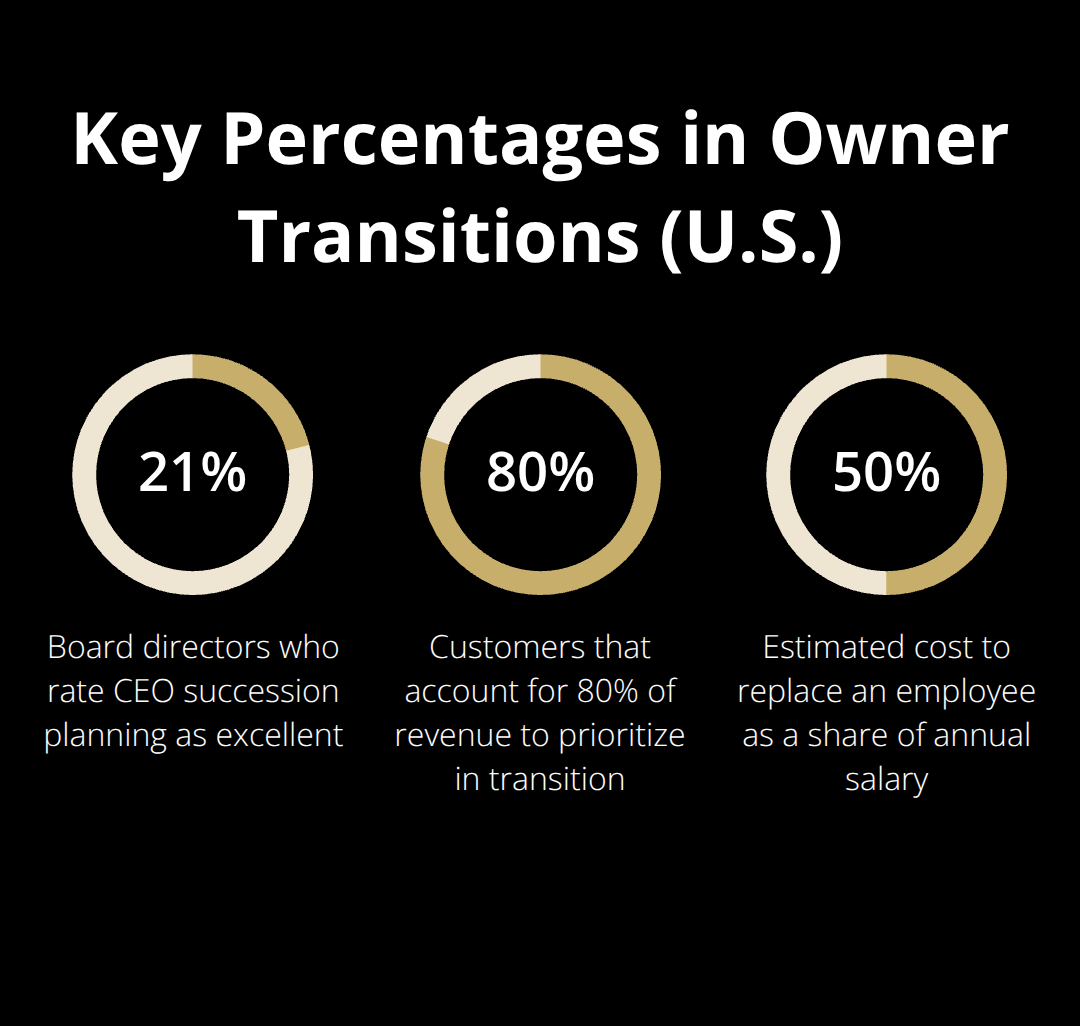
The data is stark. In 2025, 2,032 U.S. CEOs exited their positions, according to Challenger, Gray & Christmas, signaling elevated turnover across the economy. Yet only 21% of board directors rate CEO succession planning as excellent, per What Directors Think 2025. This gap between departures and preparation creates real problems. When owners leave without a plan, businesses lose customers within weeks, key employees walk out within months, and revenue drops faster than most owners expect.
Companies that skip proper transition planning face customer attrition rates that can reach 15-30% in the first 90 days post-transition, depending on industry. That translates to lost contracts, damaged relationships, and immediate cash flow pressure on whoever takes over.
Keeping Operations Running When Leadership Changes
Your customers don’t care who owns the business; they care whether their problems get solved. A smooth transition keeps that promise intact. Without documented processes, your new leader spends weeks or months figuring out how work actually happens. Vendors get confused about who to contact. Service delivery slows. Clients notice. Documented standard operating procedures and clear role definitions prevent this chaos. You need to identify which customers account for 80% of revenue and assign them dedicated transition managers who introduce the new owner before the old one leaves. This single step cuts customer loss dramatically.
Communicating Change to Your Team
Your team needs to know what’s happening. Employees who hear about leadership change from rumors perform worse, miss deadlines, and leave faster. Transparent communication from you about the transition timeline, new leadership structure, and what stays the same gives them stability. The cost of replacing an employee is about 50% of their annual salary. Keeping your existing team intact during transition is far cheaper than rebuilding.
Protecting Your Competitive Position
Revenue stability during transition isn’t luck; it’s structure. Establish a transition governance team with clear ownership of customer relationships, supplier contacts, and financial continuity. Define a single primary contact for suppliers and clients during handover to eliminate confusion. Your successor needs to meet key customers before you step away, not after. That meeting should happen while you’re still in the room to reinforce trust. This approach preserves the relationships you’ve spent years building and prevents competitors from poaching dissatisfied clients during the vulnerable transition window. With these foundations in place, you’re ready to move into the specific steps that transform transition planning from theory into action.
Building Your Transition Plan Step by Step
Creating a transition plan means turning vague intentions into concrete actions with assigned owners and deadlines. Set your transition objective within the next three to five years, according to Diligent’s research on succession planning frameworks. Define whether you’re retiring, selling the business, or promoting someone internally, because each path requires different preparation. Once you know your end goal, establish a transition governance team with clear ownership of specific areas: customer relationships, financial continuity, supplier contacts, and knowledge transfer. Assign one person to lead this effort and schedule monthly meetings to track progress. Without this structure, transition planning becomes scattered conversations that never materialize into action.
Document Every Critical Process Before You Leave
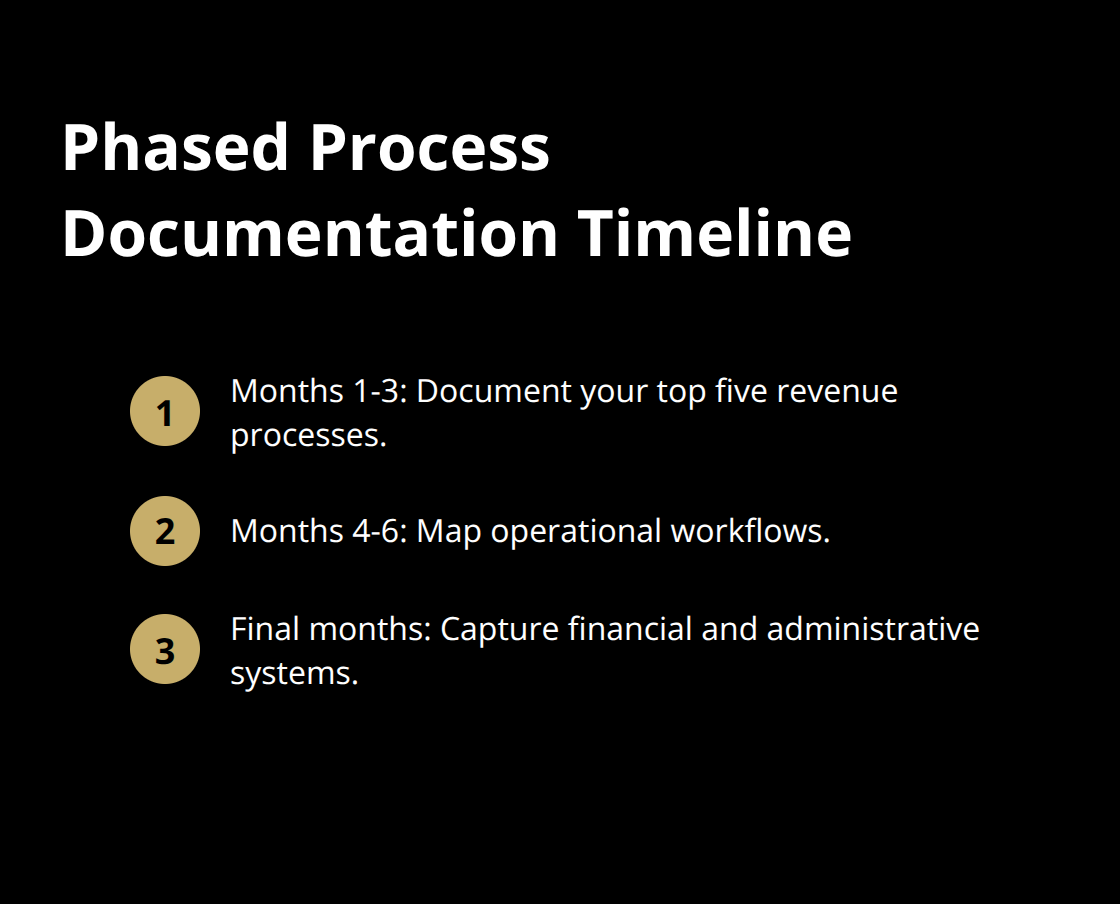
Your successor cannot run what they don’t understand. Write down your standard operating procedures for every revenue-generating activity and every critical decision point in your business. This includes how you source customers, how you price work, how you handle your biggest accounts, and how you manage cash flow. Capture the actual steps your team takes, the tools they use, and the contacts they rely on. Create a shared digital folder where this information lives, not scattered across emails or your head. Identify which processes account for 80% of your revenue and prioritize those first. A phased approach works better than trying to document everything at once. Spend the first three months documenting your top five revenue processes, the next three months on operational workflows, and the final months on financial and administrative systems.
Include vendor contacts, payment terms, renewal dates, and any informal relationships that keep the business running smoothly.
Assess Your Team and Identify Your Successor
You need to know who can succeed you before you need them to. Evaluate your current team across three dimensions: the skills they have, the skills they need, and their willingness to take on greater responsibility. Don’t assume your longest-serving employee wants the top job. Some people excel at their current role and prefer not to lead. Have direct conversations about ambitions and development interests. If no internal candidate is ready, you need at least eighteen months to develop one through cross-functional projects, mentorship, and structured training. External candidates require a different timeline-start recruiting six to nine months before your intended departure. Create individual development plans for high-potential employees that include specific milestones and measurable readiness checkpoints. Spencer Stuart reports that interim leaders during emergencies often come from the CFO, COO, or board chair roles, which tells you these positions need strong bench strength regardless of your primary successor choice.
Create a Detailed Handover Timeline
Vague timelines kill transition plans. Establish a specific handover date and work backward to create quarterly milestones. For example, if you plan to step away in twenty-four months, your first quarter should focus on documentation and assessment, your second quarter on successor development and stakeholder communication, your third quarter on formal transition planning and client introductions, and your fourth quarter on dry runs and final preparations. The second year should involve your successor shadowing you in key customer meetings, handling more decisions independently, and taking on full responsibility for specific business areas. Define what success looks like at each stage. Your successor should meet with your top ten customers by month twelve, handle negotiations independently by month eighteen, and run the business with you in an advisory capacity by month twenty-four. Build in an activation period after your official departure where you remain available for critical questions, but the new owner makes all decisions. This prevents your successor from becoming dependent on you or delaying necessary changes.
With your plan structure, processes documented, and successor identified, you’re ready to address the financial and legal elements that protect your business value and prevent costly disputes during the handover.
What Kills Transition Plans and How to Stop It
Most transition plans fail not because owners lack good intentions, but because they skip the unglamorous work of stakeholder communication, financial preparation, and realistic timelines. Silence during transition creates a vacuum that rumors fill fast. Your employees start job hunting. Your customers wonder if service quality will drop. Your suppliers question payment reliability. This uncertainty costs money. When directors rate succession planning as excellent only 21% of the time, the gap often stems from poor communication rather than poor planning.
Communicate Early and Often With Your Team
Start telling your team about the transition at least twelve months before it happens, even if details remain fluid. Schedule quarterly all-hands meetings where you explain what’s changing, what stays the same, and how it affects their roles. Name your successor publicly once the decision is final. Answer questions directly instead of letting people speculate. Your employees perform better, stay longer, and support the transition when they hear the truth from you rather than rumors from colleagues.
Introduce Your Successor to Key Customers
Your customers need the same transparency. Introduce your successor to your top twenty accounts in person, ideally six to nine months before transition. Have your successor attend these meetings alongside you, not after you’ve left. This approach cuts the post-transition customer loss rate dramatically compared to abrupt handoffs. Define a single point of contact for all supplier and customer inquiries during the transition window. Confusion about who handles what costs time and damages relationships you’ve spent years building.
Handle Financial and Legal Details Early
Owners often postpone the financial and legal groundwork until weeks before departure, which guarantees problems. Get a professional business valuation done at least eighteen months before your intended exit. Valuations show you what your business is actually worth and identify which areas drive value. A CPA familiar with business transitions should review your financial statements and tax position to spot issues early. Implement a buy-sell agreement if you have partners, funded with life insurance so the remaining owner can purchase a departing partner’s stake without destroying cash flow.
Address non-compete agreements, customer contracts with change-of-control clauses, and any vendor relationships that depend on your personal involvement. Many owners discover mid-transition that their largest customer contract requires written consent from the current owner before transferring to new leadership. That discovery should happen now, not later. Assemble a cross-functional team including an attorney, CPA, and financial advisor to review your structure.
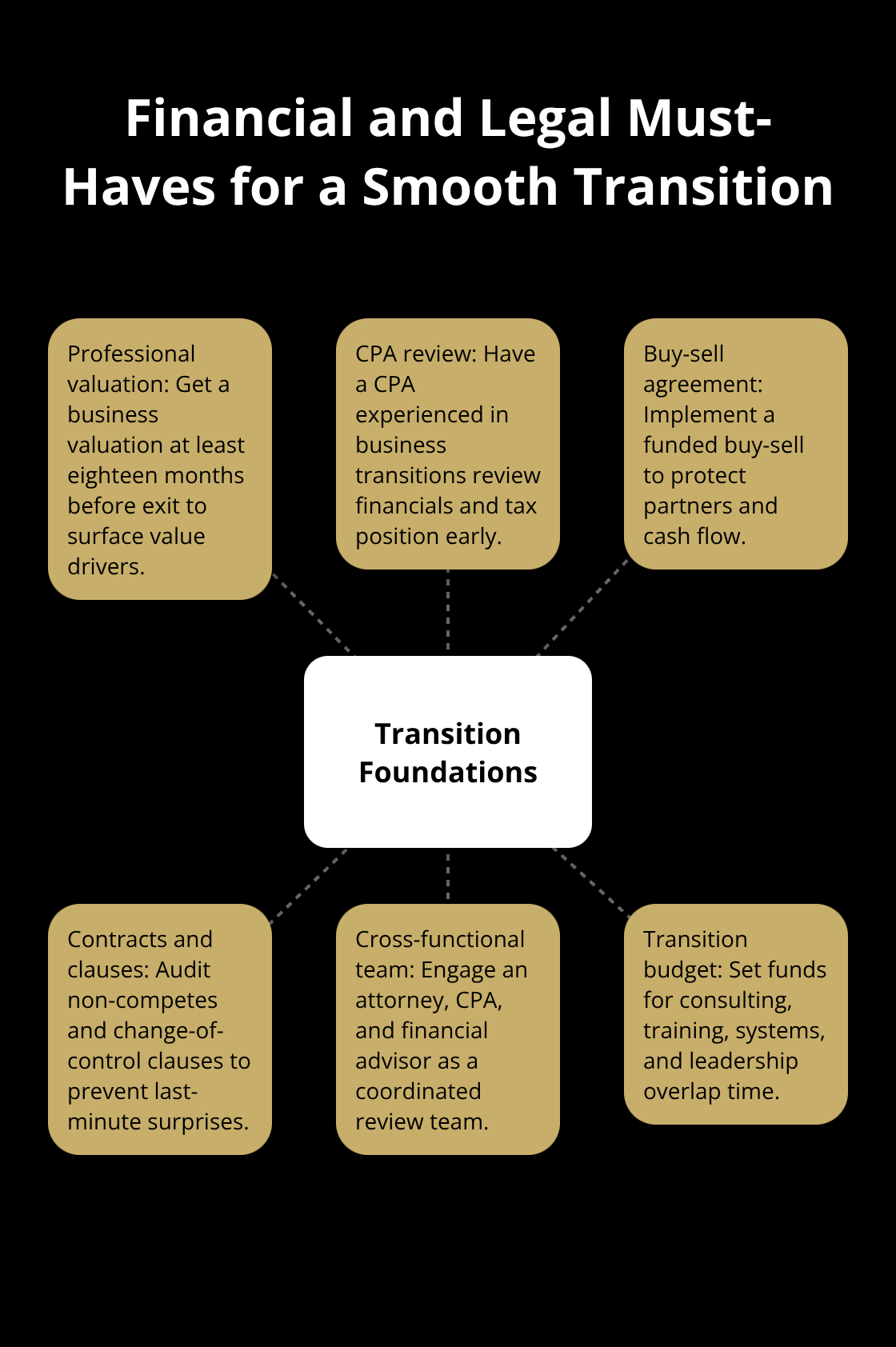
The upfront cost of this work (typically two to five thousand dollars) prevents far larger losses. Set aside a transition budget that covers consulting fees, training programs, system upgrades, and the interim period where your successor may need overlap time with you. Without this buffer, financial pressure forces rushed decisions that damage the business.
Build Realistic Timelines Into Your Plan
Owners chronically underestimate how long quality transitions take. Eighteen months is genuinely the minimum for internal succession if your candidate needs significant development. External hires need even more time to learn your business, build relationships, and earn credibility with your team. Two-year timelines work better than one-year timelines for almost every situation. A rushed transition creates gaps in knowledge transfer, incomplete process documentation, and a successor who feels overwhelmed rather than confident.
Set quarterly milestones with specific deliverables and measure progress monthly. If you fall behind schedule by month six, adjust your departure date rather than cutting corners on preparation. Your successor needs to make independent decisions in your presence for several months before you step away completely. This isn’t coddling; it’s risk management. An activation period of thirty to ninety days after your official departure (where you remain available for critical questions but don’t make decisions) prevents your successor from becoming dependent on you or delaying necessary changes. Too many owners either vanish completely after transition, leaving their successor stranded, or linger too long, preventing the new owner from establishing authority.
Final Thoughts
Owner transition planning protects everything you’ve built and positions your successor for success. The essentials are straightforward: document your processes, communicate transparently with your team and customers, identify and develop your successor, and handle the financial and legal groundwork early. Businesses that transition smoothly share one trait-they started planning years before departure and didn’t rush the uncomfortable conversations or postpone the financial review.
A business that survives leadership change intact is worth more money if you eventually sell it. Buyers pay premiums for companies with documented processes, strong management teams, and stable customer relationships, while a business that depends entirely on the owner’s presence carries higher risk and commands lower valuations. This means your investment in transition planning now increases your business value for whatever comes next.
If you’re planning to sell your business as part of your transition, we at Unbroker offer a modern platform that handles the sale process with transparent, low-cost options. Visit Unbroker to explore how we can support your exit strategy and connect you with qualified buyers without the high brokerage fees traditional brokers charge.