Selling your business online has fundamentally changed who can buy it. Geography no longer limits your options-qualified buyers from across the globe can now evaluate and purchase your company without ever stepping foot in your office.
At Unbroker, we’ve seen firsthand how digital platforms compress what used to take months into weeks. The shift toward online business sales isn’t just faster; it opens doors to buyers you’d never reach through traditional brokers.
Why Online Business Sales Are Transforming the Market
The global e-commerce market reached $6 trillion in 2024 and continues to expand, yet most business owners still rely on local brokers to find buyers. Online platforms change this entirely. Sellers now access networks spanning continents rather than neighborhoods. A SaaS business in Austin can receive offers from investors in Singapore within days. Speed matters because digital transaction behavior has become the norm across industries. When business sales happen online, buyers already expect digital-first processes. Traditional brokers typically charge 10 to 15 percent in commissions while taking months to close deals.
Geographic boundaries no longer define your buyer pool
International buyers now represent a genuine opportunity, not a niche market. A marketplace for online businesses displays your company profile to thousands of qualified purchasers simultaneously across multiple countries. This visibility matters tremendously. Traditional brokers might know 50 to 100 serious buyers in their region. Digital platforms connect you with thousands. The difference translates directly to purchase price and deal terms. More buyers competing for your business means better negotiation leverage for you.
Speed compresses months into weeks
Online business sales close faster because everything happens digitally. Legal documents, financial records, video tours, and negotiations all flow through secure platforms without geographic friction. This speed reduces uncertainty. Fewer things change in 90 days than in the six months traditional sales often require. Your buyer pool stays engaged. Your business metrics remain current. Your competitive advantage does not erode while you wait for a broker to schedule meetings and shuffle paperwork between offices.
Transparent pricing replaces hidden commissions
Traditional brokers extract 10 to 15 percent of your sale price, often without clear justification for the cost. Online platforms eliminate this model entirely. You control your costs upfront and know exactly what you pay (no surprise percentages eating into your exit value). This transparency attracts sellers who want hands-on control over their sale process and those seeking full-service support without the traditional broker markup. The result: more capital stays in your pocket, and you move forward with confidence about your financial outcome.
How to Prepare Your Business for Online Sale
Preparing your business for online sale requires three concrete actions that directly impact buyer interest and final price. Your business profile must present financial reality with compelling narrative. Documentation must be organized so buyers access what they need without friction. Valuation must reflect market conditions, not wishful thinking. Most sellers fail because they skip these steps or treat them superficially. Buyers on digital platforms evaluate dozens of businesses weekly, so incomplete profiles get ignored immediately. Your profile competes against businesses that have already invested time in presenting themselves professionally.
Build a profile that converts browsers into serious inquiries
Your business profile is your sales pitch compressed into a few screens. Include specific numbers: monthly recurring revenue, customer acquisition cost, churn rate, and growth trajectory over the past two years. Vague statements like “growing steadily” lose to concrete metrics every single time. If your SaaS business grew from $50,000 to $120,000 monthly recurring revenue in 18 months, state exactly that. Buyers want to understand what they’re purchasing, and numbers eliminate ambiguity.
Add a 60 to 90 second video showing your product in action, ideally with you explaining the business model directly. Video increases engagement significantly because it builds familiarity and trust faster than text alone. Include customer testimonials if you have them, but only real quotes from actual clients with their names visible. Anonymous praise means nothing to serious buyers.
List your top five customers by industry or revenue contribution without revealing confidential names, which demonstrates customer concentration risk or diversification. If you have a recurring revenue model, show your monthly churn rate and customer lifetime value. These metrics tell sophisticated buyers whether your business has sustainable fundamentals.
Organize documentation like a buyer will request it
Create a data room with folders organized by category: financial statements for the past three years, tax returns, customer contracts, employee agreements, vendor agreements, and product documentation. Include monthly financial summaries for the past 24 months showing revenue, expenses, and profit trends. Buyers will request this information, and having it ready accelerates the entire process.
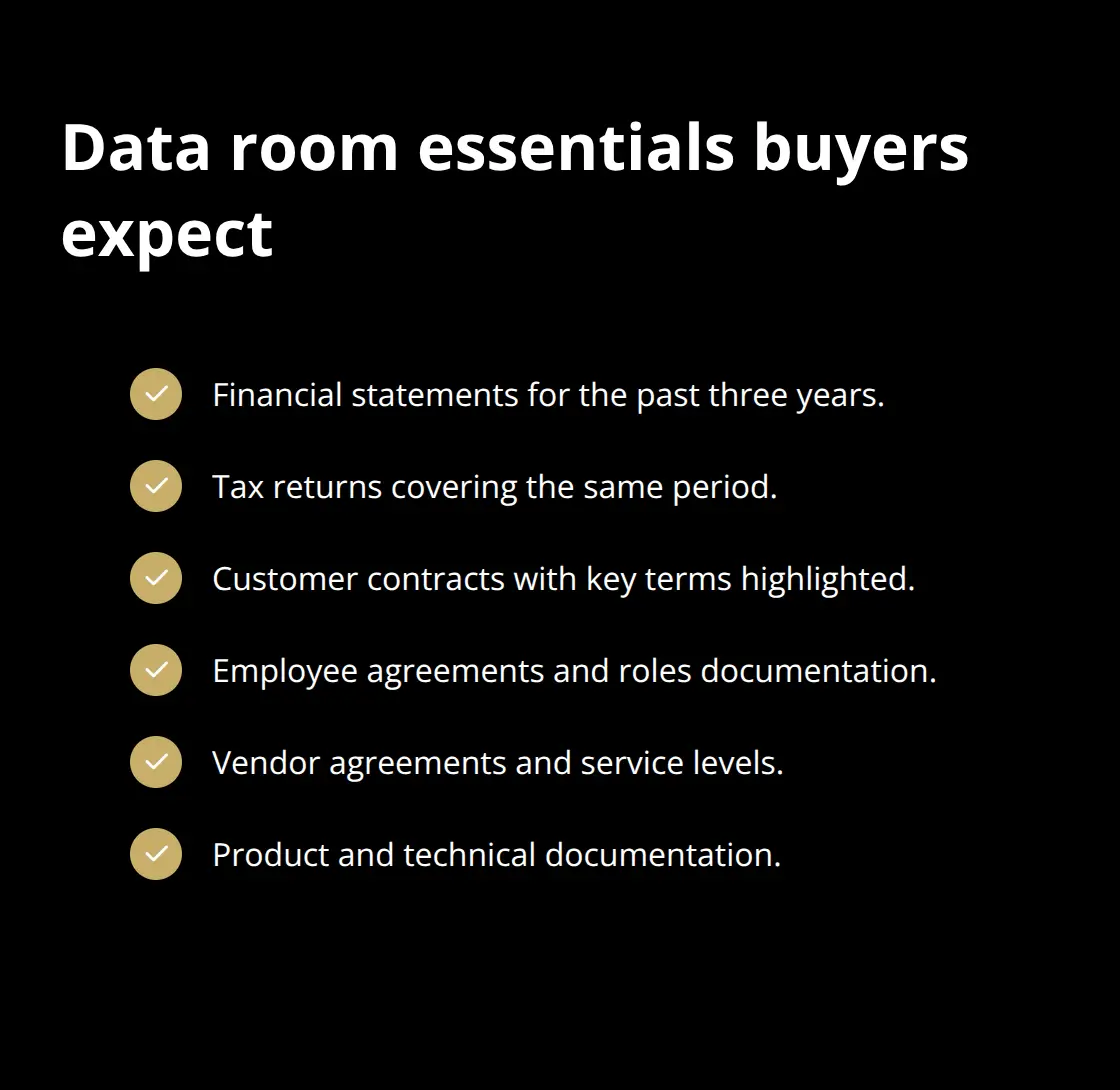
Provide bank statements backing up your revenue claims because sophisticated buyers verify everything. Include a customer list showing acquisition date, monthly spend, and revenue contribution for each customer. Add any contracts with major customers so buyers understand renewal terms and cancellation provisions. Document your technology stack, including software licenses, hosting costs, and any proprietary code or systems.
If you have intellectual property, patents, or trademarks, list them clearly with registration numbers. Missing documentation creates friction and raises red flags. Organized sellers appear more professional and more trustworthy, which directly influences offer amounts.
Set valuation based on market data, not emotion
Most business owners overprice because they’re emotionally attached to what they built. Online marketplaces show you actual sale prices for comparable businesses, which eliminates guesswork. Research recent sales of similar businesses in your industry on platforms that list actual transaction data. If you run a content site generating $50,000 monthly profit, find what similar sites sold for in the past 12 months.
Typical online business multiples range from 2 to 5 times annual profit depending on growth rate, customer concentration, and revenue stability. A fast-growing SaaS business with recurring revenue and low churn commands higher multiples than a declining content site. Price 10 to 15 percent below market rate intentionally, because this attracts multiple serious offers and creates urgency among buyers. Overpriced businesses sit unsold while fairly priced businesses generate competition.
Competition drives your final price higher than any single buyer would offer. Document your valuation methodology so buyers understand your pricing logic. This transparency builds confidence and prevents unnecessary negotiation friction. Once you’ve prepared your profile, organized your documentation, and set your valuation, the next step involves reaching those qualified buyers across the globe through strategic digital marketing and positioning.
How to Reach International Buyers Without Traditional Marketing Spend
Attracting international buyers requires precision targeting, not broad awareness campaigns. Most sellers waste money advertising to people who will never purchase their business. You need to reach investors actively searching for acquisitions in your specific industry and revenue range. Sophisticated buyers use platforms designed for business transactions, not social media ads. AI-driven matching connects your business profile with qualified purchasers based on their stated investment criteria, acquisition history, and capital availability. This approach eliminates wasted impressions. When you list your business, the platform automatically surfaces it to investors searching for companies matching your revenue model, growth rate, and industry. A SaaS business generating $100,000 monthly recurring revenue appears in front of investors with $2 million to $5 million deployment budgets, not random browsers. This targeting precision matters tremendously because it reduces time-to-offer and increases offer quality. International buyers from Europe, Asia, and North America evaluate your business simultaneously without geographic friction. Your profile reaches someone in Singapore at the exact moment it reaches someone in London, creating genuine competitive pressure that drives your final price upward.
Video transforms skeptics into serious inquiries
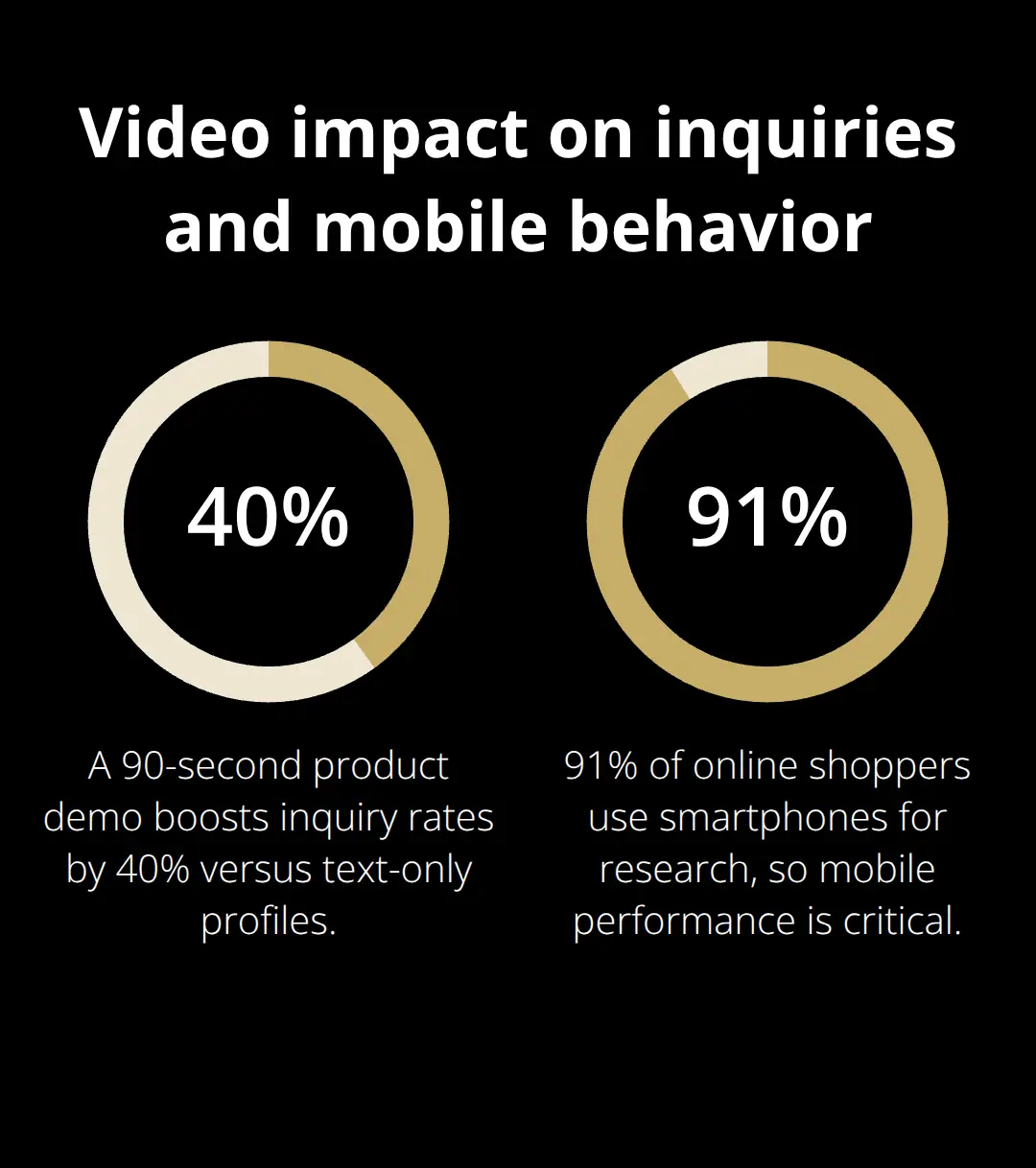
A 90-second product demonstration video increases inquiry rates by 40 percent compared to text-only profiles. Buyers need to see your software interface, understand your customer interaction points, and hear you explain the business model directly. Walk through your product’s core functionality, highlighting the features customers actually use daily. Show your dashboard displaying key metrics like monthly recurring revenue, customer count, and churn rate. Include 15 to 20 seconds of real customer testimonials if available, with names and company titles visible. International buyers particularly value video because it eliminates language barriers and builds immediate familiarity. A buyer in Tokyo watches the same demonstration as a buyer in Toronto, reducing interpretation gaps. Host this video on your profile and ensure it loads quickly across mobile devices, since 91 percent of online shoppers use smartphones for research. Poor video performance frustrates international buyers with slower internet connections and causes them to abandon your listing.
Test your video across different connection speeds and devices before publishing. Add captions for viewers who disable audio, which also improves accessibility for non-native English speakers evaluating your business from abroad.
Transparent metrics eliminate negotiation friction
International buyers conduct extensive due diligence because currency fluctuations, tax implications, and regulatory differences create additional complexity beyond domestic transactions. Display your customer acquisition cost, lifetime value, and churn rate prominently in your profile. If your business serves enterprise customers, show contract values and renewal rates. If you operate a marketplace or content site, display traffic sources, conversion rates, and revenue per visitor. Buyers from different countries interpret financial metrics differently, so provide context alongside numbers. State whether your revenue recurs or arrives one-time. Clarify whether your customers are primarily US-based or geographically distributed. Explain any seasonal revenue fluctuations explicitly because international investors unfamiliar with your market need this context to model future performance accurately. Include tax compliance documentation showing your business operates legitimately in its jurisdiction. Buyers conducting cross-border acquisitions require proof of legal standing and tax compliance before advancing to serious negotiations. Organize this documentation in your profile’s file section so international prospects access it immediately without requesting additional materials. This transparency accelerates the entire sales process because serious international buyers move quickly when they find well-documented businesses.
Positioning your business for global competition
International acquisition markets operate differently than domestic sales. Buyers from Asia, Europe, and North America evaluate businesses using different frameworks and risk tolerances. A European investor might prioritize GDPR compliance and data protection, while an Asian buyer focuses on scalability and market expansion potential. Research your target buyer geography and highlight the business attributes that matter most to those regions. If you sell to European customers, emphasize your data security practices and regulatory compliance.
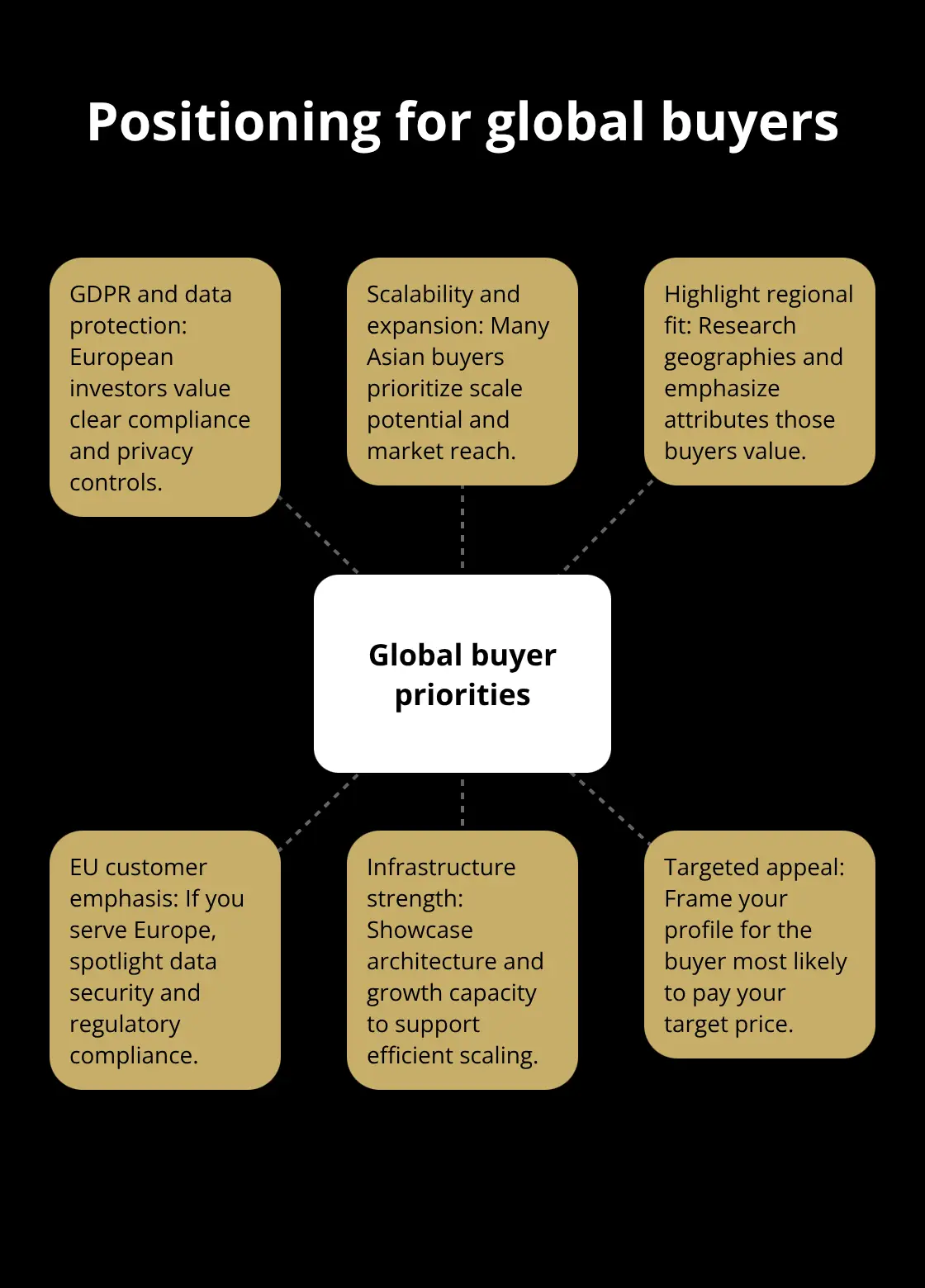
If your software scales efficiently, showcase your infrastructure and growth capacity. Position your business to appeal to the specific buyer profile most likely to pay your target price. This strategic positioning combined with transparent metrics and professional video creates multiple competitive offers from international buyers with different priorities and capital sources.
Final Thoughts
Digital business sales have fundamentally changed what’s possible for sellers. You no longer compete in a local market constrained by geography or broker networks. International buyers actively search for acquisitions matching your business profile, and platforms now connect you directly to qualified purchasers across continents, compressing traditional timelines from months to weeks while eliminating the 10 to 15 percent commissions that traditional brokers extract from your exit value.
The path forward requires three concrete actions. Present your business professionally through specific financial metrics, product video, and transparent documentation so that buyers evaluating dozens of businesses weekly don’t overlook your profile. Organize your financial records and customer data so international prospects access what they need without friction or delays. Price your business based on actual market data from comparable sales rather than emotional attachment to what you built. These three steps directly determine whether you receive multiple competitive offers or struggle to find a single buyer.
International competition drives your final price higher than any single buyer would offer. When investors from Singapore, London, and Toronto simultaneously evaluate your business, they create genuine urgency that strengthens your negotiating position. Unbroker connects your business with qualified international buyers ready to move quickly through transparent pricing and AI-driven matching that reaches the right investors for your specific online business sale.