Selling a business is one of the biggest financial decisions you’ll make. Most sellers focus on operations and financials, but overlook the one thing that directly impacts your final sale price: how you market your business to buyers.
At Unbroker, we’ve seen firsthand that premium marketing tools separate sellers who get multiple competitive offers from those who struggle to attract serious interest. The right strategy and presentation can add hundreds of thousands to your bottom line.
Why Marketing Determines Your Sale Price
Most business sellers treat marketing as an afterthought, something to handle once the business is ready to sell. This mindset costs real money. Sellers who invest in professional marketing receive offers 30–40% higher than those relying on basic listings. The difference isn’t luck-it’s visibility and credibility. When serious buyers discover your business through polished presentations, data-backed performance metrics, and targeted outreach, they perceive higher value and compete harder to acquire it. Conversely, a poorly marketed business signals weakness. Buyers assume you’re desperate or hiding something, which gives them leverage to negotiate down the price. Premium marketing tools address this directly by positioning your business as an attractive, well-run asset worth paying top dollar for.
The Real Cost of Weak Marketing
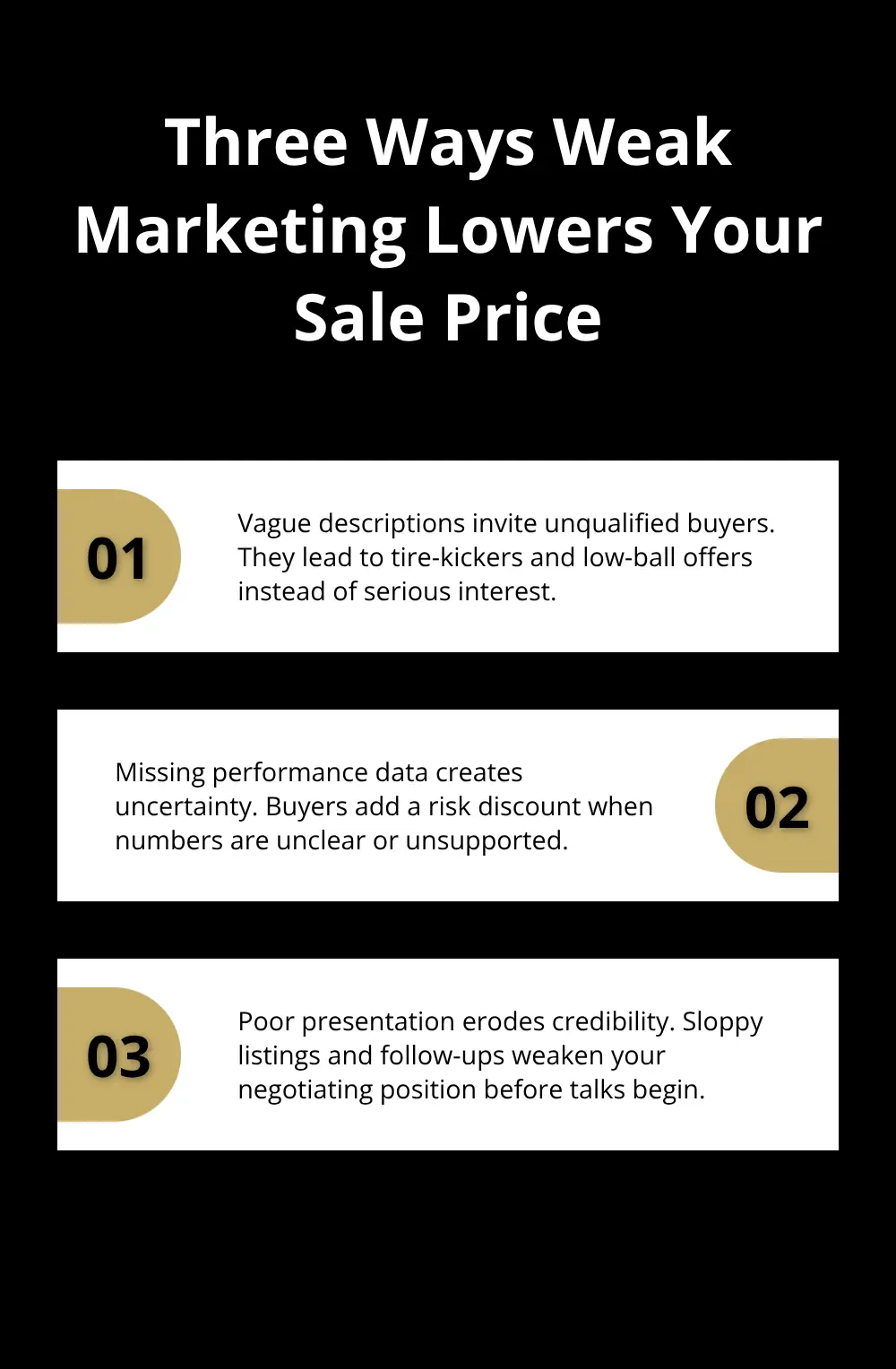
Underinvestment in marketing during the sale process creates a cascade of problems. A vague business description fails to communicate your unique strengths to qualified buyers, so you attract only tire-kickers and low-ball offers. Missing performance data or unclear financial narratives make buyers nervous, forcing them to demand discounts as a risk premium. Poor presentation across your listing, email outreach, and follow-up materials damages your credibility before serious negotiations even begin.
One seller increased their asking price by $150,000 simply through upgrading their financial presentation and crafting a compelling narrative around their customer retention rates and recurring revenue model. The business itself hadn’t changed-only how it was presented to the market.
Why Serious Buyers Respond to Professional Campaigns
Serious, well-funded buyers evaluate multiple business opportunities simultaneously. They move quickly toward sellers who demonstrate professionalism and transparency. Financial transparency in business is a primary driver of trust. Professional marketing tools-clean financial dashboards, buyer-ready presentations, targeted outreach with personalized messaging-signal that you’re organized and serious about the sale. This attracts institutional buyers and financial firms with real capital, not amateur investors. These buyers also conduct thorough due diligence and are willing to pay fair prices for businesses presented with confidence and clarity. When your marketing demonstrates operational excellence and financial health, you’re not just selling an asset; you’re selling peace of mind to a buyer who trusts your numbers and your story.
What Professional Marketing Tools Actually Do
The right platform transforms how potential buyers perceive your business from day one. Professional tools create financial dashboards that tell your story clearly, highlight your competitive advantages, and present your numbers in ways that build confidence rather than raise questions. They also enable you to reach qualified buyers through targeted channels instead of hoping someone stumbles across a generic listing. Personalized outreach (emails, follow-ups, and buyer-specific messaging) shows that you understand each prospect’s needs and have thought about why your business matters to them specifically. This level of professionalism separates serious sellers from amateurs and attracts the buyers with actual capital and intent to close.
The Tools That Attract Serious Buyers
A professional listing isn’t just text and numbers on a page-it’s your first handshake with potential buyers. The platform you choose determines whether your business appears polished or amateurish before a single conversation happens. Financial dashboards matter because they transform raw data into narrative. Instead of showing a spreadsheet with revenue and expenses, a professional dashboard highlights growth trajectory, profit margins, customer acquisition trends, and cash flow patterns side by side. Buyers absorb this in seconds and form immediate impressions about whether your business is worth their time.
Building Presentations That Sell Value
Tools that let you build custom buyer presentations shift the conversation away from price haggling and toward value recognition. You highlight your competitive advantages, market position, and operational metrics in a cohesive story. When a buyer sees clean financials, clear growth patterns, and professional presentation from day one, they’re already mentally committed to paying closer to your asking price because they perceive lower risk. The right platform transforms how potential buyers perceive your business from the moment they open your listing.
Reaching Qualified Buyers Directly
Generic listings scattered across multiple platforms waste your time and attract noise. Targeted buyer outreach means you identify which prospects actually fit your business profile and contact them with personalized messaging that shows you’ve done homework on their needs. A platform that enables you to segment buyers by industry, investment size, and geographic focus lets you craft messages that speak directly to what matters to each prospect-whether that’s recurring revenue potential, market expansion opportunities, or operational efficiency gains.
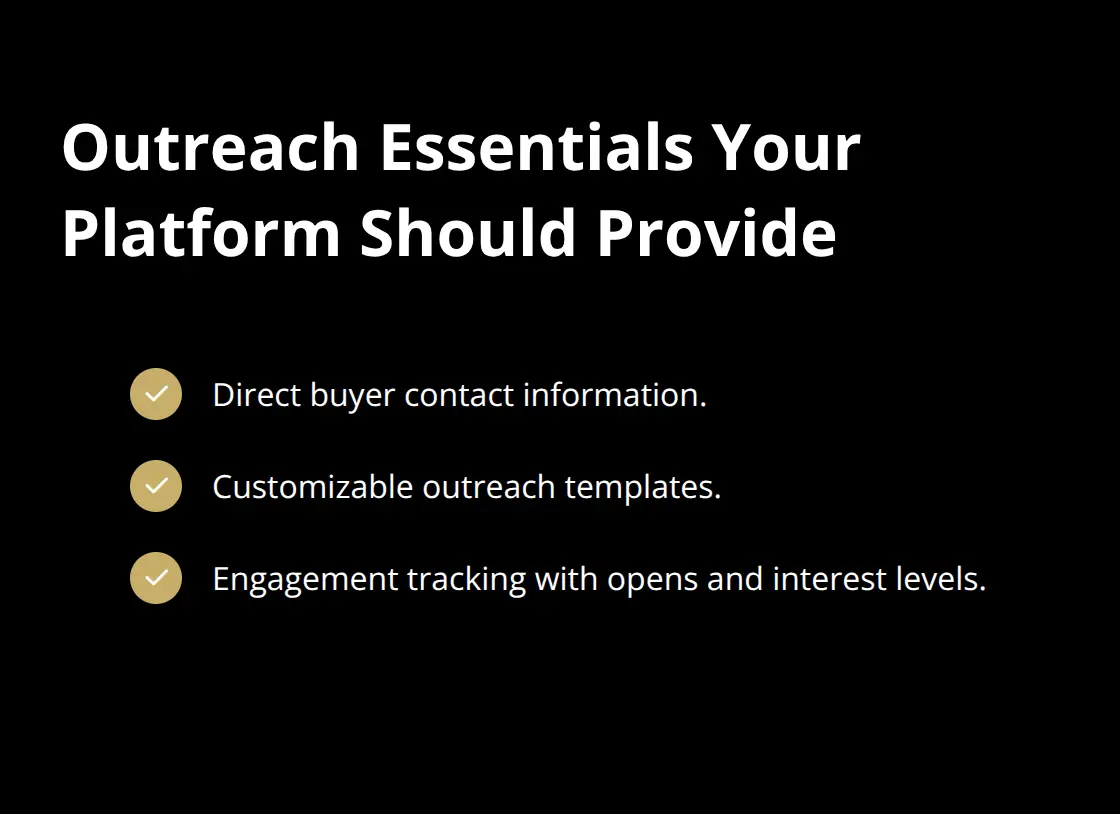
Personalized outreach through email or direct contact converts higher than generic listings because it signals respect for the buyer’s time and demonstrates that you understand their acquisition strategy. Many sellers waste months waiting for inbound interest when they could reach out to 20–30 qualified prospects in a single week with the right tools. You should expect your platform to provide buyer contact information, templates for outreach that you can customize, and tracking so you know which prospects opened your message and how interested they actually are.
Measuring Performance to Refine Your Approach
You can’t optimize what you don’t measure. A proper platform shows you exactly how many qualified prospects viewed your listing, how long they spent reviewing your financial data, which sections generated the most follow-up questions, and at what stage prospects drop out of the process. This intelligence tells you what’s working and what needs adjustment.
If your customer retention story isn’t resonating, you’ll see it in the data and can strengthen that narrative before the next prospect views it. If your financial presentation confuses buyers, you’ll notice they spend minutes on that section then disappear-a clear signal to restructure. The best platforms also track your outreach effectiveness so you know which messaging angles actually convert prospects into serious conversations. This removes guesswork and lets you double down on what works instead of hoping your presentation lands well. Armed with this performance data, you’re ready to understand how to position your business story in ways that resonate most powerfully with the right buyers.
Turning Your Story Into Buyer Action
Your business has a narrative that matters to the right buyer. Most sellers bury this narrative under generic financial spreadsheets and vague descriptions that fail to connect emotionally or strategically with prospects. The real work of maximizing your marketing investment starts with identifying what makes your business worth premium pricing, then packaging that story in ways that speak directly to different buyer personas. A software company with strong customer retention tells a different story to a financial buyer than to a strategic competitor. One buyer values recurring revenue and predictable cash flow; the other sees market expansion and integration opportunities. Your platform should let you customize your presentation for each audience without starting from scratch.
Build Your Core Narrative Around Real Numbers
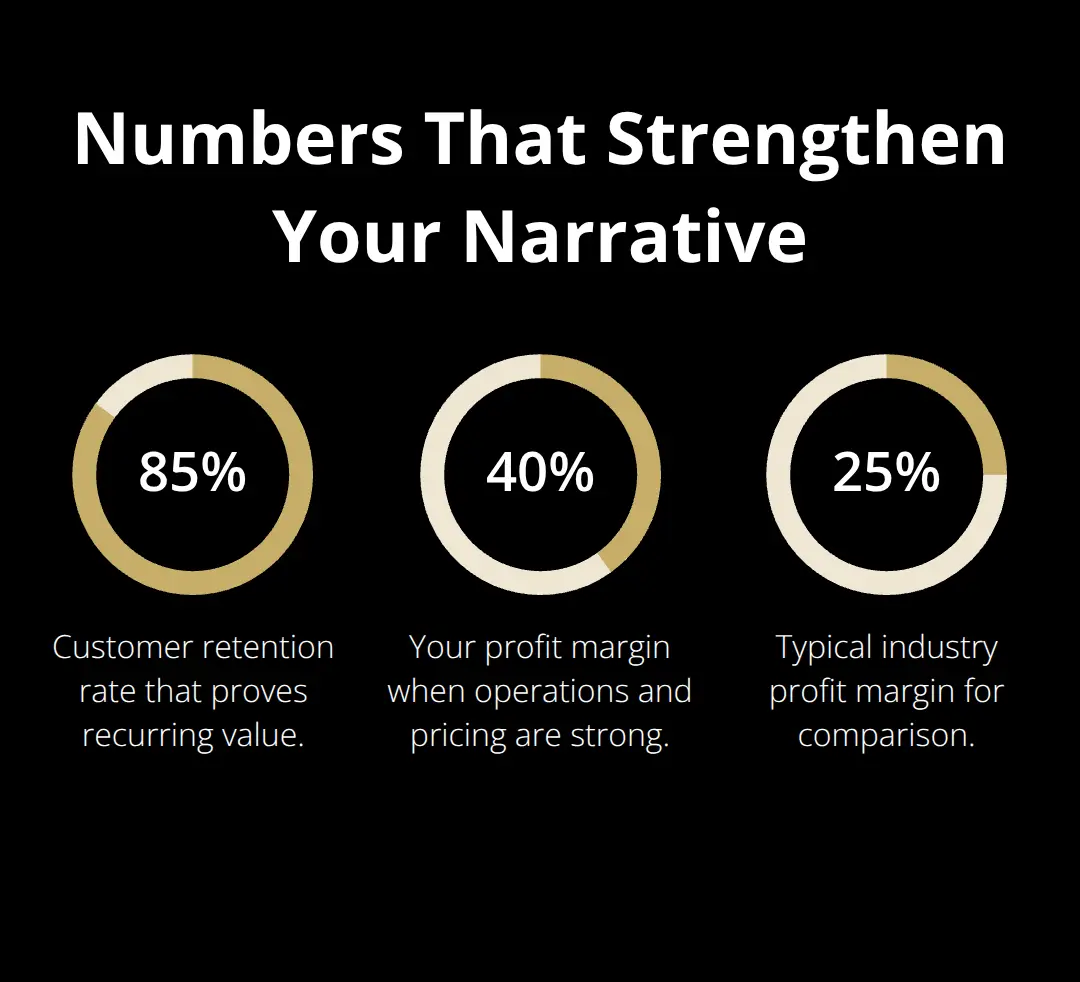
Start with the metrics that actually matter to serious buyers: customer retention rates, profit margins, revenue concentration, and growth trajectory. Present numbers as part of a larger story about why your business works. If your customer retention rate sits at 85%, that’s not just a statistic-it’s proof that your product solves real problems and customers stay because of genuine value. If your profit margins run 40% while industry averages sit at 25%, explain why. Is it operational efficiency? Pricing power? A specialized market niche?
Buyers respond to narratives backed by specifics, not vague claims about being well-run.
Research shows that businesses presented with clear financial narratives and growth stories attract 30–40% higher offers than those with incomplete storytelling. Your narrative should answer three questions every serious buyer asks: Why is this business successful? Why will it stay successful? Why should I pay what you’re asking? If you can’t answer these clearly in your presentation, your asking price starts negotiating downward before conversations begin.
Reach Buyers Where They Actually Congregate
Generic listings on one platform reach nobody. Serious business buyers congregate in specific channels depending on their profile. Institutional buyers monitor industry databases and broker networks. Strategic competitors follow industry news and attend trade conferences. Financial investors search acquisition marketplaces and work through broker relationships. Your marketing investment should concentrate on channels where your actual buyer pool spends time, not where everyone else posts listings.
If you’re selling a B2B service business, targeted LinkedIn outreach to relevant buyers converts significantly higher than hoping someone finds your listing on a general marketplace. If you’re selling a manufacturing business, industry-specific buyer networks and trade publication advertising reach qualified prospects efficiently. The mistake most sellers make is spreading effort thin across too many channels instead of dominating the channels where serious buyers actually exist. Many sellers find that qualified buyer interactions come from just a few focused channels, while they waste time on platforms that generate only noise.
Test What Actually Moves Prospects Forward
Your first presentation to a prospect isn’t your final one. Serious platforms let you track which elements of your listing and outreach actually drive engagement and follow-up questions. If your customer testimonials section gets skipped while your operational metrics section generates discussion, adjust accordingly. If your initial outreach email mentioning your market position generates responses while emails emphasizing your profitability get ignored, that tells you something specific about your buyer pool’s priorities.
Most sellers set their presentation once and hope it works. Disciplined sellers test different angles, track what resonates, and refine based on real prospect behavior. Even small adjustments-reordering your financial dashboard to lead with growth rate instead of total revenue, emphasizing recurring revenue in outreach to financial buyers, highlighting market expansion potential to strategic acquirers-can shift response rates meaningfully. The platforms worth your investment show you exactly how prospects interact with your materials: which sections they spend time on, where they drop off, what questions they ask afterward. This removes guesswork and lets you optimize your approach before the next prospect views your listing. Sellers who adjust their messaging based on early prospect feedback consistently close at higher prices than those who treat their initial presentation as final.
Final Thoughts
The evidence is clear: sellers who invest in premium marketing tools consistently achieve higher sale prices than those who treat marketing as secondary. The difference between a polished, data-driven presentation and a generic listing translates directly to tens of thousands of dollars in additional offer value. Serious buyers gravitate toward sellers who demonstrate professionalism, transparency, and strategic thinking from the first interaction.
The sellers who separate themselves from the crowd aren’t necessarily those with the best businesses-they’re the ones who present their businesses most effectively. They understand that reaching the right buyer with the right message at the right time matters more than hoping someone stumbles across a generic listing. They measure what works, adjust what doesn’t, and continuously strengthen their positioning based on real prospect behavior (this disciplined approach transforms how buyers perceive your business and what they’re willing to pay for it).
We at Unbroker built our platform specifically for business sellers who want premium marketing capabilities without the traditional brokerage markup. Our Full Service Business Sale and Assisted Business Sale options both include access to premium marketing tools, a vast buyer network, and the support you need to close at the highest possible price. Start building your strategy today and position your business to attract the serious buyers who will compete to acquire it.