When a competitor sells their business, it sends ripples through your entire industry. The sale price becomes a benchmark that directly influences how buyers value your company.
At Unbroker, we see how competitive analysis shapes business valuations daily. Smart business owners track these transactions to position themselves strategically and maximize their exit value.
How Do Competitor Sales Shape Your Market Value?
Competitor sales create immediate market benchmarks that buyers use to evaluate your business. When a similar company sells for 3.5x revenue, buyers expect your valuation to fall within that range. The U.S. Census Bureau tracks industry transaction data that reveals how these benchmarks influence prices across sectors. Companies that sell within six months of a major competitor sale typically see valuations close to established benchmarks, according to business transfer databases.
Market Share Drives Valuation Multiples
Your market position relative to sold competitors directly impacts buyer offers. Companies with larger market shares command premium valuations because buyers recognize their competitive advantages. Market leaders in stable industries receive higher multiples than smaller players due to their competitive positioning. Track your market share percentage against recent sales to understand where your valuation should land. Document your competitive advantages, customer retention rates, and revenue growth compared to sold businesses.
Industry Standards Shape Buyer Expectations
Recent competitor sales establish new industry valuation standards that buyers reference during negotiations. Professional buyers maintain databases of comparable transactions and use these as starting points for offers. The Consumer Price Index affects how buyers adjust historical sale prices for current market conditions (inflation impacts all valuations). Smart sellers compile transaction data from the past 18 months to build compelling valuation arguments. Use industry databases and public records to identify sales of businesses with similar revenue, employee count, and geographic reach.
Market Timing Affects Your Premium
Strategic timing relative to competitor sales maximizes your valuation potential. Sales immediately after high-value competitor transactions leverage positive market sentiment. However, sales too quickly after multiple competitor exits can signal market saturation to buyers (reduced scarcity drives down prices). Monitor your industry’s transaction frequency through professional networks and adjust your timeline accordingly. Companies that time their sales during periods of limited competitor activity often receive premium valuations due to reduced buyer alternatives.
The next step involves actively tracking and analyzing competitor sale data to build your strategic advantage. Consider selling your business to a competitor as one strategic option that can maximize market value through synergies and competitive positioning.
Where Do You Find Competitor Sale Data?
Successful business owners build comprehensive competitor intelligence through systematic data collection from multiple sources. The NAICS U.S. Census Business Builder provides foundational transaction data across industries, while state secretary of state databases reveal asset purchase agreements and ownership changes for private companies. BizBuySell tracks business sales with detailed price and revenue multiples, which makes it essential for benchmarks with similar-sized businesses. Professional networks like industry associations maintain member transaction databases that often include confidential sale details not found in public records.
Government Records Reveal Hidden Transactions
Federal and state databases contain transaction details that many business owners overlook. The Bureau of Economic Analysis provides merger and acquisition data by industry sector, which shows average sale prices and revenue multiples. County clerk offices maintain UCC files that reveal asset transfers and details for business sales (these records often contain financing information). Property transfer records expose real estate components of business transactions, which helps you calculate total enterprise values.
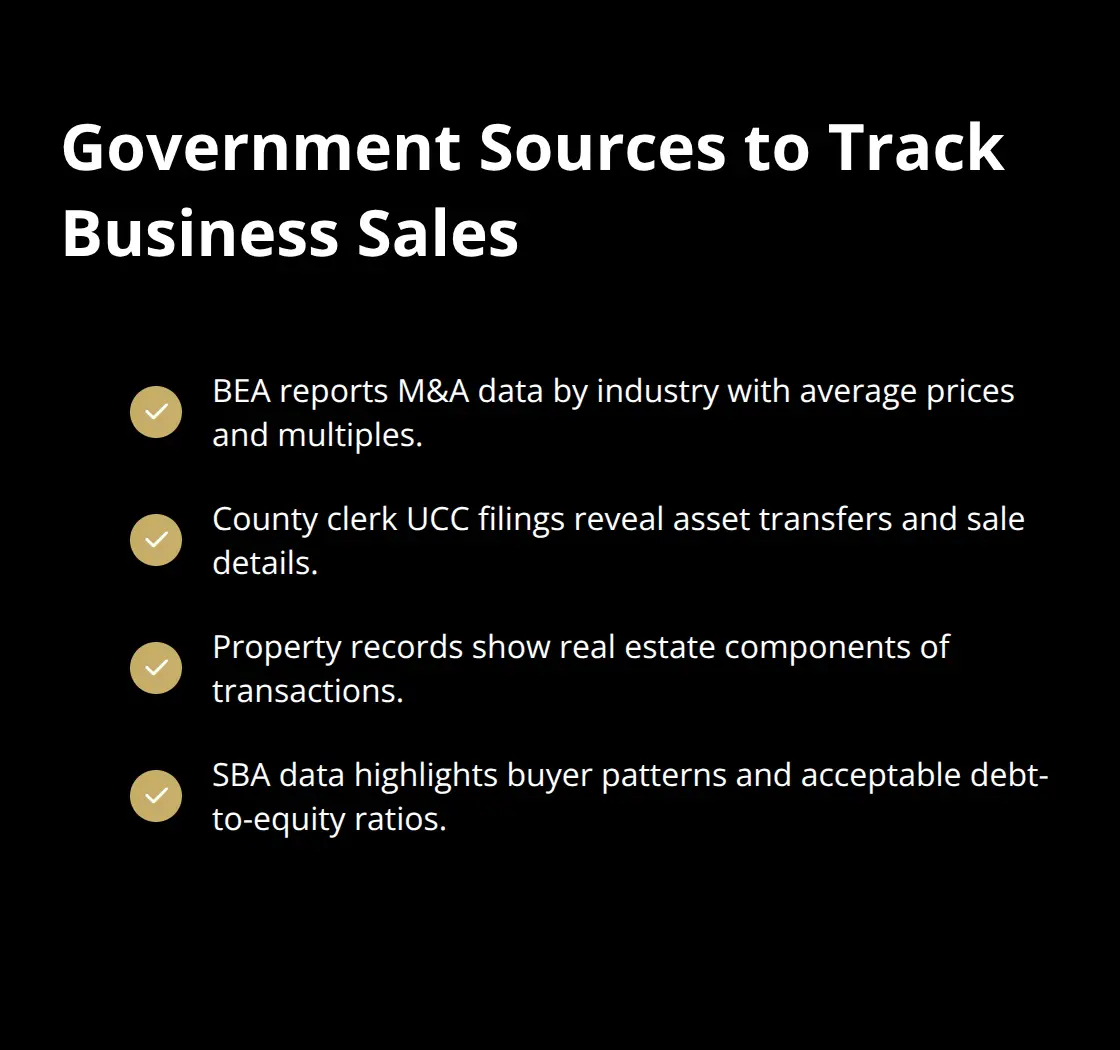
The U.S. Small Business Administration tracks SBA-financed business acquisitions and provides insight into buyer patterns and acceptable debt-to-equity ratios for your industry.
Financial Metrics Tell the Complete Story
Revenue multiples alone fail to capture the full valuation picture that sophisticated buyers evaluate. EBITDA margins from comparable sales reveal which businesses commanded premium prices based on profitability rather than size. Customer concentration ratios from sold businesses show how buyer preferences shift based on revenue spread. Employee productivity metrics from transaction databases help identify which operational characteristics drive higher valuations. Track these financial indicators monthly to position your business competitively when sale opportunities arise.
Professional Networks Provide Insider Intelligence
Industry associations and professional groups offer access to transaction data that public databases miss. Trade organizations maintain confidential member sale records that include detailed financial metrics and buyer motivations. Investment banking firms publish quarterly industry reports with transaction multiples and market trends specific to your sector. Business brokers share market intelligence through professional networks, though their data quality varies significantly across firms. Tools like Google Trends, industry reports, and competitor analysis can provide valuable insights for understanding market dynamics.
These data sources form the foundation for strategic responses to competitor activity and market positioning decisions that help you maximize your business’s value.
How Do You Respond to Competitor Sales?
Smart business owners act immediately when competitors sell because market windows close quickly. Companies tracking competitive intelligence metrics like win rates and revenue performance gain significant advantages in market positioning. Track competitor sales within your industry every 90 days through BizBuySell and industry association databases to identify optimal windows. Sales teams with access to competitive intelligence close deals 28 percent faster, and this speed advantage applies equally to business sales where market conditions determine final valuations.
Strike When Market Sentiment Peaks
List your business within 30 to 60 days after a competitor achieves a premium sale price in your market. Buyers maintain heightened interest in your industry during these periods, and comparable transactions justify higher prices. However, avoid immediate action after three or more competitor sales within six months because market saturation reduces buyer urgency and drives down offers.
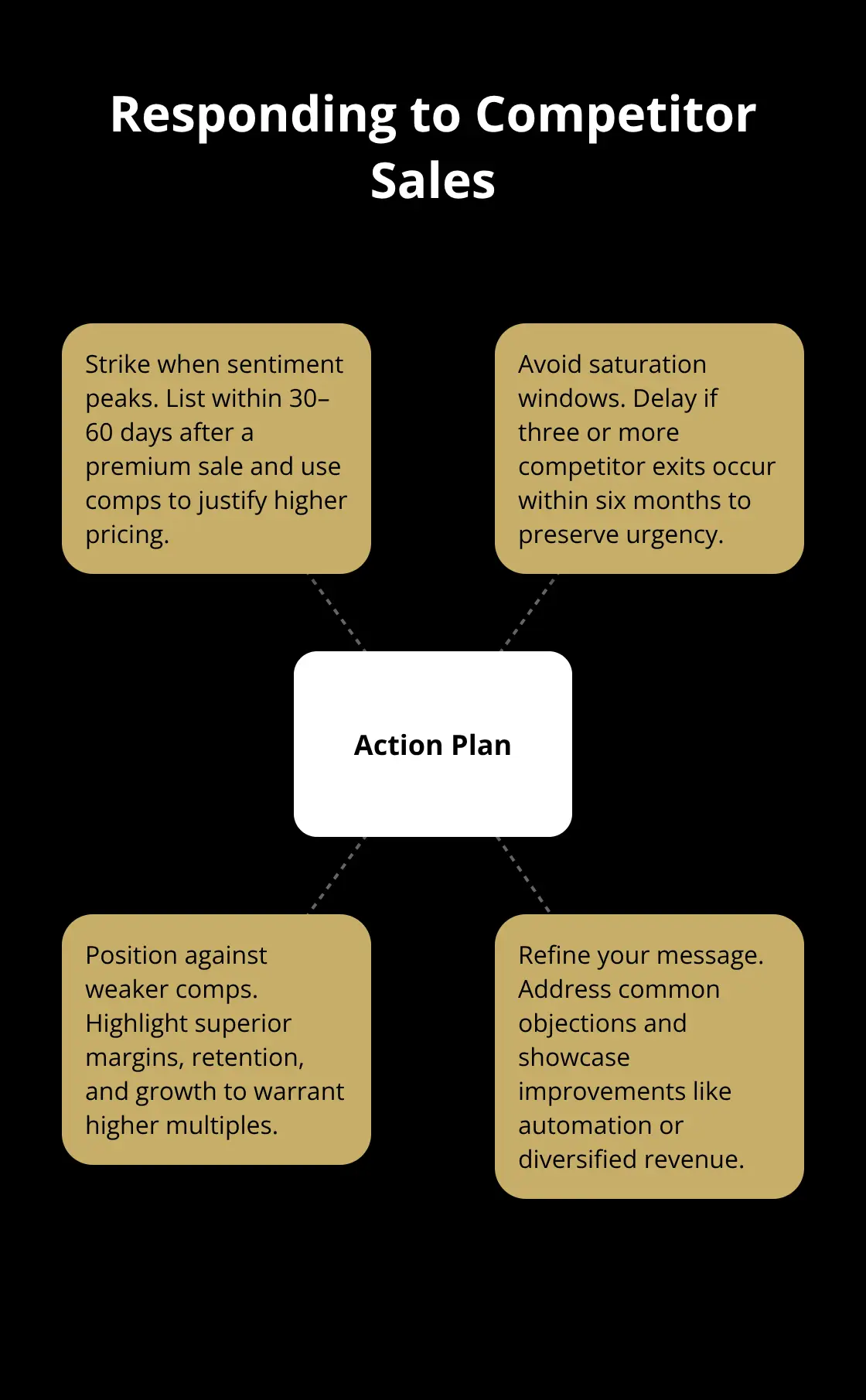
Monitor transaction frequency through your local business broker network and delay when competitor activity exceeds normal market patterns. Strategic market timing in M&A transactions can significantly impact valuations when buyers face limited alternatives.
Position Against Weaker Comparable Sales
Document your competitive advantages against recently sold businesses through detailed financial comparisons that highlight superior performance metrics. Create comparison charts that show your higher profit margins, customer retention rates, and revenue growth versus sold competitors to justify premium prices. Buyers reference recent transactions as starting points for negotiations, so demonstrate why your business deserves higher multiples than completed sales. Focus on operational efficiencies, intellectual property, or market position that sold competitors lacked. Research confirms that M&A transactions create wealth on average, with documented advantages leading to premium valuations.
Adjust Your Marketing Message
Rewrite your business summary and marketing materials to address specific buyer concerns revealed by competitor sale negotiations. Recent transactions expose common buyer objections about industry risks, which you can preemptively address in your materials. Highlight operational improvements you implemented that sold competitors failed to achieve, such as automated processes or diversified revenue streams. Adjust your price based on market feedback from recent sales, but never price below the lowest comparable transaction unless your business has significant operational weaknesses (this signals desperation to buyers). When multiple offers emerge, buyers often accept higher earnouts and waive contingencies. Always put everything in writing to protect both parties during negotiations.
Final Thoughts
Competitor sales directly impact your business valuation through market benchmarks, buyer expectations, and industry standards. Companies that conduct systematic competitive analysis gain significant advantages when they position and time their exits. Track competitor transactions every 90 days through government databases, industry associations, and professional networks to identify optimal market windows.
Act within 30 to 60 days after premium competitor sales to leverage positive market sentiment. Document your competitive advantages against recently sold businesses through detailed financial comparisons that justify higher multiples. Adjust your marketing materials to address buyer concerns that competitor negotiations revealed while you highlight operational improvements that sold competitors lacked.
Market timing matters more than perfect preparation. Companies with access to competitive intelligence close deals 28 percent faster and achieve higher win rates (monitor transaction frequency to avoid market saturation periods when multiple competitors sell simultaneously).

We at Unbroker help business owners navigate competitive markets through our transparent, low-cost platform that eliminates high brokerage fees and provides the tools needed to maximize your valuation despite market competition.