Due diligence transforms even seasoned business owners into stressed-out insomniacs. The endless document requests, buyer scrutiny, and fear of deal-killing surprises can overwhelm anyone.
We at Unbroker have guided hundreds of sellers through this process. The right preparation and mindset make all the difference between a smooth transaction and months of unnecessary chaos.
What Documents Actually Matter for Due Diligence
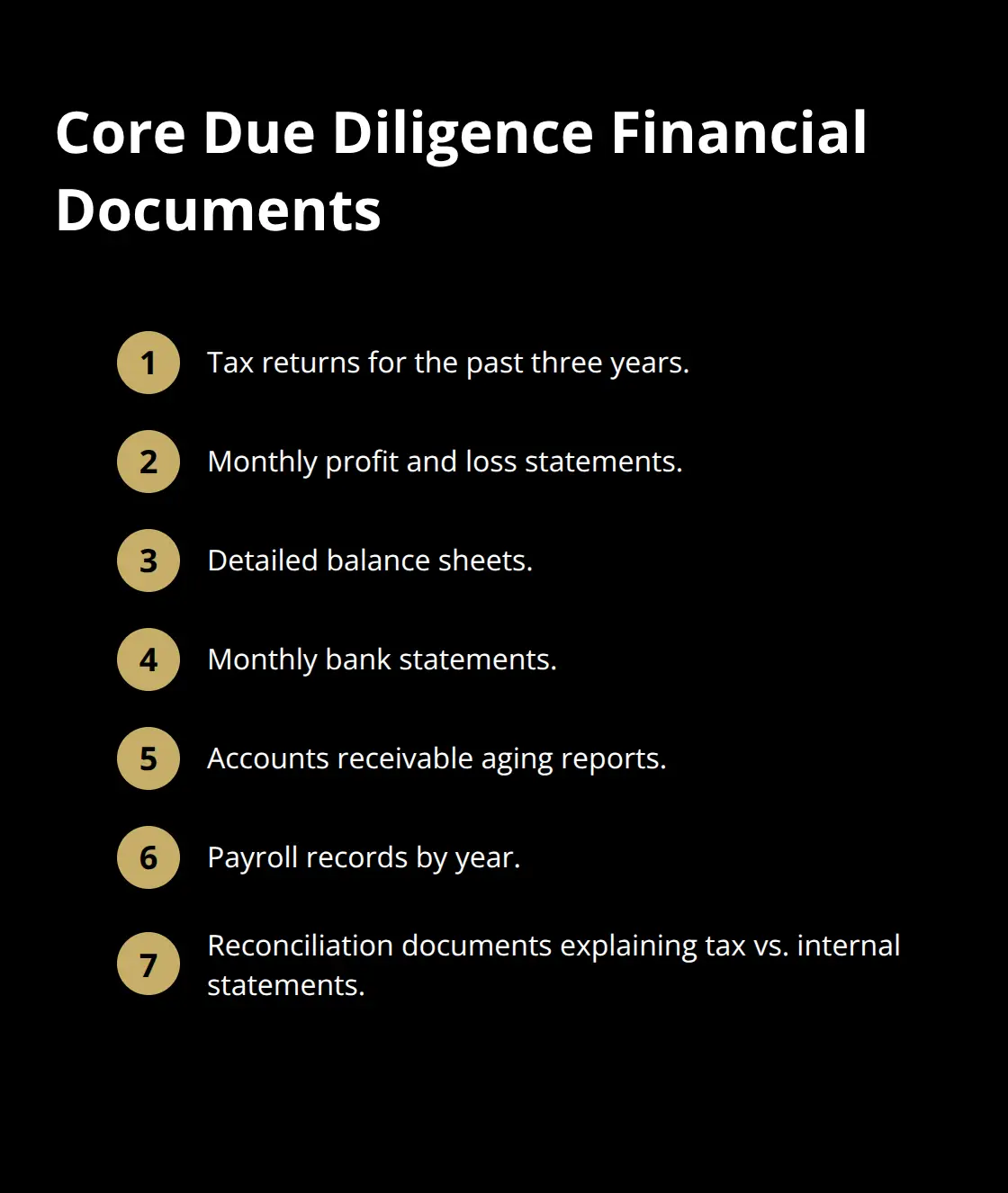
Start collecting your financial records three months before you list your business for sale. Most sellers wait until buyers request documents, which creates unnecessary stress and delays. Tax returns from the past three years, monthly profit and loss statements, and detailed balance sheets form the foundation buyers examine first. Clean QuickBooks or accounting software records save weeks of back-and-forth explanations.
Financial Documentation That Closes Deals
Buyers focus on cash flow consistency above all else. Organize monthly bank statements, accounts receivable reports, and payroll records by year in clearly labeled folders. Include explanations for any unusual transactions or seasonal fluctuations. M&A volumes globally continue to decline, with deals dropping by 9% in the first half of 2025 compared with the first half of 2024. Prepare reconciliation documents that explain discrepancies between tax returns and internal financial statements.
Legal and Operational Files That Matter
Corporate documents, customer contracts, and employee agreements require immediate access during due diligence. Scan all contracts into searchable PDFs and organize them by expiration date. Include lease agreements, insurance policies, and intellectual property documentation. Operational procedures, supplier agreements, and key employee contracts often determine deal success. Missing or poorly organized legal documents signal management problems to buyers.
Virtual Data Room Setup Strategy
Box, Dropbox Business, or ShareFile work better than email for document sharing. Create folder structures that mirror buyer due diligence checklists: Financial Records, Legal Documents, Operations, HR Files, and Marketing Materials. Set permissions carefully – buyers should access specific folders only when appropriate. Upload documents in native formats when possible, and avoid password-protected files that slow down buyer review. Professional data rooms like Firmex cost $500-2000 monthly but provide audit trails and controlled access that email cannot match.
Document Quality Standards
Buyers expect professional presentation standards across all materials. Scan documents at 300 DPI resolution (minimum) and save them as searchable PDFs with clear file names. Remove personal information from bank statements and redact sensitive customer data until later stages. Create index sheets that list document contents for each folder. Poor document quality raises questions about your attention to detail and business management practices.
Once you establish your document foundation, buyers will start requesting specific information and asking detailed questions about your business operations.
How Do You Handle Buyer Information Requests
Buyers send information requests in waves, starting with basic financials and escalating to detailed operational data. The first wave typically arrives within 48 hours of signed letters of intent, covering three years of tax returns, financial statements, and customer concentration reports. Smart sellers prepare standard response templates and assign specific team members to handle different document categories. Response time expectations have shortened dramatically – buyers now expect initial document packages within 24-48 hours, compared to the traditional week-long turnaround times from five years ago.
Response Time Management Systems
Set up automated acknowledgment emails that confirm receipt of buyer requests and provide realistic delivery timelines. Create a master spreadsheet that tracks every request, assigned team member, and completion status. Professional sellers batch similar requests together and send complete document packages rather than piecemeal responses that frustrate buyers and create confusion.
Communication Boundary Rules
Establish specific communication windows and stick to them religiously. Buyers will attempt direct contact with key employees, customers, and suppliers if you allow unrestricted access during early due diligence stages. Designate one primary contact person who filters all buyer communications and protects sensitive business relationships. Email works better than phone calls for most due diligence communications because it creates documented trails and prevents misunderstandings. Set expectations upfront that buyers receive responses during business hours only – weekend and evening communications signal desperation and weaken your position.
Sensitive Information Release Strategy
Never release customer lists, detailed employee information, or supplier contracts until buyers provide proof of financing and signed confidentiality agreements. Redact specific customer names and replace them with Customer A, Customer B labels until final due diligence stages. Release financial information progressively – start with summary reports and provide detailed breakdowns only after buyers demonstrate serious purchase intent.
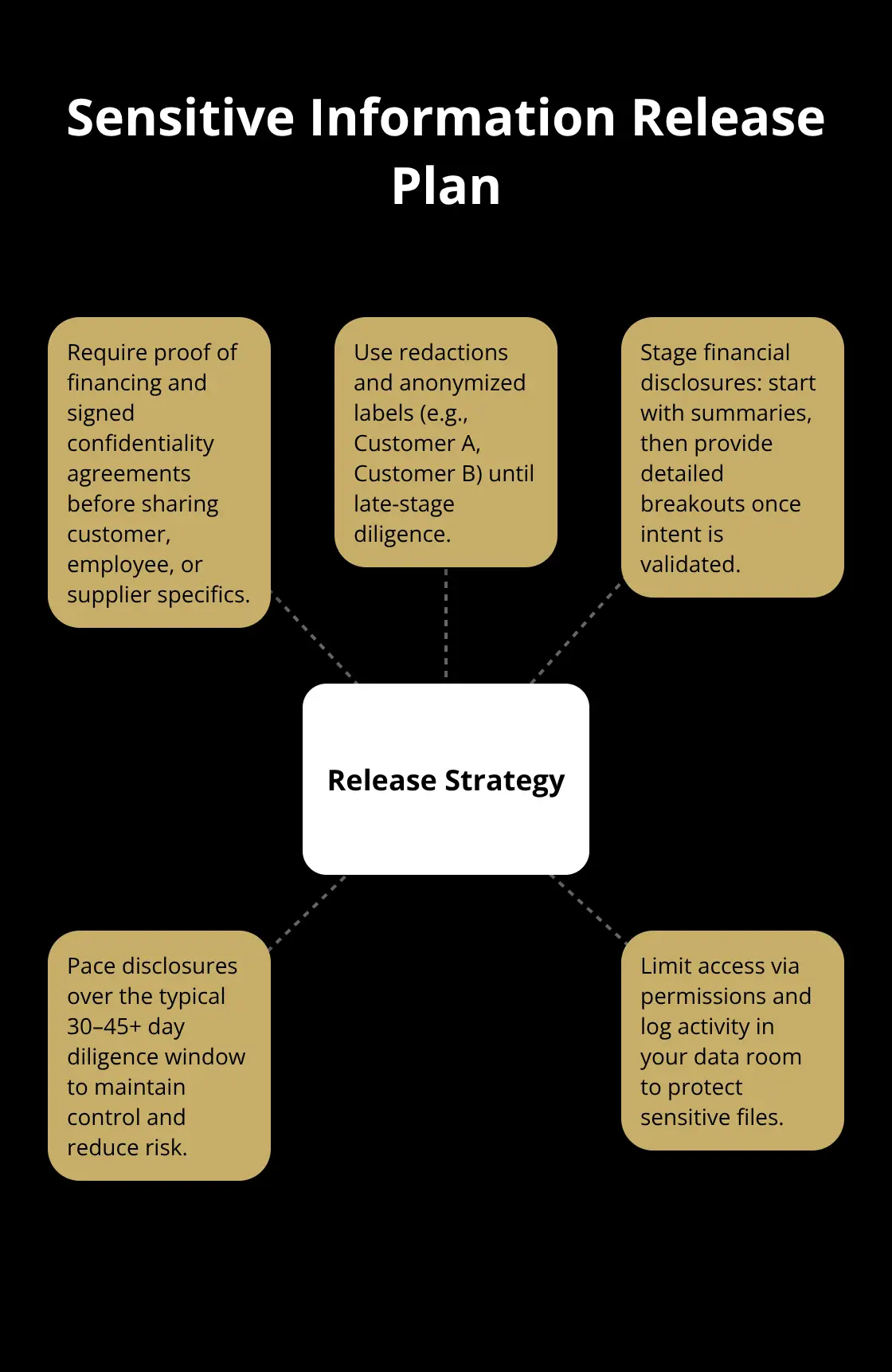
The average due diligence period may range from thirty to forty-five days for a small company purchase, but it may take anywhere from sixty days or more for larger transactions, giving you time to control information flow strategically rather than overwhelming buyers with unnecessary details upfront.
Even with perfect information management, specific red flags can still emerge that threaten to derail your entire transaction.
What Red Flags Kill Deals During Due Diligence
Financial inconsistencies destroy more deals than any other factor during due diligence. M&A volumes globally dropped by 9% in the first half of 2025 compared with the first half of 2024, while deal values are up 15%.

Buyers immediately flag businesses that show different revenue figures between tax returns and internal statements without clear explanations. Personal expenses mixed with business costs create immediate red flags – separate your personal credit card charges and home office deductions before buyers see your records. Cash transactions without proper documentation signal potential tax issues that buyers avoid completely.
Financial Record Problems That Stop Sales
Customer concentration above 30% from a single client creates dependency risk that most buyers reject outright. Unexplained year-over-year revenue swings indicate potential financial manipulation that raises serious concerns. Accounts receivable aged beyond 90 days suggest collection problems or inflated revenue recognition. Inventory valuation discrepancies between physical counts and book values signal poor internal controls. Buyers walk away when they find significant adjustments between cash and accrual accounting methods without proper reconciliation documents.
Legal Compliance Gaps That Stop Transactions
Employment law violations kill deals faster than financial problems. Misclassified contractors, unpaid overtime claims, and missing I-9 forms create liability exposure that buyers refuse to inherit. Technology M&A deals include key considerations around the target company’s rights to its IP, data rights and use of personal information. Trademark registrations, copyright documentation, and patent filings must show clear business ownership rather than personal ownership by founders. Environmental compliance issues in manufacturing or retail businesses create massive liability concerns – asbestos, lead paint, or chemical storage violations can add millions in cleanup costs that buyers will not accept.
Operational Problems That Scare Away Buyers
Key employee dependencies represent the biggest operational red flag for buyers. Businesses where owners handle sales, operations, and customer relationships simultaneously show poor scalability and management structure. Supplier concentration above 50% from single vendors creates supply chain risk that sophisticated buyers recognize immediately. Outdated technology systems, manual processes, and paper-based record maintenance suggest operational inefficiency that buyers must fix post-acquisition. Customer service problems, poor repeat purchase rates, and negative online reviews indicate market position weakness that reduces business value significantly. Buyers abandon businesses that show consecutive quarters of margin decline because this suggests competitive pressure or lost market power which threatens future profitability.
Current business licenses and permits prove operational compliance, while expired documentation creates immediate red flags that delay closing.
Final Thoughts
Due diligence success requires three fundamental strategies: early preparation, systematic organization, and professional presentation. Start document collection three months before you list your business, create clear communication protocols with buyers, and maintain consistent financial records that tell your business story accurately. Professional support transforms the due diligence experience from overwhelming chaos into manageable process steps.
Experienced advisors prevent common mistakes that kill deals, handle sensitive information disclosure strategically, and maintain buyer momentum during complex negotiations. They recognize red flags before they become deal-breakers and position your business strengths effectively. The right preparation and support system turn due diligence from a nightmare into a competitive advantage that showcases your business value.
We at Unbroker understand that due diligence represents the most stressful phase of business sales. Our modern platform for business sales provides transparent pricing, expert support, and AI-driven buyer matching that eliminates traditional brokerage complications. Whether you choose our Full Service option or Assisted Sale approach, you receive professional guidance through every due diligence challenge while you maintain control over your transaction timeline and confidential information (plus access to our experienced team throughout the entire process).