Selling your business requires meticulous preparation, and having the right paperwork ready can make or break your deal. Missing essential documents often leads to delayed negotiations, reduced offers, or failed sales entirely.
We at Unbroker have seen countless business owners struggle because they weren’t properly prepared with their documentation. This comprehensive checklist covers every document you need to present your business professionally to potential buyers.
Which Financial Documents Do Buyers Actually Need?
Financial transparency separates successful sales from failed negotiations. The Small Business Administration reports that buyers scrutinize three to five years of financial statements during due diligence, with the past three years being non-negotiable.
Profit and Loss Statements Drive Valuation
Your profit and loss statements must show normalized earnings by removing personal expenses like family vacations or luxury car payments that artificially deflate business income. These adjustments eliminate one-off effects, providing an estimated value of average earnings that buyers can rely on. Balance sheets reveal your company’s true financial position through assets, liabilities, and equity ratios that buyers use for risk assessment.
Cash Flow Proves Real Value
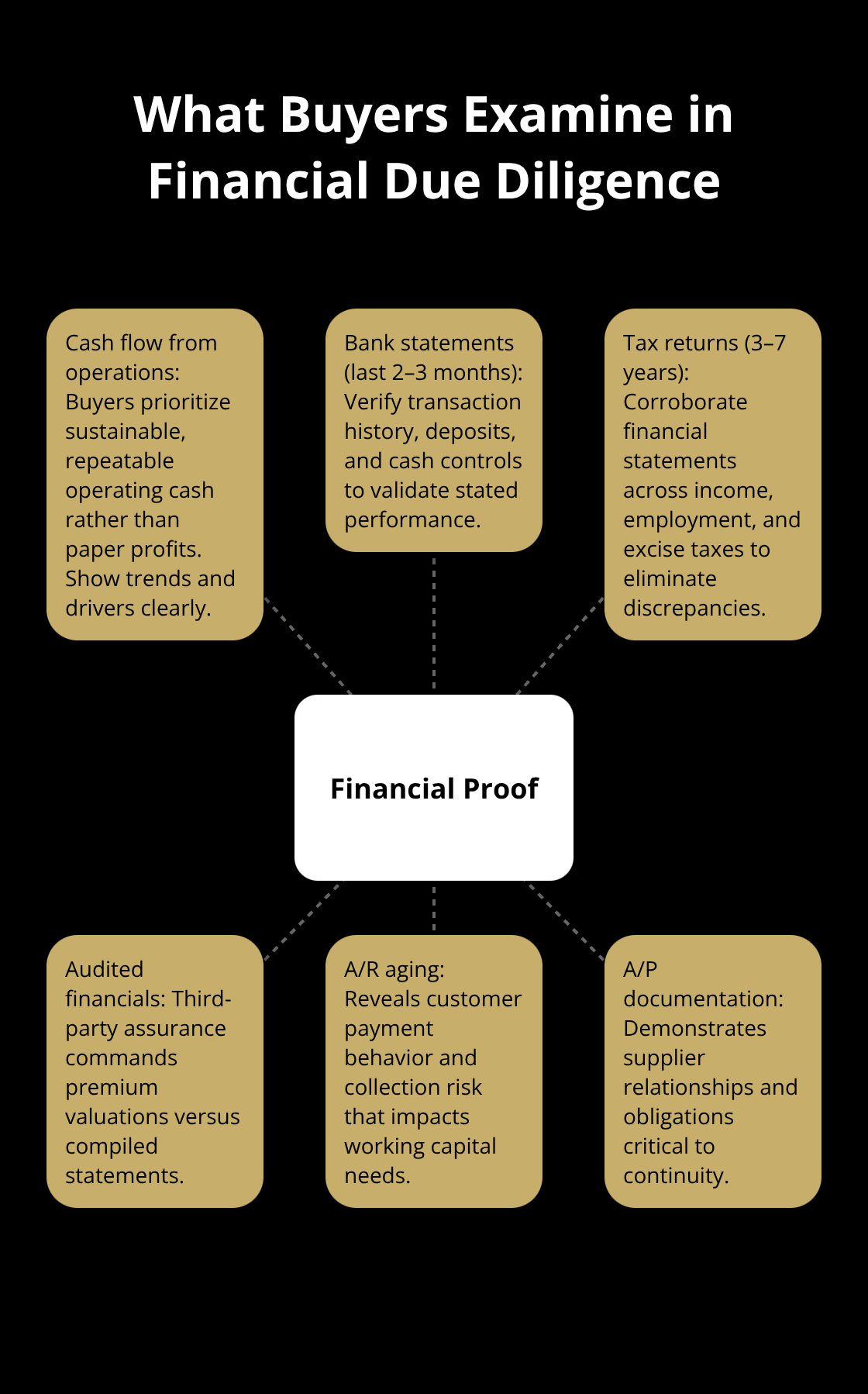
Cash flow statements prove operational sustainability beyond paper profits. These documents show actual money movement that determines if your business generates real value. Buyers prefer businesses with strong cash flow directly from operations to minimize reliance on outside financing (which reduces their risk significantly).
Tax Returns Validate Every Claim
Tax documentation validates every financial claim you make to potential buyers. The IRS requires businesses to maintain records for three to seven years after closing, and buyers expect complete tax returns including income, employment, and excise taxes for this period. Discrepancies between reported income on financial statements and tax returns immediately raise red flags that can kill deals.
Professional Audits Command Premium Prices
Professional audits strengthen your position significantly, with audited financials commanding premium valuations compared to compiled statements. Account receivables aging reports expose customer payment patterns and potential collection risks, while payables documentation shows your relationship management with suppliers and creditors (both critical for operational continuity).
Organized financial documentation accelerates the due diligence period that determines final sale terms. Buyers request detailed bank statements spanning two to three months to verify transaction histories, and your legal documentation must support these financial claims with proper contracts and agreements.
What Legal Documents Actually Matter to Buyers?
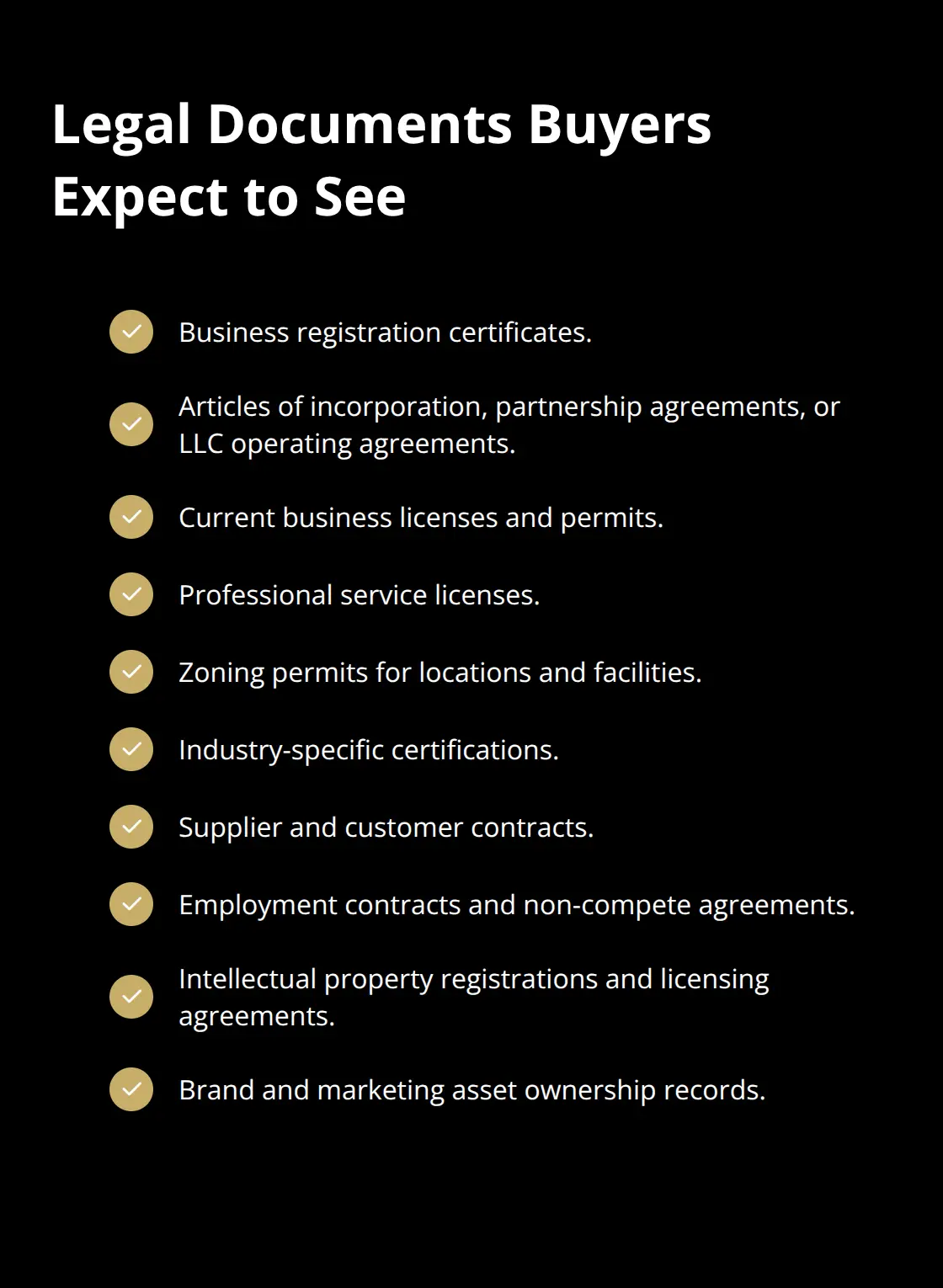
Legal documentation proves business legitimacy and operational continuity that buyers demand before they commit to purchase. The Small Business Administration emphasizes thorough legal preparation, and missing corporate documents immediately signal organizational weakness that reduces offers. Business registration certificates, operating agreements, and current licenses validate your legal standing and confirm compliance with local regulations.
Corporate Structure Documentation Prevents Deal Delays
Articles of incorporation, partnership agreements, and LLC operating agreements establish ownership structure that buyers need for legal transfer. Current business licenses and permits prove operational compliance, while expired documentation creates immediate red flags that delay closing according to typical due diligence timelines. Professional service licenses, zoning permits, and industry-specific certifications must remain current throughout the sale process to avoid last-minute complications.
Contracts Define Business Value and Risk
Supplier contracts and customer agreements represent your revenue streams and operational dependencies that directly impact valuation. Long-term customer contracts with automatic renewal clauses increase business value, while month-to-month arrangements signal revenue instability. Employment contracts, non-compete agreements, and key employee retention documents show workforce stability that buyers evaluate for operational continuity.
Intellectual Property Documentation Adds Hidden Value
Trademark registrations, patent filings, and proprietary process documentation can represent significant hidden value that many business owners underestimate during initial valuations. Copyright materials, trade secrets, and licensing agreements protect your competitive advantages and transfer directly to new owners (making them valuable negotiation assets).
Your marketing materials and brand assets build on this legal foundation to showcase market position and customer relationships that drive revenue growth.
What Marketing Assets Actually Drive Sale Prices?
Marketing documentation proves market position and customer relationships that directly impact your business valuation. Customer demographics, engagement metrics, and acquisition data demonstrate your market reach and growth potential to buyers who need concrete evidence of revenue sustainability.
Customer Database Documentation Reduces Business Risk
A comprehensive customer database with purchase histories, contact information, and demographic profiles shows buyer diversity that reduces business risk. Aging reports reveal customer payment patterns, while detailed customer profiles highlight your most valuable accounts and their contribution to revenue over the past three fiscal years. Buyers analyze customer concentration ratios to assess revenue stability, with businesses serving diverse customer bases commanding higher valuations than those dependent on few major clients.
Brand Assets Command Premium Valuations
Marketing materials including logos, website designs, social media accounts, and promotional content transfer directly to new owners and represent significant value beyond basic business operations. Professional brand guidelines, marketing templates, and established visual identity systems save buyers thousands in rebranding costs. Digital marketing assets like email lists, social media followers, and content libraries provide immediate marketing infrastructure that buyers can leverage for continued growth.
Performance Metrics Drive Revenue Projections
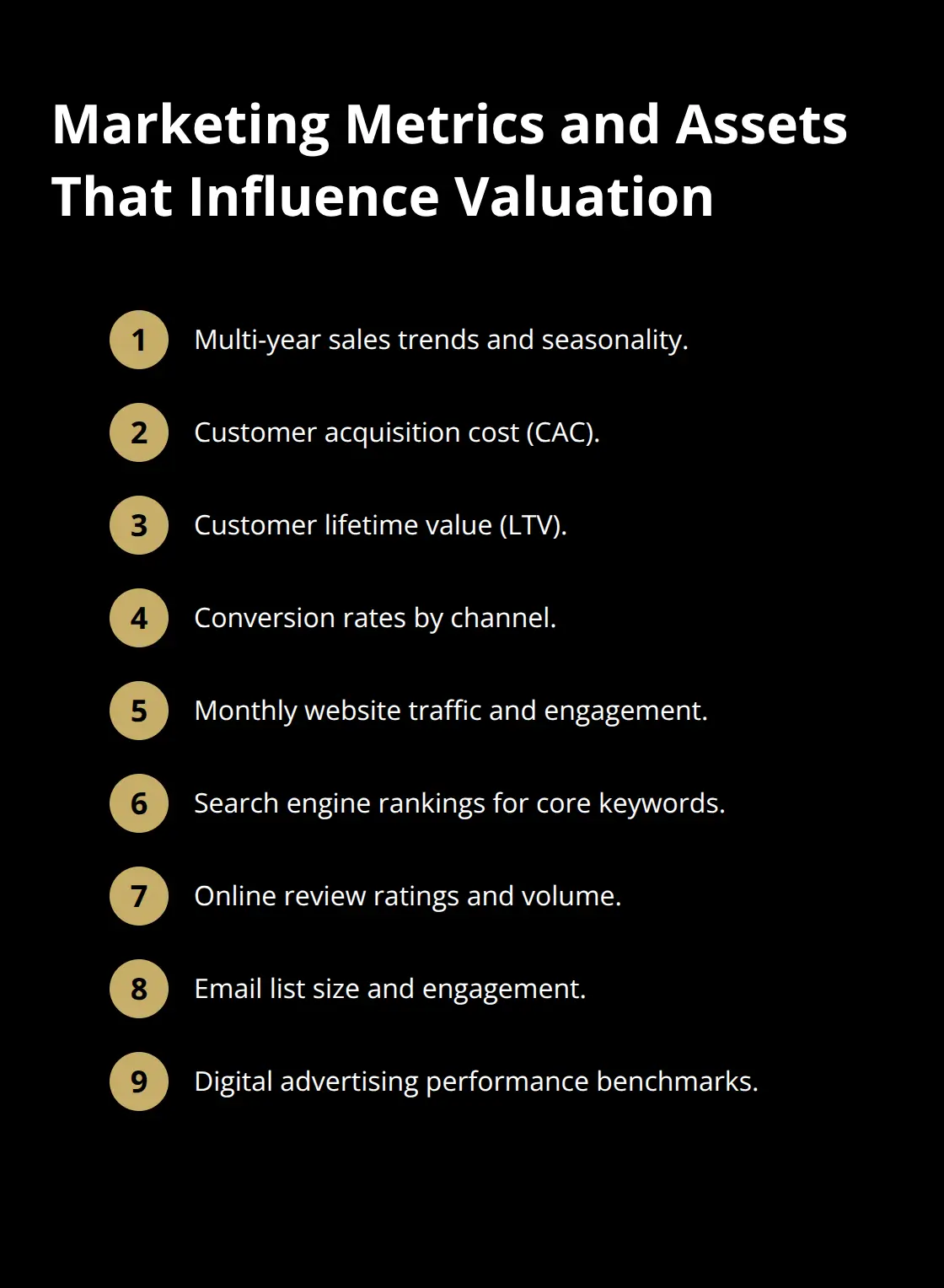
Sales performance metrics across multiple years show seasonal patterns, growth trends, and marketing campaign effectiveness that buyers use for future planning and revenue projections. Customer acquisition costs, lifetime value calculations, and conversion rate data help buyers understand marketing efficiency and scalability potential.
Analytics Prove Market Performance
Website analytics from Google Analytics and social media insights demonstrate online presence strength and customer engagement levels that modern buyers consider essential. Monthly traffic reports, conversion rates, and search engine rankings validate your market presence and competitive position. Online review ratings and digital advertising performance data help buyers understand your customer base quality and predict future marketing success (directly influencing their willingness to pay premium prices for businesses with strong digital foundations).
Final Thoughts
Complete documentation transforms your business sale from a stressful ordeal into a professional transaction that commands premium prices. Buyers pay more for businesses with organized records because they reduce risk and accelerate due diligence timelines. Missing essential documents immediately signal poor management and create negotiation leverage for buyers who exploit documentation gaps to justify lower offers.
Proper preparation increases business value by demonstrating operational excellence and reducing buyer uncertainty. Professional financial statements, current legal documentation, and comprehensive marketing materials prove your business runs systematically rather than depending on owner involvement. This systematic approach attracts serious buyers who recognize well-managed businesses and pay accordingly.
Start organizing your documentation now, even if you’re not planning to sell immediately. Create digital filing systems for financial records, legal documents, and marketing materials that stay current through regular updates. We at Unbroker understand that selling your business requires expert guidance and transparent processes (which is why our platform eliminates high brokerage fees while providing comprehensive support through either Full Service or Assisted Business Sale options).