Losing a key employee can shake the foundations of your business, especially when you’re considering selling. At Unbroker, we’ve seen firsthand how this challenge can impact a company’s value and appeal to potential buyers.
Selling a business after losing a key employee requires careful planning and strategic action. This post will guide you through the process of assessing the impact, mitigating the loss, and positioning your business for a successful sale.
What Happens When a Key Employee Leaves?
Mapping the Departing Employee’s Role
When a key employee leaves, swift assessment and action become paramount. The first step involves creating a comprehensive list of the employee’s responsibilities, projects, and key relationships. This inventory helps understand the full scope of the gap left behind, including both formal duties and informal roles they may have filled.
For instance, a departing sales manager might have been responsible for:
- Managing a team of 5 sales representatives
- Maintaining relationships with the top 20 clients
- Negotiating contracts worth $2 million annually
- Developing and implementing the annual sales strategy
Quantifying the Business Impact
The next step translates the employee’s departure into concrete business metrics. This process is vital for understanding the potential effect on your company’s value and appeal to buyers.
Consider these factors:
- Revenue impact: How much of your annual revenue was directly tied to this employee?
- Productivity loss: What’s the estimated drop in team output without this person?
- Knowledge gap: What unique skills or information are walking out the door?
- Client risk: How many client relationships might follow the employee?
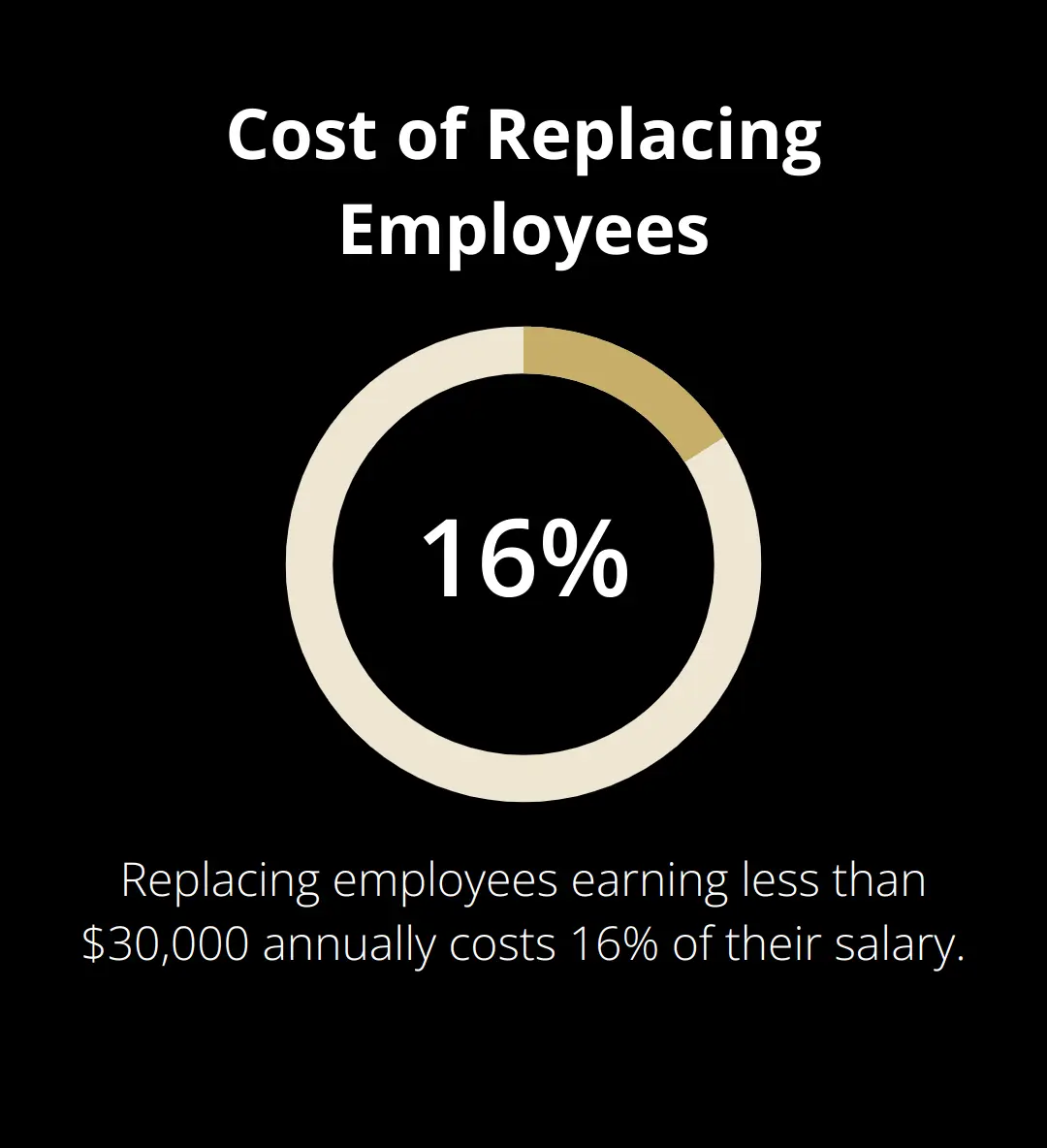
A study by the Center for American Progress found that replacing employees earning less than $30,000 annually typically costs 16 percent of their annual salary. This figure underscores the importance of swift action.
Assessing Client and Contract Risks
The final step involves reviewing all client relationships and contracts that the departing employee managed. Identify which ones are at highest risk and develop a plan to retain them.
Take these steps:
- Contact key clients personally to reassure them about continuity of service
- Review contracts for any clauses tied to specific personnel
- Assign temporary relationship managers to high-value accounts
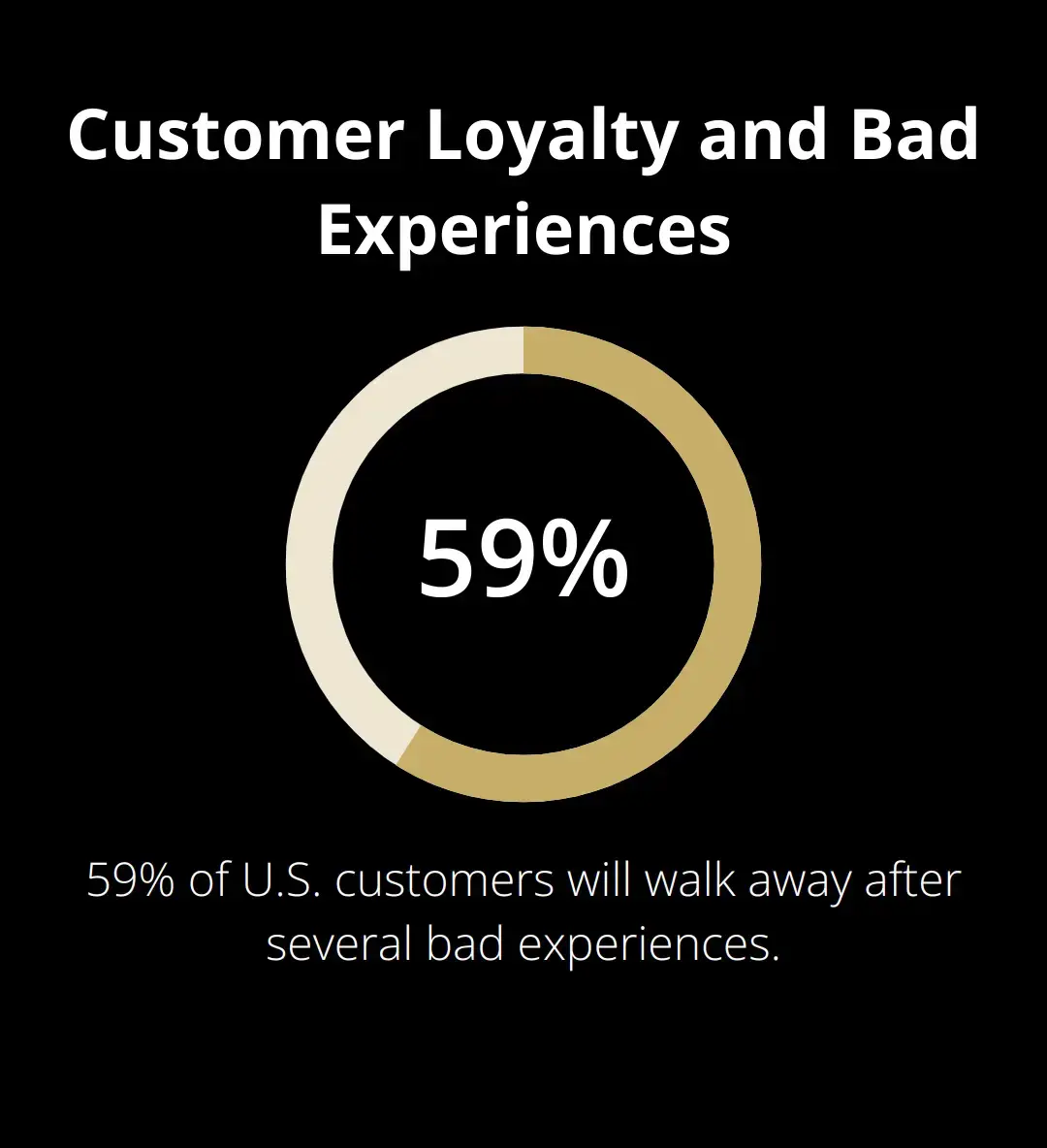
Transparency with clients can build trust during this transition. A survey by PwC showed that in the U.S., 59% will walk away after several bad experiences, even if they love the company or product.
Developing a Transition Strategy
With a clear understanding of the impact, it’s time to develop a transition strategy. This plan should address immediate concerns and long-term stability. Consider these elements:
- Knowledge transfer: Schedule intensive sessions with the departing employee (if possible) to capture critical information. This is important for onboarding new hires, summer interns, or when an employee transfers departments.
- Team restructuring: Redistribute responsibilities among existing team members or identify roles that need immediate filling.
- Communication plan: Develop a clear message for staff, clients, and stakeholders about the transition.
A well-executed transition strategy can minimize disruption and maintain business continuity. This proactive approach sets the stage for the next critical phase: mitigating the loss and stabilizing your business operations.
How to Quickly Recover from a Key Employee’s Exit
When a key employee leaves, swift action maintains business stability and value. Companies can navigate this challenge with strategic approaches. Here’s how to mitigate the loss and keep your business on track for a successful sale.
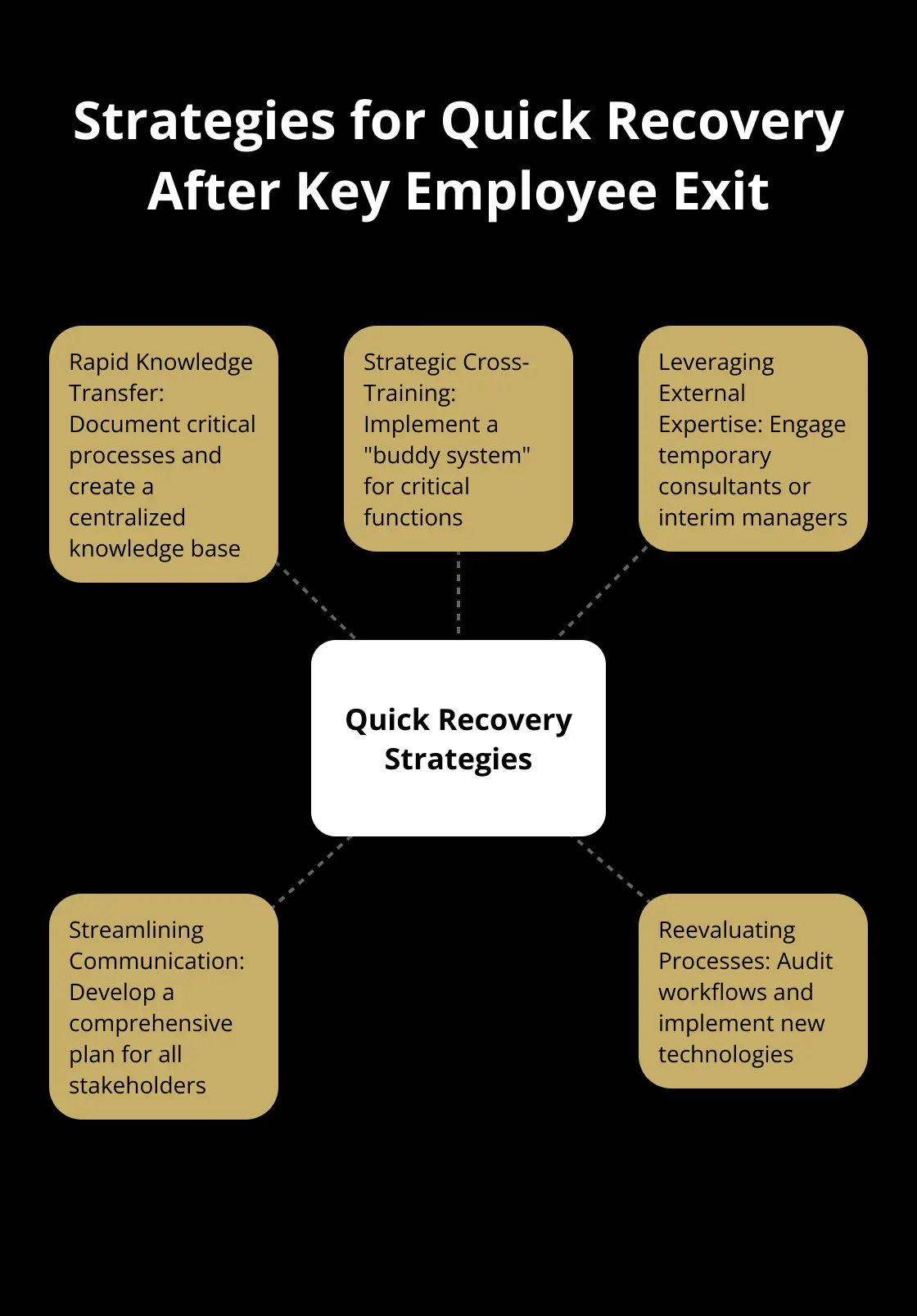
Rapid Knowledge Transfer
Time is essential when transferring knowledge from a departing employee. Determine the kinds of information you want to retain. Focus on documenting critical processes, client relationships, and ongoing projects. Use tools like Loom or Screencast-O-Matic to record video tutorials of complex procedures.
Create a centralized knowledge base using platforms like Notion or Confluence. This repository should include step-by-step guides, contact lists, and project timelines. Ask the departing employee to contribute to this resource, ensuring their expertise remains accessible to the team.
Strategic Cross-Training
Cross-train your remaining staff to fill the gap left by a key employee. This approach can elevate employees’ skill-sets, enhance flexibility within the organization, and improve everyone’s understanding of how the business operates.
Implement a “buddy system” where each critical function has a primary and secondary owner. This approach can create a more resilient team structure, which attracts potential buyers.
Leveraging External Expertise
Sometimes, internal resources don’t bridge the gap. In these cases, temporary consultants or interim managers can be game-changers. These professionals provide immediate expertise and maintain business continuity.
When selecting external help, prioritize industry experience and a track record of successful transitions. Platforms like Toptal or Catalant connect you with high-caliber professionals quickly.
Consider engaging a fractional executive if the departing employee held a leadership role. These experienced professionals step in part-time, providing strategic guidance without the long-term commitment of a full-time hire.
Streamlining Communication
Clear communication is vital during this transition period. Develop a comprehensive communication plan that addresses all stakeholders:
- Internal team: Hold a company-wide meeting to address the departure and outline the transition plan.
- Clients: Reach out personally to key clients (reassure them about service continuity).
- Partners and vendors: Inform them of any changes in point of contact or processes.
Try to maintain a positive tone in all communications, focusing on the opportunities for growth and improvement that this change brings.
Reevaluating Processes and Structures
Use this transition as an opportunity to reevaluate your business processes and structures. The departure of a key employee often reveals inefficiencies or over-dependencies that you can address:
- Audit current workflows and identify bottlenecks.
- Implement new technologies or tools to streamline operations.
- Redistribute responsibilities to create a more balanced workload across the team.
This proactive approach not only helps your business recover but also positions it as a more attractive acquisition target. Potential buyers value companies that demonstrate adaptability and resilience in the face of challenges.
As you implement these strategies, you’ll find that your business not only recovers from the loss of a key employee but emerges stronger and more appealing to potential buyers. The next step is to leverage this renewed strength in positioning your business for sale.
Turning Employee Loss into a Selling Point
Recalibrate Financial Projections
The first step to position your business for sale after a key employee’s departure involves updating your financial projections. This process goes beyond mere number adjustments; it showcases your company’s ability to thrive despite changes.
Collaborate with your accountant or financial advisor to create revised projections that account for:
- Temporary revenue fluctuations
- Cost savings from the departed employee’s salary
- Investments in training or new hires
- Potential growth from restructured roles
These updated financial projections will paint a clear picture of your business’s financial trajectory. Accurate projections help make informed decisions about investments, expansion plans, hiring needs, and other strategic initiatives.
Craft a Compelling Narrative
Your business’s story becomes a key selling point. Frame the employee’s departure as part of a larger narrative of growth and adaptation. This approach transforms a potential red flag into a demonstration of your company’s strength.
Highlight these key elements in your narrative:
- Streamlined operations post-departure
- Improvements in processes or technology implemented during the transition
- Emergence of new leaders or talent within your organization
Buyers invest in your business’s future, not its past. Positive or negative news stories can influence how investors perceive the value and prospects of a company.
Enhance Your Business Presentation
Update your marketing materials and business presentation to reflect your company’s new reality and strengths. Revise your:
- Executive summary
- Company overview
- Growth strategy
- Team structure
Maintain transparency about the changes but focus on the positive outcomes. For instance, if you’ve implemented a new CRM system in response to the departure, highlight how this improves customer management and scalability.
Include case studies or data points that demonstrate your business’s resilience in your presentation. For example, if you’ve maintained client retention rates despite the transition, feature this prominently.
Leverage New Opportunities
The departure of a key employee often opens up new opportunities for growth and innovation. Identify and capitalize on these opportunities to make your business more attractive to potential buyers.
Consider these strategies:
- Restructure roles to create more efficient workflows
- Implement new technologies that streamline operations
- Develop new products or services that fill gaps left by the departing employee
Highlight these initiatives in your sales pitch. They demonstrate your business’s adaptability and forward-thinking approach, which can significantly increase its appeal to potential buyers.
Emphasize Team Resilience
Showcase how your team has adapted and grown through this transition. This resilience can be a powerful selling point for potential buyers.
Try these approaches:
- Highlight success stories of team members who’ve stepped up to new challenges
- Showcase any cross-training or skill development initiatives
- Emphasize improved communication and collaboration within the team
A resilient team adds significant value to your business (and can often offset the loss of a single key employee). Make sure potential buyers understand the strength and adaptability of your workforce.
Final Thoughts
Selling a business after losing a key employee challenges owners but also creates opportunities for growth. Companies must act quickly to assess the impact, implement mitigation strategies, and reposition their business for sale. Proactive planning, knowledge transfer, and process improvements strengthen the company’s appeal to potential buyers.
We at Unbroker understand the complexities of selling a business in these circumstances. Our modern platform offers transparent, low-cost options for business sellers, eliminating high brokerage fees while providing expert support. We connect sellers with a vast network of potential buyers through our Full Service and Assisted Business Sale options.
The departure of a key employee doesn’t need to derail your plans to sell. With the right strategies and support, you can transform this challenge into an opportunity for a successful sale. Visit Unbroker to learn how we can help you navigate this transition and maximize your business’s value.