Selling your company doesn’t mean abandoning everything you’ve built. Your business legacy represents years of culture, values, and relationships that define your organization’s identity.
At Unbroker, we see founders struggle with this balance daily. The right approach protects what matters most while completing a successful transaction.
Smart preparation and buyer selection can preserve your company’s essence for future generations.
How Do You Build a Legacy Foundation Before Selling?
Document Your Company’s Core DNA
Start with a comprehensive company narrative that captures your business’s evolution, key milestones, and moments that define your organization. Understanding operational costs, revenue streams, and financial contingencies is vital for maintaining business stability during the transition. Create a detailed timeline that includes your principles, pivotal decisions, and breakthrough achievements. Include employee testimonials about what makes your workplace unique. Record video interviews with long-term employees who embody your company culture. Document your decision-making processes, particularly how you’ve handled challenges and maintained values under pressure. This documentation becomes your cultural blueprint for new ownership.
Map Your Cultural Architecture
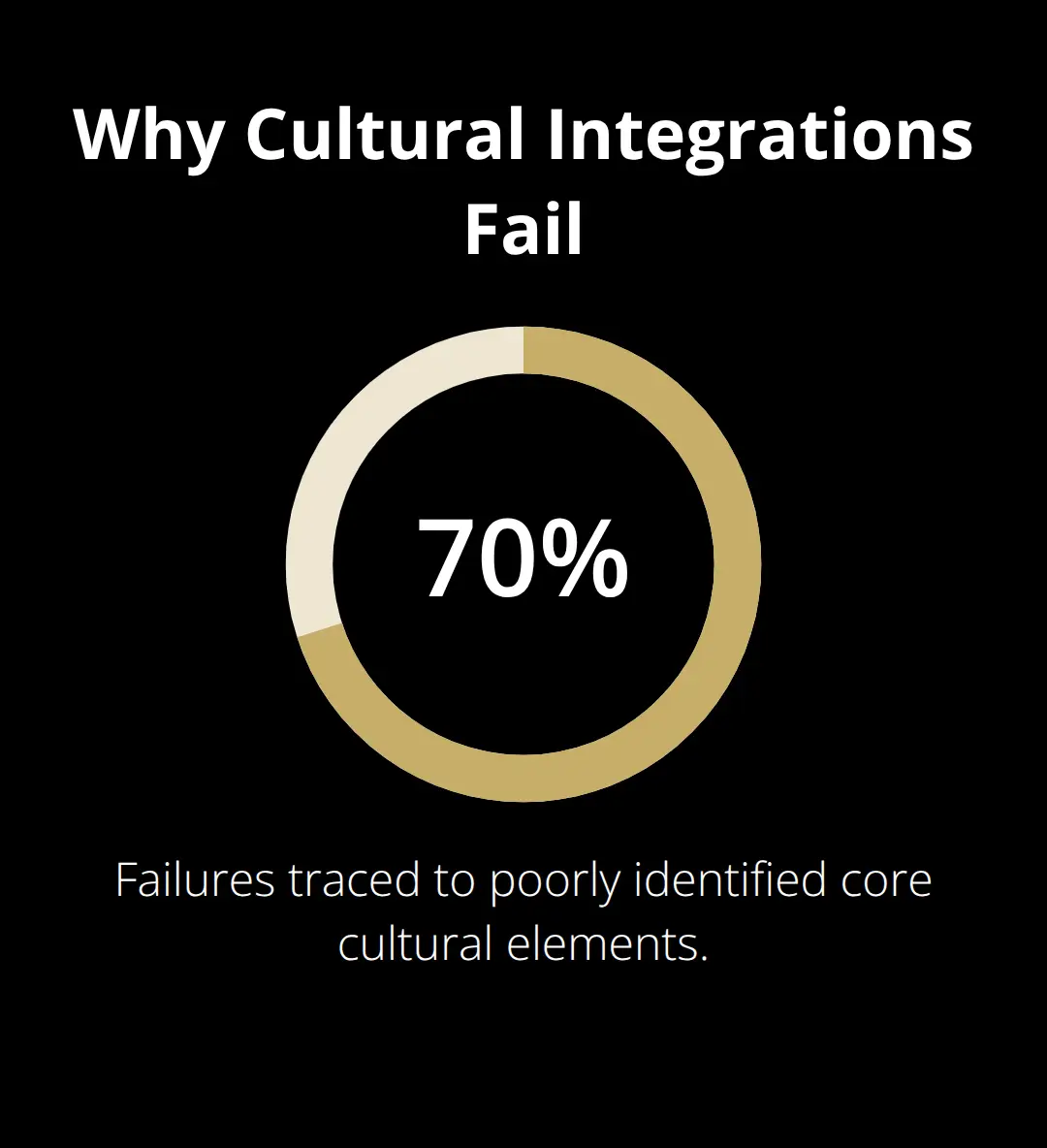
Identify the specific practices, rituals, and behaviors that define your company’s personality. McKinsey research indicates that 70% of cultural integration failures stem from poorly identified core elements. Analyze your criteria for new hires, performance evaluation methods, and promotion patterns to understand what traits you actually reward.
Examine your customer service approach, vendor relationships, and community involvement. Document informal traditions like team celebrations, decision-making styles, and communication patterns. Survey your top performers to understand what attracted them to your company and what keeps them engaged. These elements form your non-negotiable cultural requirements that must survive the transition.
Structure Your Transition Roadmap
Develop a phased transition plan that spans 12-18 months post-sale with specific legacy preservation milestones. Companies with structured transition plans achieve higher employee retention rates, as leadership behaviors, organization and job design significantly impact employee well-being and burnout. Define which leaders will remain during transition periods and establish mentorship programs that pair your key people with new management. Create measurement systems for cultural continuity that include employee satisfaction scores, customer retention rates, and adherence to core values. Set quarterly review points to assess legacy preservation progress and establish intervention protocols when cultural drift occurs.
With your legacy foundation documented and your transition roadmap complete, you face the next challenge: finding buyers who will honor what you’ve built.
How Do You Choose Buyers Who Share Your Values?
Research Buyer Track Records Before First Contact
Start your buyer research with concrete acquisition histories rather than marketing materials. Harvard Business Review studies show that 70-90% of acquisitions fail when buyers lack compatible integration experience. Request specific examples of how potential buyers maintained employee retention, preserved company traditions, and honored founder commitments in previous deals. Examine their portfolio companies through LinkedIn to identify leadership changes, employee tenure patterns, and cultural shifts post-acquisition. Contact former business owners who sold to your prospects directly – their honest feedback reveals integration approaches that marketing presentations never mention. Private equity firms with multiple successful integrations typically demonstrate better cultural preservation than first-time acquirers or firms focused solely on financial engineering.
Evaluate Cultural Compatibility Through Direct Interaction
Schedule face-to-face meetings with decision-makers to assess their genuine interest in your company’s values beyond financial metrics. Ask specific questions about how they plan to maintain your workplace culture, handle employee concerns, and continue community involvement programs. Watch for buyers who ask detailed questions about your team dynamics, customer relationships, and operational philosophies rather than just revenue projections. Test their commitment by proposing scenarios where cultural preservation might conflict with short-term profits (such as maintaining higher employee benefits or continuing charitable initiatives). Buyers who immediately dismiss these concerns or provide vague responses likely prioritize financial returns over legacy preservation.
Structure Legacy Protection Into Sale Terms
Transform cultural preservation from verbal promises into binding legal obligations within your purchase agreement. Include specific retention requirements for key employees, mandatory consultation periods for major policy changes, and protection clauses for company traditions and community involvement programs. Establish measurable cultural metrics with quarterly reports and financial penalties for non-compliance.
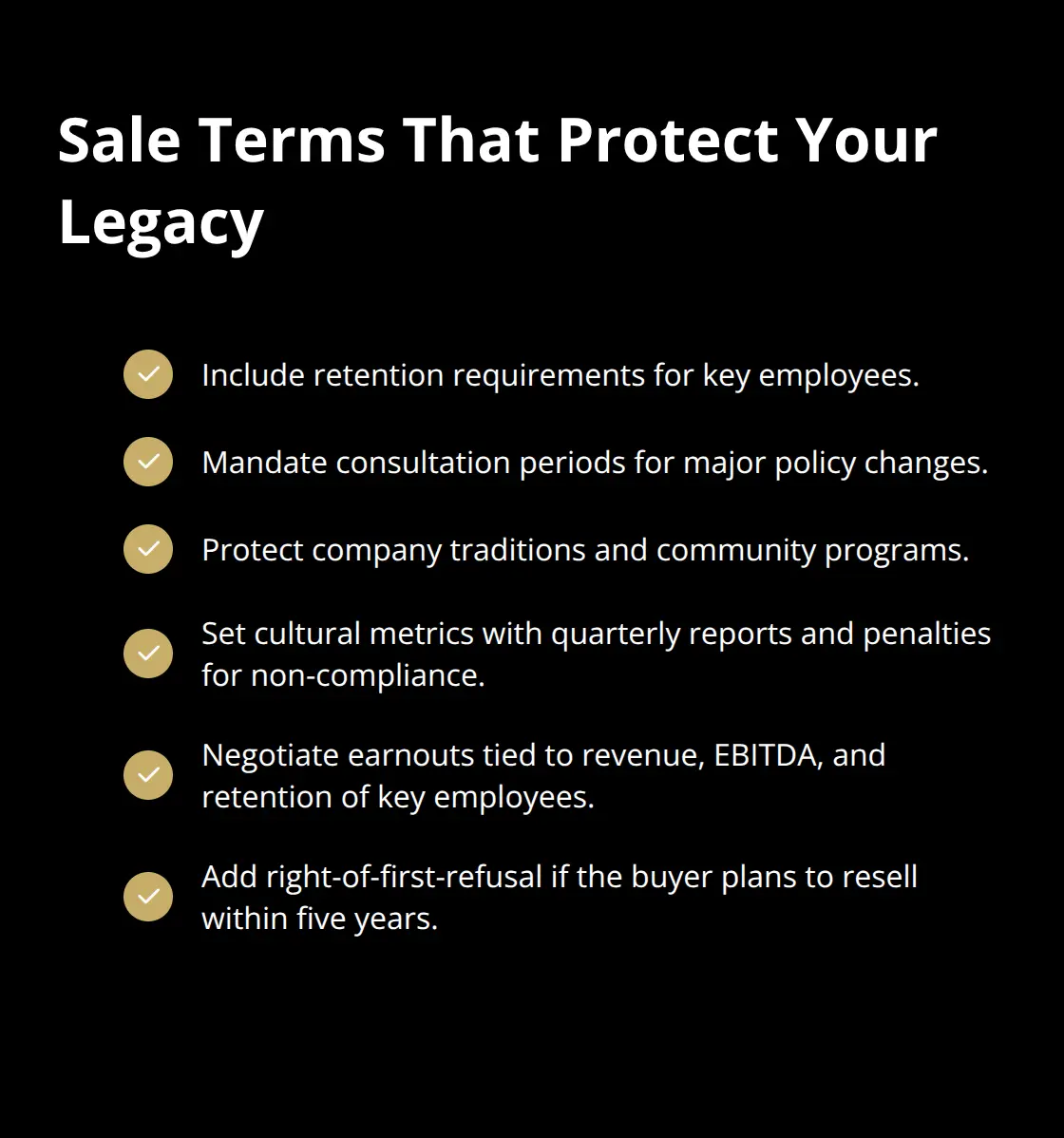
Smart sellers negotiate earnout provisions tied to revenue, EBITDA, or non-financial metrics such as retention of key employees rather than just revenue targets. Include right-of-first-refusal clauses if the buyer decides to resell within five years, which gives you opportunity to protect your legacy from future ownership changes. These contractual safeguards create accountability that survives the initial transition honeymoon period and help you navigate due diligence more effectively.
Once you’ve selected the right buyer and secured legal protections, the real work begins with managing the actual transition process to maintain your company’s identity.
How Do You Execute a Seamless Cultural Handover?
Launch Strategic Communication Campaigns
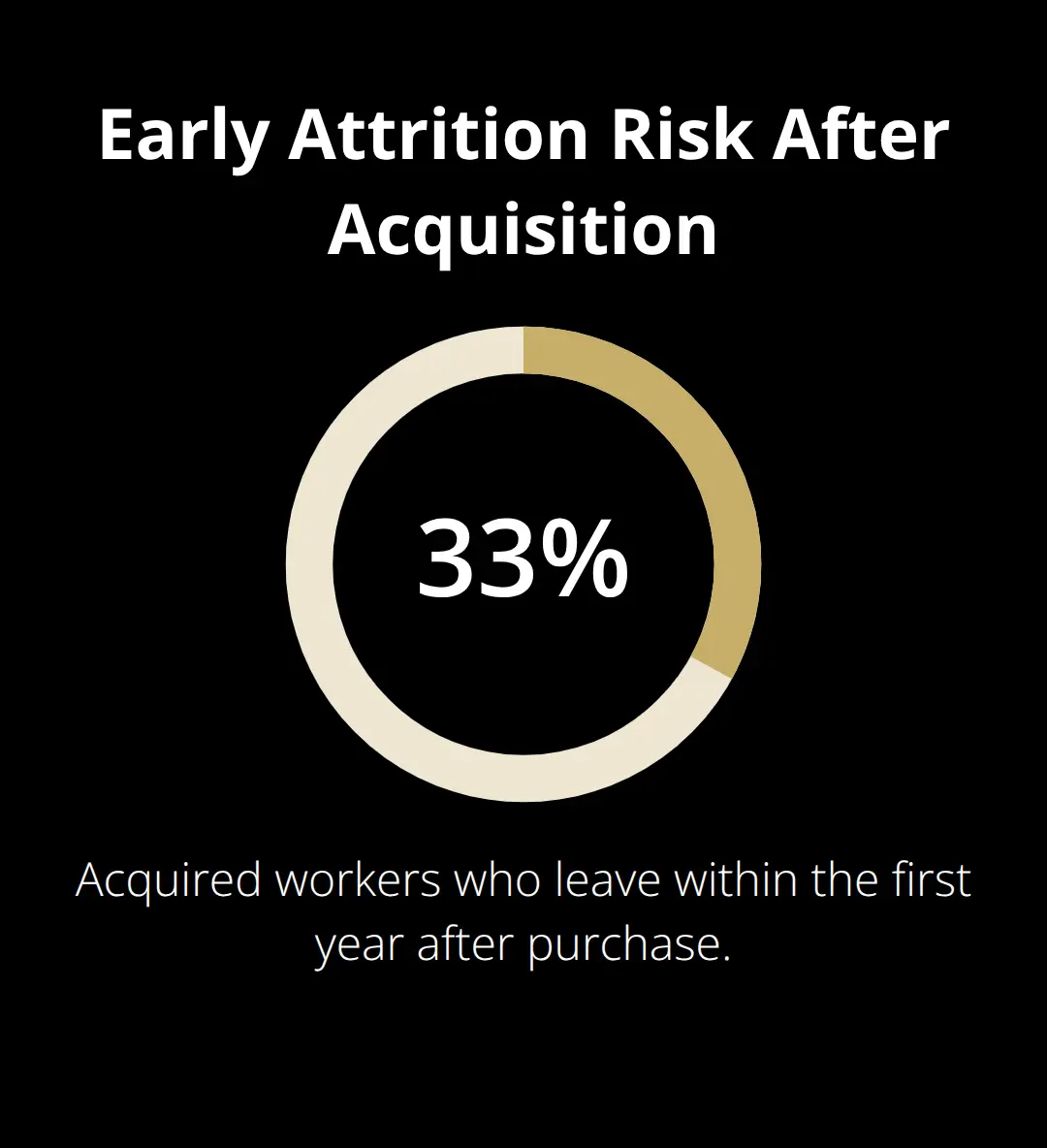
Deploy a multi-phase communication strategy that addresses different stakeholder groups with tailored message schedules. Research shows that 33 percent of acquired workers leave in the first year of their startup’s purchase, highlighting the importance of proactive communication during ownership transitions. Start with your leadership team two weeks before public announcement, followed by all employees within 48 hours, then customers and vendors within one week.
Create specific talking points for each group that emphasize continuity rather than change. Schedule town halls every two weeks during the first quarter post-sale, with mandatory attendance for department heads who must cascade information to their teams. Document all questions and concerns in a centralized database to identify patterns and address recurring issues systematically.
Install Real-Time Cultural Monitoring Systems
Implement weekly pulse surveys that measure specific cultural indicators rather than generic satisfaction scores. Track metrics like decision-making speed, cross-department collaboration frequency, and adherence to established communication protocols. Gallup measures engagement through a composite of 12 workplace experiences, including role clarity, resource availability, and recognition for good work. Establish cultural ambassadors from each department who report directly to transition leadership about policy changes, management style shifts, and employee sentiment changes. Create dashboard systems that flag cultural deviations immediately when survey scores drop below predetermined thresholds or when ambassador reports indicate concerning trends.
Enforce Accountability Through Structured Handover Protocols
Structure the handover period with mandatory weekly reviews between outgoing and incoming leadership teams to assess cultural preservation progress. Require new management to complete cultural competency assessments before they make operational changes and establish intervention triggers when legacy metrics decline. Research addresses critical gaps by examining interconnected aspects of organizational transitions during leadership transitions. Create escalation procedures that activate when cultural preservation targets miss benchmarks (including required consultation with original leadership and potential contract penalty enforcement). Schedule monthly stakeholder feedback sessions that include employee representatives, key customers, and community partners to monitor external perception changes throughout the transition process.
Final Thoughts
Business legacy preservation during a sale demands deliberate action and strategic execution. Companies that maintain their cultural identity post-acquisition invest significant time in documentation, buyer selection, and transition management. Your business legacy represents more than financial value – it encompasses the relationships, values, and practices that define your organization’s impact.
The three-phase approach works because it addresses the human elements that traditional M&A processes often overlook. Documentation creates a roadmap for new ownership. Buyer screening based on cultural compatibility prevents mismatched partnerships that destroy value. Structured transition protocols maintain continuity when leadership changes hands.
Thoughtful business transitions benefit everyone involved. Employees experience less disruption and uncertainty. Customers maintain trusted relationships (while communities preserve valuable partnerships). At Unbroker, we connect you with buyers who value cultural preservation alongside financial returns through our transparent platform. The right approach transforms your exit from an ending into a continuation of your company’s story under new stewardship.