Losing a loved one is a profound experience that can shake the foundations of our personal and professional lives. For business owners, the challenge of managing grief while making critical decisions about their company’s future can be overwhelming.
At Unbroker, we understand the complexities of selling a business after a death in the family. This guide aims to provide practical advice and support for entrepreneurs navigating this difficult journey.
How Grief Impacts Business Decisions
The Emotional Toll of Loss on Entrepreneurs
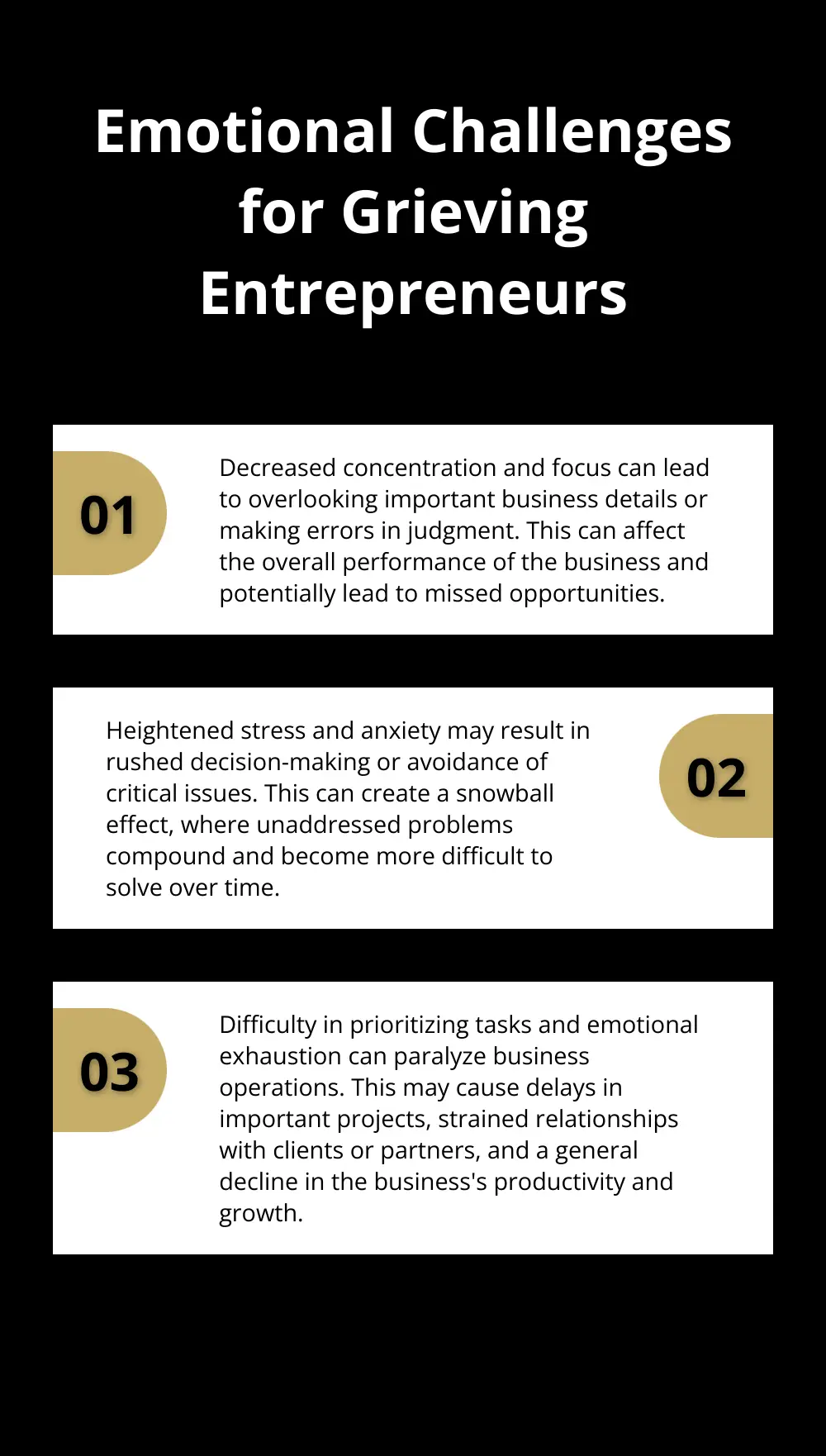
Entrepreneurs often invest their heart and soul into their businesses, making it challenging to separate personal emotions from professional decisions. When faced with grief, business owners may experience:
- Decreased concentration and focus
- Heightened stress and anxiety
- Difficulty in prioritizing tasks
- Emotional exhaustion
These emotional challenges can lead to hasty or poorly considered decisions that may have long-lasting consequences for the business.
Decision-Making Through the Fog of Grief
Grief can significantly alter cognitive processes, affecting how we perceive risks and rewards. A review of literature curates findings that have had an impact on the field of bereavement research and shaped its development.
For business owners considering selling their company, these cognitive changes can result in undervaluing the business or accepting unfavorable terms just to complete the sale quickly.
Identifying Grief’s Influence on Business Choices
It’s important for entrepreneurs to recognize how grief might affect their decision-making. Some signs that grief is influencing your business choices include:
- Feeling overwhelmed by routine tasks
- Avoiding important decisions or meetings
- Making impulsive changes to the business
- Losing interest in the company’s future
If you notice these signs, it may be time to step back and seek support. Working with a grief counselor or trusted advisor can provide an objective perspective on your business decisions during this difficult time.
Practical Steps for Decision-Making While Grieving
- Postpone major decisions: If possible, delay significant business choices. Leaders can follow principles to make smart decisions in uncertain times.
- Engage professional help: Work with a therapist or grief counselor to process your emotions.
- Assign responsibilities: Identify trusted team members who can temporarily take on some of your duties.
- Establish a decision-making framework: Create a set of criteria for evaluating business decisions to help remove emotional bias.
- Consult advisors: Rely on your board of directors, mentors, or professional advisors for guidance on critical decisions.
Acknowledging the pain – both your own and your team’s – is the initial step. Leaders must process their grief to authentically support others. This approach is particularly important when considering a business sale, as emotions can significantly influence the process and outcome.
As we move forward, it’s essential to consider how to balance personal healing with ongoing business responsibilities. The next section will explore strategies for self-care and maintaining business operations during the grieving process.
How to Heal While Running Your Business
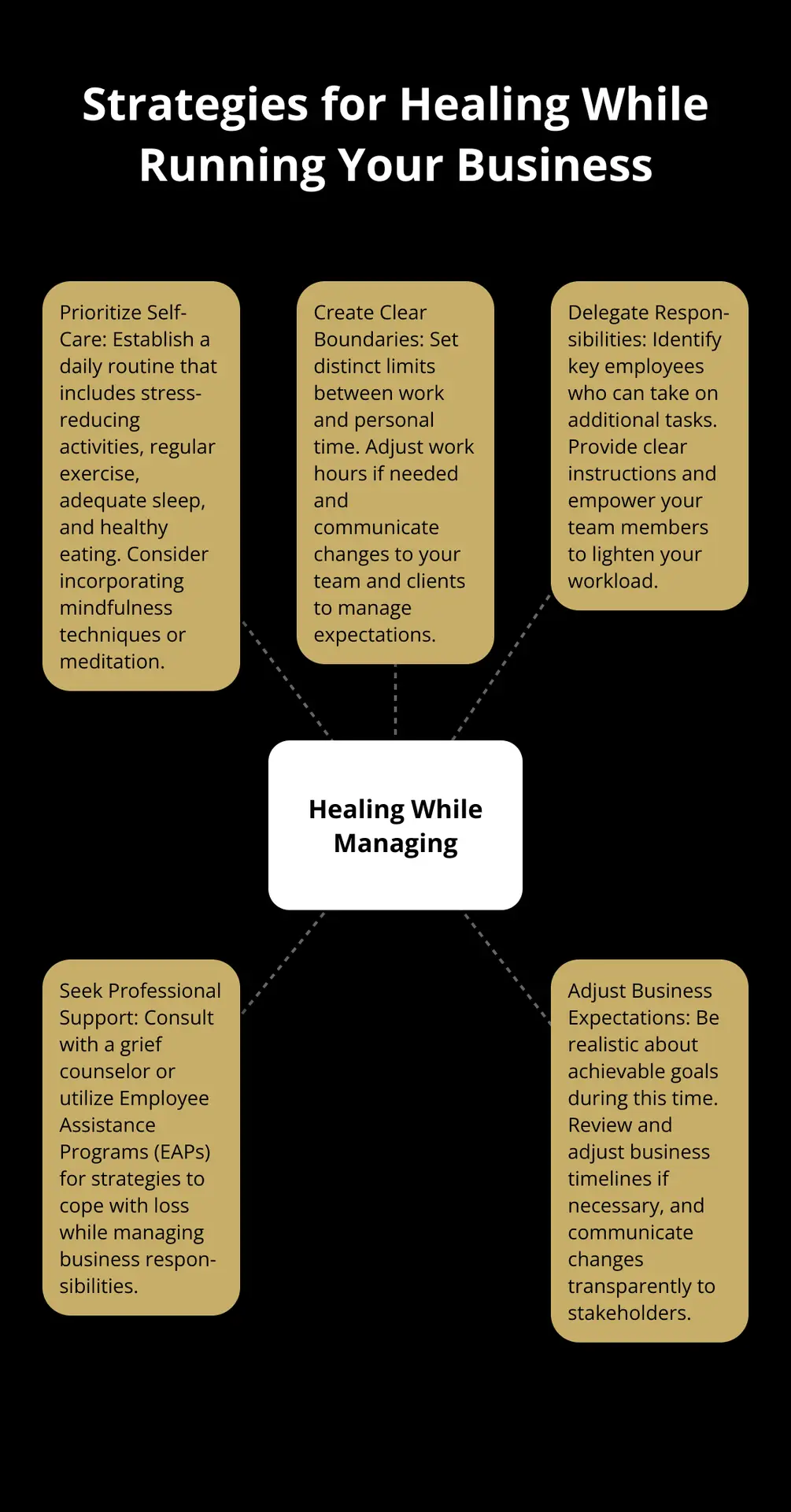
Prioritize Self-Care
Self-care is essential for maintaining your ability to lead effectively. Establish a daily routine that includes activities that reduce stress and promote healing. The American Psychological Association recommends regular exercise, adequate sleep, and healthy eating as foundational self-care practices. Consider incorporating mindfulness techniques or meditation into your day. Mindfulness-based stress reduction techniques can be effective in reducing anxiety, depression, and stress.
Create Clear Boundaries
Set clear boundaries between work and personal time. This might mean adjusting your work hours or limiting after-hours communications. Communicate these changes to your team and clients to manage expectations. Taking time for yourself ultimately benefits your business by ensuring you’re in the best possible state to make critical decisions.
Delegate Responsibilities Effectively
Now is the time to rely on your team. Identify key employees who can take on additional responsibilities. Be specific about what you need and provide clear instructions. This not only lightens your load but also empowers your team members.
Seek Professional Support
Don’t hesitate to seek professional help. A grief counselor can provide strategies for coping with loss while managing your business responsibilities. Many Employee Assistance Programs (EAPs) offer confidential counseling services. EAPs can bring benefits to the company in the form of lower insurance premiums, increased productivity, and reduced absenteeism.
Adjust Business Expectations
Be realistic about what you and your business can achieve during this time. Review your business goals and adjust timelines if necessary. Communicate these changes to stakeholders transparently. This honesty can actually strengthen relationships and build trust. Vulnerable leaders who are open about challenges can gain more respect and loyalty from their teams.
Healing is not a linear process (some days will be harder than others). Implement these strategies and work with supportive professionals to navigate this challenging period while keeping your business on track. The next section will explore how to approach the business sale process while managing grief.
When Should You Sell Your Business While Grieving?
Assessing Your Readiness
Selling a business during a period of grief presents unique challenges. The decision to sell requires careful consideration and professional guidance to navigate effectively. Your emotional state plays a significant role in determining the right time to sell.
Indicators of Readiness
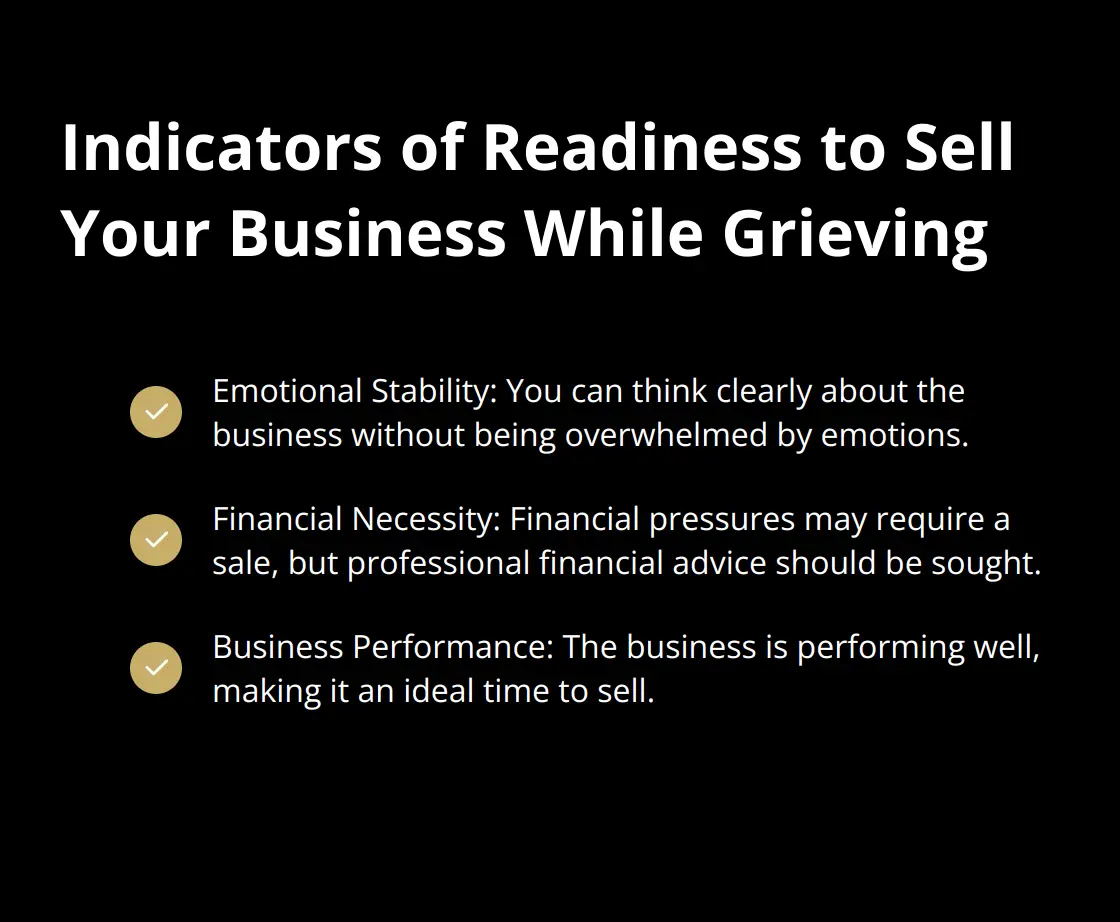
- Emotional Stability: You should consider selling when you can think clearly about the business without emotional overwhelm.
- Financial Necessity: Sometimes, financial pressures may force a sale. In such cases, seek professional financial advice to explore all options.
- Business Performance: The ideal time to sell is when your business performs well.
Sale Methods to Consider
Your emotional state will influence the most suitable sale method for you:
- Full-service Business Brokers: This option provides extensive support and minimizes your involvement. They take care of all the complicated details and will obtain numerous bids.
- Online Marketplaces: Platforms like Unbroker offer a cost-effective alternative.
- Direct Sale: If you have a potential buyer in mind (such as a family member or employee), a direct sale might prove less emotionally taxing. However, you should still obtain professional valuation and legal support.
Building Your Professional Support Team
Selling a business while grieving requires a team of professionals who understand your unique situation:
- Business Valuation Expert: Obtain an objective assessment of your business’s worth.
- Accountant: They can help organize your financials and potentially identify ways to increase your business’s value before the sale.
- Attorney: Choose one with experience in business sales who can also handle estate planning if needed.
- Grief Counselor: Don’t underestimate the importance of emotional support during this process.
- Business Sale Platform: Consider using a platform that offers both technological efficiency and human support.
Final Thoughts
The sale of a business after a family death presents unique challenges. Grief impacts decision-making, so business owners must prioritize self-care and seek professional support. A measured approach to selling involves assessing emotional readiness and choosing an appropriate sale method.
Platforms like Unbroker offer flexible options for business sales during sensitive times. These combine technological efficiency with human support to ease the process. Grief support groups and counseling services specializing in entrepreneurship can provide valuable insights and coping strategies.
Selling a business while grieving requires a balance between emotional needs and sound business decisions. Patience and clarity will help navigate this challenging period. Taking care of yourself and obtaining appropriate support will foster resilience and integrity throughout the sale process.