Selling a business shouldn’t feel like navigating a financial minefield. Most sellers face surprise fees at every turn, from hidden commissions to unexpected charges that eat into their profits.
At Unbroker, we built a transparent pricing platform because sellers deserve to know exactly what they’ll pay before signing anything. No surprises, no fine print, just honest numbers upfront.
What Traditional Brokers Actually Cost You
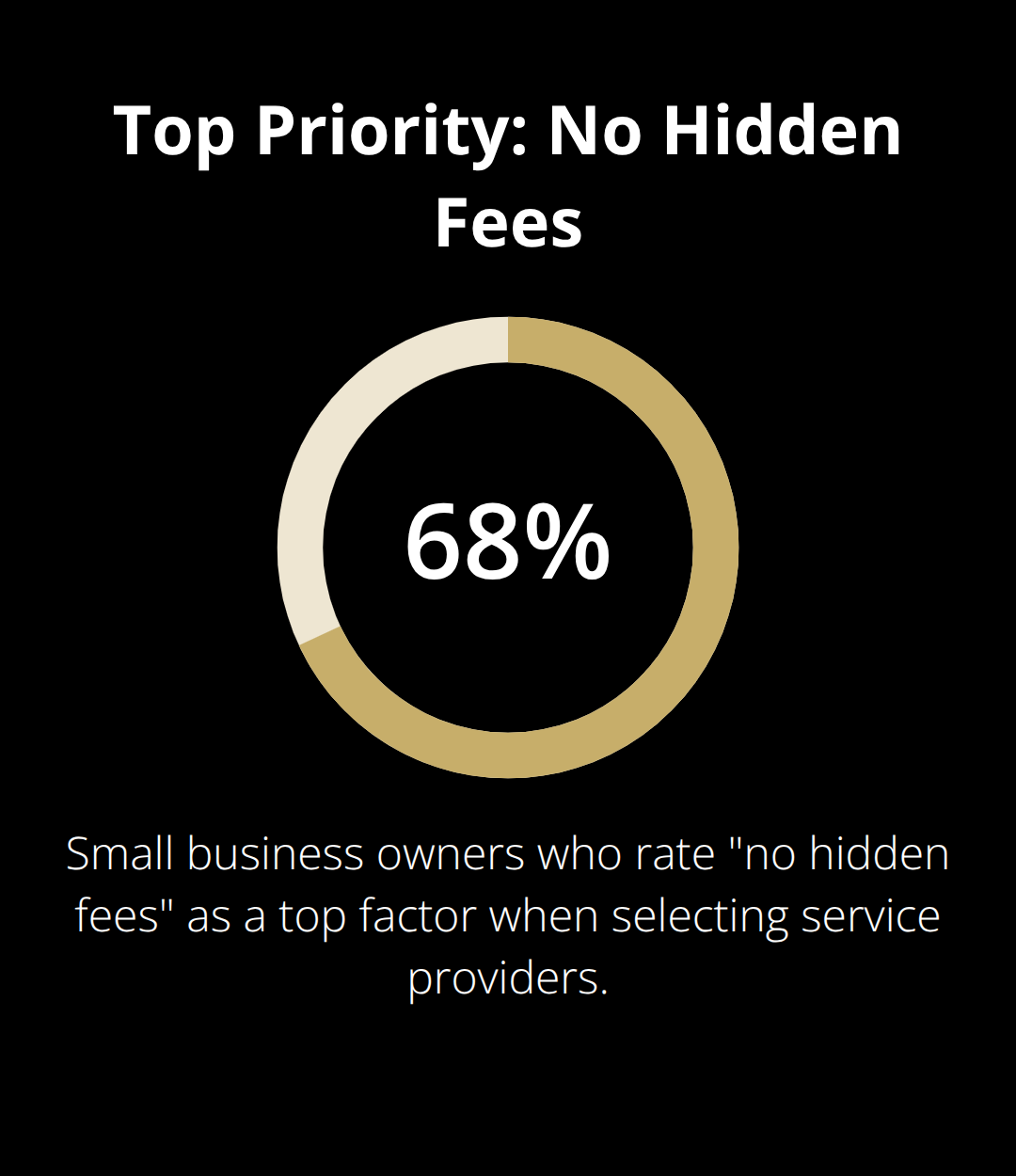
When a business broker quotes you a commission, that’s just the opening act. A $500,000 sale triggers a substantial commission alone, but the real damage comes from what follows. Escrow fees typically run $2,000 to $5,000, legal document preparation adds another $1,500 to $3,000, and marketing costs can easily hit $3,000 to $8,000 depending on the broker’s approach. A Morning Consult survey conducted for the Financial Technology Association found that 68% of small business owners rate no hidden fees as a top factor when selecting service providers, yet most never see a full cost breakdown until days before closing. At that point, you’re trapped.
Walking away means losing weeks or months of work, so sellers absorb whatever fees appear on the closing statement. That $500,000 sale suddenly nets $425,000 or less after hidden fees in business broker commissions pile up.
The real problem isn’t just the total cost-it’s the timing. Sellers make their sale decision based on incomplete information, then discover the actual net proceeds are substantially lower than expected. This forces difficult choices: renegotiate with the buyer at the last minute, accept a smaller payout, or walk away entirely.
The Hidden Fee Trap
Brokers often disguise commissions as service charges or mark up third-party services without transparent disclosure. One seller pays an additional 2% for buyer qualification reviews, another gets charged for rush processing, and a third discovers marketing fees weren’t included in the initial estimate. These charges compound because sellers have no way to compare them upfront. You can’t shop around when you don’t know the real price.
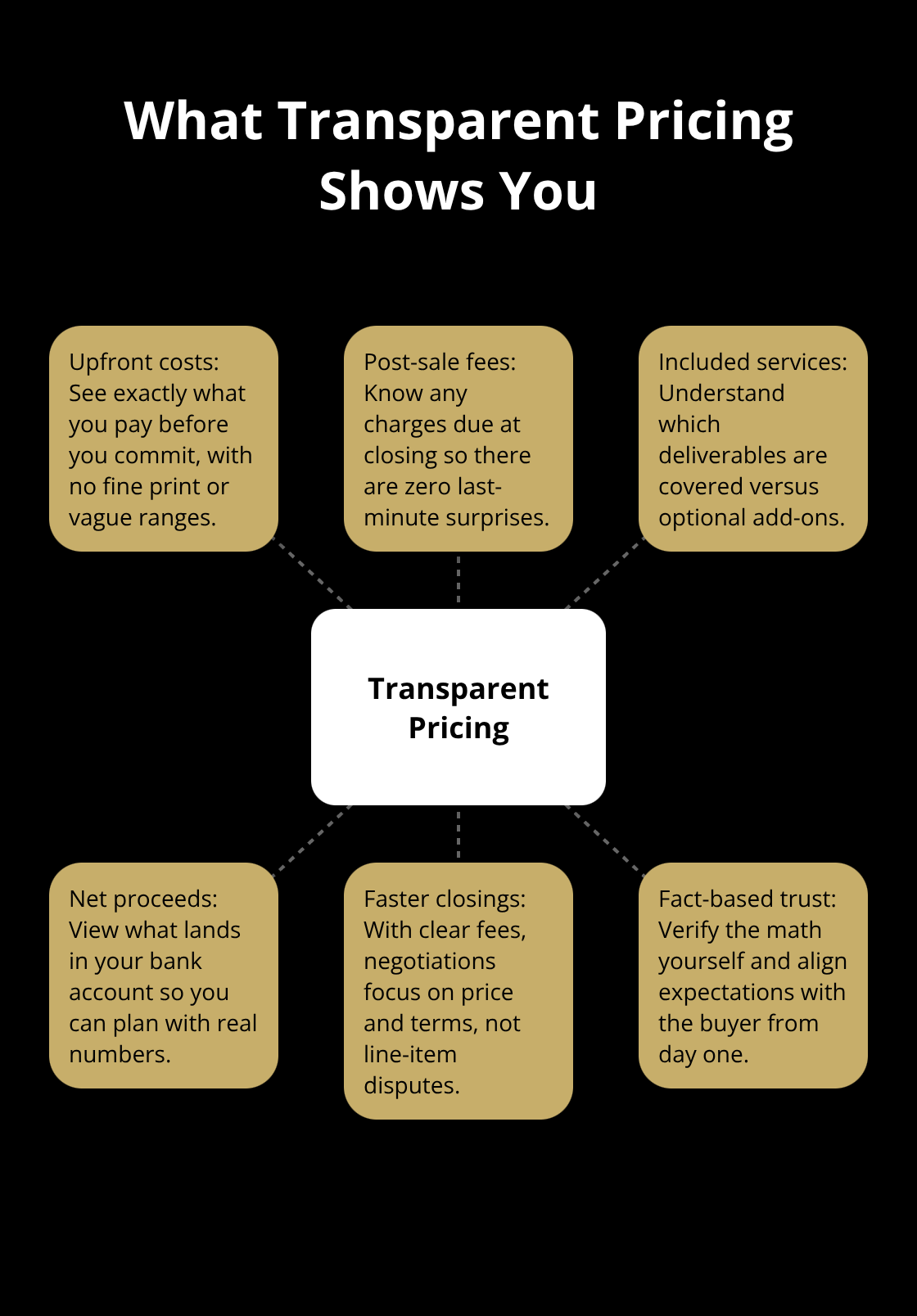
The lack of transparency also creates friction right when you need smooth closing. Both buyer and seller waste energy arguing about fees instead of focusing on deal terms and timeline. Small business owners prioritize transparent pricing by publishing every cost upfront: the base fee, post-sale charges, what services are covered, and exactly what your net proceeds will be.
Why Timing Matters
Unexpected charges appearing days before closing leave you powerless. You’ve already told your team you’re selling, notified key customers, and mentally moved on. Adding $10,000 or $15,000 in surprise fees at the finish line feels unavoidable. Clear pricing from day one changes this dynamic completely.
You can evaluate whether selling makes financial sense before you invest significant time and energy into the process. You can compare multiple platforms side by side using real numbers, not marketing promises. You can make an informed decision about which service actually delivers the best net result for your specific situation. This upfront clarity shifts control back to you-the seller-and transforms how you approach the entire transaction.
What Transparent Pricing Reveals About Your Actual Payout
Knowing your net proceeds before you commit to selling changes everything. When a broker hides fees until closing day, you negotiate blind. You thought you’d net $425,000, but surprise charges reduce it to $405,000. That $20,000 gap represents real money you could have used to fund a transition, invest in your next venture, or simply keep. Transparent pricing eliminates this ambiguity entirely. You see the success fee percentage, what’s included, and exactly what lands in your bank account. This isn’t theoretical clarity-it’s the difference between making a financially sound decision and discovering too late that the deal doesn’t work for you.
Budget Planning Starts With Honest Numbers
Most sellers approach a business sale without a clear financial picture. They estimate what they might net, then make plans based on that guess. When hidden fees appear, those plans collapse. With transparent pricing, you calculate your net proceeds on day one and build your post-sale strategy around real numbers. If you’re planning to pay off debt, fund a sabbatical, or invest in another business, you need to know the actual amount available. A seller expecting $450,000 but receiving $410,000 suddenly can’t execute their plan. Transparent platforms publish every cost component upfront, so you model different scenarios. If selling at $500,000 nets you $480,000 after all costs, you know immediately whether the deal justifies the effort. This prevents wasted time pursuing sales that don’t meet your financial threshold.
Trust Emerges When Numbers Add Up
Sellers develop trust in a service when they verify the math independently. A platform that charges a 6% success fee, paid only when your business sells, operates transparently. You calculate your net proceeds yourself and confirm the numbers match what the platform promised. This verification process builds confidence because you rely on facts, not the broker’s word. Contrast this with traditional brokers who quote a percentage commission but never disclose the full cost breakdown until weeks later. The lack of verifiable numbers creates suspicion, even if the broker has good intentions. When both buyer and seller know the exact fees upfront, negotiations focus on price and terms instead of arguments about costs. This accelerates closing timelines because everyone operates from the same financial reality.
Comparing Platforms Becomes Straightforward
You waste no energy questioning whether hidden charges will appear or whether the quoted price includes everything promised. Instead, you compare multiple services side by side using actual numbers. One platform charges 10% commission plus $5,000 in additional fees. Another charges a 6% success fee, paid only when the business sells. You can calculate which option delivers better net proceeds for your specific sale price. This comparison power shifts control to you. You’re no longer at the mercy of marketing claims or vague promises. You see exactly what each service costs and what you’ll actually receive. This transparency forces platforms to compete on real value, not hidden fees or confusing pricing structures. The seller who understands their true net proceeds can make decisions with confidence, knowing they’ve chosen the option that actually serves their financial interests.
How We Price Your Business Sale Differently
We at Unbroker reject the traditional broker model entirely. Instead of charging 8% to 10% commissions that evaporate your proceeds, we’ve built pricing that actually respects what you’re selling for. Our Full Service Business Sale charges a 6% success fee, paid only when your business sells, meaning you know your exact net proceeds from day one. If you sell for $500,000, you calculate $500,000 minus a 6% success fee, and that’s what lands in your account before taxes. No upfront costs, no surprise markups on third-party services, no fees disguised as processing charges. This success-fee structure forces us to operate efficiently instead of inflating costs to chase higher percentages. For sellers who want more control, our Assisted Business Sale option lets DIY sellers build their own sale process while accessing our buyer network and expert guidance. This option works perfectly for founders who have time and want to minimize costs while keeping professional support available when needed.
What Your Real Savings Look Like
Compare the math directly. A traditional broker takes 10% on a $500,000 sale, charging $50,000 in commission alone. Add $3,000 for escrow, $2,000 for legal documents, $5,000 for marketing, and you’re paying $60,000 total. Your net proceeds drop to $440,000. We at Unbroker charge a 6% success fee, or $30,000 on that same sale, leaving you with $470,000.
That $30,000 difference isn’t theoretical-it’s real money you keep. Some sellers invest that difference back into their next venture or use it to fund a sabbatical they’ve earned. The structural advantage matters because we don’t profit from volume or percentage deals; we profit from serving sellers efficiently at honest prices. This alignment means we actually want your sale to close quickly and cleanly rather than stretching timelines to justify higher fees.
Transparency That Eliminates Last-Minute Panic
You receive a complete cost breakdown before you sign anything. No hidden fees appear three days before closing. No surprise charges appear on the final statement. No discovery that marketing costs weren’t included in the estimate. This upfront clarity lets you model different sale scenarios and understand exactly what happens at each price point. Selling at $400,000 nets you $395,015 after our fees. Selling at $600,000 nets you $595,015. You can run these numbers yourself and verify them independently, which builds genuine confidence in the process. Both you and your potential buyer know the exact fees involved, so negotiations stay focused on price and terms rather than arguments about costs. Closing timelines accelerate because nobody wastes energy questioning whether hidden charges will appear at the finish line.
Final Thoughts
Selling your business demands financial clarity, not guesswork. Hidden fees destroy the financial outcome you’ve worked years to achieve, and they force sellers into impossible choices at closing time. A transparent pricing platform eliminates this trap entirely by showing you exactly what you’ll pay before you commit to anything.
The difference between traditional brokers and honest pricing proves substantial. A $500,000 sale costs you $60,000 or more with conventional brokers, leaving you with $440,000, while that same sale through Unbroker’s 6% success fee costs $30,000, leaving you with $470,000. That $30,000 gap represents real money for your next chapter-whether you’re funding a new venture, paying off debt, or taking the break you’ve earned.
We at Unbroker built our service around one principle: you deserve to know your actual net proceeds on day one. Explore how transparent pricing and real savings work when you’re ready to sell on your terms.