Selling your business without professional help is risky. One missing clause in a contract or one overlooked disclosure requirement can cost you thousands-or worse, derail the entire deal.
At Unbroker, we’ve seen countless DIY sellers stumble because they lacked proper documentation. The good news: document templates included in this guide give you the legal foundation and buyer confidence you need to close successfully.
Why Documentation Decides Your Deal
Selling a business without proper documents is like negotiating in the dark. You cannot see the pitfalls, the buyer cannot trust your claims, and legal problems emerge weeks or months after you think the deal is closed. Why Documentation Decides Your Deal ensures continuity of operations, minimizes disruptions, and facilitates a smooth transition of ownership. For business sellers, this inefficiency translates directly into lost negotiating power, delayed closings, and exposure to liability. A single missing representation about business liabilities, tax compliance, or customer contracts can trigger buyer remorse, lawsuits, or deal collapse. The documentation you provide sets the tone for how seriously a buyer takes your business and how confident they feel about signing.
State Laws Shape Your Contract Requirements
Your state mandates specific disclosures and contract language for business sales. A Business Purchase Agreement must cover purchase price allocation, earnest money terms, representations and warranties, closing conditions, and non-compete provisions-all tied to your state’s laws on enforceability. If your agreement lacks proper tax allocation language, the IRS may challenge how you and the buyer reported the sale, resulting in audits and penalties for both parties. Non-compete clauses must be reasonable in duration and geography to survive legal challenge; vague or overly broad language gets struck down in court, leaving your buyer free to compete with you immediately. Financial disclosure documents must accurately reflect what you claim about revenue, expenses, and customer contracts. Misrepresenting even one item opens you to fraud claims that can survive the closing and haunt you for years.
Professional Documents Build Buyer Confidence
Buyers assume DIY sellers cut corners. When you present polished, legally sound documents that mirror what professional brokers use, you signal competence and legitimacy. A complete Business Purchase Agreement with proper representations, warranties, and indemnification provisions shows you understand the sale process and hide nothing. Professional Documents Build buyer confidence through timely access to comprehensive documentation, which minimizes delays, expedites decision-making, and cultivates trust. Conversely, hand-written contracts, missing signatures, or vague terms make buyers nervous and justify lower bids. Buyers also expect financial disclosures, tax returns, and customer lists presented in a professional format. Ready-made templates structure this information so buyers can review it quickly and spot no red flags. Templates also prevent you from accidentally omitting critical details that buyers will demand later, which extends negotiations unnecessarily.
Poor Contract Language Costs Thousands
Many DIY sellers miss earnest money clauses, allowing buyers to walk away without penalty if financing falls through. Others fail to specify who covers closing costs, leading to disputes at the final hour. Some overlook indemnification survival periods, meaning post-closing claims can emerge years later with no protection. A missing or poorly worded non-compete clause means you cannot prevent your buyer from immediately competing with you using the business relationships you just sold. These errors are not theoretical-they happen repeatedly because sellers draft agreements from scratch or copy templates without understanding the clauses. A proper Business Purchase Agreement template includes sections like Closing Provisions with deadlines, Default and Cure frameworks allowing 30 days to fix breaches, and Indemnification provisions splitting liability between pre-closing and post-closing periods. Using a tested template cuts these mistakes dramatically and protects your sale price and timeline. The next section covers the specific documents you need to prepare before a buyer even makes an offer.
What Documents You Actually Need to Close Your Sale
The Letter of Intent Signals Serious Buyer Commitment
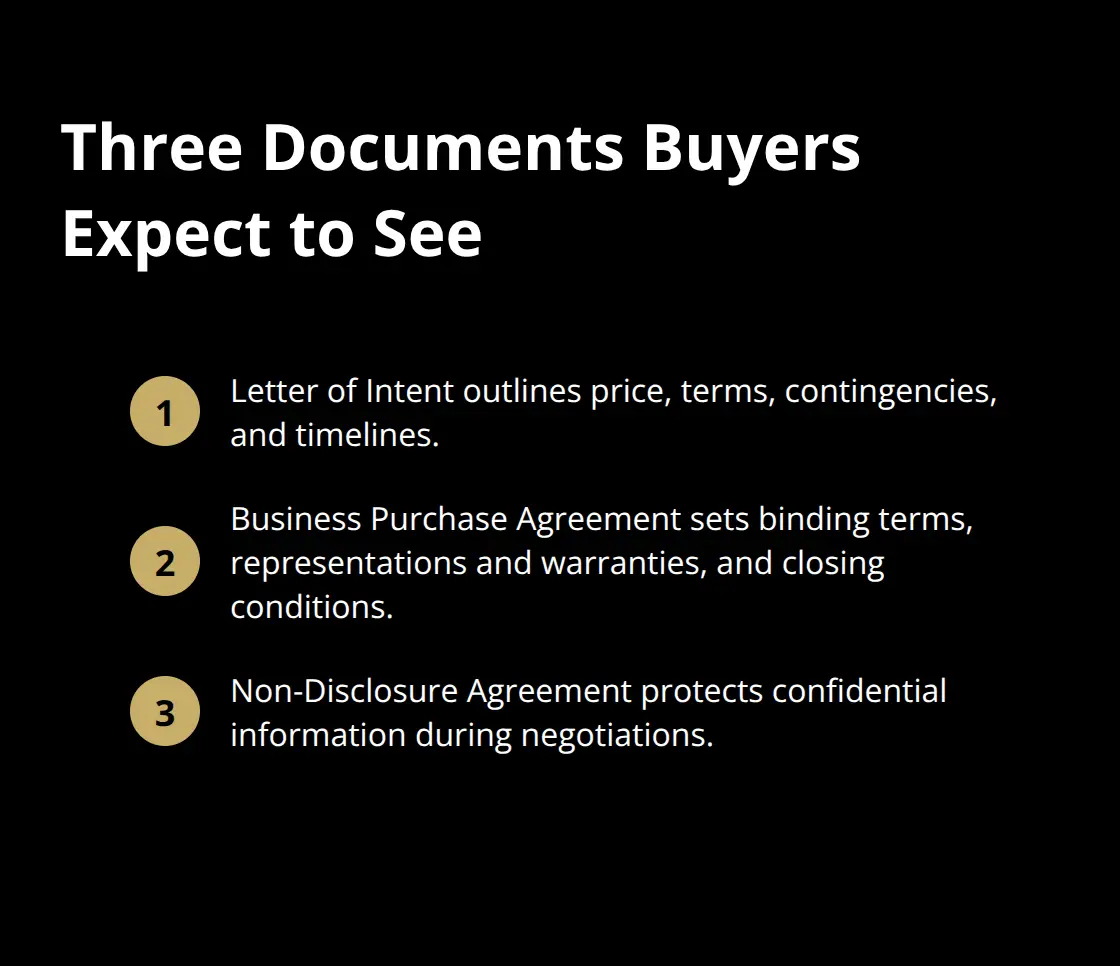
A Letter of Intent marks the moment a buyer commits to serious negotiation. This document outlines purchase price, payment terms, contingencies, and a target closing date-all non-binding, but it signals intent before lawyers draft the full agreement. Many DIY sellers skip this step and jump straight to a formal purchase agreement, which wastes time if the buyer backs out over price or terms. The Letter of Intent typically runs two to four pages and takes hours to complete, not weeks. Include the business description, proposed purchase price, earnest money amount (typically 5% of the sale price), financing contingencies, and a closing timeline. This document protects you by confirming the buyer’s seriousness before you invest in full due diligence preparation.

The Business Purchase Agreement Locks Down Legal Terms
Once both parties sign the Letter of Intent, you move to the Business Purchase Agreement, which is the legally binding contract that governs the entire transaction. This agreement must specify purchase price allocation across assets (inventory, equipment, customer contracts, goodwill), earnest money that the buyer deposits at signing and credits toward the purchase price at closing, and representations and warranties from both parties about the business’s legal standing, tax compliance, and absence of hidden liabilities. Closing provisions should include a specific date and calendar-day deadlines for each party to perform, with language stating time is of the essence so neither party can claim delays are acceptable. Default and cure provisions typically allow 30 days for the breaching party to fix the problem before the other party can terminate or seek damages. Non-compete clauses must state a specific duration (often 2–5 years) and geographic scope to survive legal challenge; vague language like you cannot compete anywhere indefinitely gets struck down in court, leaving your buyer free to start a competing business immediately after closing.
Financial Disclosures Prove Your Asking Price
Financial disclosure documents prove your business is worth what you claim. Provide the last three years of tax returns, profit and loss statements, and balance sheets so the buyer can verify revenue, expenses, and profitability trends. Include a customer list showing the top 10–20 customers by revenue and contract status (annual, month-to-month, or project-based), since buyers worry about customer concentration and retention after you leave. A valuation summary should show how you calculated the asking price using industry multiples (for example, many service businesses sell for 2–4 times annual revenue or 4–6 times EBITDA). State which multiple you used and why it applies to your business. If you claim the business is worth $500,000 and the buyer sees revenue of $200,000, they will immediately question whether you used a 2.5x multiple or inflated the value. Transparency here prevents months of back-and-forth negotiation.
Non-Disclosure Agreements Protect Your Competitive Edge
Non-Disclosure Agreements protect your business information during negotiations. A buyer may walk away, and you do not want them sharing your customer list, pricing strategy, or financial details with a competitor. Have the buyer sign an NDA before you share any sensitive information beyond the basic business description. The NDA should cover confidentiality obligations for both parties, specify a duration (often 2–3 years post-termination), and clarify what information is excluded (publicly available data, information the buyer already knew). Confidentiality provisions in the main Business Purchase Agreement also protect sensitive information disclosed during performance of the agreement itself. Many DIY sellers hand over financial statements and customer lists without an NDA, then watch the buyer shop the information to competitors or use it to negotiate harder. A signed NDA costs nothing but prevents this exposure.
Templates for all three documents are widely available and help you structure the information buyers expect to see. With these documents in place, you shift from preparation to active negotiation-the moment when your documentation quality directly impacts the offers you receive.
Templates Cut Your Legal Costs Without Cutting Corners
Hiring a business attorney to draft a purchase agreement from scratch costs an average of $920 on a flat fee basis, depending on complexity and your state. If you use a template instead, you pay nothing upfront and get a document that covers the same legal ground. The real advantage is not just saving money-it is speed. An attorney takes two to four weeks to draft and revise an agreement; a template lets you customize and finalize terms in a few hours. Buyers also move faster when they see a professional, complete agreement waiting for them on day one. You eliminate the back-and-forth where the buyer’s attorney requests changes, you send it to your attorney, your attorney responds, and weeks vanish. Templates standardize the process so both parties know what to expect and can focus on price and terms, not on fixing sloppy contract language.
Speed Matters More Than You Think
Rocket Lawyer’s Business Purchase Agreement template is widely used by DIY sellers and small business owners, showing that ready-made documents work for real transactions. When you present a buyer with a polished, complete agreement on day one, they perceive your business as professional and organized. Conversely, delays in producing documents signal incompetence or hidden problems, which justifies lower offers. A buyer who waits three weeks for a purchase agreement will start second-guessing the entire deal. They may reduce their offer, add contingencies, or walk away to find a cleaner opportunity. Accelerating your timeline from proposal to signed agreement from eight weeks to four weeks can mean the difference between closing a deal and losing it to a competing opportunity. Templates also let you prepare documents before you even list your business for sale, so the moment a qualified buyer emerges, you hand them a complete package. This preparation shifts negotiating power to you because the buyer sees no friction, no delays, and no amateur hour.
Consistency Protects Your Position Across All Negotiations
When you draft documents manually or use different templates for different buyers, inconsistencies emerge. One agreement says the earnest money is non-refundable if financing fails; another says it is refundable. One specifies a 30-day cure period for breaches; another says 60 days. These gaps confuse buyers, create legal exposure, and invite disputes. A standardized template ensures every buyer sees the same terms, the same representations, and the same non-compete language. This consistency also protects you if a deal falls through and you move to the next buyer-you are not starting from scratch or explaining why buyer number two gets different terms than buyer number one. Consistency also prevents you from accidentally weakening your position. When you use the same template repeatedly, you internalize which clauses protect you and which ones do not. You stop making careless mistakes like forgetting to include a survival period for indemnification claims, which means post-closing liability claims could emerge years later with no protection.
Final Thoughts
DIY sellers who use document templates included in their sales process close deals faster and with fewer legal complications than those who improvise. You now understand why documentation matters, what specific documents buyers expect, and how templates eliminate delays and legal costs. The difference between a smooth closing and a collapsed deal often comes down to whether you presented professional, complete paperwork on day one or scrambled to produce documents weeks into negotiations.
Templates signal competence to buyers because they demonstrate that you take the sale seriously. When a buyer sees a polished Letter of Intent, a comprehensive Business Purchase Agreement with proper indemnification and non-compete language, and organized financial disclosures, they perceive your business as legitimate and well-managed. This perception justifies higher offers and faster decisions, while standardized terms across all negotiations prevent the mistakes that cost thousands in lost sale price or post-closing liability exposure.
Start preparing your documents now, before you list your business. Customize a Business Purchase Agreement template to reflect your state’s laws and your business specifics, then gather three years of tax returns, profit and loss statements, and a customer list. We at Unbroker provide legal document templates, negotiation assistance, and access to a buyer network through transparent, low-cost options that support DIY sellers without high brokerage fees.