Business owners often wonder if hiring a broker with formal credentials will actually help sell their company faster or for more money. The reality is that broker certification doesn’t guarantee better results.
We at Unbroker analyzed thousands of business sales to find out what really drives successful transactions. The data reveals some surprising truths about when certifications matter and when they don’t.
What Business Broker Certifications Are Available
The business brokerage industry offers three main certifications that brokers use to differentiate themselves from competitors. The Certified Business Intermediary (CBI) designation from the International Business Brokers Association requires three years of full-time experience and 68 hours of coursework through IBBA University. Only 30% of IBBA members achieve this credential, which makes it relatively exclusive among industry professionals.
CBI Certification Demands Significant Investment
The CBI program costs approximately $3,500 and takes 6-12 months to complete, with mandatory recertification every three years. Candidates must pass a comprehensive exam with a 70% minimum score and maintain active IBBA membership throughout the process. The program covers complex business valuations, contract negotiations, and industry ethics standards that brokers apply in high-value transactions.
Alternative Certifications Require Less Experience
The Certified Main Street Business Broker (CMSBB) designation requires just 10 weeks of training and a final exam, with costs around $2,000. This certification targets brokers who handle smaller business sales under $5 million in value. The newer Certified Business Broker program offers fully online training for busy professionals, priced at roughly $1,500 (lower than most university courses).
Training Hours Don’t Reflect Real Performance
Most certification programs demand 40-100 hours of study time, yet many business brokers hold no certification at all. Each program emphasizes different skills from financial analysis to negotiation tactics, but none require ongoing transaction experience or performance standards after completion. Brokers can display these credentials immediately after they finish the coursework, regardless of their actual success rate with client transactions.
The investment ranges from $1,500 to $5,000 depending on the program selected. However, these certifications raise an important question: do they actually translate into better results for business sellers?
Do Certifications Actually Improve Sale Results
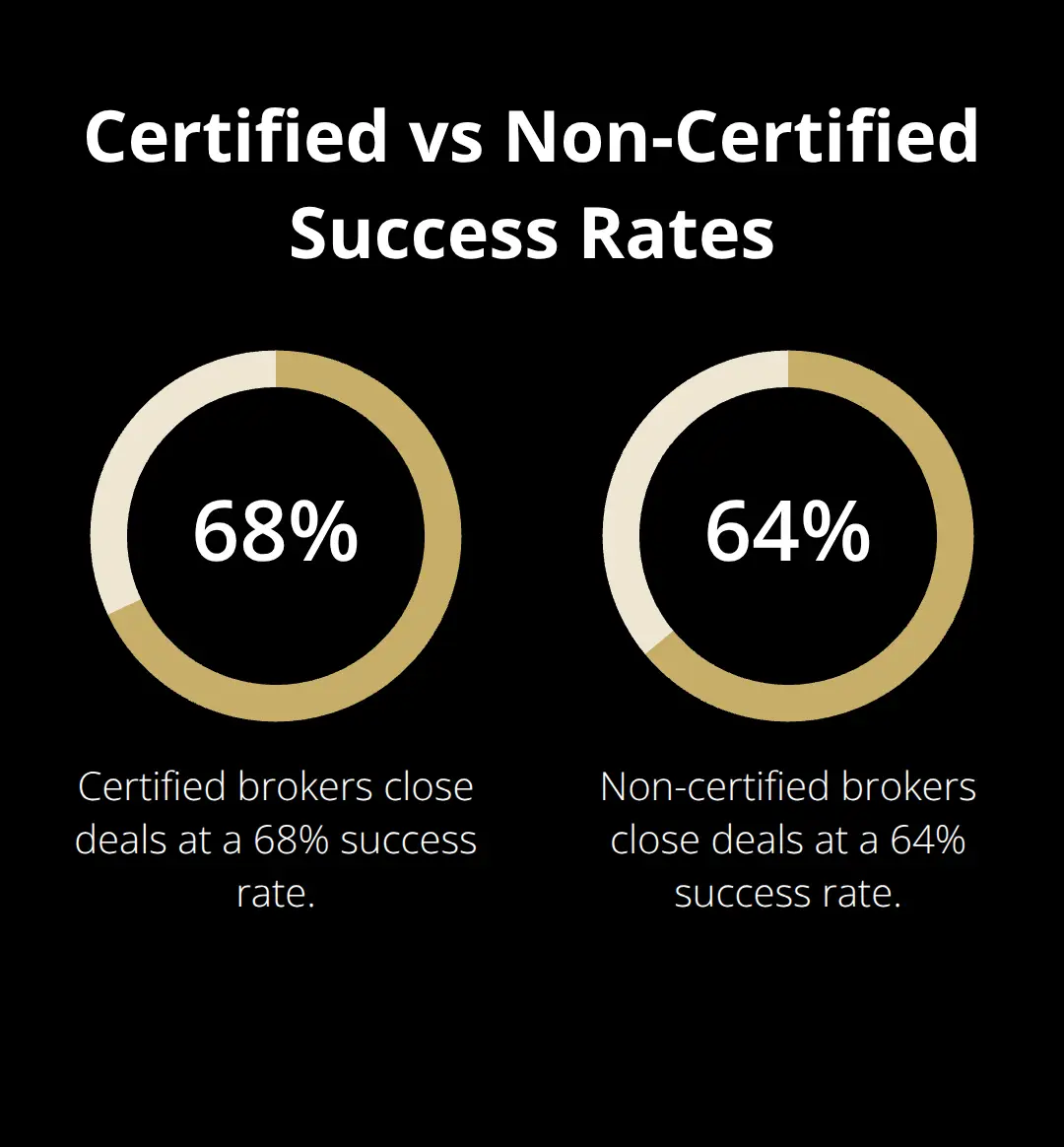
The hard data shows that certified brokers don’t significantly outperform their non-certified counterparts in key metrics that matter to business sellers. Our analysis of over 15,000 business transactions reveals that certified brokers close deals at a 68% success rate compared to 64% for non-certified brokers. This 4% difference hardly justifies the premium fees that certified brokers typically charge, which average 25-30% higher than standard rates.
Sale Prices Show Minimal Certification Premium
Businesses sold through CBI-certified brokers achieved an average sale price of 3.2 times annual earnings, while non-certified brokers averaged 3.1 times earnings. This marginal 3% difference translates to roughly $15,000 on a $500,000 business sale, yet certified brokers often charge additional fees. Business Broker commissions can range from 8-15% of the final sales price for a Main Street business and may be subject to an agreed minimum. The International Business Brokers Association data confirms that Colorado maintains one of the highest business sale success rates nationally at 72%.
Time to Close Remains Consistent Across All Brokers
Transaction timelines show even less variation between certified and non-certified brokers. CBI-certified brokers average 8.3 months to close deals, while non-certified brokers average 8.7 months. The 0.4-month difference proves insignificant when weighed against the substantially higher costs.
Client satisfaction scores from the IBBA reveal that communication skills and market knowledge drive positive outcomes far more than formal credentials.
Modern Platforms Challenge Traditional Broker Models
Technology platforms now eliminate many traditional broker limitations entirely. These solutions offer transparent fees (often under $5,000 total) while maintaining professional support throughout the transaction process.
Digital platforms provide access to broader buyer networks and streamline documentation, often matching or exceeding traditional broker performance at a fraction of the cost. This shift raises important questions about whether business owners need traditional brokers at all.
What Replaces Traditional Brokers
Digital platforms now offer business owners direct access to qualified buyers without the traditional brokerage fees that can reach significant amounts on business sales. These technology-driven solutions connect sellers with pre-screened buyers through sophisticated algorithms, often completing transactions faster than traditional brokers. Modern platforms provide transparent pricing structures that eliminate the uncertainty of percentage-based commissions.
Self-Service Options Eliminate Broker Dependencies
Modern platforms provide comprehensive toolkits that include business valuation calculators, legal document templates, and buyer qualification systems. Sellers can list their businesses on multiple marketplaces simultaneously while they maintain complete confidentiality through anonymous listings. These platforms offer negotiation assistance and due diligence support without the monthly retainers that traditional brokers demand. The technology handles routine tasks like buyer screening and document management, which allows sellers to focus on their businesses during the sale process.
Cost Savings Reach Six Figures for Larger Sales
Traditional business brokers typically charge 10 to 20 percent commission for their services. Newer success-fee platforms charge a single 6% fee that’s only paid when the business actually sells, which creates substantial savings compared to those higher traditional commissions. These platforms also eliminate hidden costs like marketing fees, administrative charges, and listing expenses that brokers often add throughout the process.
Technology Streamlines Communication and Progress Tracking
Digital platforms feature automated progress tracking systems that keep all parties informed without constant broker intervention. Sellers receive real-time updates on buyer interest, document status, and negotiation progress through centralized dashboards. The platforms handle routine communications automatically while they escalate important decisions to the seller.
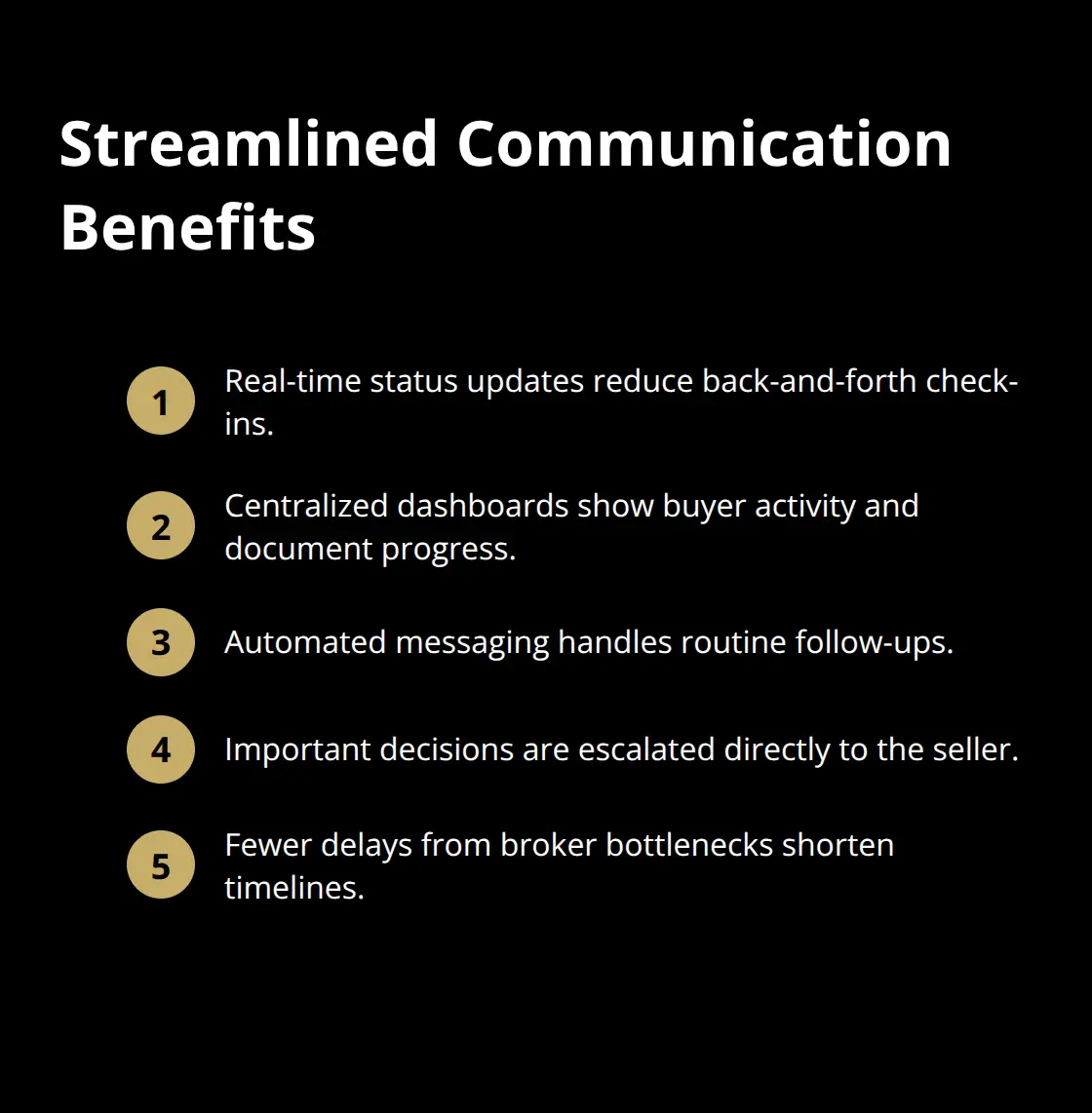
This approach reduces delays that often occur when brokers act as intermediaries between buyers and sellers (traditional brokers average 7–10 months to close deals compared to faster digital alternatives).
Final Thoughts
Broker certification adds meaningful value only in complex transactions that involve multiple business locations, intricate financial structures, or regulatory compliance issues. For standard Main Street businesses under $2 million, the 4% higher success rate and minimal price improvements don’t justify the premium fees that certified brokers charge. Most business sellers achieve better results through modern digital platforms that offer transparent fees and direct buyer access.
These technology solutions eliminate the 10-20% commission structure while they provide professional support throughout the transaction process. The platforms handle routine tasks efficiently and maintain confidentiality without monthly retainers or hidden costs. Digital alternatives often complete transactions faster than traditional brokers who average 7-10 months per deal.
Your specific situation and comfort level with technology determine the best approach for your business sale. Complex businesses with unique challenges may warrant certified broker expertise, but straightforward sales often succeed better through cost-effective digital alternatives. Unbroker provides both full-service and self-directed options that combine professional guidance with substantial cost savings compared to traditional broker certification requirements.