Selling a manufacturing business with outdated equipment can be a daunting task. Many owners worry that aging machinery will significantly decrease their company’s value and appeal to potential buyers.
At Unbroker, we’ve guided numerous manufacturing business owners through this process. We’ve found that with the right strategies, it’s possible to maximize your company’s value and attract serious buyers, even with older equipment.
What’s Your Manufacturing Company Really Worth?
The Real Impact of Your Equipment
A professional appraisal of your machinery forms the foundation of your company’s valuation. Age isn’t the only factor; functionality and efficiency play crucial roles. A survey of National Association of Manufacturers members was conducted between July 20, 2023, and Sept. 1, 2023, with the purpose of evaluating the effect of equipment on productivity. Document recent upgrades, maintenance records, and operational efficiency to showcase the equipment’s true worth to potential buyers.
Crunching the Numbers
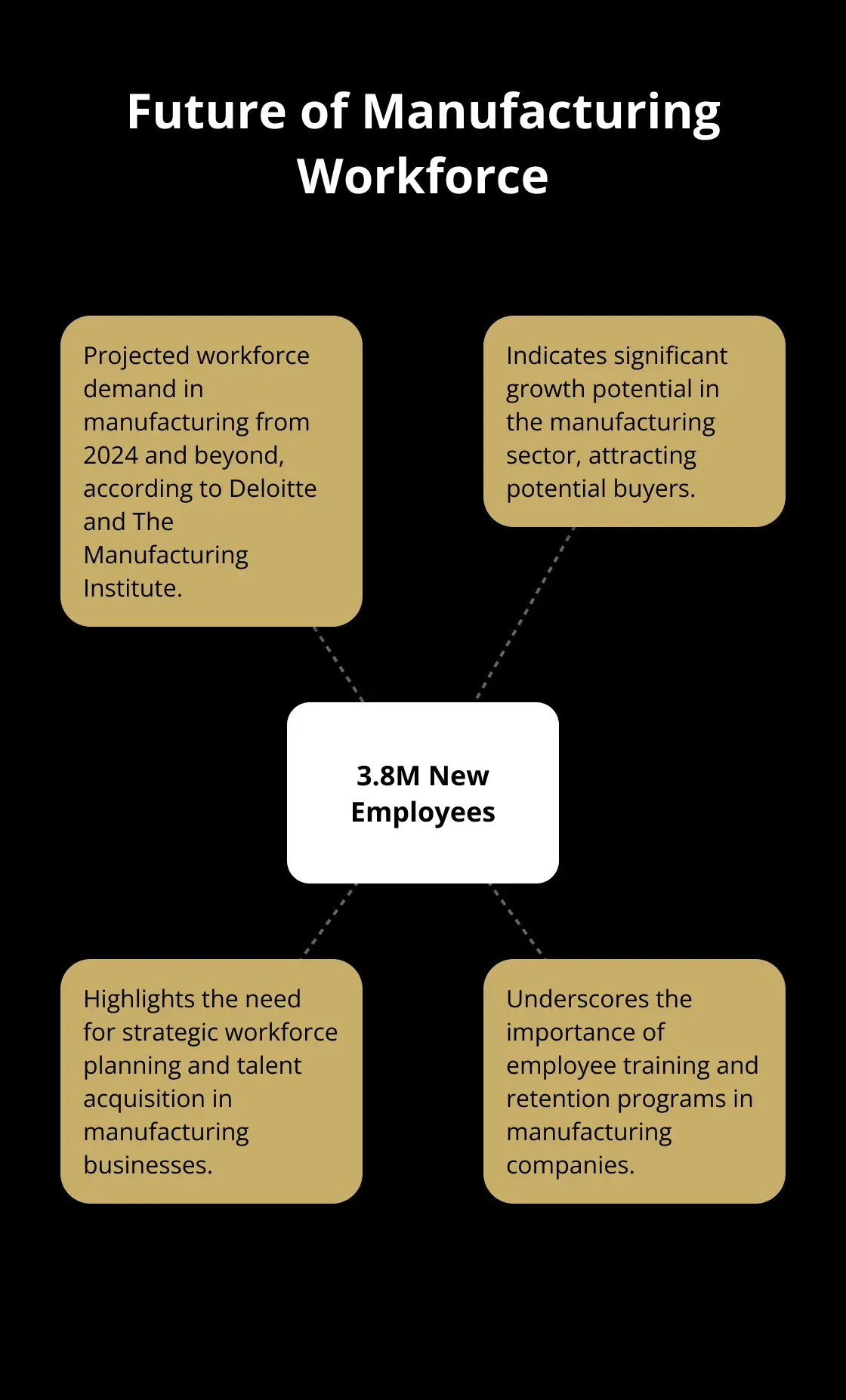
Your company’s market value extends beyond equipment. Financial performance takes center stage. A report by Deloitte and The Manufacturing Institute found that there could be as many as 3.8 million net new employees needed in manufacturing between 2024 and beyond. Collect your financial statements for the last 3-5 years and calculate your adjusted EBITDA (which adds back non-recurring expenses and owner benefits). This figure paints a clearer picture of your company’s earning potential.
The Hidden Value in Your Business
Intangible assets often hold significant worth. A loyal customer base can prove invaluable. The ACSI is the only national cross-industry measure of customer satisfaction that represents the U.S. economy. Document your customer relationships, contracts, and repeat business rates. Your brand reputation matters too. If your industry recognizes you for quality or innovation, highlight this fact. It could become the differentiator that attracts serious buyers.
Setting a Realistic Asking Price
Valuing a manufacturing company requires more than tallying up assets. It demands a comprehensive picture of your business’s current performance and future potential. Consider engaging a professional valuation service to ensure accuracy. These experts can help you navigate complex factors like market trends, industry multiples, and comparable sales data.
Preparing for Buyer Scrutiny
Anticipate potential buyers’ concerns about aging equipment. Prepare a detailed equipment replacement plan, including cost estimates and projected ROI. This proactive approach demonstrates your understanding of the business’s needs and provides buyers with a clear path forward. Additionally, compile a list of your company’s competitive advantages (e.g., proprietary processes, exclusive contracts) to offset any perceived weaknesses in your equipment lineup.
As you move forward in the selling process, you’ll need to develop strategies to increase your company’s value before putting it on the market. These tactics can help you maximize your sale price and attract more qualified buyers.
Boosting Your Manufacturing Company’s Value
Strategic Equipment Upgrades
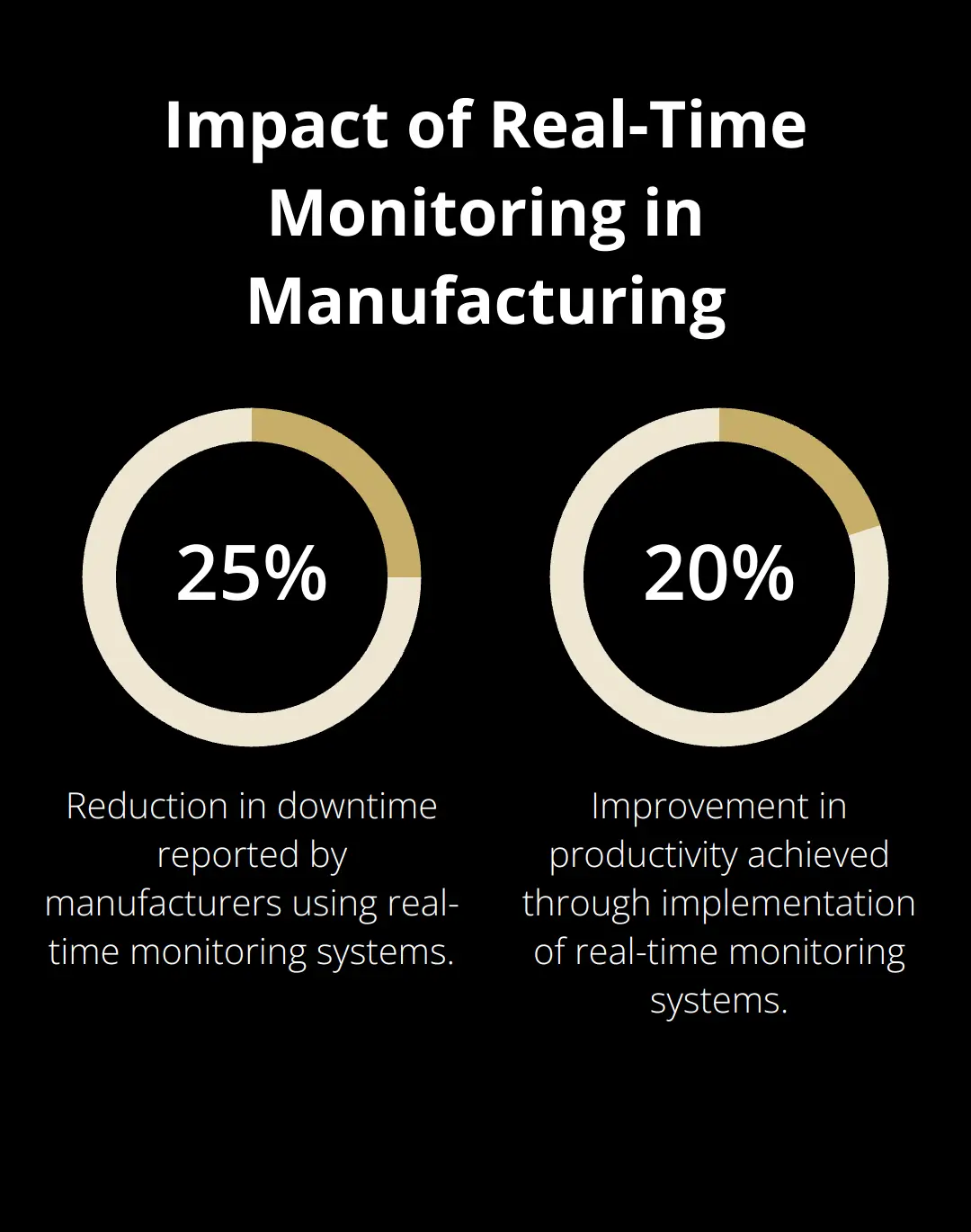
Manufacturing businesses can increase their appeal and value through targeted improvements. Unbroker has observed how specific upgrades and efficiency measures transform a company’s market position. Instead of a complete machinery overhaul, focus on strategic upgrades that directly enhance productivity or reduce operational costs. Retrofitting older machines with modern control systems can boost efficiency without the expense of full replacement. According to the Manufacturing Institute, manufacturers utilizing real-time monitoring systems report a 25% reduction in downtime and a 20% improvement in productivity.
Operational Streamlining
Potential buyers place high value on operational efficiency. The implementation of lean manufacturing principles eliminates waste and improves productivity. A comprehensive study by McKinsey & Company found that manufacturers consistently achieve 25-30% reductions in manufacturing costs after adopting lean practices. Consider the engagement of lean manufacturing consultants to identify and implement quick-win improvements that you can showcase to potential buyers.
Future-Proof Equipment Planning
A comprehensive equipment replacement plan that extends beyond the sale of your business reassures buyers about the company’s future viability. Include detailed cost projections, expected ROI for new equipment, and a timeline for implementation.
Enhancing Intangible Assets
While physical assets are important, don’t overlook the value of intangible assets. Strengthen customer relationships, protect intellectual property, and invest in your brand reputation. These elements often carry significant weight with potential buyers (and can sometimes offset concerns about aging equipment).
Technology Integration
The integration of modern technology into your manufacturing processes can significantly boost your company’s value. Try to implement data analytics, IoT sensors, or automation where feasible. These additions not only improve efficiency but also demonstrate to buyers that your company is forward-thinking and adaptable to industry trends.
The next step in preparing your manufacturing company for sale involves effective marketing strategies to attract potential buyers. A well-crafted marketing approach can highlight your company’s strengths and address potential concerns about aging equipment head-on.
How to Market Your Manufacturing Company Effectively
Showcase Growth Potential
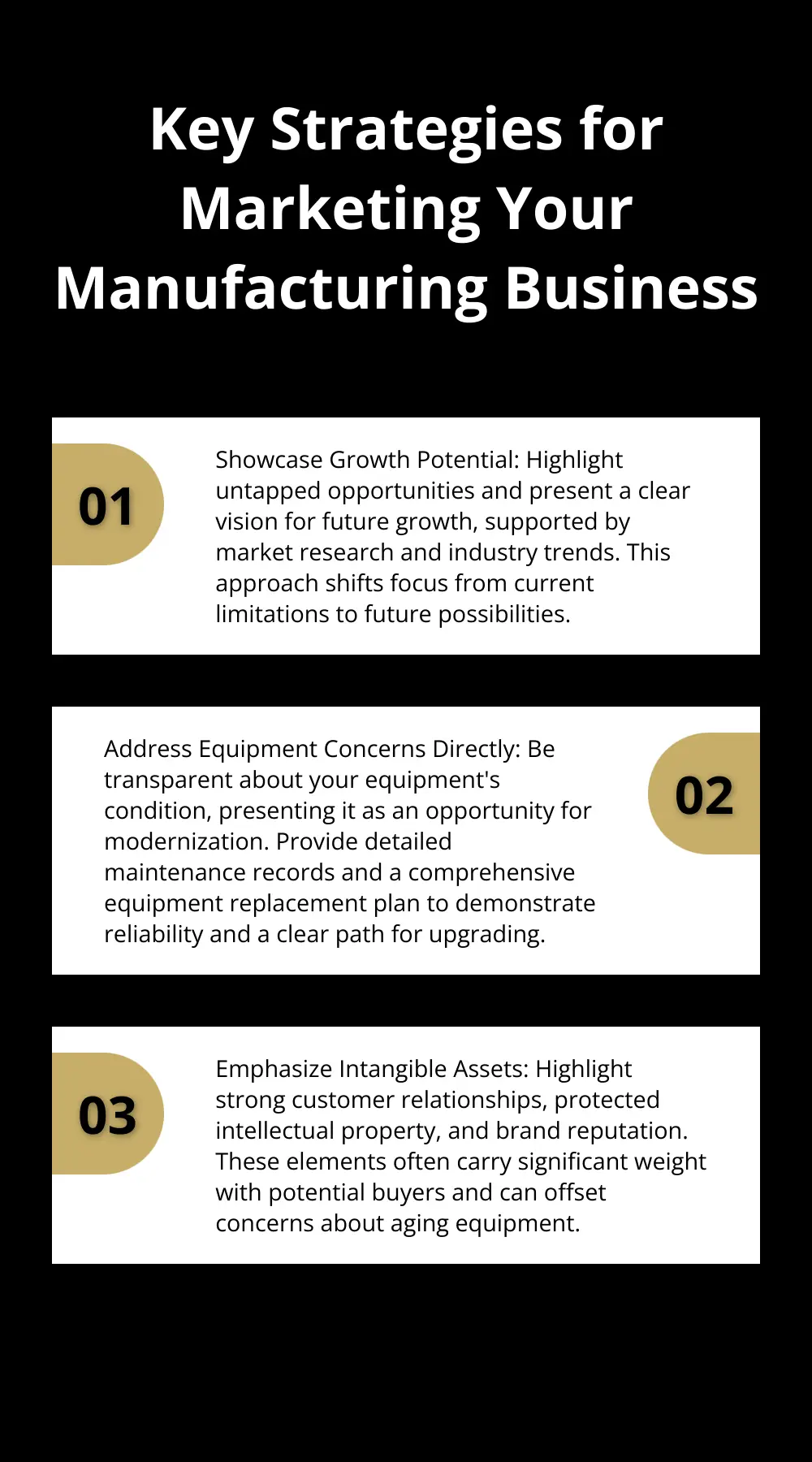
Buyers focus more on future possibilities than current limitations. Your marketing efforts should highlight the untapped potential within your business. Present a clear vision for growth, supported by market research and industry trends. Eighty-eight percent of manufacturers expect investments to continue or increase in the next fiscal year. Show how your company will capitalize on such trends.
Leverage Your Track Record
Your company’s history and achievements serve as powerful selling points. Compile a comprehensive portfolio that showcases major projects, long-term contracts, and industry awards. Value is largely driven by financial health and stability. Emphasize your company’s contributions to industry advancements or local economic growth to underscore its value beyond mere financials.
Address Equipment Concerns Directly
Transparency about your equipment’s condition is essential. Instead of downplaying aging machinery, present it as an opportunity for the new owner to modernize and increase efficiency. Provide detailed maintenance records and performance data to demonstrate that your equipment (while older) remains well-maintained and reliable. Include a comprehensive equipment replacement plan in your marketing materials to show potential buyers a clear path to upgrading the company’s capabilities.
Highlight Operational Efficiency
Showcase your company’s operational efficiency to attract potential buyers. Implement and document lean manufacturing practices, which can lead to significant cost savings (typically 25-30% according to McKinsey & Company). Demonstrate how these efficiencies translate into improved profitability and competitiveness in the market.
Emphasize Intangible Assets
Don’t overlook the value of intangible assets in your marketing strategy. Highlight strong customer relationships, protected intellectual property, and a solid brand reputation. These elements often carry significant weight with potential buyers and can sometimes offset concerns about aging equipment. Provide concrete examples of how these intangible assets contribute to your company’s success and future growth potential.
Final Thoughts
Selling a manufacturing business with outdated equipment requires strategic planning and effective marketing. You must focus on your company’s strengths, address equipment concerns directly, and implement targeted improvements. Potential buyers often prioritize future potential over current limitations, so highlight your company’s track record, customer relationships, and operational efficiencies.
Transparency builds trust with potential buyers and leads to smoother negotiations. Provide detailed information about your equipment’s condition, maintenance history, and performance. Consider targeted upgrades to boost efficiency and develop a comprehensive equipment replacement plan to show buyers a clear path forward.
Professional advice can prove invaluable when you sell a manufacturing business with outdated equipment. Experts can help you accurately value your business, identify areas for improvement, and connect you with serious buyers. At Unbroker, we specialize in helping manufacturing business owners sell their companies efficiently and cost-effectively (without the high fees associated with traditional brokers).