Selling your business doesn’t have to mean selling everything at once. An asset sale approach gives you control over which parts of your company change hands and which stay with you.
At Unbroker, we’ve seen business owners overlook this strategy because they assume a full company sale is their only option. The reality is different. Asset sales offer tax advantages, liability protection, and flexibility that stock sales simply don’t provide.
What’s the Real Difference Between Selling Assets and Selling Stock
The distinction between an asset sale and a stock sale matters far more than most business owners realize. When you sell stock, the buyer acquires ownership of your entire company, including all assets, liabilities, contracts, and obligations. When you sell assets, you choose exactly what transfers and what stays with you. This fundamental difference creates vastly different financial and legal outcomes for both parties.
Tax treatment favors asset sellers
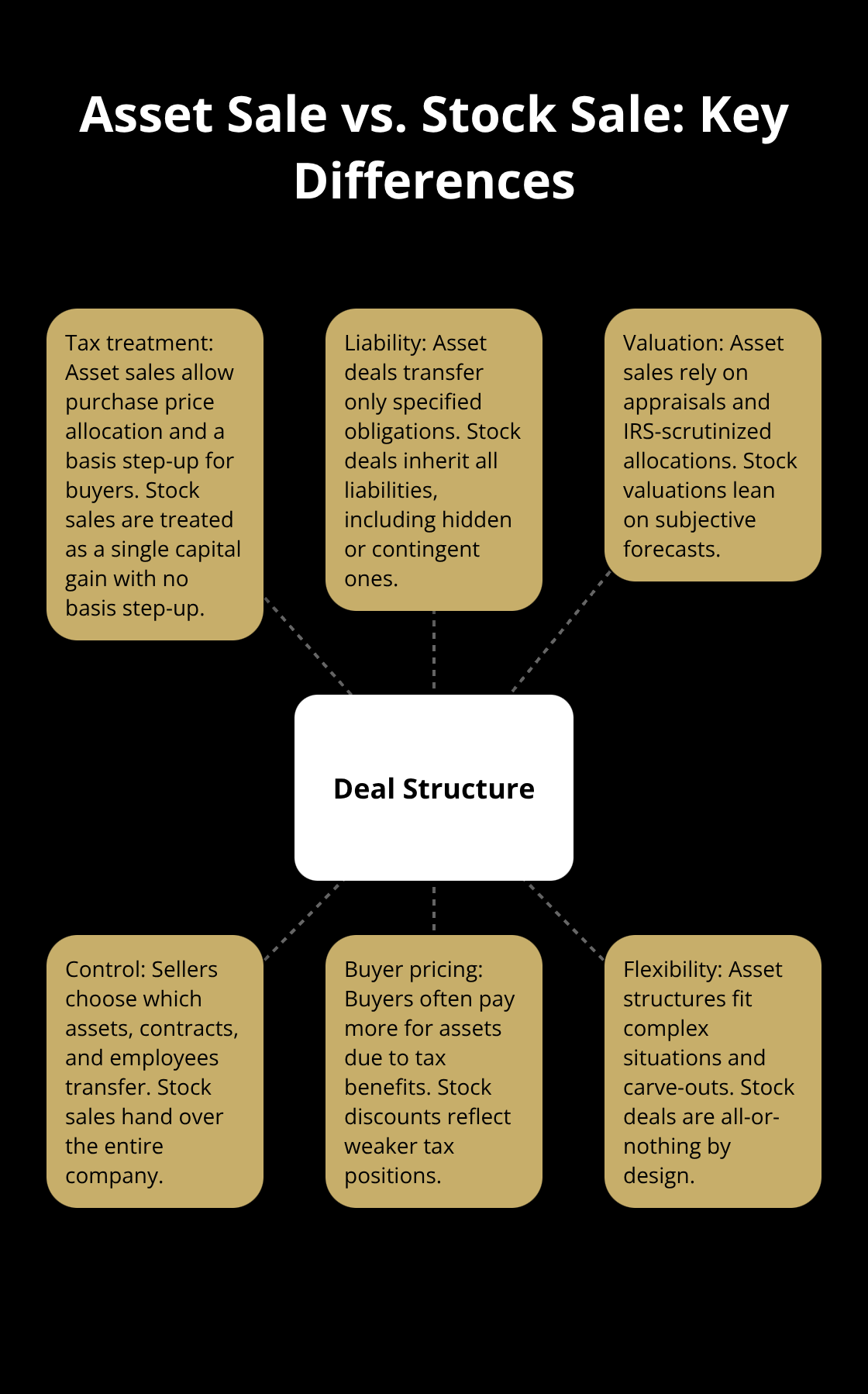
Asset sales typically provide better tax outcomes for sellers. When you sell assets, you allocate the purchase price across different asset categories, some of which receive capital gains treatment while others might qualify for Section 1231 gains or depreciation recapture. A buyer who purchases assets can step up the basis to fair market value, which means they get to depreciate or amortize those assets starting fresh. This creates tax advantages that don’t exist in stock sales. Stock sales treat the entire transaction as a single capital gain with no basis step-up for the buyer, making them less attractive from a tax perspective. The IRS recognizes these differences, and savvy buyers will demand a lower price for stock purchases to compensate for their weaker tax position.
Liability protection gives you peace of mind
Selling assets means the buyer assumes only the liabilities you explicitly transfer. Liability protection in asset sales comes from clear documentation that excludes undisclosed debts or obligations from the transaction. Stock sales transfer everything, including hidden liabilities that might emerge years later. A buyer in a stock transaction essentially inherits your entire legal history. Asset sales work best when your business carries contingent liabilities, pending litigation, or environmental concerns you want to leave behind. The allocation of liability in an asset sale gets documented in the purchase agreement with specificity that stock sales cannot match. You negotiate exactly which obligations transfer and which don’t, giving you control that stock sales eliminate entirely.
Valuation becomes more transparent
Asset sales require detailed valuation of each asset category. Equipment gets appraised separately from inventory, customer lists, goodwill, and real estate. This granular approach creates transparency and often supports higher valuations for tangible assets. Purchase price allocation in asset sales has major tax implications for both the buyer and seller based on how each asset is classified. The IRS scrutinizes purchase price allocations in asset sales, which means both parties have incentive to justify their numbers with appraisals and documentation. This scrutiny actually protects you because it establishes a clear record if questions arise later. Stock valuations often rest on subjective factors like future earnings potential, making them harder to defend.
What this means for your next steps
Asset sales offer you control over which parts of your company change hands and which remain yours. The tax advantages, liability protection, and transparent valuation methods create a foundation for a stronger deal. Understanding these differences positions you to make informed decisions about your business sale structure. The next section examines when an asset sale actually makes sense for your specific situation.
When an Asset Sale Makes Sense
Retain Control Over Which Assets Transfer
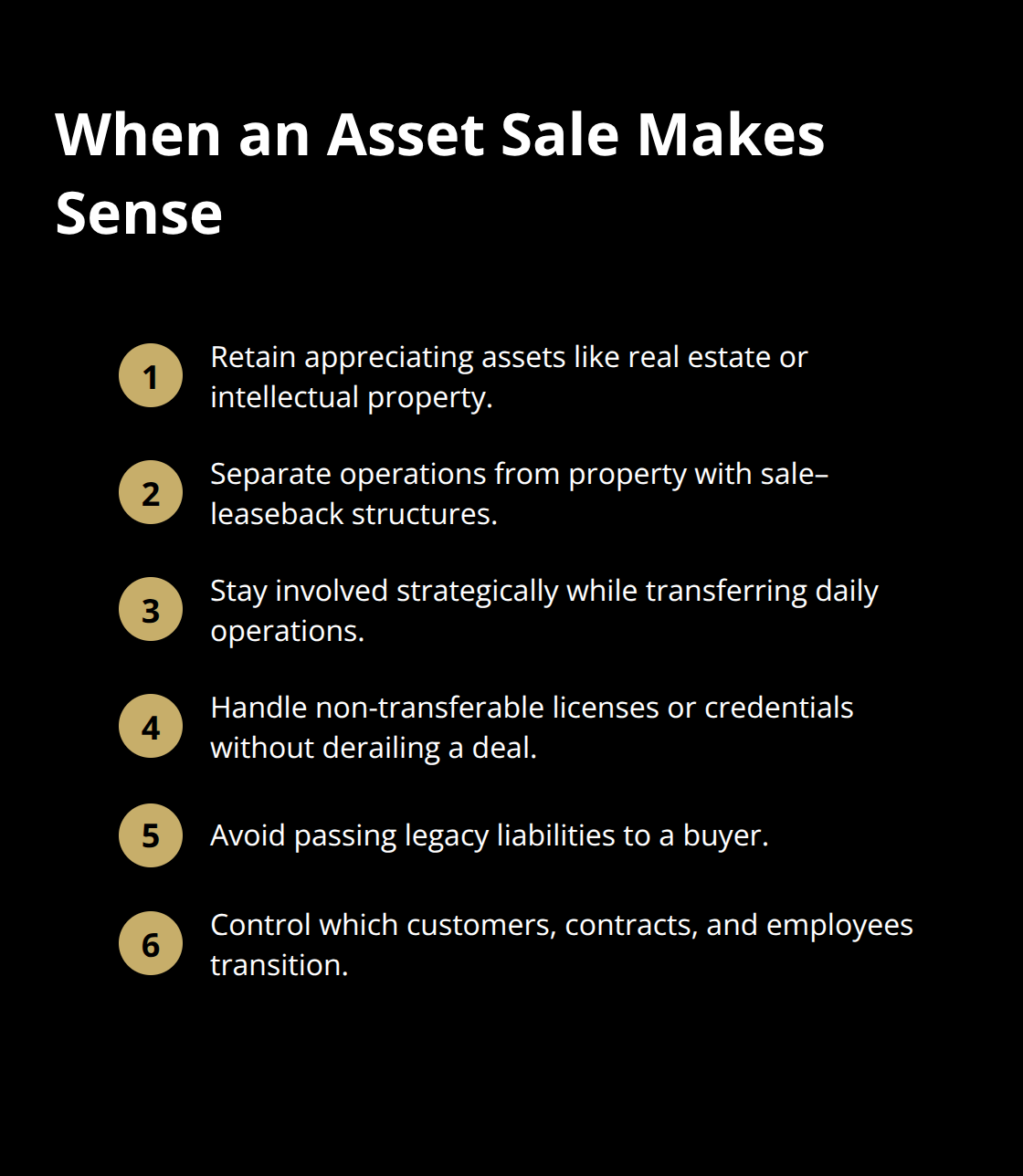
Asset sales work best when you want to shed liabilities without abandoning your entire business. Many owners operate multiple revenue streams or hold real estate separately from operations. An asset sale lets you sell the operating business to one buyer while keeping the property, intellectual property, or other holdings. This structure makes sense if you plan to stay involved in a different capacity or want to retain assets that appreciate independently. You might sell your manufacturing equipment and customer base to a buyer but keep the land, leasing it back under a separate agreement.
Manage Legacy Liabilities on Your Timeline
This approach works when your business carries environmental liabilities, pending lawsuits, or regulatory compliance issues you’d rather not transfer. A restaurant owner facing a health code violation or a manufacturing facility with soil contamination can sell the operational assets while retaining ownership of the real estate until the liability resolves. The buyer accepts only the specific assets and explicitly documented obligations, while you manage legacy issues on your timeline. Companies with contingent liabilities or uncertain pension obligations particularly benefit from this structure because you avoid transferring obligations that might not materialize for years.
Gain Negotiating Leverage With Buyers
Buyers increasingly prefer asset sales when they want to integrate only certain components into their existing operation. This preference gives asset sellers negotiating leverage. A buyer acquiring your customer list, equipment, and brand name without inheriting your old employment contracts, lease obligations, or historical debts gains immediate operational clarity.
Simplify Ownership Transfers and Licensing
You maintain control over which customers get transferred, which contracts terminate, and which employees transition. This granular control prevents disputes later about what the buyer actually received. If your business operates under multiple licenses or permits tied to your personal ownership, an asset sale avoids the complication of transferring those credentials. A contractor license, medical practice credentials, or franchise agreement might not transfer to a new owner at all, making an asset sale the only viable path. The purchase price reflects only what actually transfers, making valuations more defensible and negotiations more straightforward than stock transactions where the buyer inherits everything, including items they didn’t want and obligations they didn’t anticipate.
Understanding when an asset sale fits your situation positions you to structure a deal that protects your interests. The next section walks through the practical steps to prepare your assets for sale.
How to Prepare Your Assets for Sale
Create a Detailed Asset Inventory and Valuation
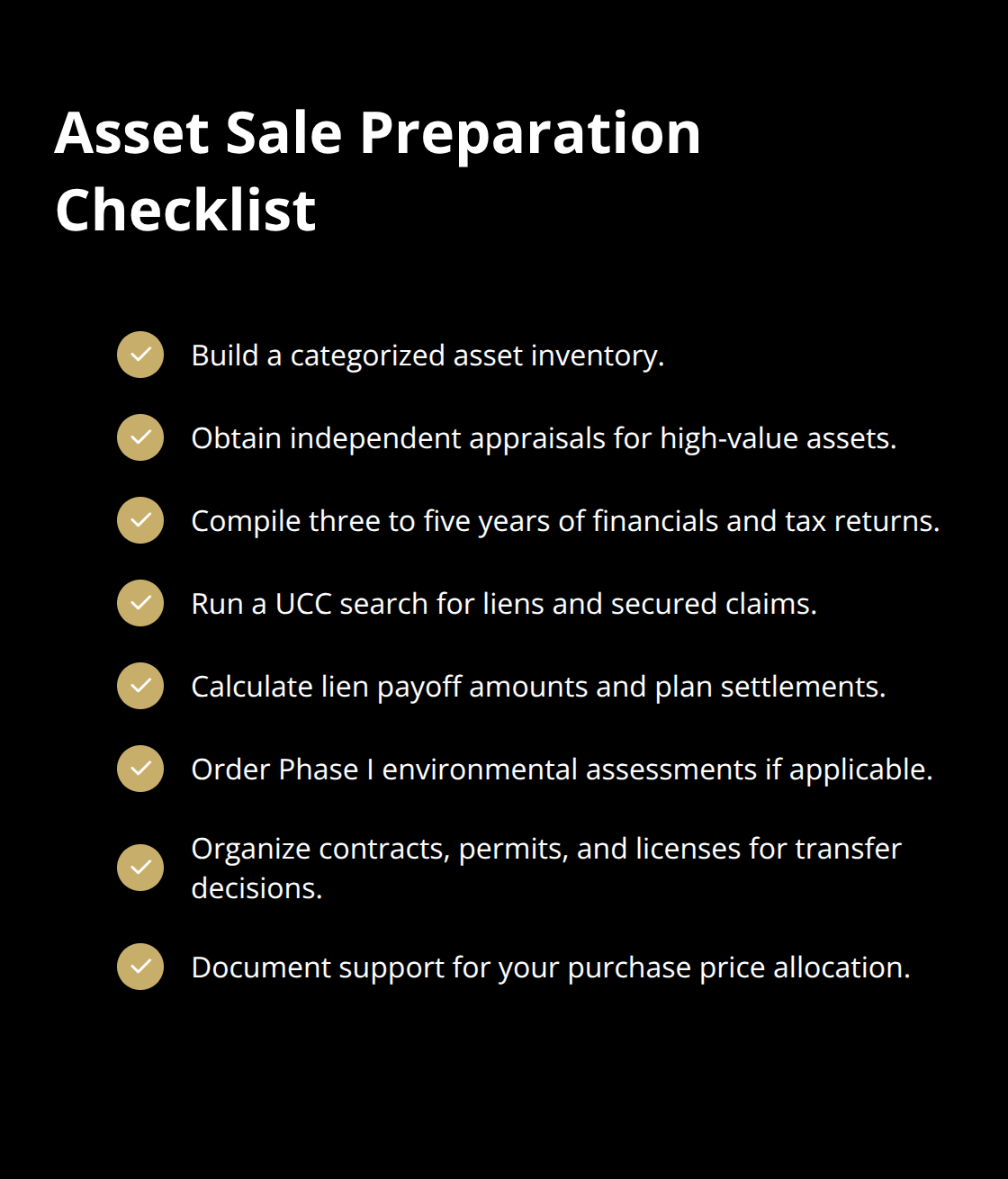
Selling specific assets requires knowing exactly what you own and what it’s worth. Start by creating a comprehensive inventory that goes beyond a simple list. Categorize everything into equipment, inventory, customer contracts, intellectual property, real estate, and goodwill. Equipment valuations need current condition assessments, not historical purchase prices. A manufacturing business might have machinery worth 40% of original cost due to wear and obsolescence, while specialized equipment in niche industries holds value better.
Get independent appraisals for high-value items. The IRS expects detailed documentation supporting your purchase price allocation, and appraisals from certified professionals defend your numbers if audited. For inventory, use recent sales data to establish fair market value rather than cost basis. Customer lists and contracts require special attention because their value depends on contract length, renewal rates, and customer retention history. Document exactly which customers you transfer and which you retain. This specificity prevents disputes during closing and justifies the price you ask.
Organize Financial and Legal Documentation
Your documentation package directly impacts how quickly buyers move forward and what price they offer. Organize financial records for the past three to five years, including tax returns, profit and loss statements, balance sheets, and detailed asset schedules. Buyers scrutinize these records to verify asset condition and business performance.
Identify all liens, mortgages, equipment leases, and claims against your assets immediately. Most business owners discover unexpected liens during due diligence, which delays closings and weakens negotiating positions. A UCC search through your state’s Secretary of State office reveals secured claims you might have forgotten about. If liens exist, calculate payoff amounts and determine whether you settle them from sale proceeds or require the buyer to assume them as part of the deal structure.
Address Environmental and Regulatory Issues
Environmental assessments matter for real estate or manufacturing facilities. Phase I environmental site assessments identify contamination risks that could make assets unsellable or require costly remediation. Address major issues before listing because buyers will demand price reductions or walk away entirely.
Organize employment contracts, customer agreements, supplier contracts, and lease terms separately because the purchase agreement will specify which transfer and which terminate. Include any regulatory compliance documentation, certifications, permits, or licenses tied to the assets. This preparation work takes time but prevents the costly surprises that derail deals during final negotiations.
Final Thoughts
An asset sale approach gives you control that traditional business sales don’t offer. You’ve learned how this strategy provides tax advantages, protects you from inherited liabilities, and creates transparent valuations that both you and potential buyers can defend. The flexibility to retain certain assets while transferring others means you structure a deal that actually fits your long-term goals rather than forcing yourself into an all-or-nothing transaction.
The preparation work matters more than most business owners expect. A comprehensive asset inventory, organized documentation, and upfront identification of liens or environmental issues separate deals that close smoothly from ones that stall during negotiations. Buyers move faster and offer better prices when they see you’ve completed this groundwork, and the time you invest now directly reduces friction later and strengthens your negotiating position.
We at Unbroker understand that selling your business shouldn’t mean paying excessive brokerage fees or navigating the process alone. Our platform offers transparent, low-cost options designed specifically for business owners like you, and whether you want hands-off selling through our Full Service Business Sale or prefer expert support while maintaining control through our Assisted Business Sale, we provide access to a vast buyer network, premium marketing tools, and legal document templates without hidden fees. Explore how Unbroker can simplify your business sale and connect you with qualified buyers ready to move forward.