Selling a service business requires more than just finding a buyer. You need to demonstrate clear value through solid financials, documented processes, and a loyal client base.
At Unbroker, we’ve seen too many service business owners leave money on the table because they didn’t prepare properly. The difference between a mediocre exit and a profitable one comes down to three things: preparation, valuation, and marketing.
Getting Your Service Business Ready to Sell
Document Your Operational Systems
The foundation of a profitable exit starts months before you talk to any buyer. Most service business owners underestimate how much work goes into preparing their business for sale, and this mistake costs them thousands in lost value. The preparation phase isn’t about making your business look good on paper-it’s about proving that your business can run without you and that clients will stick around after the handover.
Service businesses live or die by their processes, and buyers want to see documented proof that you have repeatable systems in place. Write down exactly how you handle client onboarding, project delivery, quality control, and client communication. If you’re running on intuition and experience rather than documented steps, potential buyers will assume the business depends entirely on you-which tanks your valuation.
Organize Your Financial Records
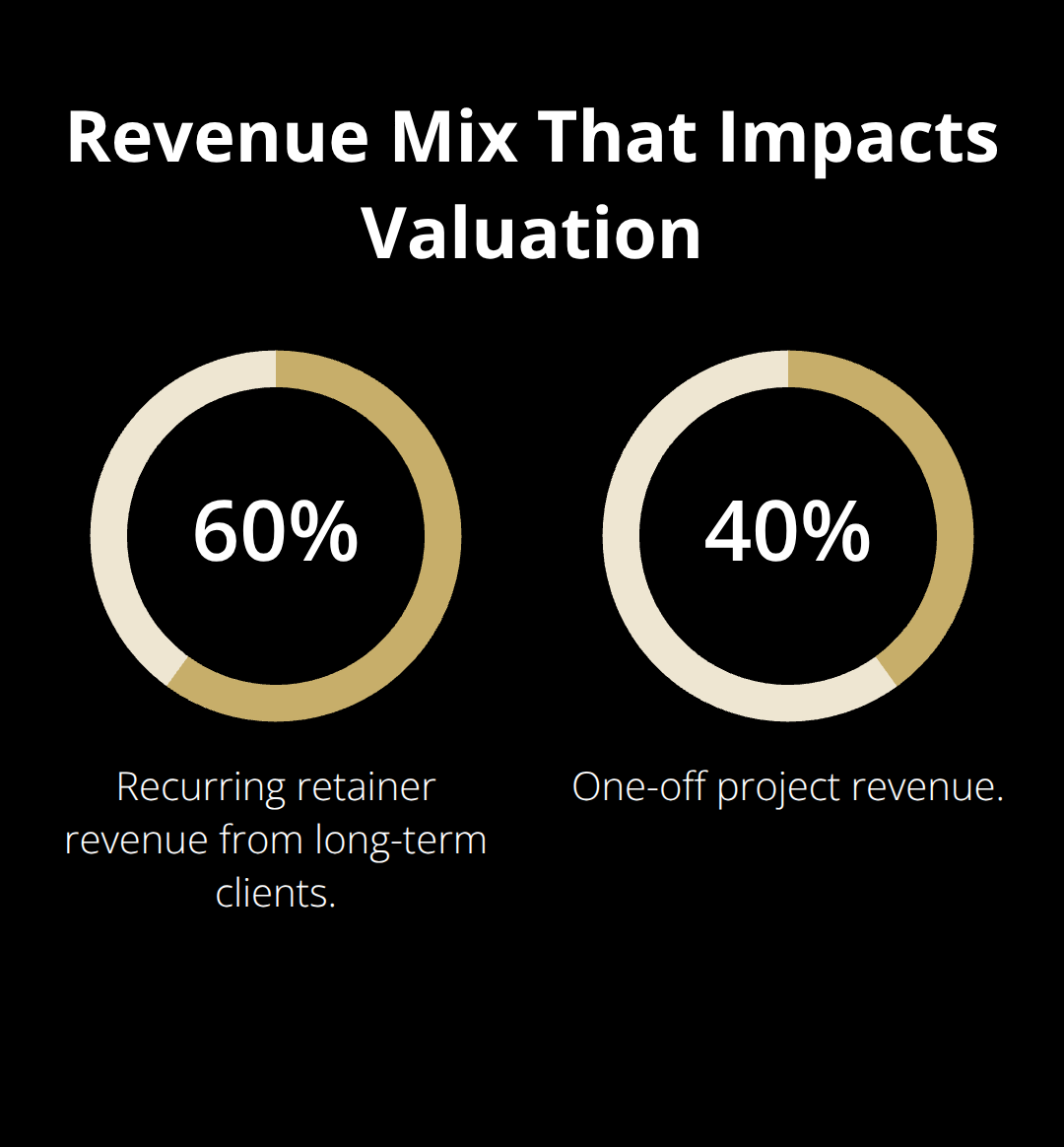
Your financial records come next, and this is where many service owners stumble. Pull together three years of tax returns, profit and loss statements, and balance sheets. More importantly, separate recurring revenue from one-time projects. Buyers care deeply about predictable, repeatable income streams. If 60% of your revenue comes from long-term retainer clients and 40% from one-off projects, that distinction matters significantly for valuation.
Clean up any inconsistencies between your books and your tax filings-buyers will hire accountants to verify everything anyway, and discrepancies raise red flags. Transparent financials signal that you’ve run a professional operation and have nothing to hide.
Strengthen Your Client Relationships
Client retention is where your business truly proves its worth. A service business with strong client relationships and long-term contracts is worth substantially more than one dependent on constant new client acquisition. Document your client retention rate, average client lifetime value, and the length of your typical client relationships. If you can show that 80% of your clients renew annually and your average client stays for five years, you’ve got a powerful selling point.
Start strengthening client relationships now, not after you’ve decided to sell. Lock in multi-year contracts where possible, increase communication frequency, and deliver exceptional results. Buyers specifically look for clients who will stay after the transition, so demonstrate this through contract lengths and relationship depth.
Create a Client Transition Plan
Prepare a detailed client transition plan that shows how you’ll hand off relationships to the new owner, including introduction meetings, documentation of client preferences, and a roadmap for maintaining service quality. The stronger your documented processes, the cleaner your financials, and the more stable your client base, the less risk a buyer perceives-and lower perceived risk means higher purchase price. With these three areas locked down, you’re ready to move into the valuation phase, where you’ll determine exactly what your business is worth.
Determine Your Service Business Valuation
Revenue Multiples Vary by Industry and Stability
Service business valuations don’t follow a one-size-fits-all formula, and that’s where most owners go wrong. The market for service businesses operates on revenue multiples, but those multiples vary wildly depending on your industry, client stability, and operational structure. A digital marketing agency might sell for 3 to 4 times EBITDA, while a management consulting firm could command 5 to 6 times. The difference comes down to predictability and scalability.
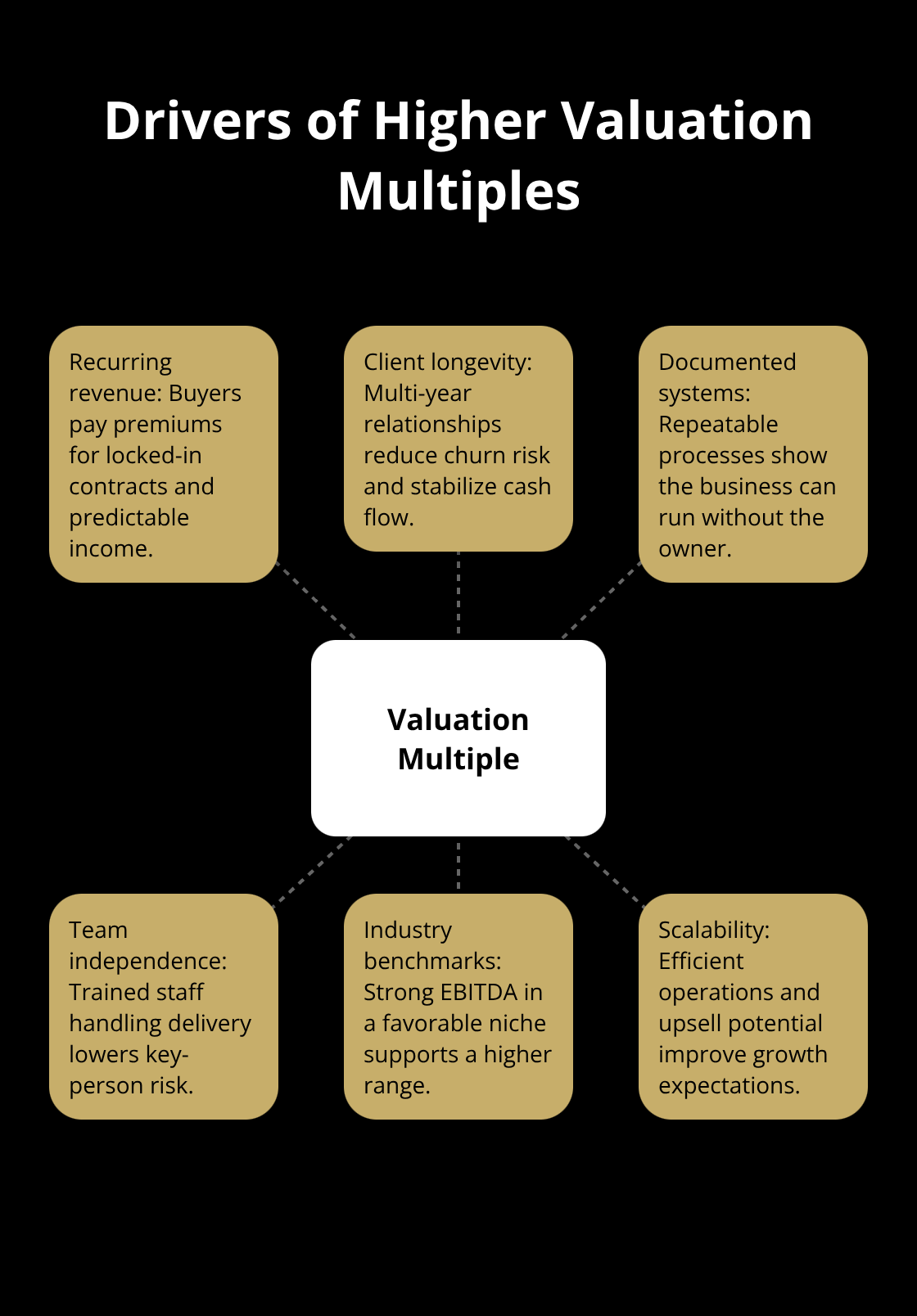
Buyers aren’t just paying for last year’s revenue-they’re paying for the income stream they expect after they take over. This means your valuation depends heavily on how much of your revenue comes from locked-in contracts versus one-time engagements. If you generate 70% of your income from annual retainer agreements with clients who’ve been with you for three-plus years, you’ll sit in a stronger negotiating position than someone who relies on constant project-based work.
Calculate Your EBITDA and Apply Industry Benchmarks
Start by calculating your EBITDA (earnings before interest, taxes, depreciation, and amortization) for the past three years, then apply industry benchmarks. Service businesses typically sell for 2.5 to 5 times EBITDA, depending on those factors we mentioned. The recurring revenue piece matters so much that buyers will often pay a premium just for contract visibility.
A client paying you $5,000 monthly on a two-year contract is worth significantly more than a client who might spend $60,000 this year but could disappear next year. Recurring revenue signals stability and reduces the buyer’s risk, which translates directly into a higher multiple for your business.
Team Strength and Documented Systems Drive Your Multiple
Your team and documented systems directly impact your multiple. Buyers want to know whether the business depends on you or whether it can operate independently. A service business where you’ve documented all processes, trained your team to handle client relationships, and removed yourself from day-to-day delivery commands a higher multiple than one where you’re the sole rainmaker.
If your team members can deliver quality work without your involvement, buyers see less risk and pay more. Factor in your team’s retention too-if your key people have been with you for five years and have signed employment agreements extending beyond the sale, that’s a major value add. Conversely, if your business relies on freelancers or contractors without formal agreements, buyers will discount your valuation because those relationships might evaporate.
Work With a Valuation Specialist
Don’t just add up revenue and apply a multiple. Walk through your last three years of financials with a business valuation specialist who understands service businesses. They’ll help you identify which revenue streams are truly recurring, which clients are flight risks, and which operational gaps could reduce your multiple. This investment pays for itself when you’re negotiating with serious buyers.
With your valuation locked down, you’re ready to move into the marketing phase, where you’ll position your business to attract qualified buyers who recognize its true worth.
Market Your Service Business Effectively
Identify and Target the Right Buyer Categories
Finding qualified buyers for a service business means abandoning the hope that someone will magically discover you. You need a deliberate strategy that positions your business where serious acquirers actually look. Most service business owners treat the sales process like a passive listing, assuming their accountant or lawyer will handle it. That approach leaves money on the table.
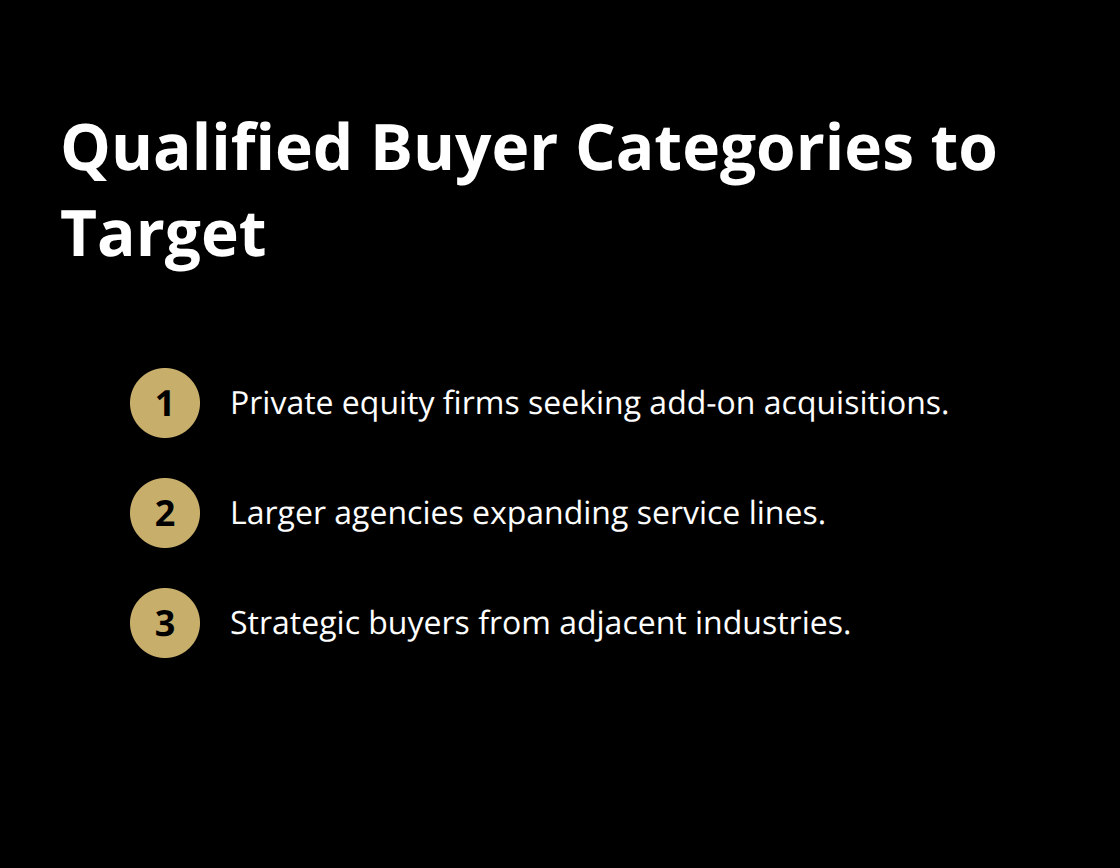
Private equity firms hunting for add-on acquisitions, larger agencies looking to expand service lines, and strategic buyers from adjacent industries all have different motivations and timelines. Research which firms made acquisitions in your sector over the past two years. If a marketing agency acquired three competitors in the last eighteen months, they’re actively hunting.
Work with business brokers who specialize in service business sales and understand your industry’s nuances. These brokers maintain buyer networks and can position your business directly with qualified prospects rather than broadcasting it to tire-kickers.
Emphasize Your Unique Value Proposition With Data
Your business case should emphasize what makes you different from competitors. If you’ve built a service business with 85% client retention and clients who stay an average of six years, that’s your headline. If your team has deep expertise in a specific vertical like healthcare or fintech, that’s your differentiator.
Buyers pay premiums for businesses that solve specific problems better than generalists, so quantify your advantages with real data. Feature recognizable brands you’ve worked with prominently in your materials. A buyer seeing that you’ve locked in $500,000 in annual recurring revenue from five-year contracts sleeps better at night than one seeing revenue that could vanish next quarter.
Build Digital Visibility and Leverage LinkedIn
Digital visibility matters more than you think, even for service business sales. Create a professional business overview document that showcases your financials, client base composition, team expertise, and growth trajectory. LinkedIn becomes your selling platform here-ensure your company profile reflects strong financial performance, highlights your team’s credentials, and demonstrates client satisfaction through testimonials and case studies.
Consider running targeted ads on LinkedIn toward decision-makers at private equity firms and larger service providers in your industry. The investment in targeted advertising costs far less than the difference between a mediocre and strong exit. Post your business overview document where potential buyers search for acquisitions.
Answer the Buyer’s Core Question
Your marketing materials should answer the question every buyer asks first: why does this business matter after the sale? Show that revenue doesn’t depend on your personal relationships or your daily involvement. Document specific processes your team follows, introduce key team members with their track records, and provide client testimonials that emphasize reliability and quality.
A buyer needs proof that your business can operate independently. Multi-year contracts with major clients provide that proof far better than promises about your personal relationships. This documentation transforms your business from a one-person operation into a scalable asset.
Price Strategically to Attract Serious Buyers
Price your asking price strategically but don’t undersell. Service businesses typically command 2.5 to 5 times EBITDA, and your preparation work determines where in that range you land. If you’ve done everything right (documented systems, strong financials, stable clients, and a capable team), you belong in the upper range.
Setting your price too low attracts bargain hunters who will demand significant discounts during negotiation. Setting it appropriately attracts serious buyers who recognize value and negotiate around margin rather than cutting the purchase price in half.
Final Thoughts
Selling a service business requires three interconnected elements that work together. You document your processes so buyers see a scalable operation rather than a one-person show. You organize your financials and highlight your recurring revenue to justify a strong valuation multiple. You market your business strategically to attract qualified buyers who understand what they’re purchasing.
Most service business owners underestimate how much professional guidance matters during this process. Valuation specialists identify which revenue streams truly count as recurring, business brokers connect you with buyers actively hunting in your sector, and legal advisors structure the deal to protect your interests. These professionals aren’t optional luxuries-they’re investments that typically return multiples of their cost through better deal terms and higher purchase prices.
When you sell a service business, you prove to a buyer that your business generates predictable income independent of your personal involvement. That proof requires documentation, financial clarity, and strategic positioning. Explore how Unbroker can simplify your exit and help you maximize what your business is actually worth.